Department of Human Dimensions of Natural Resources, Colorado State University, Fort Collins, CO, USA.
Department of Human Dimensions of Natural Resources, Colorado State University, Fort Collins, CO, USA.
Appetite. 2021 Oct 1;165:105293. doi: 10.1016/j.appet.2021.105293. Epub 2021 May 14.
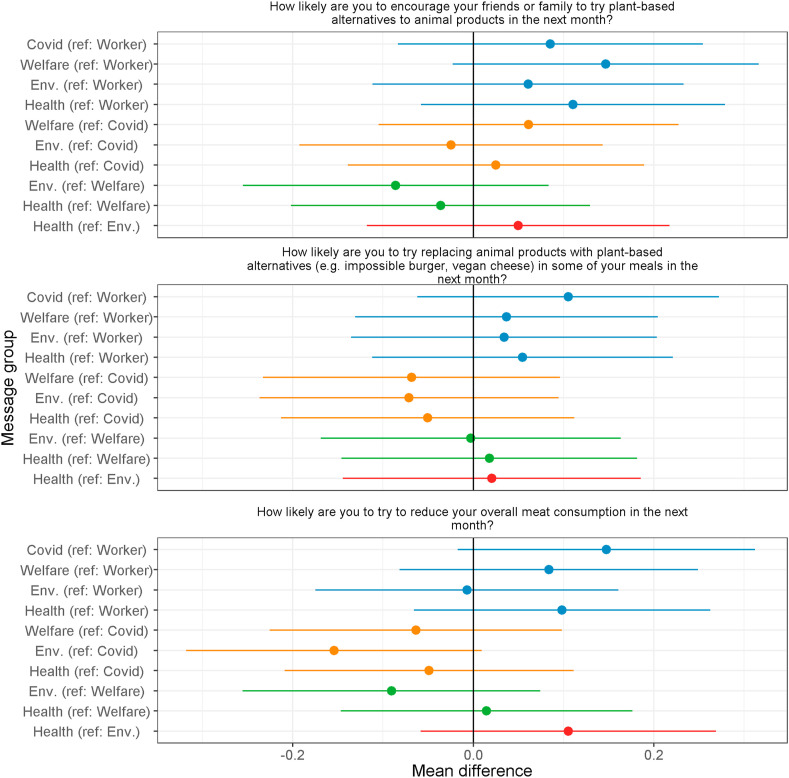
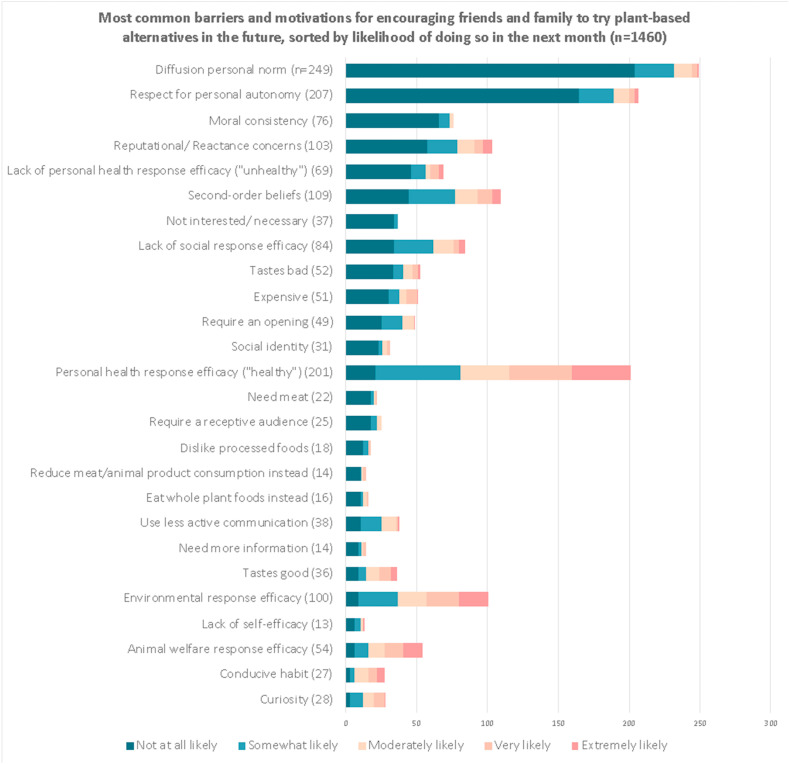
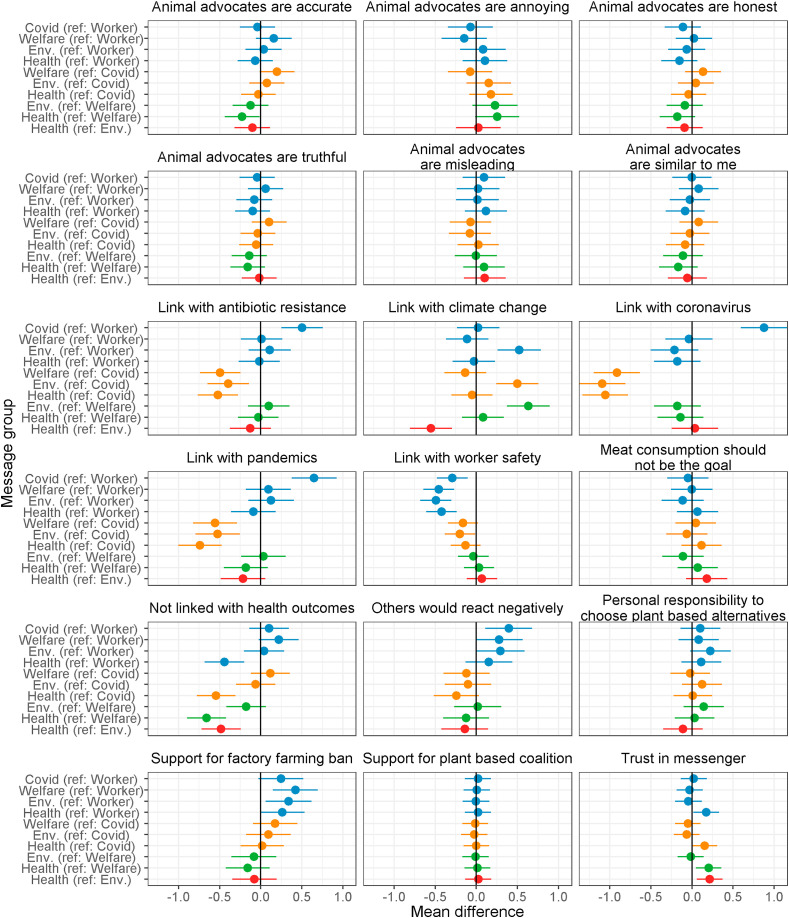
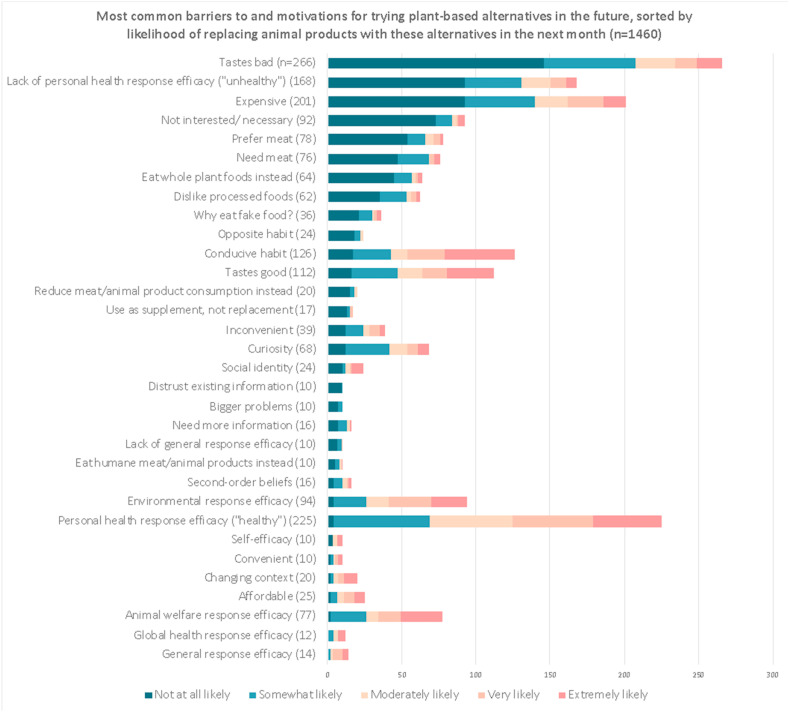
Shifting the public towards plant-based diets is critical for achieving environmental and public health outcomes. Increasingly news articles and organizations have begun using the saliency of the COVID-19 crisis to highlight the link between animal agriculture, pandemic risks, and other widespread public health threats. Yet, little is known about the effectiveness of this messaging strategy for motivating dietary change. We conducted a randomized trial with an online sample to examine the impact of: (1) a message that uses the saliency of the COVID-19 pandemic to highlight the risk of disease transmission from factory farms, and (2) a message that uses the saliency of the COVID-19 pandemic to highlight the threat to worker's health created by factory farms. We examine whether these messages are more effective at changing beliefs about and behavioral intentions towards plant-based eating, as compared to more traditional messages that highlight the environmental, personal health, or animal welfare implications of factory farmed meat consumption. We find that all messages differentially influenced beliefs about the various negative consequences of meat consumption. However, these altered beliefs did not differentially motivate changes in respondents' intentions to reduce meat consumption and choose plant-based alternatives. This was possibly due to the numerous other barriers to behavior change identified in qualitative survey responses, such as cost, taste, and social factors. We did find that messages that highlight the personal health benefits of reduced meat consumption were more effective at increasing public trust in the message deliverer. Our results suggest that highlighting personal health benefits in messaging and addressing the additional identified barriers to behavior change may be critical for building trust and shifting the public towards plant-based diets.
将公众的饮食转向植物性饮食对于实现环境和公共卫生目标至关重要。越来越多的新闻文章和组织开始利用 COVID-19 危机的显著性来强调动物农业、大流行病风险和其他广泛的公共卫生威胁之间的联系。然而,对于这种信息传递策略对于激励饮食改变的有效性知之甚少。我们进行了一项在线随机试验,以检验以下两种信息的影响:(1)一条利用 COVID-19 大流行的显著性来强调从工厂化农场传播疾病风险的信息,(2)一条利用 COVID-19 大流行的显著性来强调工厂化农场对工人健康的威胁的信息。我们研究了这些信息是否比强调工厂化养殖肉类消费对环境、个人健康或动物福利影响的更传统信息更有效地改变人们对植物性饮食的看法和行为意向。我们发现,所有信息都对肉类消费的各种负面影响的看法产生了不同的影响。然而,这些改变的信念并没有促使受访者减少肉类消费和选择植物性替代品的意图发生不同的变化。这可能是由于定性调查答复中确定的许多其他行为改变障碍造成的,例如成本、口味和社会因素。我们确实发现,强调减少肉类消费对个人健康的好处的信息更能增加公众对信息传递者的信任。我们的结果表明,在信息传递中强调个人健康益处并解决额外确定的行为改变障碍对于建立信任和引导公众转向植物性饮食可能至关重要。