Fernando Madushan, Duijf Pascal H G, Proctor Martina, Stevenson Alexander J, Ehmann Anna, Vora Shivam, Skalamera Dubravka, Adams Mark, Gabrielli Brian
Mater Research Institute-The University of Queensland, Brisbane, QLD, Australia.
Institute of Health and Biomedical Innovation, Queensland University of Technology (QUT), Faculty of Health, School of Biomedical Sciences, Brisbane, QLD, Australia.
Oncogenesis. 2021 May 15;10(5):41. doi: 10.1038/s41389-021-00329-8.
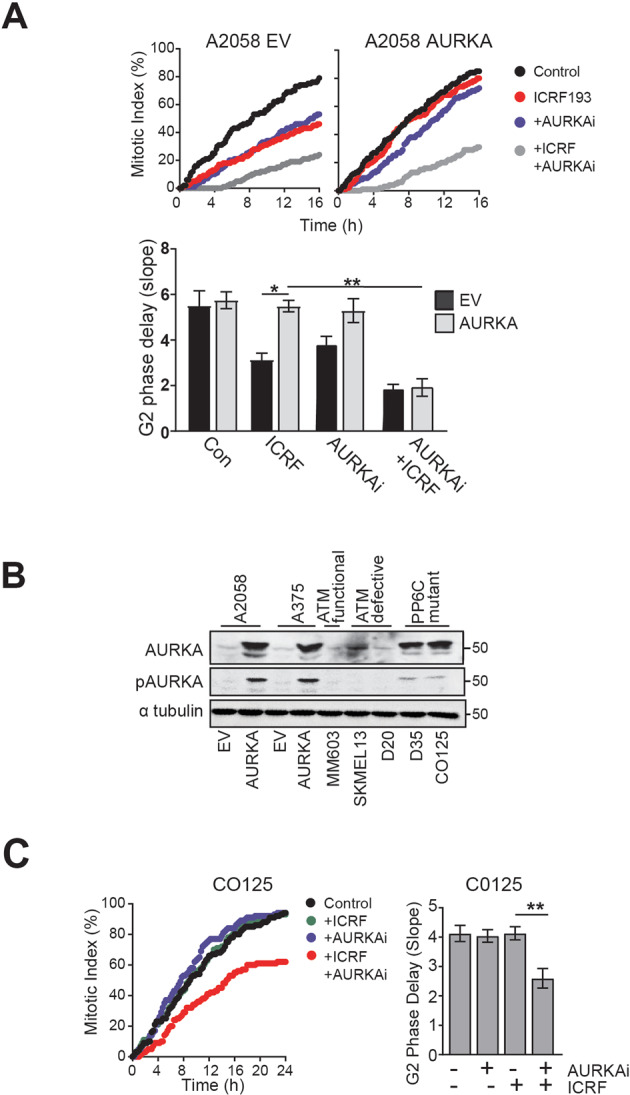
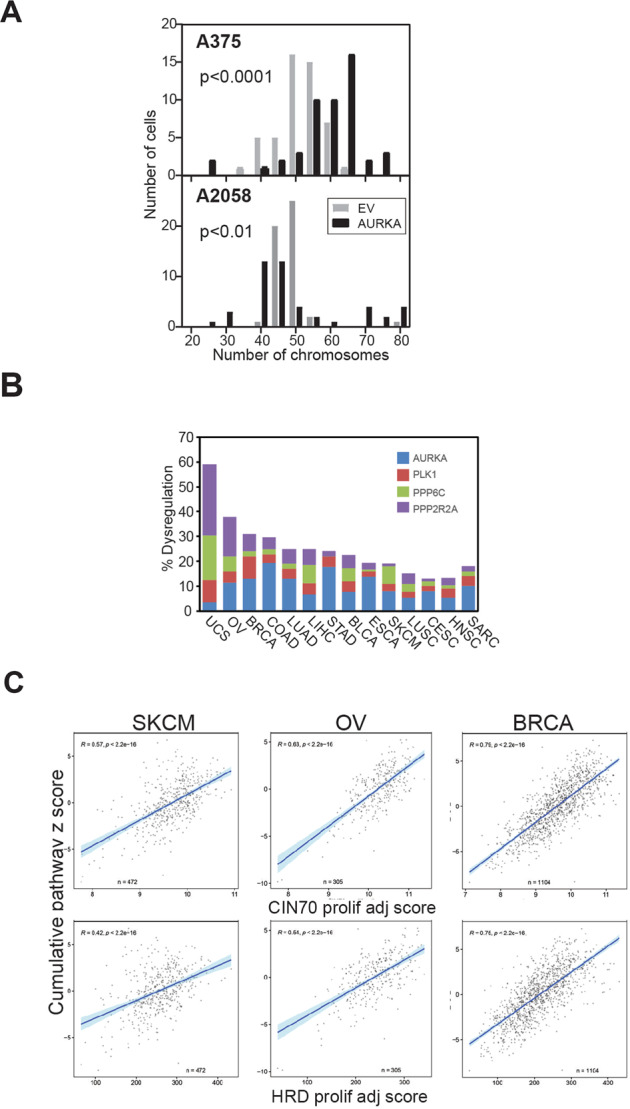
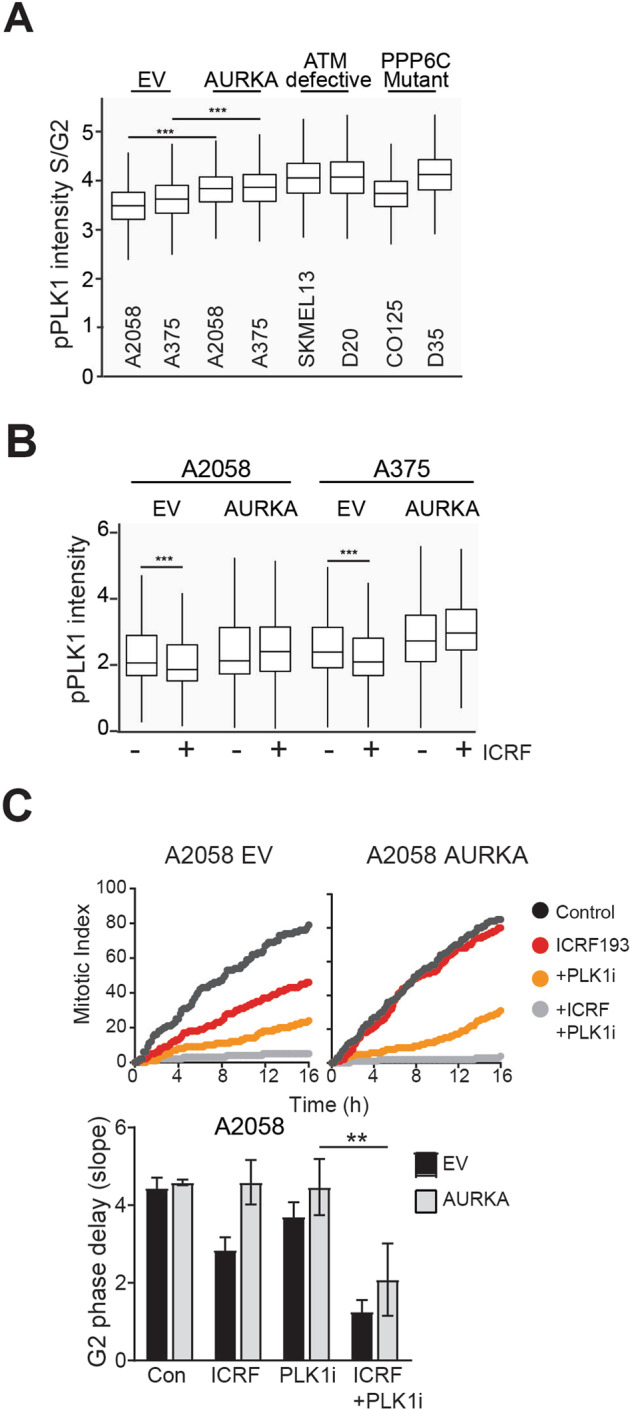
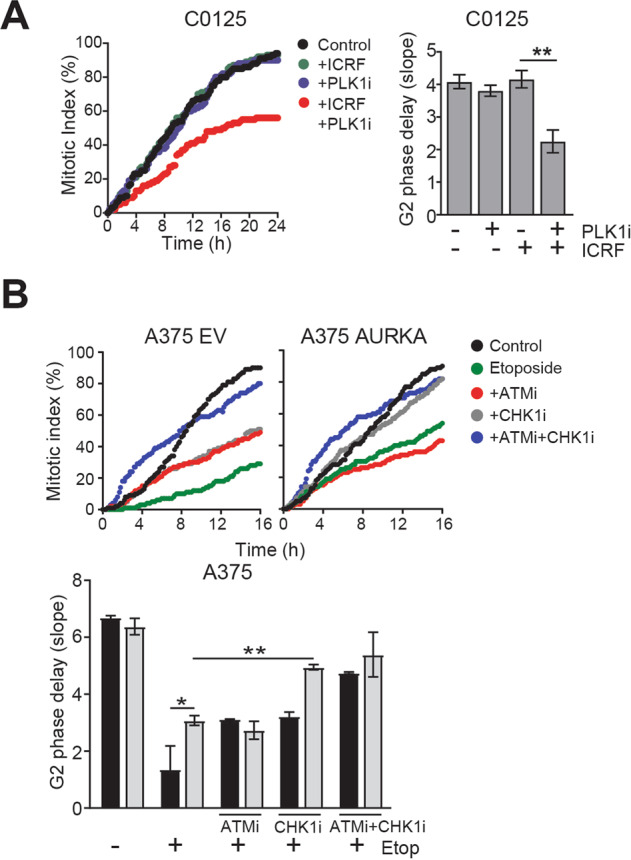
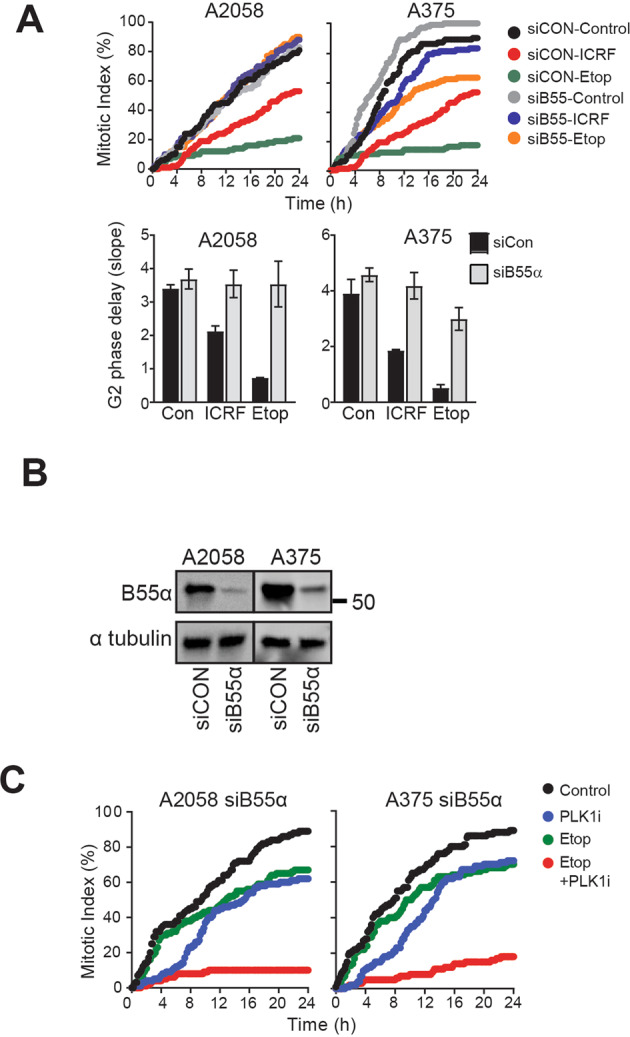
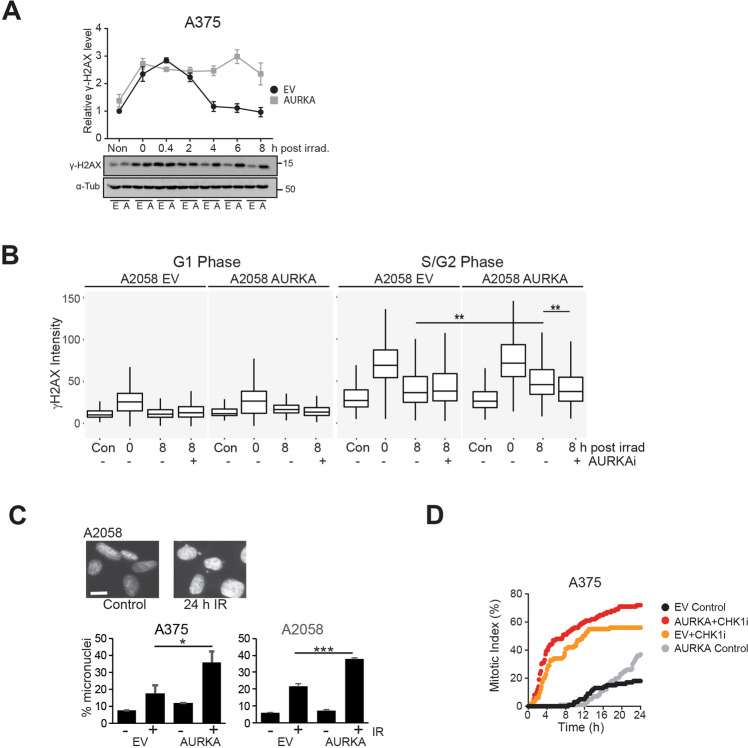
Defective DNA repair is being demonstrated to be a useful target in cancer treatment. Currently, defective repair is identified by specific gene mutations, however defective repair is a common feature of cancers without these mutations. DNA damage triggers cell cycle checkpoints that are responsible for co-ordinating cell cycle arrest and DNA repair. Defects in checkpoint signalling components such as ataxia telangiectasia mutated (ATM) occur in a low proportion of cancers and are responsible for reduced DNA repair and increased genomic instability. Here we have investigated the AURKA-PLK1 cell cycle checkpoint recovery pathway that is responsible for exit from the G2 phase cell cycle checkpoint arrest. We demonstrate that dysregulation of PP6 and AURKA maintained elevated PLK1 activation to promote premature exit from only ATM, and not ATR-dependent checkpoint arrest. Surprisingly, depletion of the B55α subunit of PP2A that negatively regulates PLK1 was capable of overcoming ATM and ATR checkpoint arrests. Dysregulation of the checkpoint recovery pathway reduced S/G2 phase DNA repair efficiency and increased genomic instability. We found a strong correlation between dysregulation of the PP6-AURKA-PLK1-B55α checkpoint recovery pathway with signatures of defective homologous recombination and increased chromosomal instability in several cancer types. This work has identified an unrealised source of G2 phase DNA repair defects and chromosomal instability that are likely to be sensitive to treatments targeting defective repair.
DNA修复缺陷正被证明是癌症治疗中的一个有用靶点。目前,修复缺陷是通过特定基因突变来识别的,然而,修复缺陷是没有这些突变的癌症的一个常见特征。DNA损伤会触发细胞周期检查点,这些检查点负责协调细胞周期停滞和DNA修复。诸如共济失调毛细血管扩张突变(ATM)等检查点信号成分的缺陷在低比例的癌症中出现,并导致DNA修复减少和基因组不稳定性增加。在这里,我们研究了负责从G2期细胞周期检查点停滞中退出的AURKA-PLK1细胞周期检查点恢复途径。我们证明,PP6和AURKA的失调维持了PLK1的高激活状态,从而促进仅从ATM依赖性而非ATR依赖性检查点停滞中过早退出。令人惊讶的是,负向调节PLK1的PP2A的B55α亚基的缺失能够克服ATM和ATR检查点停滞。检查点恢复途径的失调降低了S/G2期DNA修复效率,并增加了基因组不稳定性。我们发现,PP6-AURKA-PLK1-B55α检查点恢复途径的失调与几种癌症类型中同源重组缺陷和染色体不稳定性增加的特征之间存在很强的相关性。这项工作确定了G2期DNA修复缺陷和染色体不稳定性的一个未被认识到的来源,这些可能对针对修复缺陷的治疗敏感。