Bryk Marta, Chwastek Jakub, Mlost Jakub, Kostrzewa Magdalena, Starowicz Katarzyna
Department of Neurochemistry, Maj Institute of Pharmacology, Polish Academy of Sciences, Cracow, Poland.
Front Pharmacol. 2021 Apr 28;12:643605. doi: 10.3389/fphar.2021.643605. eCollection 2021.
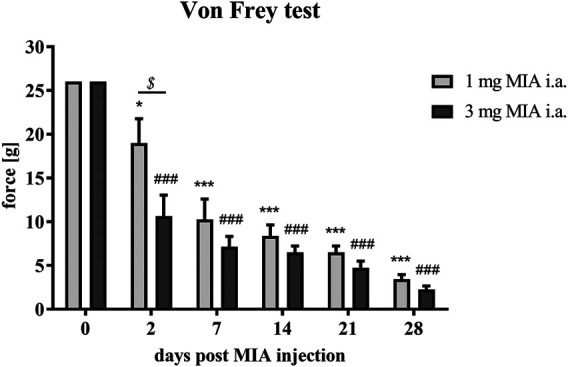
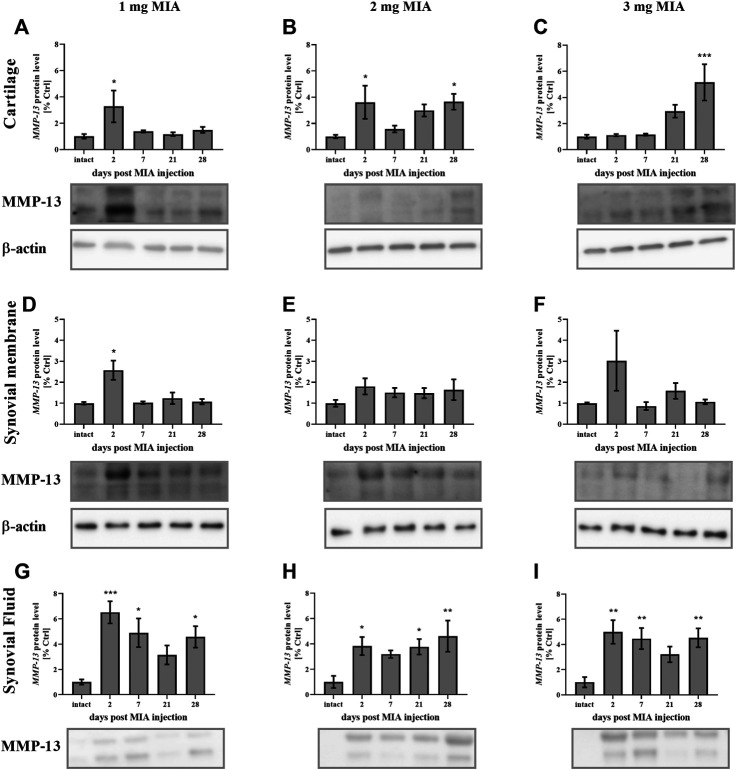
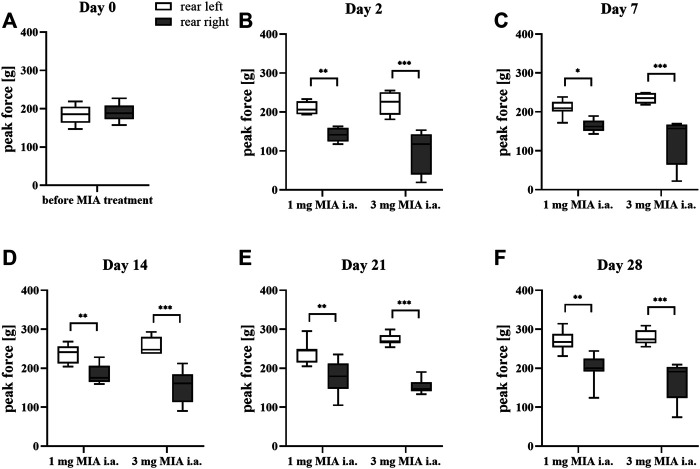
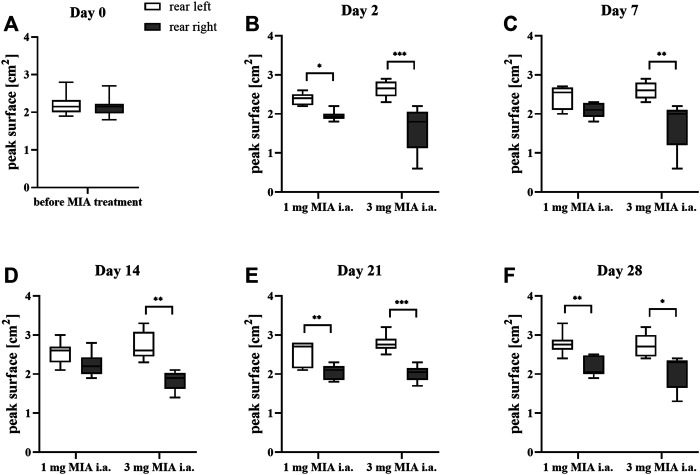
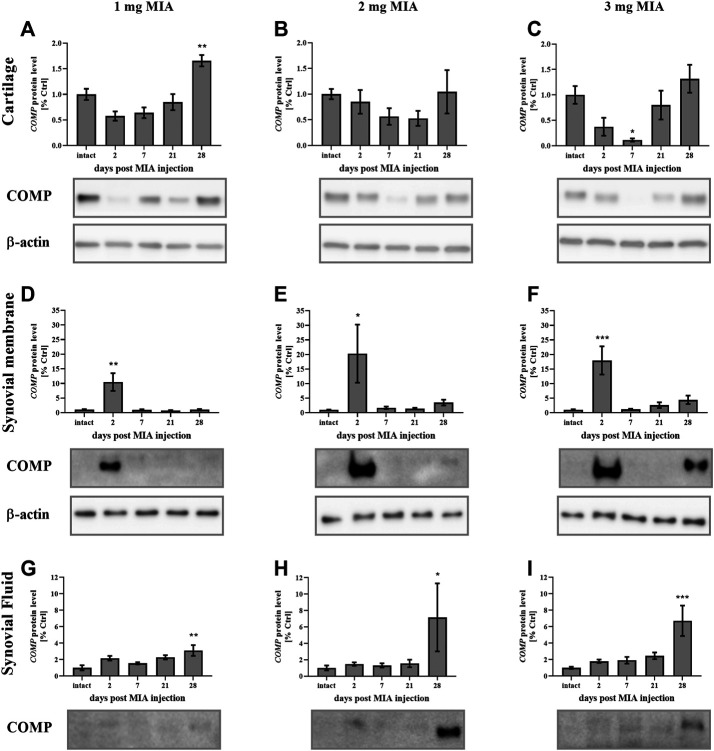
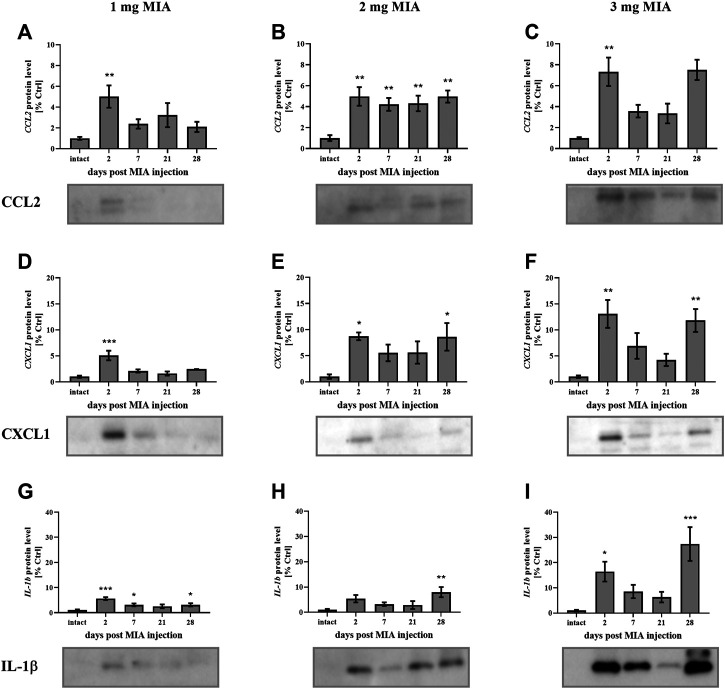
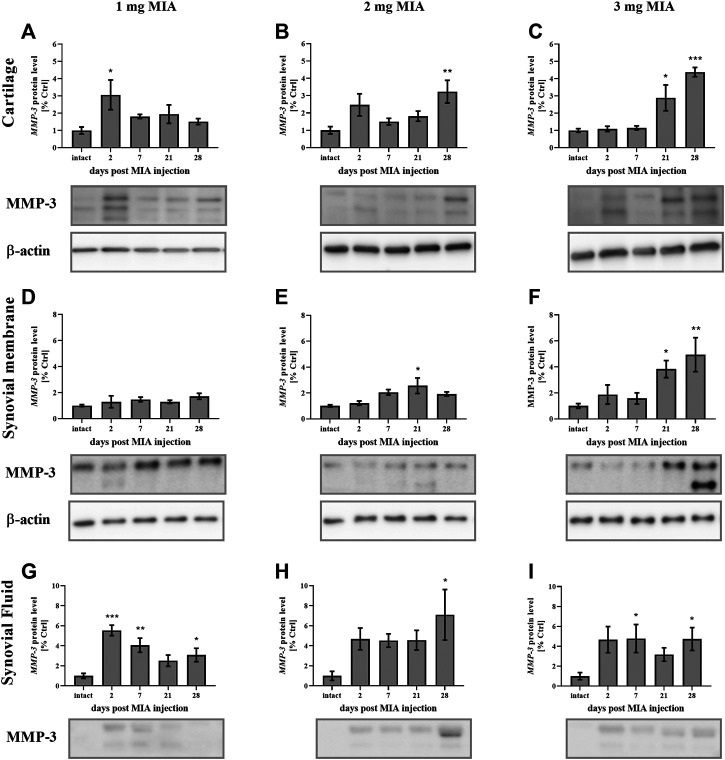
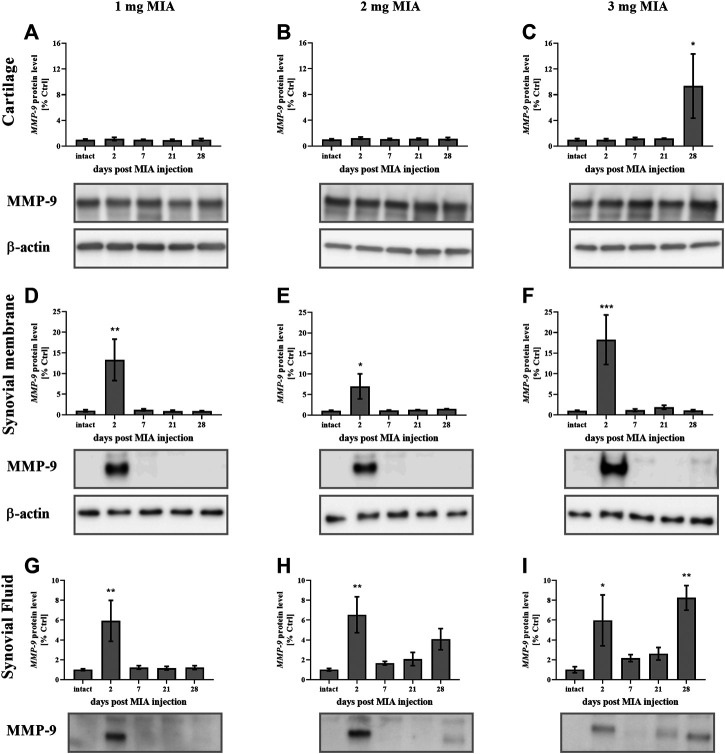
Osteoarthritis (OA) is a degenerative joint disease that primarily affects people over 65 years old. During OA progression irreversible cartilage, synovial membrane and subchondral bone degradation is observed, which results in the development of difficult-to-treat chronic pain. One of the most important factors in OA progression is joint inflammation. Both proinflammatory and anti-inflammatory factors, as well as extracellular matrix degradation enzymes (matrix metalloproteinases (MMPs), play an important role in disease development. One of the most widely used animal OA models involves an intra-articular injection of sodium monoiodoacetate (MIA) directly into the joint capsule, which results in glycolysis inhibition in chondrocytes and cartilage degeneration. This model mimics the degenerative changes observed in OA patients. However, the dose of MIA varies in the literature, ranging from 0.5 to 4.8 mg. The aim of our study was to characterize grading changes after injection of 1, 2 or 3 mg of MIA at the behavioral and molecular levels over a 28-day period. In the behavioral studies, MIA injection at all doses resulted in a gradual increase in tactile allodynia and resulted in abnormal weight bearing during free walking sequences. At several days post-OA induction, cartilage, synovial membrane and synovial fluid samples were collected, and qPCR and Western blot analyses were performed. We observed significant dose- and time-dependent changes in both gene expression and protein secretion levels. Inflammatory factors (CCL2, CXCL1, IL-1β, COMP) increased at the beginning of the experiment, indicating a transient inflammatory state connected to the MIA injection and, in more severe OA, also in the advanced stages of the disease. Overall, the results in the 1 mg MIA group were not consistently clear, indicating that the lowest tested dose may not be sufficient to induce long-lasting OA-like changes at the molecular level. In the 2 mg MIA group, significant alterations in the measured factors were observed. In the 3 mg MIA group, MMP-2, MMP-3, MMP-9, and MMP-13 levels showed very strong upregulation, which may cause overly strong reactions in animals. Therefore, a dose of 2 mg appears optimal, as it induces significant but not excessive OA-like changes in a rat model.
骨关节炎(OA)是一种退行性关节疾病,主要影响65岁以上的人群。在OA进展过程中,可观察到软骨、滑膜和软骨下骨发生不可逆的降解,进而导致难以治疗的慢性疼痛。OA进展的最重要因素之一是关节炎症。促炎和抗炎因子以及细胞外基质降解酶(基质金属蛋白酶(MMPs))在疾病发展中都起着重要作用。最广泛使用的动物OA模型之一是将单碘乙酸钠(MIA)直接关节腔内注射到关节囊中,这会导致软骨细胞中的糖酵解受到抑制以及软骨退变。该模型模拟了OA患者中观察到的退行性变化。然而,文献中MIA的剂量各不相同,范围从0.5至4.8毫克。我们研究的目的是在28天的时间内,从行为和分子水平上对注射1、2或3毫克MIA后的分级变化进行表征。在行为学研究中,所有剂量的MIA注射均导致触觉异常性疼痛逐渐增加,并导致自由行走过程中负重异常。在OA诱导后的几天,收集软骨、滑膜和滑液样本,并进行qPCR和蛋白质印迹分析。我们观察到基因表达和蛋白质分泌水平均存在显著的剂量和时间依赖性变化。炎症因子(CCL2、CXCL1、IL-1β、COMP)在实验开始时增加,表明与MIA注射相关的短暂炎症状态,在更严重的OA中以及疾病的晚期阶段也是如此。总体而言,1毫克MIA组的结果并不一致明确,表明测试的最低剂量可能不足以在分子水平上诱导持久的OA样变化。在2毫克MIA组中,观察到所测因子有显著改变。在3毫克MIA组中,MMP-2、MMP-3、MMP-9和MMP-13水平显示出非常强烈的上调,这可能会在动物中引起过度强烈的反应。因此,2毫克的剂量似乎是最佳的,因为它在大鼠模型中诱导出显著但不过度的OA样变化。