Liu Yaoli, Fu Xiazhou, Chen Zhiyong, Luo Tingting, Zhu Chunxia, Ji Yaoting, Bian Zhuan
Key Laboratory Breeding Base of Basic Science of Stomatology (Hubei-MOST) and Key Laboratory for Oral Biomedicine of Ministry of Education, School and Hospital of Stomatology, Wuhan University, Wuhan, China.
Center of Stomatology, Tongji Hospital of Tongji Medical College of Huazhong University of Science and Technology, Wuhan, China.
Front Pharmacol. 2021 Apr 29;12:665894. doi: 10.3389/fphar.2021.665894. eCollection 2021.
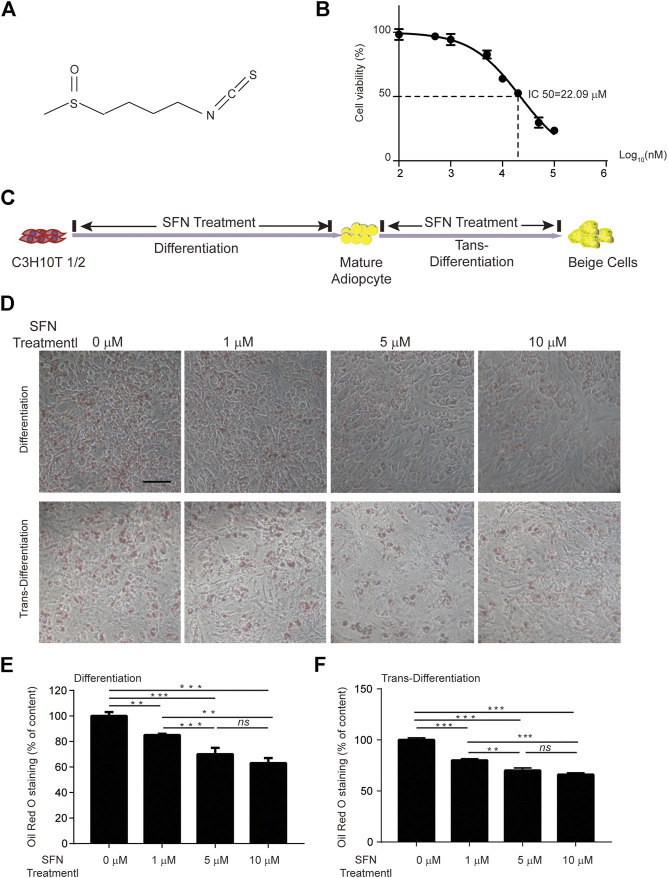
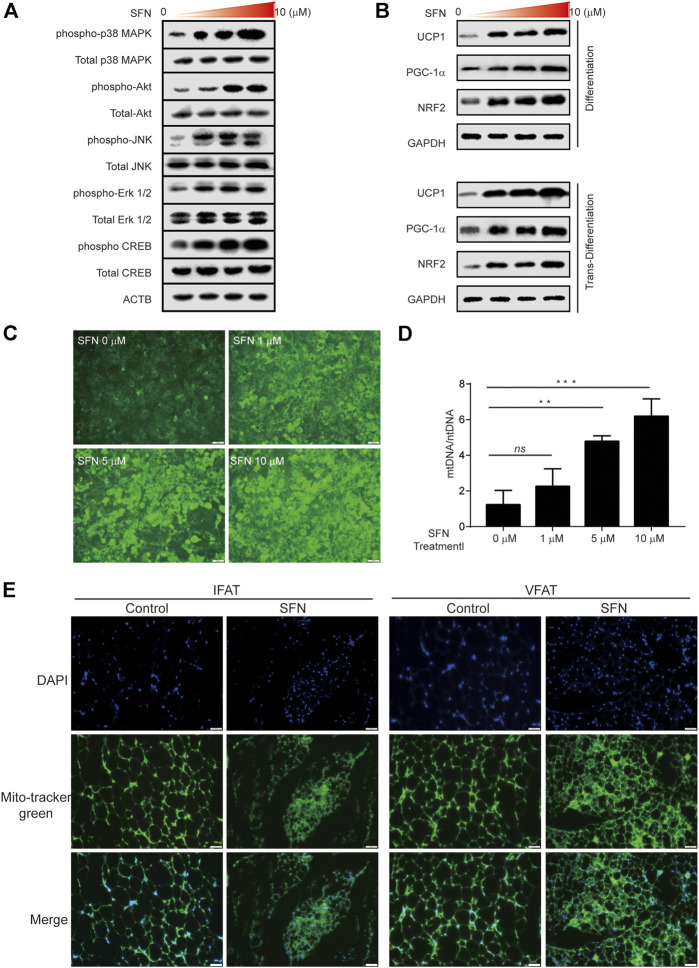
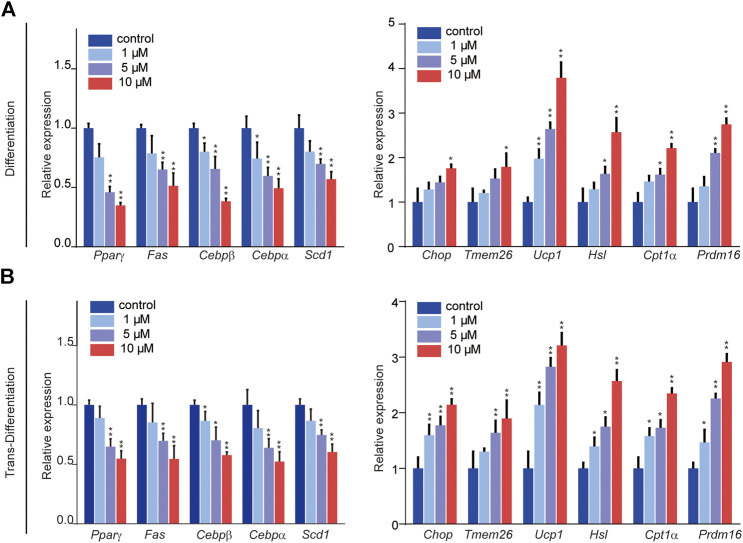
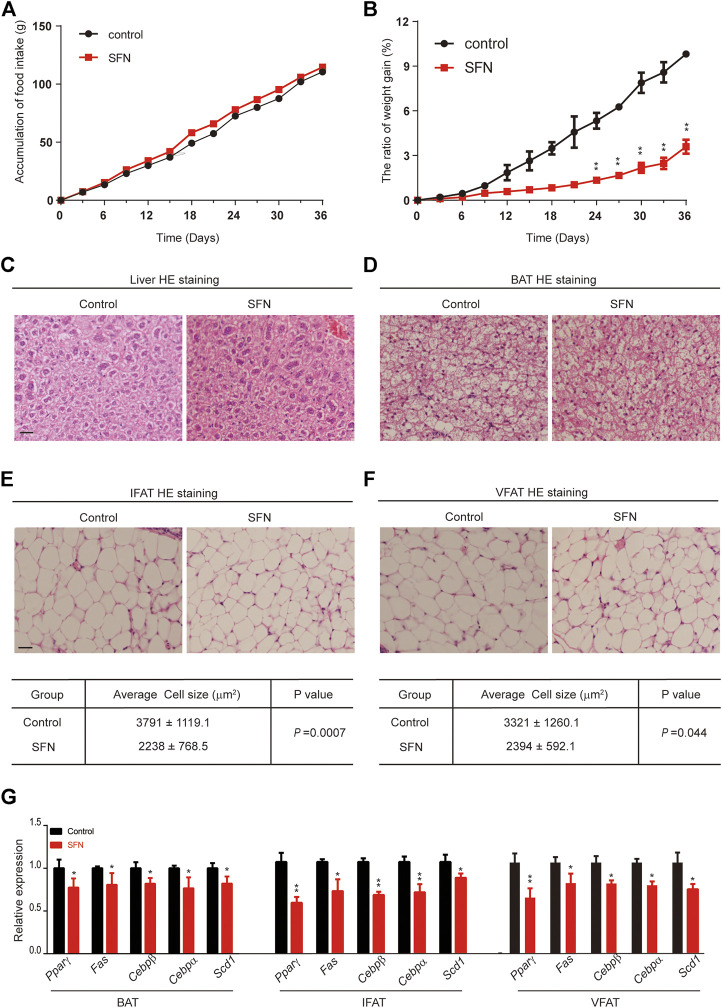
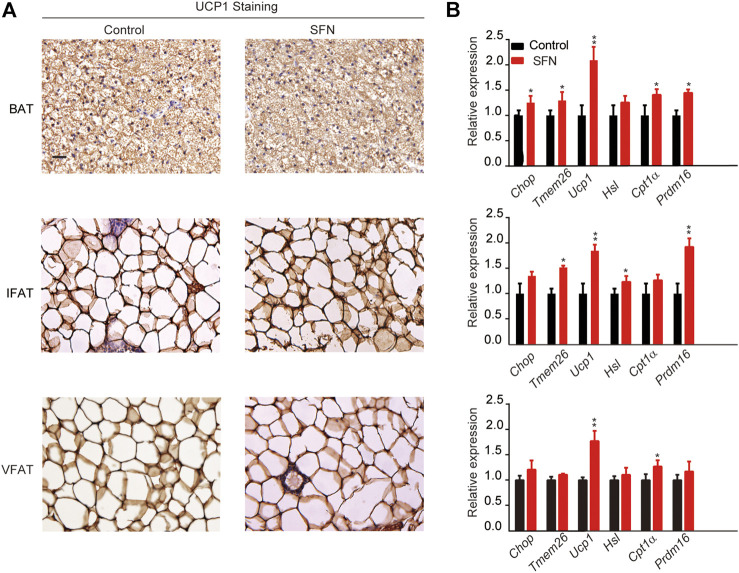
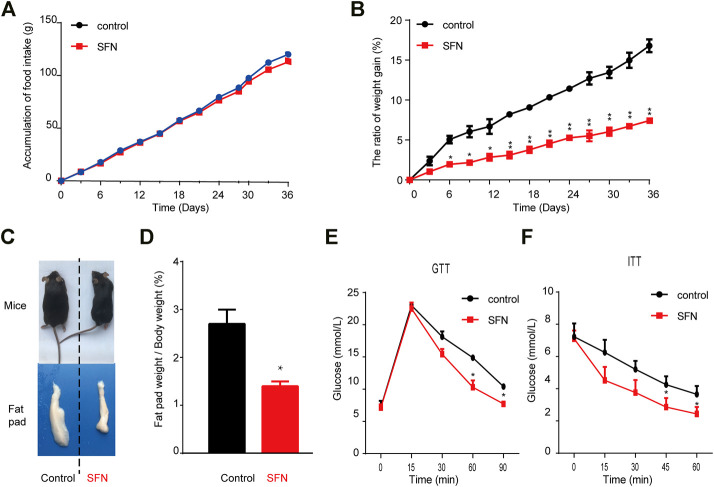
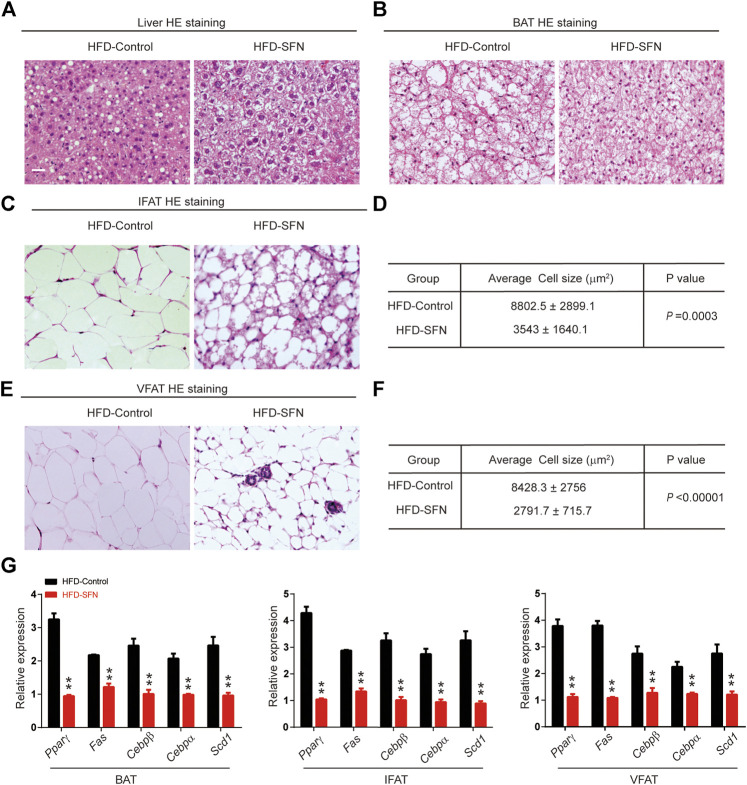
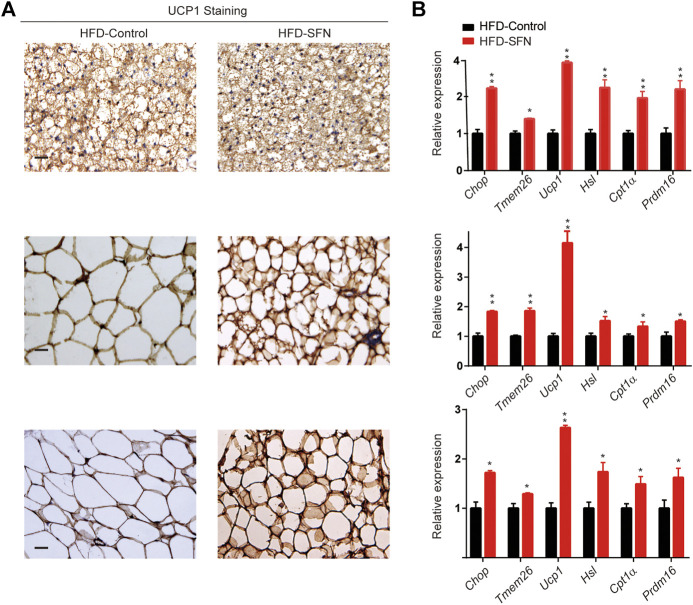
Sulforaphane (SFN), an isothiocyanate naturally occurring in cruciferous vegetables, is a potent indirect antioxidant and a promising agent for the control of metabolic disorder disease. The glucose intolerance and adipogenesis induced by diet in rats was inhibited by SFN. Strategies aimed at induction of brown adipose tissue (BAT) could be a potentially useful way to against obesity. However, protective effect of SFN against obesity by browning white adipocyte has not been reported. Our present study is aimed at evaluation the efficacy of the SFN against the high-fat induced-obesity mice and investigating the potential mechanism. High-Fat Diet-induced obese female C57BL/6 mice were intraperitoneally injected with SFN (10 mg/kg) daily. Body weight was recorded every 3 days. 30 days later, glucose tolerance test (GTT) and insulin tolerance test (ITT) were performed. At the end of experiment, fat mass were measured and the adipogenesis as well as browning associated genes expression in white adipose tissue (WAT) were determined by RT-qPCR and western blot. Histological examination of the adipose tissue samples were carried out with hematoxylin-eosin (HE) staining and immunofluorescence staining method. , pre-adipocytes C3H10T1/2 were treated with SFN to investigate the direct effects on adipogenesis. SFN suppressed HFD-induced body weight gain and reduced the size of fat cells in mice. SFN suppressed the expression of key genes in adipogenesis, inhibited lipid accumulation in C3H10T1/2 cells, increased the expression of brown adipocyte-specific markers and mitochondrial biogenesis and , and decreased cellular and mitochondrial oxidative stress. These results suggested that SFN, as a nutritional factor, has great potential role in the battle against obesity by inducing the browning of white fat. SFN could significantly decrease the fat mass, and improve glucose metabolism and increase insulin sensitivity of HFD-induced obese mice by promoting the browning of white fat and enhancing the mitochondrial biogenesis in WAT. Our study proves that SFN could serve as a potential medicine in anti-obesity and related diseases.
萝卜硫素(SFN)是一种天然存在于十字花科蔬菜中的异硫氰酸盐,是一种有效的间接抗氧化剂,也是控制代谢紊乱疾病的一种有前景的药物。SFN可抑制大鼠饮食诱导的葡萄糖不耐受和脂肪生成。旨在诱导棕色脂肪组织(BAT)的策略可能是对抗肥胖的一种潜在有用方法。然而,尚未有关于SFN通过使白色脂肪细胞棕色化来对抗肥胖的保护作用的报道。我们目前的研究旨在评估SFN对高脂诱导肥胖小鼠的疗效,并研究其潜在机制。将高脂饮食诱导的肥胖雌性C57BL/6小鼠每天腹腔注射SFN(10mg/kg)。每3天记录一次体重。30天后,进行葡萄糖耐量试验(GTT)和胰岛素耐量试验(ITT)。实验结束时,测量脂肪量,并通过RT-qPCR和蛋白质免疫印迹法测定白色脂肪组织(WAT)中脂肪生成以及棕色化相关基因的表达。用苏木精-伊红(HE)染色和免疫荧光染色法对脂肪组织样本进行组织学检查。用SFN处理前脂肪细胞C3H10T1/2,以研究其对脂肪生成的直接影响。SFN抑制高脂饮食诱导的小鼠体重增加,并减小脂肪细胞大小。SFN抑制脂肪生成关键基因的表达,抑制C3H10T1/2细胞中的脂质积累,增加棕色脂肪细胞特异性标志物的表达和线粒体生物发生,并且降低细胞和线粒体氧化应激。这些结果表明,SFN作为一种营养因子,在通过诱导白色脂肪棕色化对抗肥胖的斗争中具有巨大的潜在作用。SFN可通过促进白色脂肪棕色化和增强WAT中的线粒体生物发生,显著降低高脂饮食诱导肥胖小鼠的脂肪量,并改善葡萄糖代谢,提高胰岛素敏感性。我们的研究证明,SFN可作为抗肥胖及相关疾病的潜在药物。