Tanabe Kazuhiro, Hayashi Chihiro, Katahira Tomoko, Sasaki Katsuhiko, Igami Ko
Medical Solution Promotion Department, Medical Solution Segment, LSI Medience Corporation, 3-30-1 Shimura, Itabashi-ku, Tokyo 174-8555, Japan.
Research Supporting Department, Kyushu Pro Search Limited Liability Partnership, 4-1 Kyudai-Shincho, Nishiku, Fukuoka 819-0388, Japan.
Comput Struct Biotechnol J. 2021 Apr 7;19:1956-1965. doi: 10.1016/j.csbj.2021.04.015. eCollection 2021.
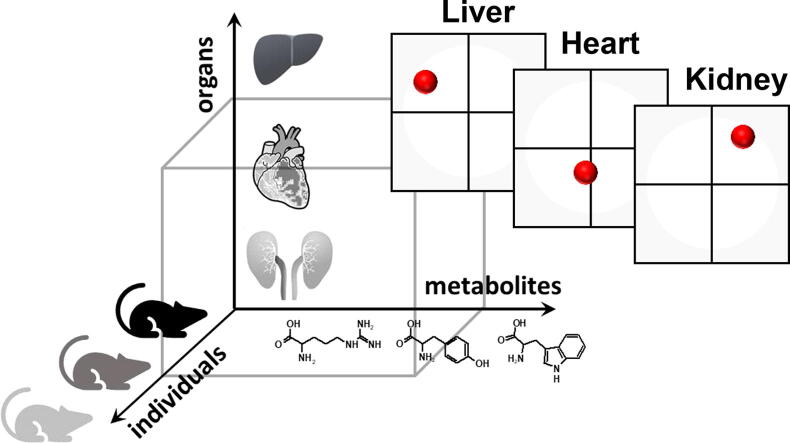
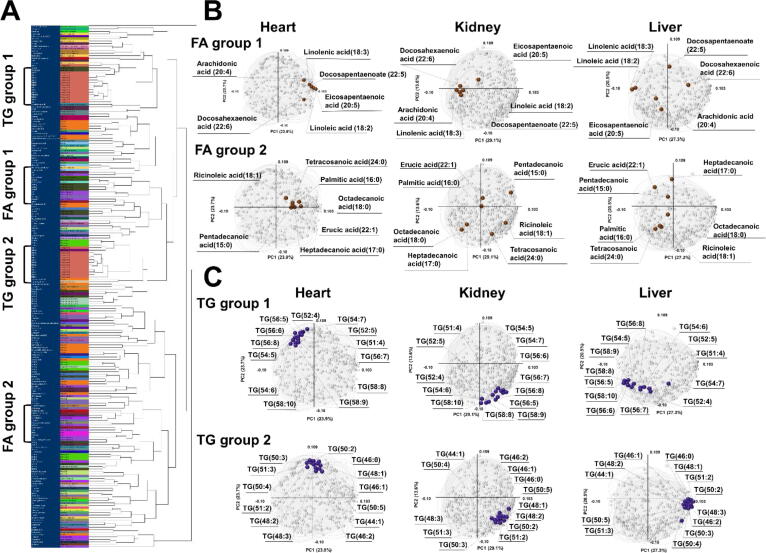
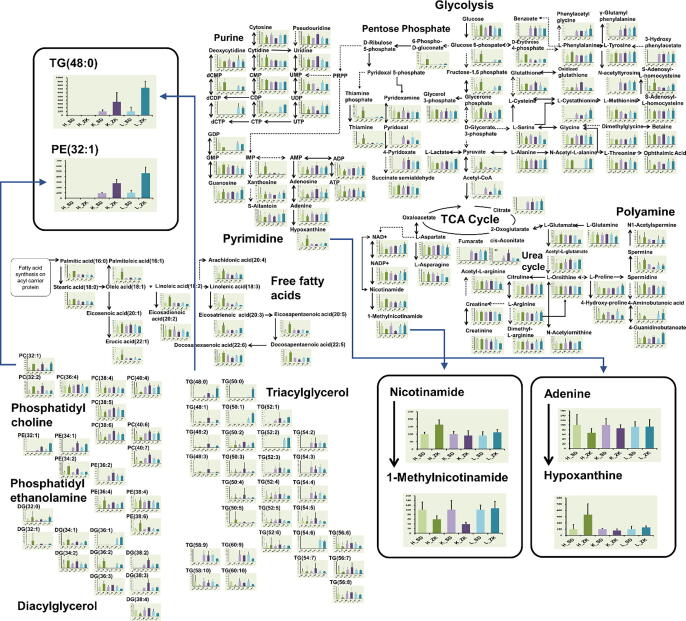
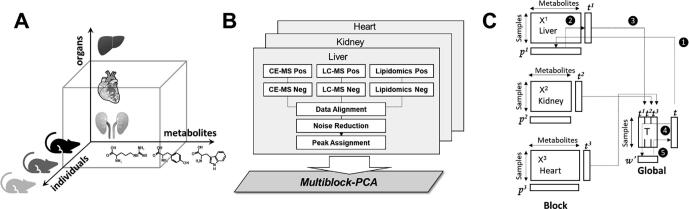
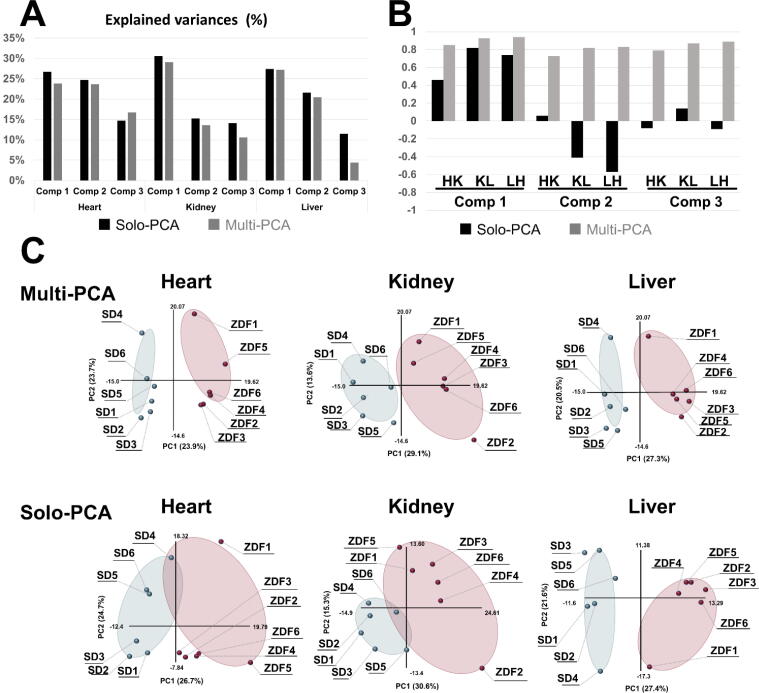
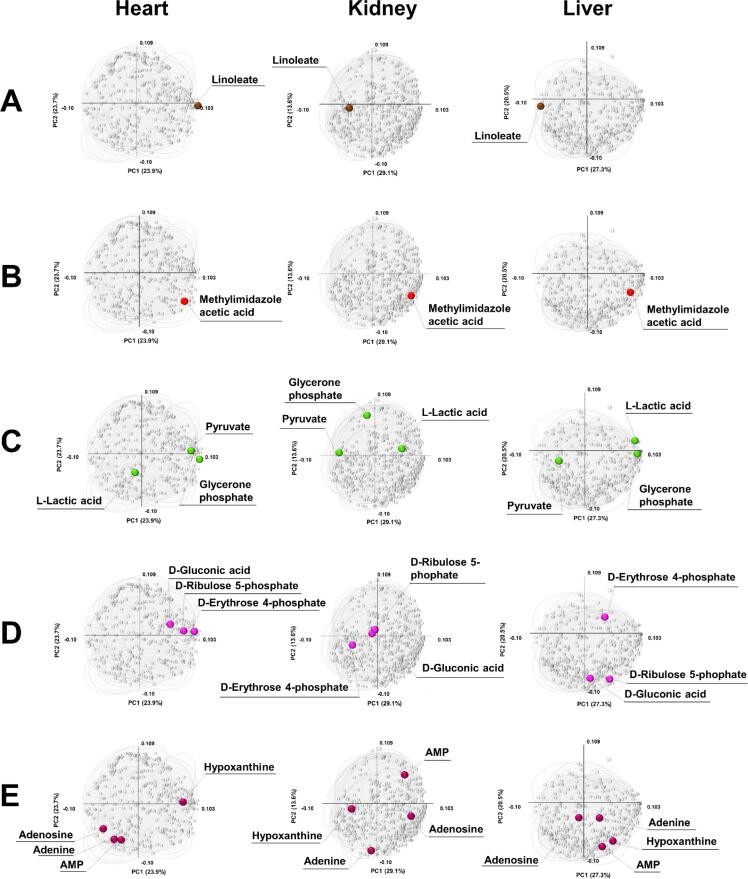
Principal component analysis (PCA) is a useful tool for omics analysis to identify underlying factors and visualize relationships between biomarkers. However, this approach is limited in addressing life complexity and further improvement is required. This study aimed to develop a new approach that combines mass spectrometry-based metabolomics with multiblock PCA to elucidate the whole-body global metabolic network, thereby generating comparable metabolite maps to clarify the metabolic relationships among several organs. To evaluate the newly developed method, Zucker diabetic fatty (ZDF) rats ( = 6) were used as type 2 diabetic models and Sprague Dawley (SD) rats ( = 6) as controls. Metabolites in the heart, kidney, and liver were analyzed by capillary electrophoresis and liquid chromatography mass spectrometry, respectively, and the detected metabolites were analyzed by multiblock PCA. More than 300 metabolites were detected in the heart, kidney, and liver. When the metabolites obtained from the three organs were analyzed with multiblock PCA, the score and loading maps obtained were highly synchronized and their metabolism patterns were visually comparable. A significant finding in this study was the different expression patterns in lipid metabolism among the three organs; notably triacylglycerols with polyunsaturated fatty acids or less unsaturated fatty acids showed specific accumulation patterns depending on the organs.
主成分分析(PCA)是组学分析中用于识别潜在因素并直观呈现生物标志物之间关系的一种有用工具。然而,这种方法在应对生命复杂性方面存在局限性,需要进一步改进。本研究旨在开发一种新方法,将基于质谱的代谢组学与多块PCA相结合,以阐明全身的整体代谢网络,从而生成可比较的代谢物图谱,以阐明多个器官之间的代谢关系。为了评估新开发的方法,将6只Zucker糖尿病脂肪大鼠(ZDF)用作2型糖尿病模型,6只Sprague Dawley(SD)大鼠用作对照。分别通过毛细管电泳和液相色谱质谱法分析心脏、肾脏和肝脏中的代谢物,并通过多块PCA对检测到的代谢物进行分析。在心脏、肾脏和肝脏中检测到300多种代谢物。当用多块PCA分析从这三个器官获得的代谢物时,得到的得分图和载荷图高度同步,它们的代谢模式在视觉上具有可比性。本研究的一个重要发现是这三个器官在脂质代谢方面存在不同的表达模式;值得注意的是,含有多不饱和脂肪酸或不饱和程度较低的脂肪酸的三酰甘油根据器官不同呈现出特定的积累模式。