Gong Haiyan, Yang Yi, Zhang Sichen, Li Minghong, Zhang Xiaotong
Department of Computer Science and Technology, University of Science and Technology Beijing, Beijing 100083, China.
Beijing Advanced Innovation Center for Materials Genome Engineering, University of Science and Technology Beijing, Beijing 100083, China.
Comput Struct Biotechnol J. 2021 Apr 8;19:2070-2083. doi: 10.1016/j.csbj.2021.04.016. eCollection 2021.
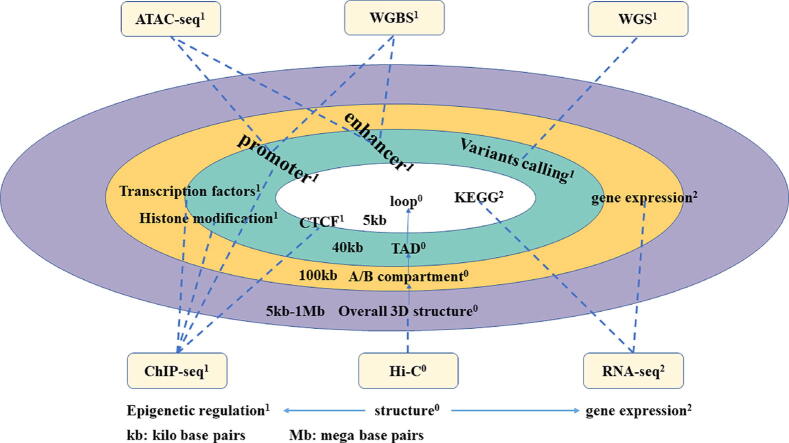
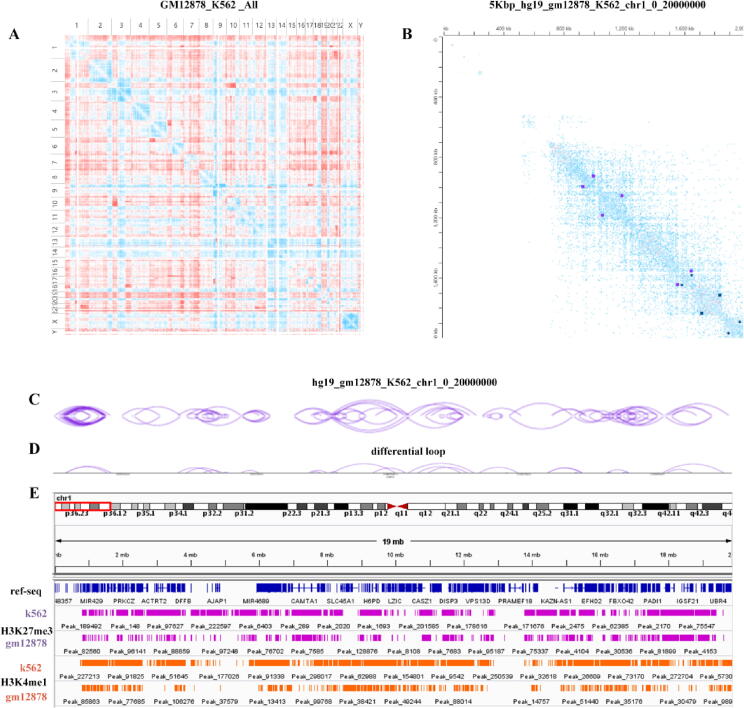
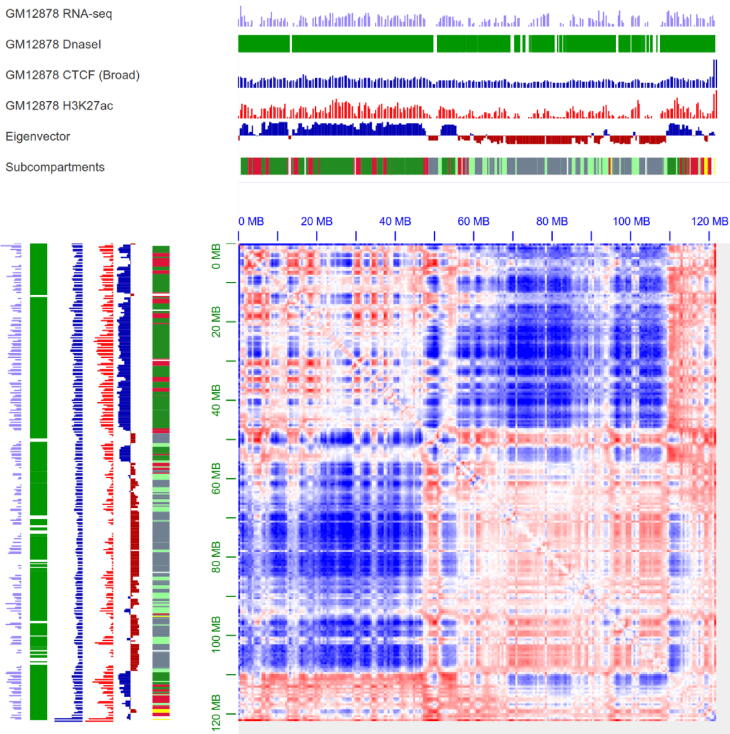
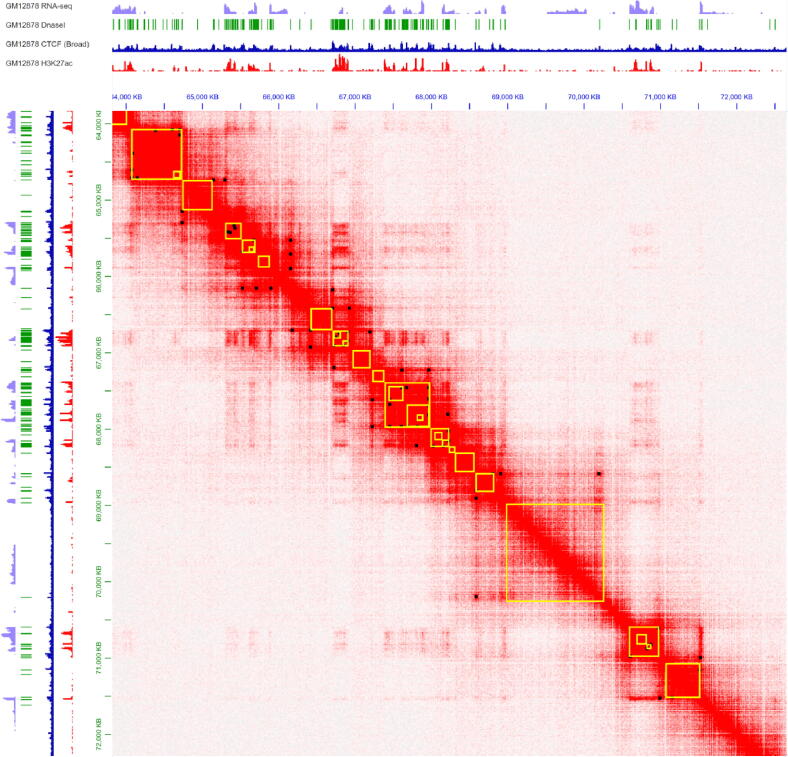
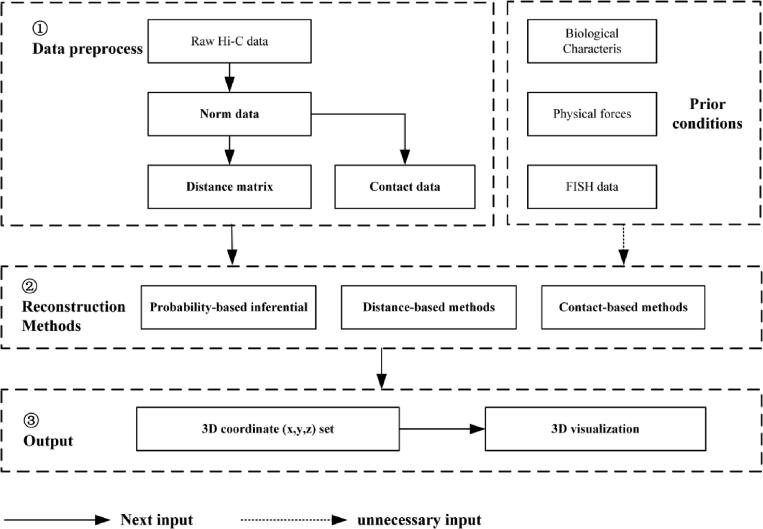
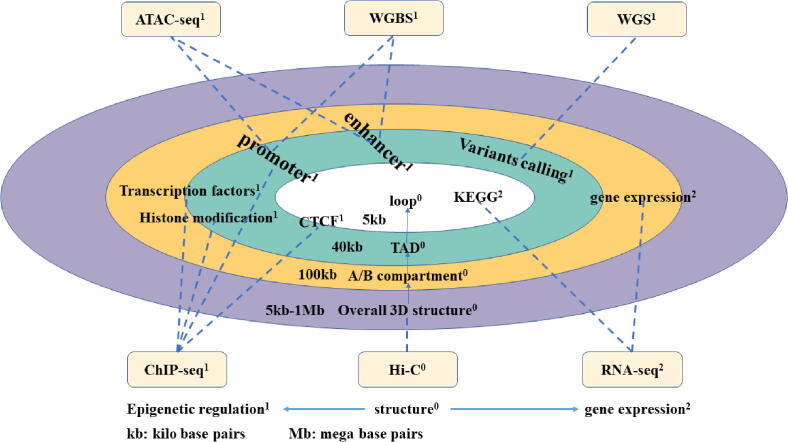
With the development of 3C (chromosome conformation capture) and its derivative technology Hi-C (High-throughput chromosome conformation capture) research, the study of the spatial structure of the genomic sequence in the nucleus helps researchers understand the functions of biological processes such as gene transcription, replication, repair, and regulation. In this paper, we first introduce the research background and purpose of Hi-C data visualization analysis. After that, we discuss the Hi-C data analysis methods from genome 3D structure, A/B compartment, TADs (topologically associated domain), and loop detection. We also discuss how to apply genome visualization technologies to the identification of chromosome feature structures. We continue with a review of correlation analysis differences among multi-omics data, and how to apply Hi-C and other omics data analysis into cancer and cell differentiation research. Finally, we summarize the various problems in joint analyses based on Hi-C and other multi-omics data. We believe this review can help researchers better understand the progress and applications of 3D genome technology.
随着3C(染色体构象捕获)及其衍生技术Hi-C(高通量染色体构象捕获)研究的发展,对细胞核中基因组序列空间结构的研究有助于研究人员理解基因转录、复制、修复和调控等生物学过程的功能。在本文中,我们首先介绍Hi-C数据可视化分析的研究背景和目的。之后,我们从基因组三维结构、A/B区室、拓扑相关结构域(TADs)和环检测等方面讨论Hi-C数据分析方法。我们还讨论了如何应用基因组可视化技术来识别染色体特征结构。我们接着回顾多组学数据之间的相关性分析差异,以及如何将Hi-C和其他组学数据分析应用于癌症和细胞分化研究。最后,我们总结了基于Hi-C和其他多组学数据的联合分析中的各种问题。我们相信这篇综述可以帮助研究人员更好地理解三维基因组技术的进展和应用。