Xu Lina, Yin Lianhong, Qi Yan, Tan Xuemei, Gao Meng, Peng Jinyong
College of Pharmacy, Dalian Medical University, Dalian 116044, China.
Key Laboratory for Basic and Applied Research on Pharmacodynamics Substances of Traditional Chinese Medicine of Liaoning Province, Dalian Medical University, Dalian 116044, China.
Acta Pharm Sin B. 2021 Oct;11(10):3150-3164. doi: 10.1016/j.apsb.2021.03.022. Epub 2021 Apr 6.
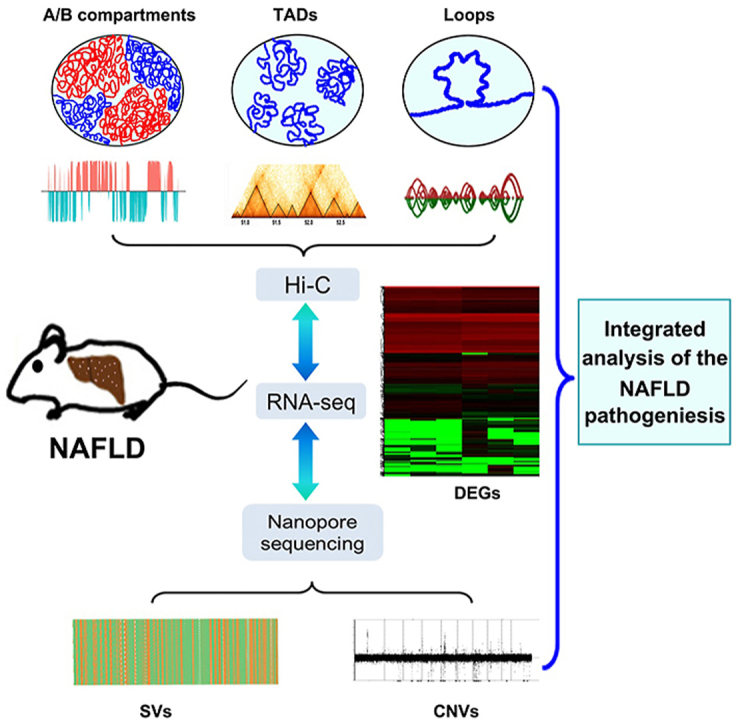
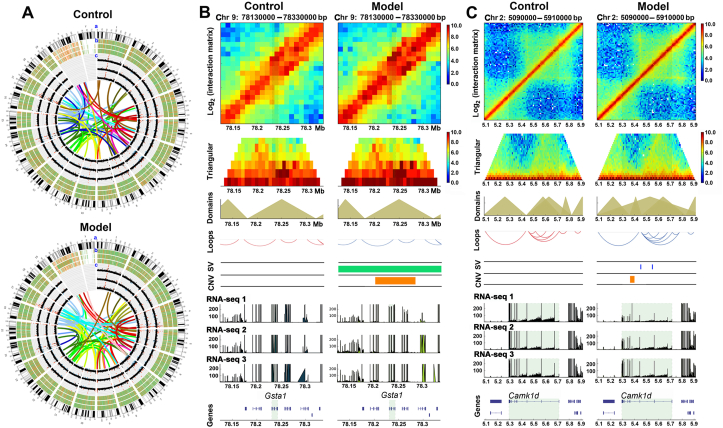
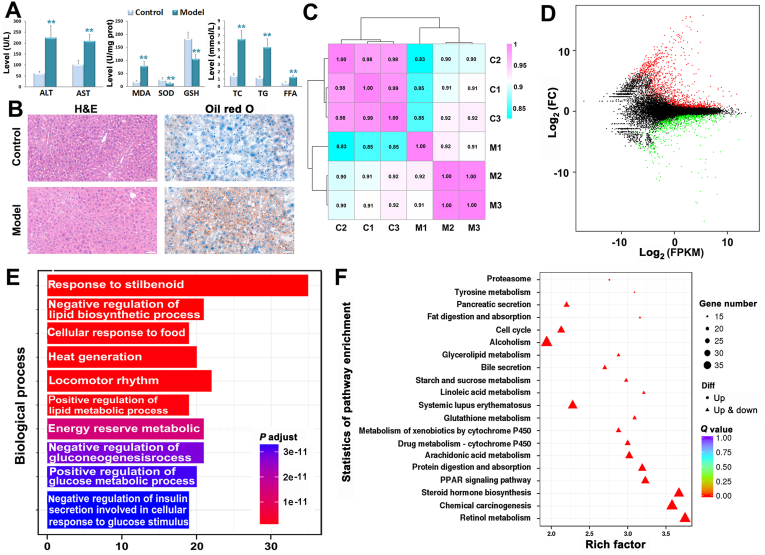
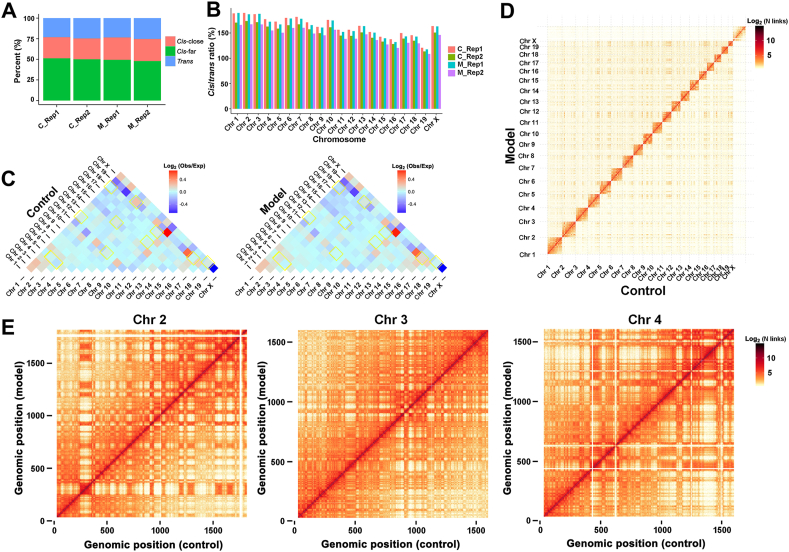
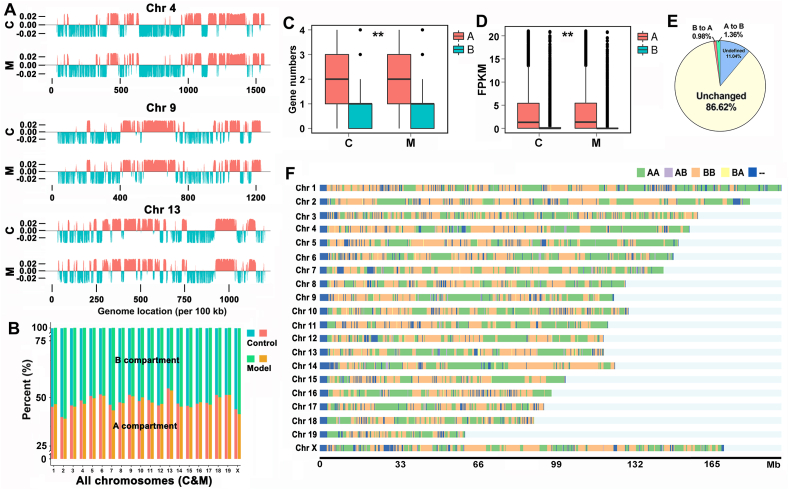
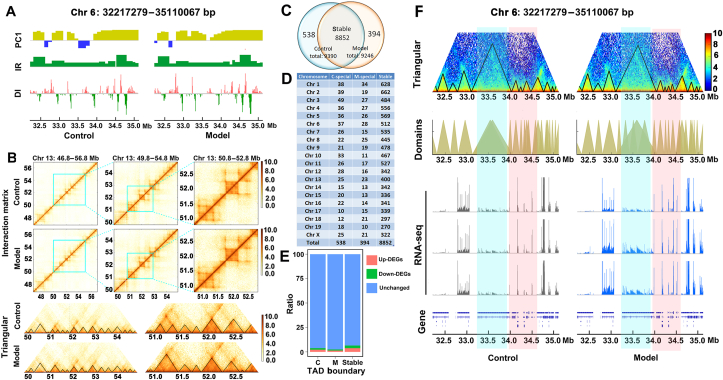
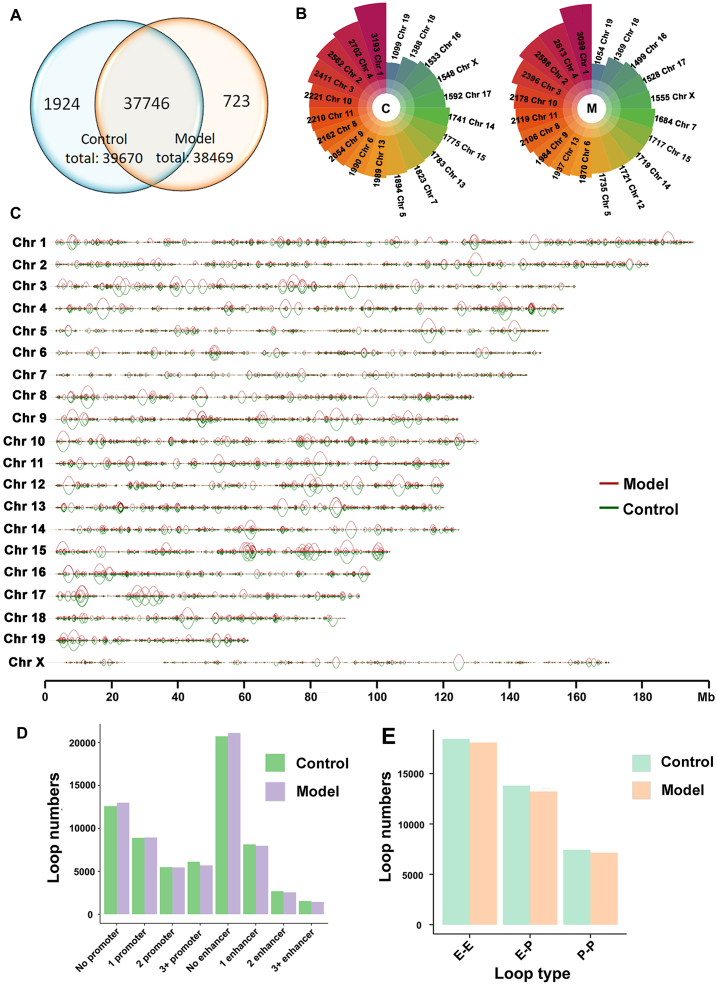
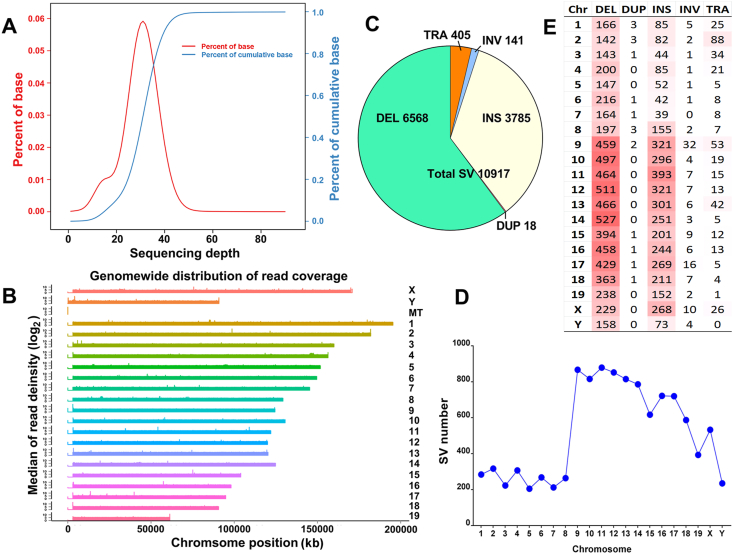
The three-dimensional (3D) conformation of chromatin is integral to the precise regulation of gene expression. The 3D genome and genomic variations in non-alcoholic fatty liver disease (NAFLD) are largely unknown, despite their key roles in cellular function and physiological processes. High-throughput chromosome conformation capture (Hi-C), Nanopore sequencing, and RNA-sequencing (RNA-seq) assays were performed on the liver of normal and NAFLD mice. A high-resolution 3D chromatin interaction map was generated to examine different 3D genome hierarchies including A/B compartments, topologically associated domains (TADs), and chromatin loops by Hi-C, and whole genome sequencing identifying structural variations (SVs) and copy number variations (CNVs) by Nanopore sequencing. We identified variations in thousands of regions across the genome with respect to 3D chromatin organization and genomic rearrangements, between normal and NAFLD mice, and revealed gene dysregulation frequently accompanied by these variations. Candidate target genes were identified in NAFLD, impacted by genetic rearrangements and spatial organization disruption. Our data provide a high-resolution 3D genome interaction resource for NAFLD investigations, revealed the relationship among genetic rearrangements, spatial organization disruption, and gene regulation, and identified candidate genes associated with these variations implicated in the pathogenesis of NAFLD. The newly findings offer insights into novel mechanisms of NAFLD pathogenesis and can provide a new conceptual framework for NAFLD therapy.
染色质的三维(3D)构象对于基因表达的精确调控至关重要。尽管三维基因组和非酒精性脂肪性肝病(NAFLD)中的基因组变异在细胞功能和生理过程中起着关键作用,但目前人们对其了解甚少。我们对正常小鼠和NAFLD小鼠的肝脏进行了高通量染色体构象捕获(Hi-C)、纳米孔测序和RNA测序(RNA-seq)分析。通过Hi-C生成了高分辨率的三维染色质相互作用图谱,以研究包括A/B区室、拓扑相关结构域(TADs)和染色质环在内的不同三维基因组层次结构,并通过纳米孔测序进行全基因组测序以识别结构变异(SVs)和拷贝数变异(CNVs)。我们在正常小鼠和NAFLD小鼠之间,鉴定出了全基因组中数千个区域在三维染色质组织和基因组重排方面的变异,并揭示了基因失调常常伴随着这些变异。在NAFLD中鉴定出了受基因重排和空间组织破坏影响的候选靶基因。我们的数据为NAFLD研究提供了高分辨率的三维基因组相互作用资源,揭示了基因重排、空间组织破坏和基因调控之间的关系,并鉴定出了与这些变异相关的候选基因,这些基因与NAFLD的发病机制有关。这些新发现为NAFLD发病机制的新机制提供了见解,并可为NAFLD治疗提供一个新的概念框架。