Department of Radiation Oncology, Nanfang Hospital, Southern Medical University, Guangzhou, China.
Information Management and Big Data Center, Nanfang Hospital, Southern Medical University, Guangzhou, China.
Oncoimmunology. 2021 Apr 26;10(1):1909296. doi: 10.1080/2162402X.2021.1909296.
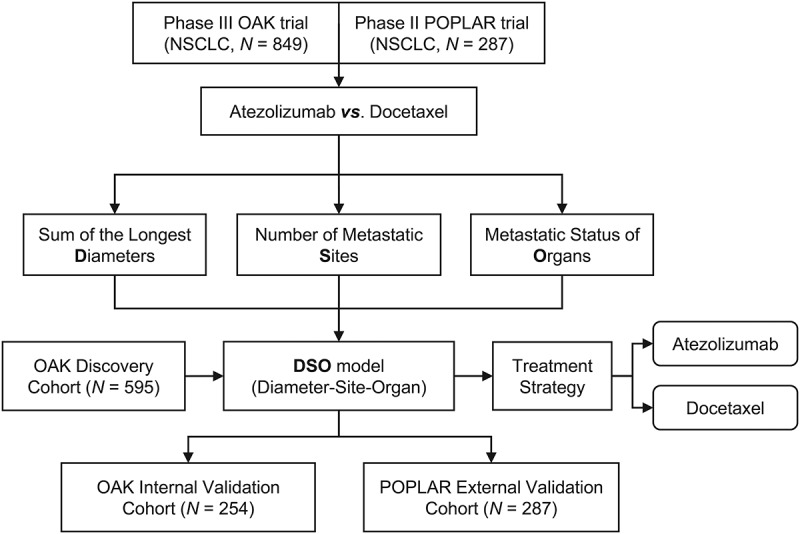
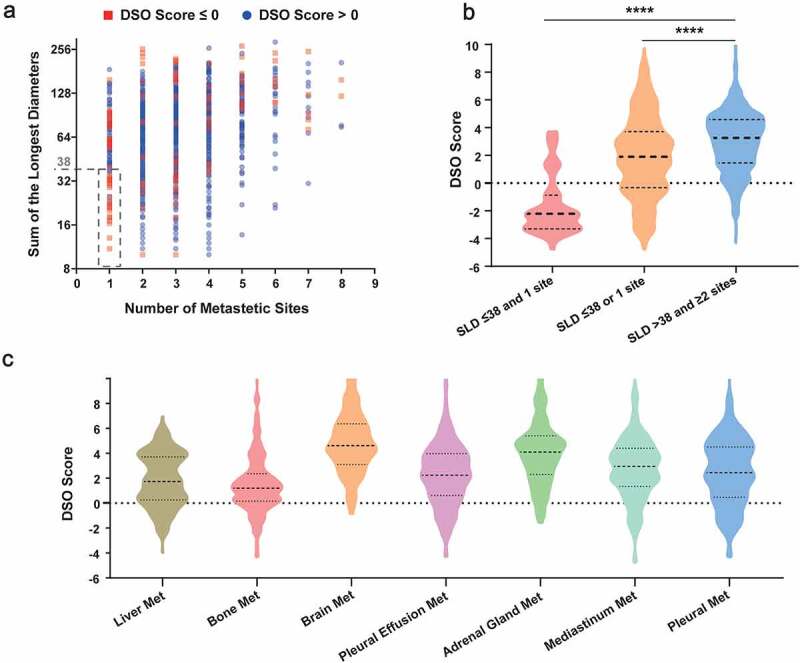
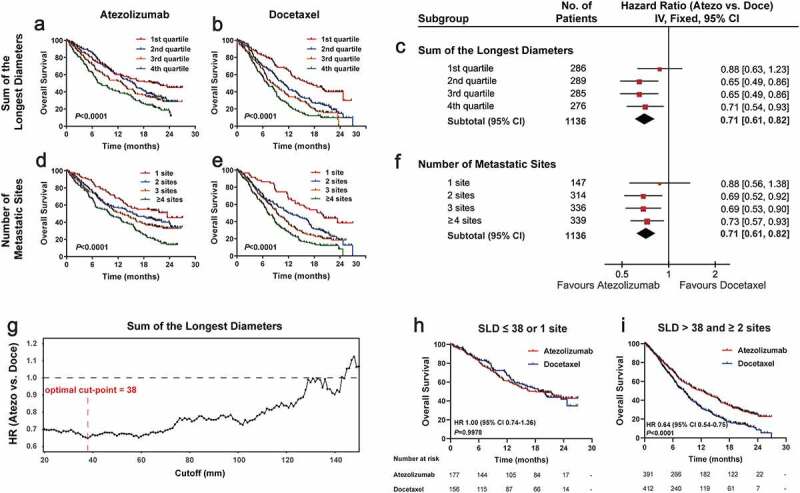
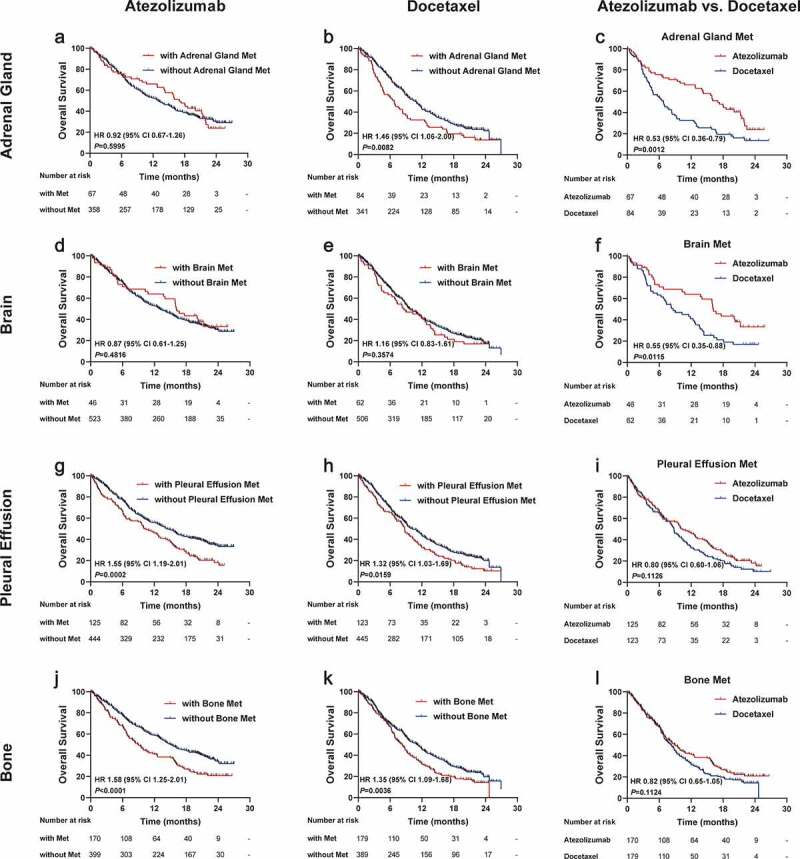
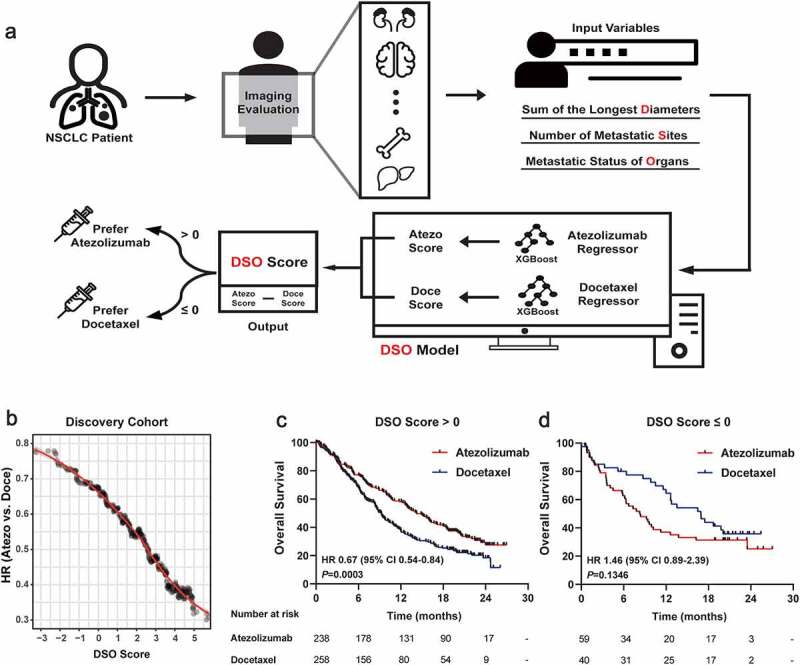
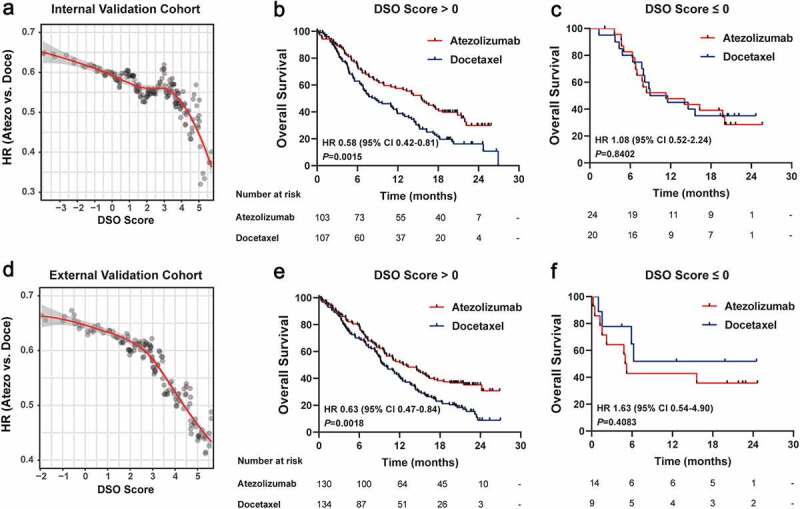
: Clinical benefits of immune-checkpoint blockade (ICB) versus standard chemotherapy have been established in unselected non-small cell lung cancer (NSCLC). However, the response to ICB therapy among patients is heterogeneous in clinical practice. : We retrospectively assessed the predicitive effect of the primary and metastatic lesion spectrum (baseline sum of the longest diameters [SLD], number of metastatic sites and specific organ metastases) on the efficacy of atezolizumab over docetaxel in OAK and POPLAR trial cohorts. A decision model, termed DSO (Diameter-Site-Organ), based on the spectrum was developed and validated for guiding ICB. : Higher SLD (>38 mm) and more metastatic sites (≥2) were characterized with pronounced overall survival (OS) benefits from atezolizumab versus docetaxel. Specifically, adrenal gland and brain metastases were identified as favorable predictors of atezolizumab treatment. The DSO model was developed in the discovery cohort to integrate the directive effect of the primary and metastatic lesion spectrum. Remarkably, a general pattern of enhanced efficacy of atezolizumab versus docetaxel was observed along with the increase of the DSO score. For patients with DSO score > 0, atezolizumab yielded a significantly prolonged OS than docetaxel, whereas OS was generally similar between two treatments in patients with DSO score ≤ 0. Equivalent findings were also seen in the internal and external validation cohorts. : The response to anti-PD-L1 therapy among patients varied with the primary and metastatic lesion spectrum. The DSO-based system might provide promising medication guidance for ICB treatment in NSCLC patients.
: 在未经选择的非小细胞肺癌(NSCLC)患者中,免疫检查点阻断(ICB)与标准化疗相比具有临床获益。然而,在临床实践中,患者对 ICB 治疗的反应存在异质性。 : 我们回顾性评估了原发性和转移性病变谱(基线最长直径总和[SLD]、转移性部位数量和特定器官转移)对 OAK 和 POPLAR 试验队列中阿特珠单抗对比多西他赛疗效的预测作用。基于该谱,我们开发并验证了一种称为 DSO(直径-部位-器官)的决策模型,用于指导 ICB。 : SLD(>38mm)较高和转移性部位(≥2)较多的患者,与多西他赛相比,阿特珠单抗的总体生存(OS)获益明显。具体而言,肾上腺和脑转移被确定为阿特珠单抗治疗的有利预测因素。DSO 模型是在发现队列中开发的,用于整合原发性和转移性病变谱的直接影响。值得注意的是,随着 DSO 评分的增加,观察到阿特珠单抗相对于多西他赛疗效增强的一般模式。对于 DSO 评分>0 的患者,阿特珠单抗的 OS 明显长于多西他赛,而对于 DSO 评分≤0 的患者,两种治疗方法的 OS 通常相似。内部和外部验证队列也观察到了类似的结果。 : 患者对抗 PD-L1 治疗的反应因原发性和转移性病变谱而异。基于 DSO 的系统可能为 NSCLC 患者的 ICB 治疗提供有前途的用药指导。