Jacobs Matthew, Benovoy Mitchel, Chang Lin-Ching, Corcoran David, Berry Colin, Arai Andrew E, Hsu Li-Yueh
National Heart, Lung, and Blood Institute, National Institutes of Health, Bethesda, MD 20892, USA.
Department of Electrical Engineering and Computer Science, The Catholic University of America, Washington, DC 20064, USA.
IEEE Access. 2021;9:52796-52811. doi: 10.1109/access.2021.3070320. Epub 2021 Apr 1.
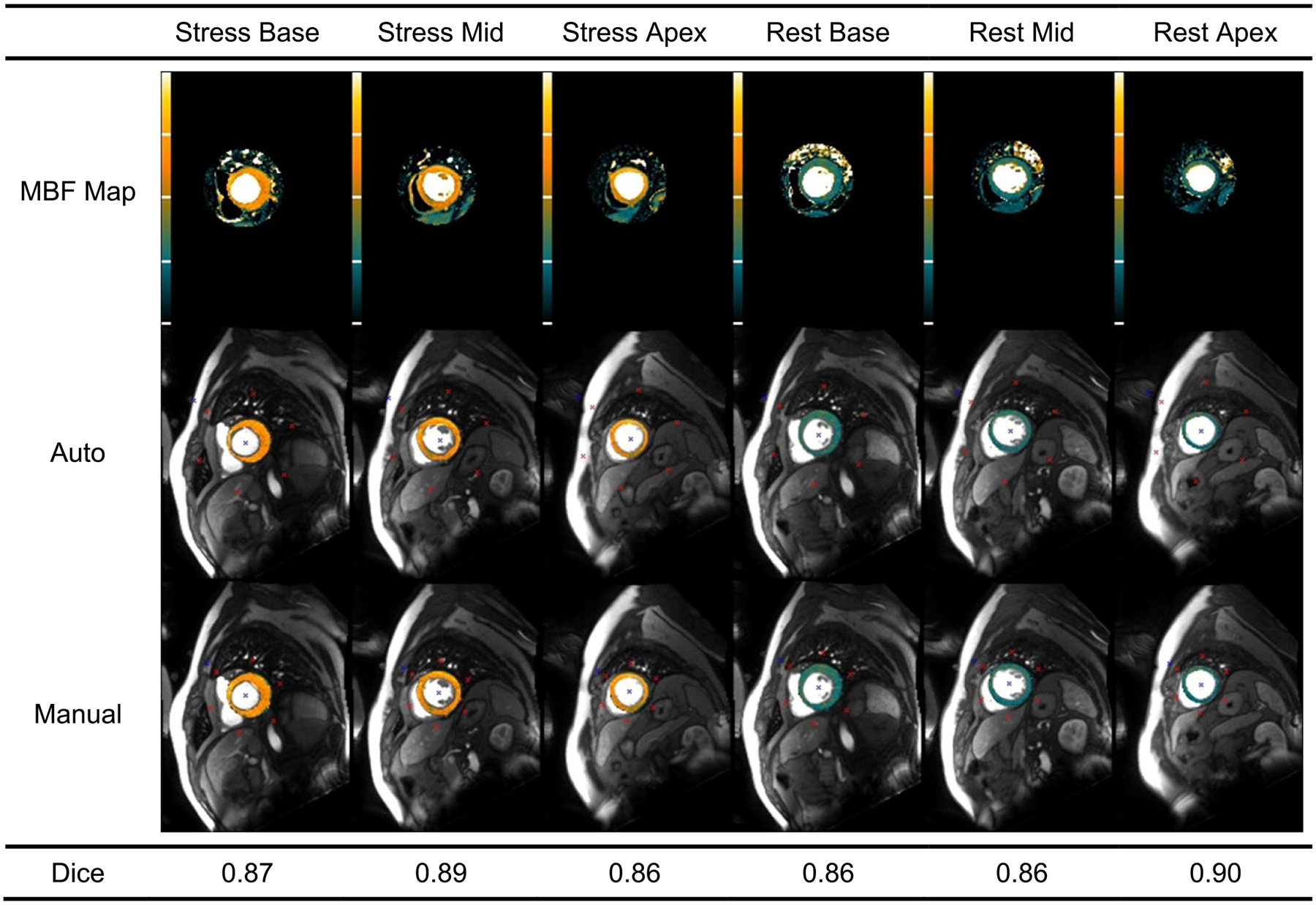
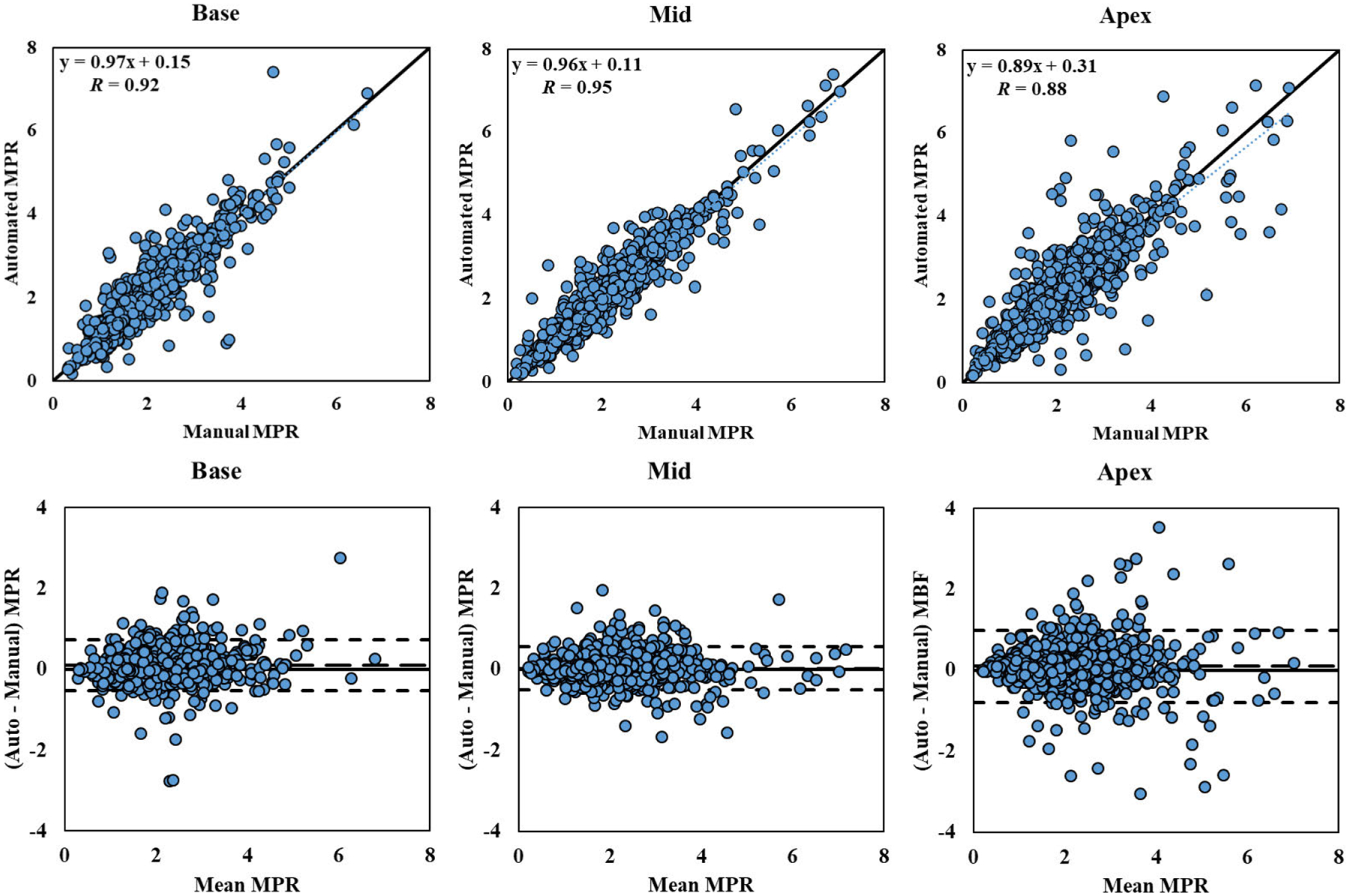
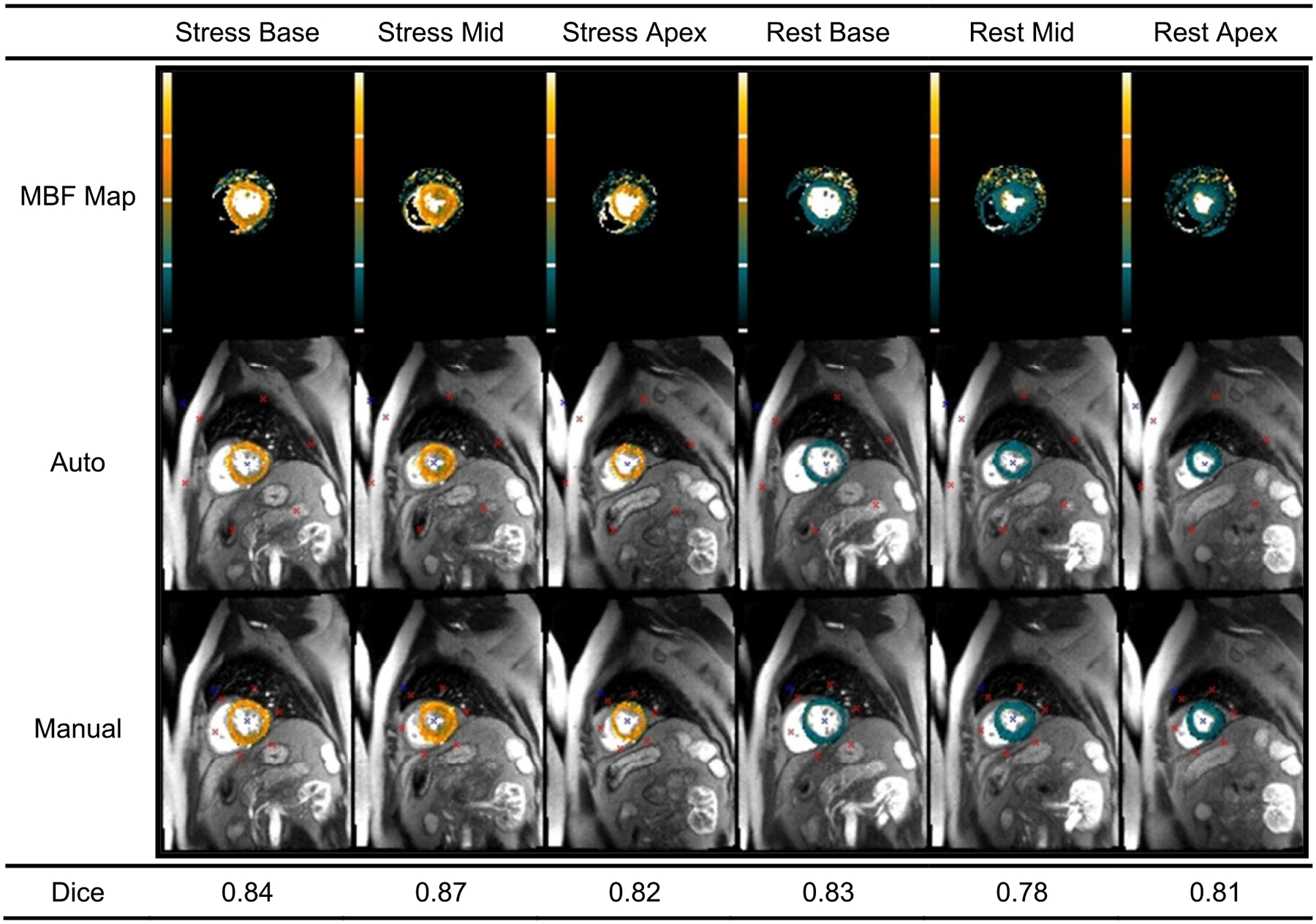
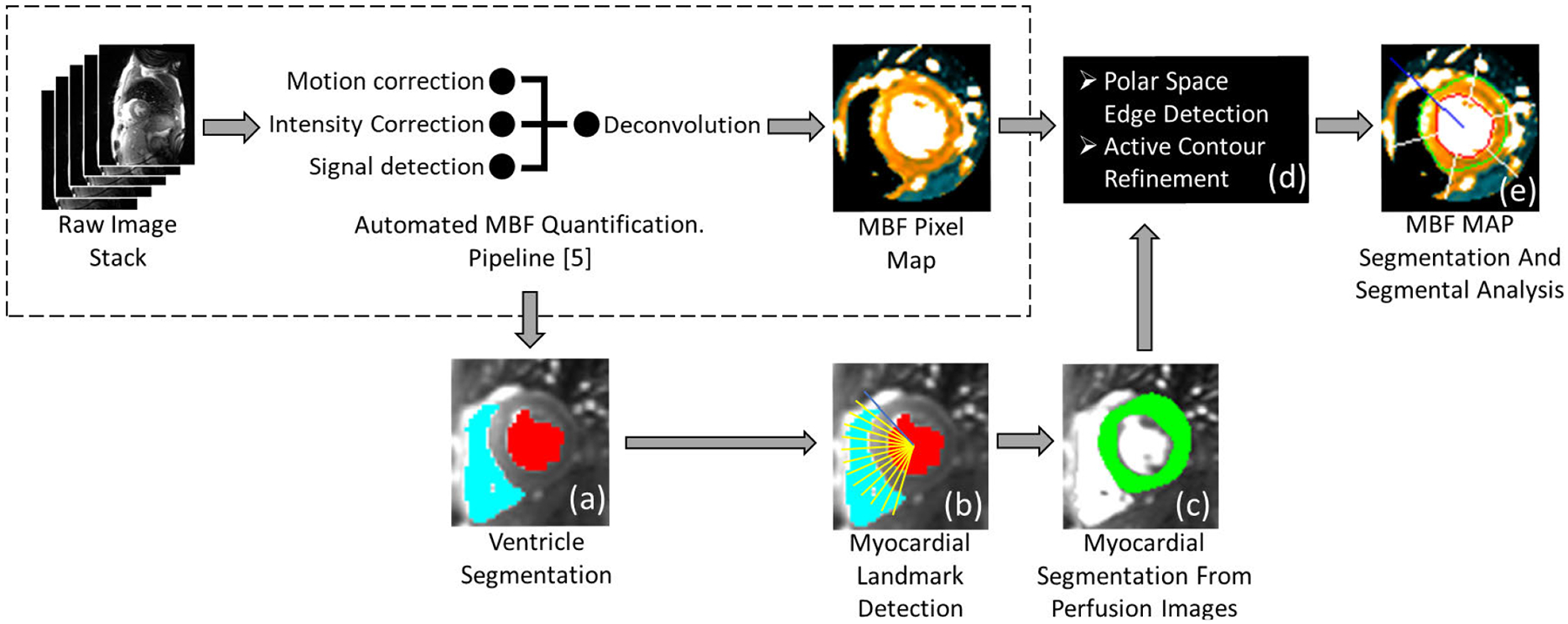
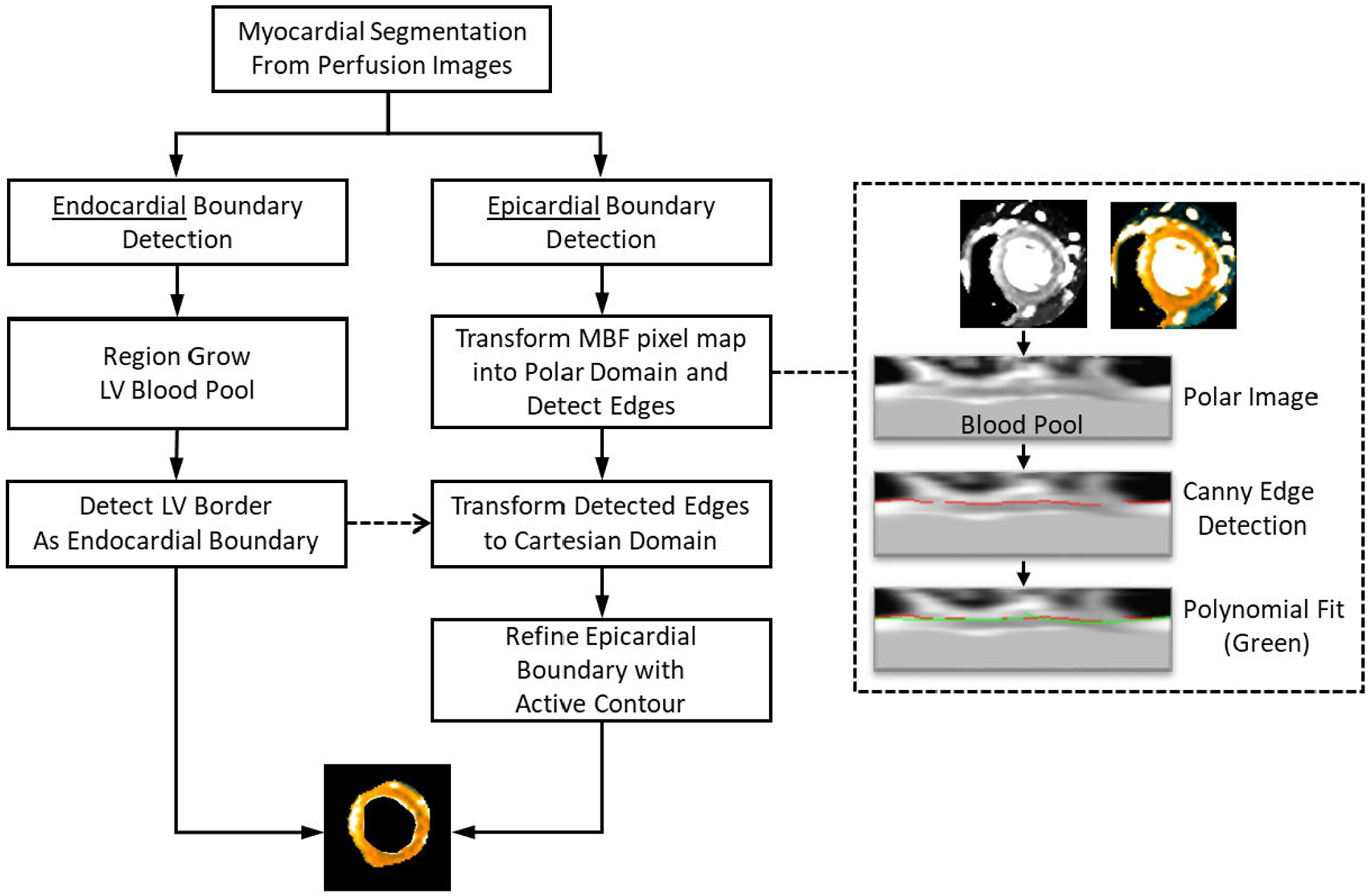
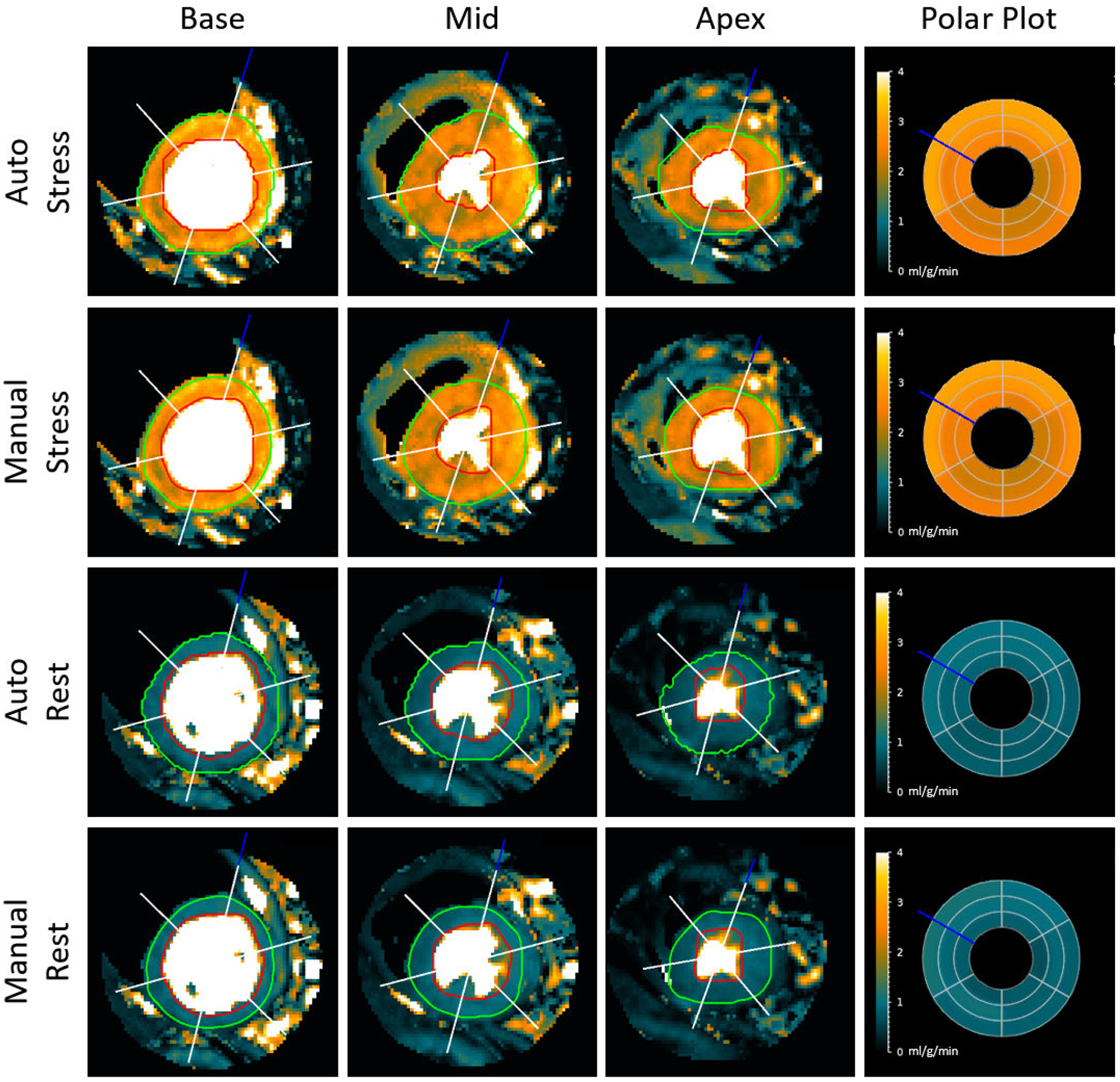
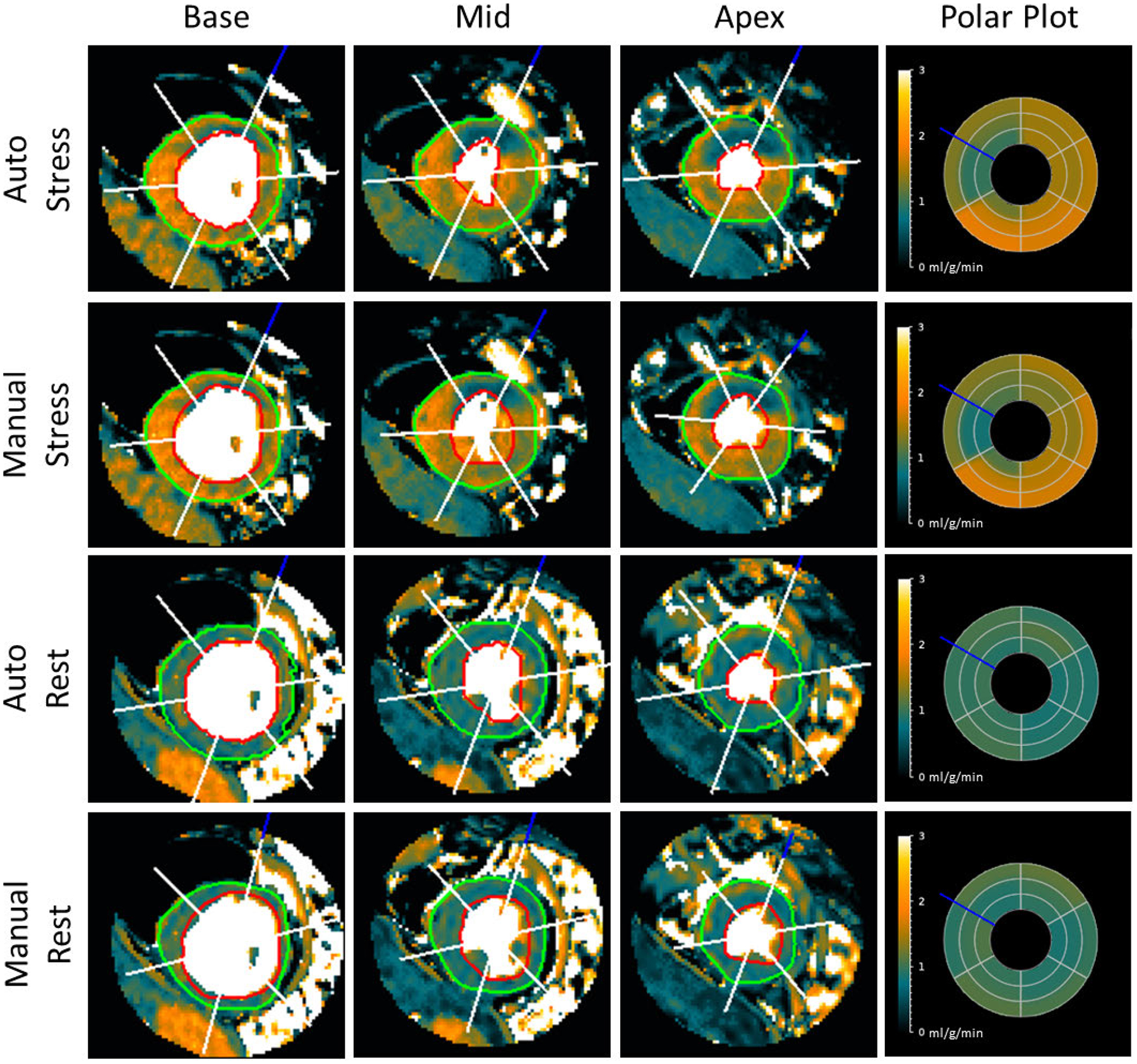
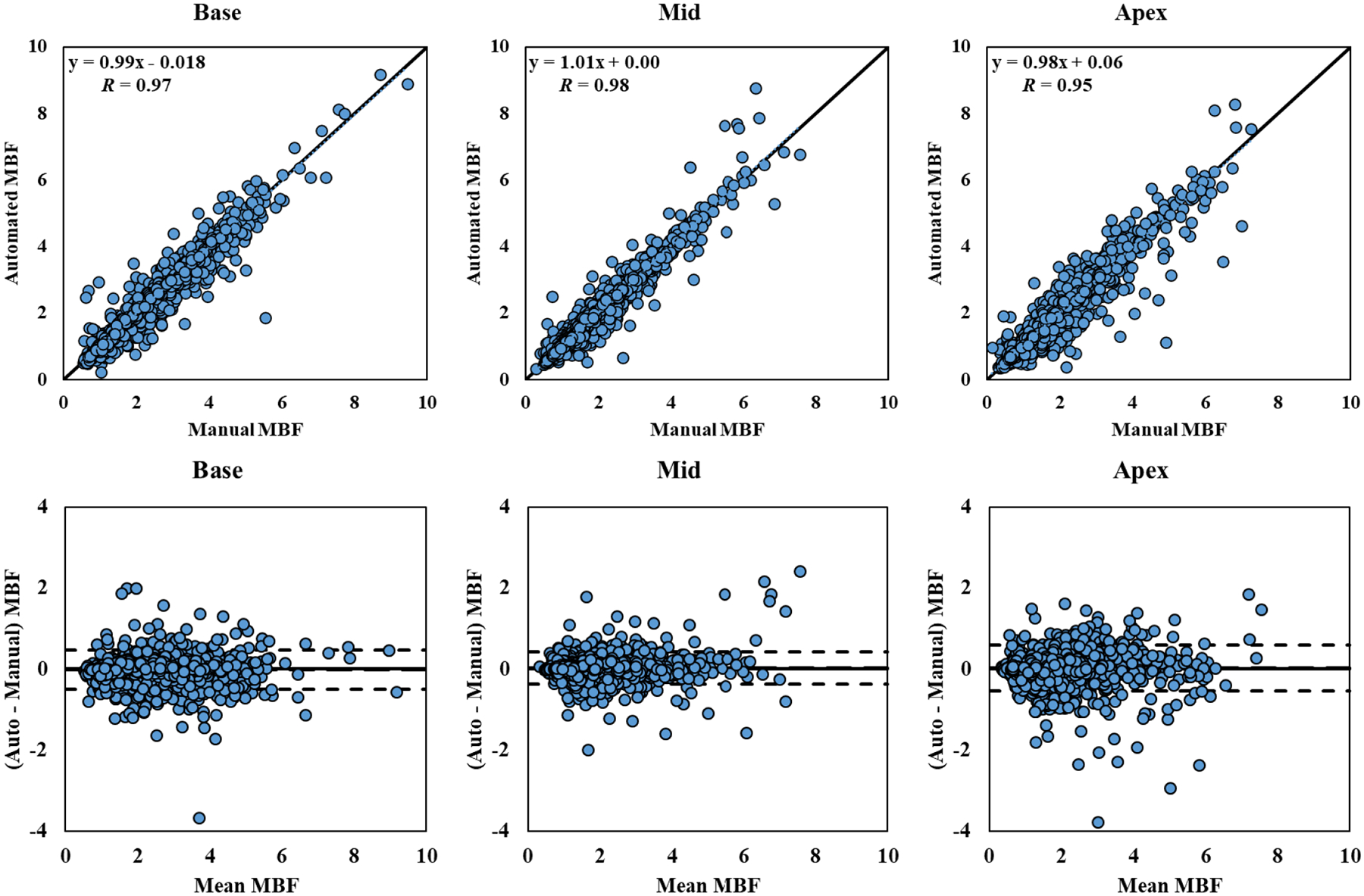
First pass gadolinium-enhanced cardiovascular magnetic resonance (CMR) perfusion imaging allows fully quantitative pixel-wise myocardial blood flow (MBF) assessment, with proven diagnostic value for coronary artery disease. Segmental analysis requires manual segmentation of the myocardium. This work presents a fully automatic method of segmenting the left ventricular myocardium from MBF pixel maps, validated on a retrospective dataset of 247 clinical CMR perfusion studies, each including rest and stress images of three slice locations, performed on a 1.5T scanner. Pixel-wise MBF maps were segmented using an automated pipeline including region growing, edge detection, principal component analysis, and active contours to segment the myocardium, detect key landmarks, and divide the myocardium into sectors appropriate for analysis. Automated segmentation results were compared against a manually defined reference standard using three quantitative metrics: Dice coefficient, Cohen Kappa and myocardial border distance. Sector-wise average MBF and myocardial perfusion reserve (MPR) were compared using Pearson's correlation coefficient and Bland-Altman Plots. The proposed method segmented stress and rest MBF maps of 243 studies automatically. Automated and manual myocardial segmentation had an average (± standard deviation) Dice coefficient of 0.86 ± 0.06, Cohen Kappa of 0.86 ± 0.06, and Euclidian distances of 1.47 ± 0.73 mm and 1.02 ± 0.51 mm for the epicardial and endocardial border, respectively. Automated and manual sector-wise MBF and MPR values correlated with Pearson's coefficient of 0.97 and 0.92, respectively, while Bland-Altman analysis showed bias of 0.01 and 0.07 ml/g/min. The validated method has been integrated with our fully automated MBF pixel mapping pipeline to aid quantitative assessment of myocardial perfusion CMR.
首次通过钆增强心血管磁共振(CMR)灌注成像可实现全定量逐像素心肌血流(MBF)评估,对冠状动脉疾病具有已证实的诊断价值。节段分析需要对心肌进行手动分割。这项工作提出了一种从MBF像素图中自动分割左心室心肌的方法,并在247例临床CMR灌注研究的回顾性数据集中进行了验证,每个数据集包括在1.5T扫描仪上对三个切片位置进行的静息和负荷图像。使用包括区域生长、边缘检测、主成分分析和活动轮廓的自动化流程对逐像素MBF图进行分割,以分割心肌、检测关键地标,并将心肌划分为适合分析的扇区。使用三个定量指标将自动分割结果与手动定义的参考标准进行比较:骰子系数、科恩卡帕系数和心肌边界距离。使用皮尔逊相关系数和布兰德-奥特曼图比较扇区平均MBF和心肌灌注储备(MPR)。所提出的方法自动分割了243项研究的负荷和静息MBF图。自动和手动心肌分割的平均(±标准差)骰子系数为0.86±0.06,科恩卡帕系数为0.86±0.06,心外膜和心内膜边界的欧几里得距离分别为1.47±0.73mm和1.02±0.51mm。自动和手动扇区MBF及MPR值的皮尔逊相关系数分别为0.97和0.92,而布兰德-奥特曼分析显示偏差分别为0.01和0.07ml/g/min。该经过验证的方法已与我们的全自动MBF像素映射流程集成,以辅助心肌灌注CMR的定量评估。