
利用动态模拟为荷兰人口层面设计生活方式项目以降低 2 型糖尿病风险的决策方法创新
An Innovative Approach for Decision-Making on Designing Lifestyle Programs to Reduce Type 2 Diabetes on Dutch Population Level Using Dynamic Simulations.
机构信息
Department of Microbiology and Systems Biology, Netherlands Organisation for Applied Scientific Research (TNO), Zeist, Netherlands.
Methodology Department, School of Management, Radboud University, Nijmegen, Netherlands.
出版信息
Front Public Health. 2021 Apr 29;9:652694. doi: 10.3389/fpubh.2021.652694. eCollection 2021.
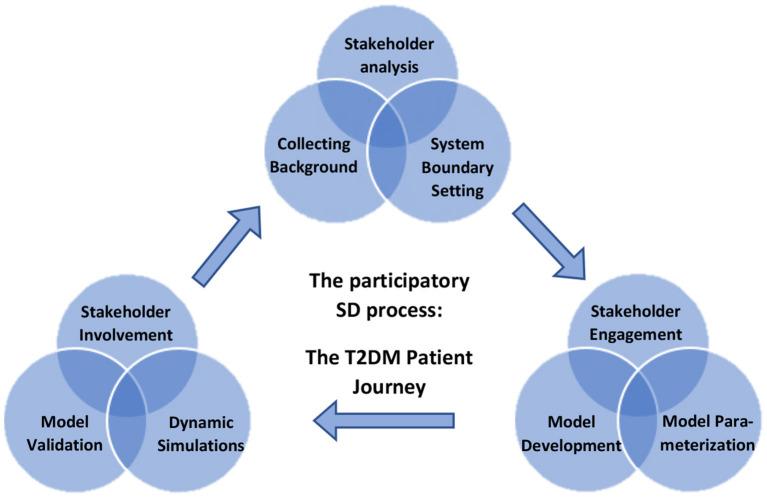
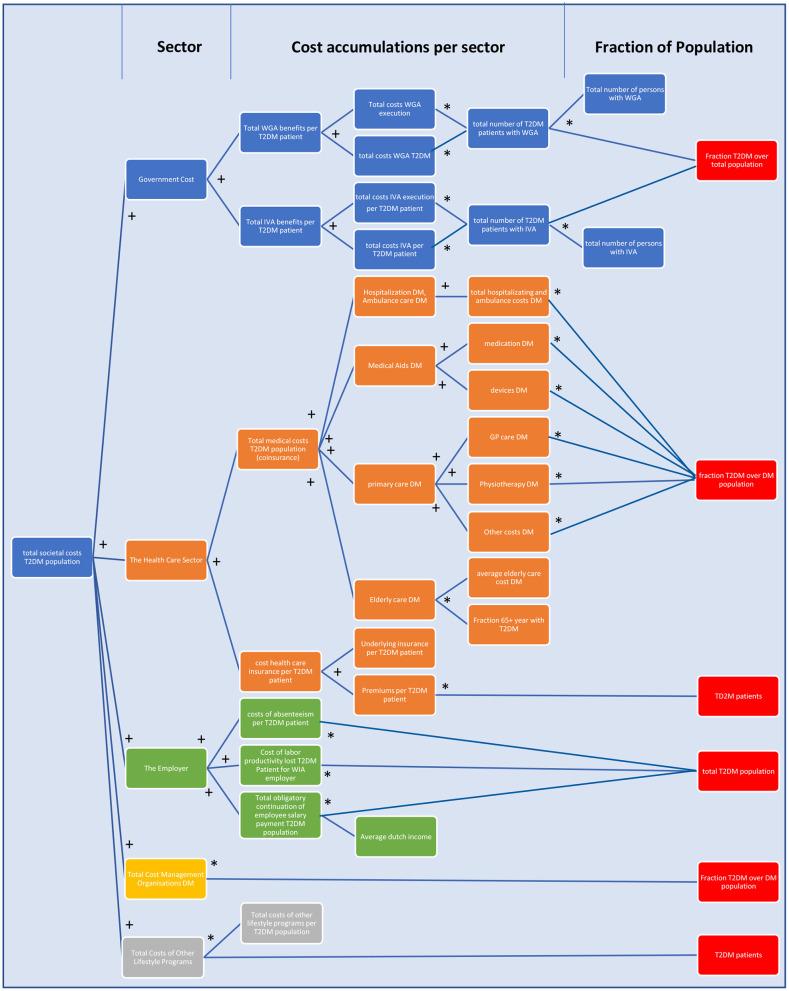
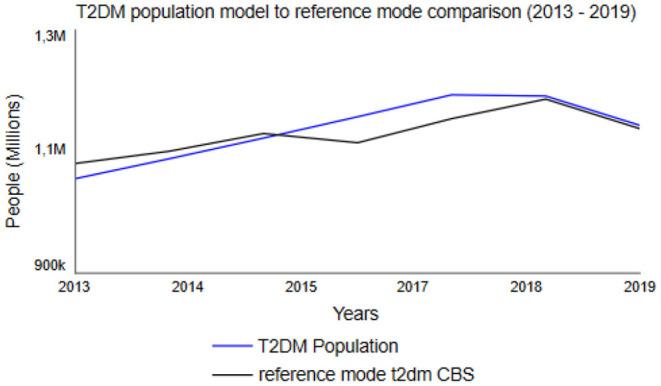
The number of individuals suffering from type 2 diabetes is dramatically increasing worldwide, resulting in an increasing burden on society and rising healthcare costs. With increasing evidence supporting lifestyle intervention programs to reduce type 2 diabetes, and the use of scenario simulations for policy support, there is an opportunity to improve population interventions based upon cost-benefit analysis of especially complex lifestyle intervention programs through dynamic simulations. In this article, we used the System Dynamics (SD) modeling methodology aiming to develop a simulation model for policy makers and health professionals to gain a clear understanding of the patient journey of type 2 diabetes mellitus and to assess the impact of lifestyle intervention programs on total cost for society associated with prevention and lifestyle treatment of pre-diabetes and type 2 diabetes in The Netherlands. System dynamics describes underlying structure in the form of causal relationships, stocks, flows, and delays to explore behavior and simulate scenarios, in order to prescribe intervention programs. The methodology has the opportunity to estimate and simulate the consequences of unforeseen interactions in order to prescribe intervention programs based on scenarios tested through "what-if" experiments. First, the extensive knowledge of diabetes, current available data on the type 2 diabetes population, lifestyle intervention programs, and associated cost in The Netherlands were captured in one simulation model. Next, the relationships between leverage points on the growth of type 2 diabetes population were based upon available data. Subsequently, the cost and benefits of future lifestyle intervention programs on reducing diabetes were simulated, identifying the need for an integrated adaptive design of lifestyle programs while collecting the appropriate data over time. The strengths and limitations of scenario simulations of complex lifestyle intervention programs to improve the (cost)effectiveness of these programs to reduce diabetes in a more sustainable way compared to usual care are discussed.
全球范围内,2 型糖尿病患者的数量正在急剧增加,这给社会带来了越来越大的负担,也导致医疗保健成本不断上升。越来越多的证据表明,生活方式干预计划可以降低 2 型糖尿病的发病率,情景模拟也可以为政策提供支持,因此,有机会通过动态模拟,根据成本效益分析,特别是对复杂的生活方式干预计划进行改进,以提高人群干预效果。在本文中,我们使用系统动力学(SD)建模方法,旨在为决策者和卫生专业人员开发一个模拟模型,以便清楚地了解 2 型糖尿病患者的就医历程,并评估生活方式干预计划对荷兰预防和生活方式治疗糖尿病前期和 2 型糖尿病相关总成本的影响。系统动力学以因果关系、存量、流量和时滞的形式描述基本结构,以探索行为并模拟情景,从而制定干预计划。该方法有机会估计和模拟不可预见的相互作用的后果,以便根据通过“假设”实验测试的情景制定干预计划。首先,我们将糖尿病的广泛知识、荷兰当前关于 2 型糖尿病患者的可用数据、生活方式干预计划以及相关成本纳入一个模拟模型中。其次,根据现有数据确定了 2 型糖尿病患者人数增长的杠杆点之间的关系。随后,模拟了未来生活方式干预计划在降低糖尿病发病率方面的成本和收益,确定了需要对生活方式计划进行集成自适应设计,同时随着时间的推移收集适当的数据。讨论了复杂生活方式干预计划情景模拟在提高这些计划(成本)效益以更可持续的方式降低糖尿病发病率方面的优势和局限性。



 Zotero 插件