• 文献检索
  • 文档翻译
  • 深度研究
  • 学术资讯
  • Suppr Zotero 插件Zotero 插件
  • 邀请有礼
  • 套餐&价格
  • 历史记录
应用&插件
Suppr Zotero 插件Zotero 插件浏览器插件Mac 客户端Windows 客户端微信小程序
定价
高级版会员购买积分包购买API积分包
服务
文献检索文档翻译深度研究API 文档MCP 服务
关于我们
关于 Suppr公司介绍联系我们用户协议隐私条款
关注我们

Suppr 超能文献

核心技术专利:CN118964589B侵权必究
粤ICP备2023148730 号-1Suppr @ 2026

文献检索

告别复杂PubMed语法,用中文像聊天一样搜索,搜遍4000万医学文献。AI智能推荐,让科研检索更轻松。

立即免费搜索

文件翻译

保留排版,准确专业,支持PDF/Word/PPT等文件格式,支持 12+语言互译。

免费翻译文档

深度研究

AI帮你快速写综述,25分钟生成高质量综述,智能提取关键信息,辅助科研写作。

立即免费体验

南亚生物信息学教育的现状:过去与现在。

Status of Bioinformatics Education in South Asia: Past and Present.

机构信息

Institute of Biochemistry and Biotechnology, University of Veterinary and Animal Sciences, Lahore 54000, Pakistan.

Department of Statistics and Computer Science, University of Veterinary and Animal Sciences, Lahore 54000, Pakistan.

出版信息

Biomed Res Int. 2021 Apr 26;2021:5568262. doi: 10.1155/2021/5568262. eCollection 2021.

DOI:10.1155/2021/5568262
PMID:33997009
原文链接:https://pmc.ncbi.nlm.nih.gov/articles/PMC8096557/
Abstract

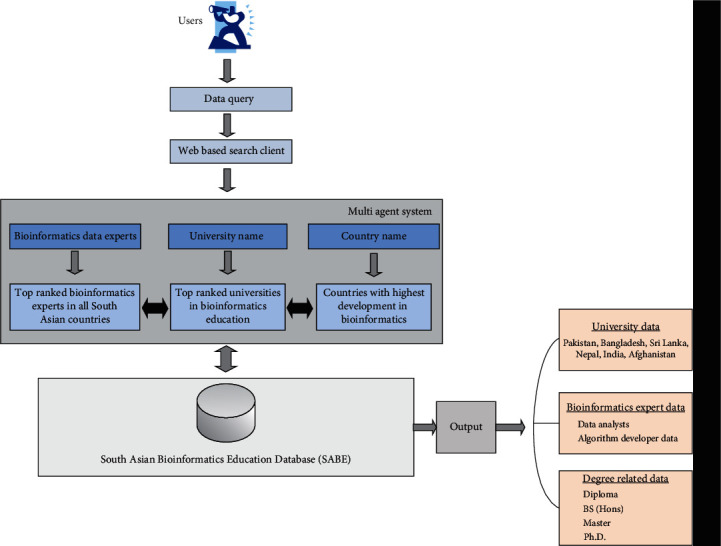
Bioinformatics education has been a hot topic in South Asia, and the interest in this education peaks with the start of the 21 century. The governments of South Asian countries had a systematic effort for bioinformatics. They developed the infrastructures to provide maximum facility to the scientific community to gain maximum output in this field. This article renders bioinformatics, measures, and its importance of implementation in South Asia with proper ways of improving bioinformatics education flaws. It also addresses the problems faced in South Asia and proposes some recommendations regarding bioinformatics education. The information regarding bioinformatics education and institutes was collected from different existing research papers, databases, and surveys. The information was then confirmed by visiting each institution's website, while problems and solutions displayed in the article are mostly in line with South Asian bioinformatics conferences and institutions' objectives. Among South Asian countries, India and Pakistan have developed infrastructure and education regarding bioinformatics rapidly as compared to other countries, whereas Bangladesh, Sri Lanka, and Nepal are still in a progressing phase in this field. To advance in a different sector, the bioinformatics industry has to be revolutionized, and it will contribute to strengthening the pharmaceutical, agricultural, and molecular sectors in South Asia. To advance in bioinformatics, universities' infrastructure needs to be on a par with the current international standards, which will produce well-trained professionals with skills in multiple fields like biotechnology, mathematics, statistics, and computer science. The bioinformatics industry has revolutionized and strengthened the pharmaceutical, agricultural, and molecular sectors in South Asia, and it will serve as the standard of education increases in the South Asian countries. A framework for developing a centralized database is suggested after the literature review to collect and store the information on the current status of South Asian bioinformatics education. This will be named as the South Asian Bioinformatics Education Database (SABE). This will provide comprehensive information regarding the bioinformatics in South Asian countries by the country name, the experts of this field, and the university name to explore the top-ranked outputs relevant to queries.

摘要

生物信息学教育一直是南亚的热门话题,对这种教育的兴趣在 21 世纪初达到了顶峰。南亚国家的政府为此进行了系统的努力。他们建立了基础设施,为科学界提供最大的便利,以在这一领域取得最大的成果。本文通过适当的方法改进生物信息学教育的缺陷,展示了南亚的生物信息学、措施及其实施的重要性。它还解决了南亚面临的问题,并就生物信息学教育提出了一些建议。生物信息学教育和机构的信息是从不同的现有研究论文、数据库和调查中收集的。然后,通过访问每个机构的网站来确认这些信息,而文章中显示的问题和解决方案主要与南亚生物信息学会议和机构的目标一致。在南亚国家中,印度和巴基斯坦在生物信息学基础设施和教育方面的发展速度比其他国家快,而孟加拉国、斯里兰卡和尼泊尔在这一领域仍处于发展阶段。要在不同的领域取得进展,生物信息学产业必须进行革命,这将有助于加强南亚的制药、农业和分子领域。为了在生物信息学方面取得进展,大学的基础设施需要与当前的国际标准相媲美,这将培养出具有生物技术、数学、统计学和计算机科学等多个领域技能的训练有素的专业人员。生物信息学产业已经使南亚的制药、农业和分子领域发生了革命性的变化,并将随着南亚国家教育标准的提高而继续发挥作用。在文献综述之后,建议建立一个集中式数据库框架,以收集和存储关于南亚生物信息学教育现状的信息,这个数据库将被命名为“南亚生物信息学教育数据库(SABE)”。它将按国家名称、该领域的专家和大学名称提供有关南亚国家生物信息学的综合信息,以探索与查询相关的顶级成果。
https://cdn.ncbi.nlm.nih.gov/pmc/blobs/a666/8096557/14e1f59521ef/BMRI2021-5568262.001.jpg

相似文献

1
Status of Bioinformatics Education in South Asia: Past and Present.南亚生物信息学教育的现状:过去与现在。
Biomed Res Int. 2021 Apr 26;2021:5568262. doi: 10.1155/2021/5568262. eCollection 2021.
2
South Asian co-operation in population education. Materials jointly developed for common use by South Asian population education programmes.南亚人口教育合作。南亚人口教育项目共同开发以供通用的材料。
Popul Educ Asia Pac Newsl Forum. 1992(36):8-9.
3
Interview. Ms. Shahid Azfar: Team Leader, UNFPA Country Support Team (CST) for South and West Asia, Kathmandu, Nepal.采访。沙希德·阿兹法尔女士:联合国人口基金南亚和西亚国家支助小组(国家支助小组)组长,尼泊尔加德满都。
Asia Pac POPIN Bull. 1993 Jun;5(2):9-10.
4
Emigration dynamics in South Asia, IOM / UNFPA workshop, 2-3 September 1996, IOM headquarters, Geneva, Switzerland.南亚的移民动态,国际移民组织/联合国人口基金研讨会,1996年9月2日至3日,瑞士日内瓦国际移民组织总部
Int Migr. 1996;34(4):627-37. doi: 10.1111/j.1468-2435.1996.tb00548.x.
5
Bioinformatics education in India.印度的生物信息学教育。
Brief Bioinform. 2010 Nov;11(6):616-25. doi: 10.1093/bib/bbq027. Epub 2010 Aug 12.
6
South Asian co-operation in population programmes.南亚人口计划合作。
Popul Manag. 1989 Dec;3(2):6-13.
7
Liberalising trade in health services: constraints and prospects for South Asian countries.卫生服务贸易自由化:南亚国家面临的制约因素与前景
Int J Health Plann Manage. 2015 Jan-Mar;30(1):57-70. doi: 10.1002/hpm.2205. Epub 2013 Jul 13.
8
Bibliometric analysis of endocrinology, diabetes and metabolism research in South Asia from (2012-2021): Comparison with five developed countries.南亚内分泌学、糖尿病和代谢研究的文献计量学分析(2012-2021):与五个发达国家的比较。
Diabetes Metab Syndr. 2023 Apr;17(4):102760. doi: 10.1016/j.dsx.2023.102760. Epub 2023 Apr 9.
9
Health and socioeconomic resource provision for older people in South Asian countries: Bangladesh, India, Nepal, Pakistan and Sri Lanka evidence from NEESAMA.南亚国家老年人的健康和社会经济资源供给:来自南亚老年人健康和老龄化研究(NEESAMA)的孟加拉国、印度、尼泊尔、巴基斯坦和斯里兰卡的证据。
Glob Health Action. 2023 Dec 31;16(1):2110198. doi: 10.1080/16549716.2022.2110198.
10
Current food and nutrition situation in south Asian and south-east Asian countries.南亚和东南亚国家当前的食品与营养状况。
Biomed Environ Sci. 1996 Sep;9(2-3):102-16.

引用本文的文献

1
Retracted: Status of Bioinformatics Education in South Asia: Past and Present.撤回:南亚生物信息学教育的现状:过去与现在。
Biomed Res Int. 2024 Mar 20;2024:9842042. doi: 10.1155/2024/9842042. eCollection 2024.
2
Integrating computational skills in undergraduate Microbiology curricula in developing countries.在发展中国家的本科微生物学课程中融入计算技能。
Biol Methods Protoc. 2023 Jun 6;8(1):bpad008. doi: 10.1093/biomethods/bpad008. eCollection 2023.
3
Expression analysis of human glioma susceptibility gene and in human glioma and its clinical significance based on bioinformatics.

本文引用的文献

1
Experimental and bioinformatics considerations in cancer application of single cell genomics.单细胞基因组学在癌症应用中的实验与生物信息学考量
Comput Struct Biotechnol J. 2020 Dec 23;19:343-354. doi: 10.1016/j.csbj.2020.12.021. eCollection 2021.
2
Genomics and bioinformatics capacity in Africa: no continent is left behind.非洲的基因组学和生物信息学能力:没有一个大陆被落下。
Genome. 2021 May;64(5):503-513. doi: 10.1139/gen-2020-0013. Epub 2021 Jan 12.
3
Bioinformatics approaches for deciphering the epitranscriptome: Recent progress and emerging topics.
基于生物信息学的人类胶质瘤易感基因在人胶质瘤中的表达分析及其临床意义
Ann Transl Med. 2023 Jan 31;11(2):53. doi: 10.21037/atm-22-5646.
4
The potential mechanisms of neuroblastoma in children based on bioinformatics big data.基于生物信息学大数据的儿童神经母细胞瘤潜在机制
Transl Pediatr. 2022 Dec;11(12):1908-1919. doi: 10.21037/tp-22-504.
5
Bioinformatics analysis of the potential regulatory mechanisms of renal fibrosis and the screening and identification of factors related to human renal fibrosis.肾纤维化潜在调控机制的生物信息学分析及人类肾纤维化相关因子的筛选与鉴定
Transl Androl Urol. 2022 Jun;11(6):859-866. doi: 10.21037/tau-22-366.
6
Epi-Gene: An R-Package for Easy Pan-Genome Analysis.Epi-Gene:一个用于简便泛基因组分析的 R 包。
Biomed Res Int. 2021 Sep 20;2021:5585586. doi: 10.1155/2021/5585586. eCollection 2021.
用于破译表观转录组的生物信息学方法:最新进展与新兴主题。
Comput Struct Biotechnol J. 2020 Jun 13;18:1587-1604. doi: 10.1016/j.csbj.2020.06.010. eCollection 2020.
4
Bioinformatics and Computational Tools for Next-Generation Sequencing Analysis in Clinical Genetics.临床遗传学中用于下一代测序分析的生物信息学和计算工具
J Clin Med. 2020 Jan 3;9(1):132. doi: 10.3390/jcm9010132.
5
The development and application of bioinformatics core competencies to improve bioinformatics training and education.生物信息学核心能力的发展与应用,以提高生物信息学培训和教育。
PLoS Comput Biol. 2018 Feb 1;14(2):e1005772. doi: 10.1371/journal.pcbi.1005772. eCollection 2018 Feb.
6
Bioinformatics on a national scale: an example from Switzerland.国家规模的生物信息学:来自瑞士的一个范例。
Brief Bioinform. 2019 Mar 22;20(2):361-369. doi: 10.1093/bib/bbx073.
7
Bioinformatics in the Netherlands: the value of a nationwide community.荷兰的生物信息学:全国性社区的价值。
Brief Bioinform. 2019 Mar 22;20(2):540-550. doi: 10.1093/bib/bbx087.
8
A review of bioinformatic pipeline frameworks.生物信息学流程框架综述。
Brief Bioinform. 2017 May 1;18(3):530-536. doi: 10.1093/bib/bbw020.
9
Bioinformatics in Africa: The Rise of Ghana?非洲的生物信息学:加纳的崛起?
PLoS Comput Biol. 2015 Sep 17;11(9):e1004308. doi: 10.1371/journal.pcbi.1004308. eCollection 2015 Sep.
10
A survey of scholarly literature describing the field of bioinformatics education and bioinformatics educational research.一项关于描述生物信息学教育领域和生物信息学教育研究的学术文献调查。
CBE Life Sci Educ. 2014 Winter;13(4):607-23. doi: 10.1187/cbe.13-10-0193.