Ozawa Fumisato, Nagata Shogo, Oda Haruka, Yabe Shigeharu G, Okochi Hitoshi, Takeuchi Shoji
Institute of Industrial Science, The University of Tokyo, 4-6-1 Komaba, Meguro-ku, Tokyo 153-8505, Japan.
Graduate School of Information Science and Technology, The University of Tokyo, 7-3-1 Hongo, Bunkyo-ku, Tokyo 113-8656, Japan.
iScience. 2021 Apr 1;24(4):102309. doi: 10.1016/j.isci.2021.102309. eCollection 2021 Apr 23.
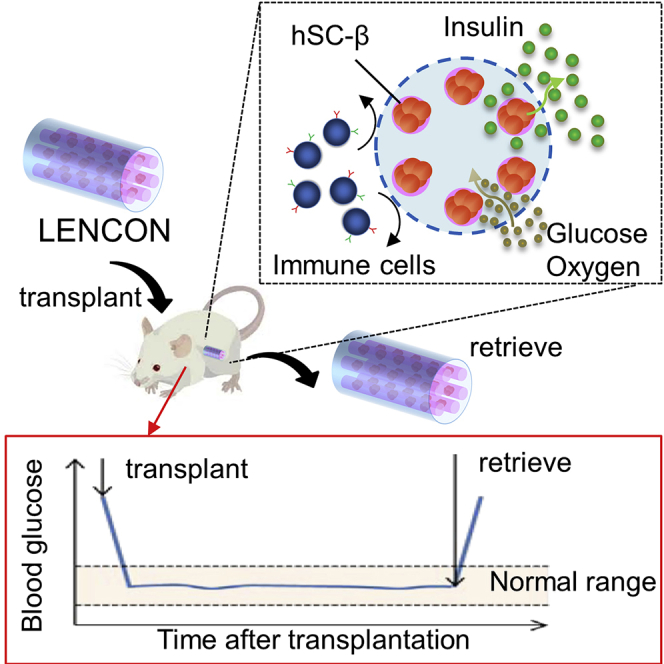
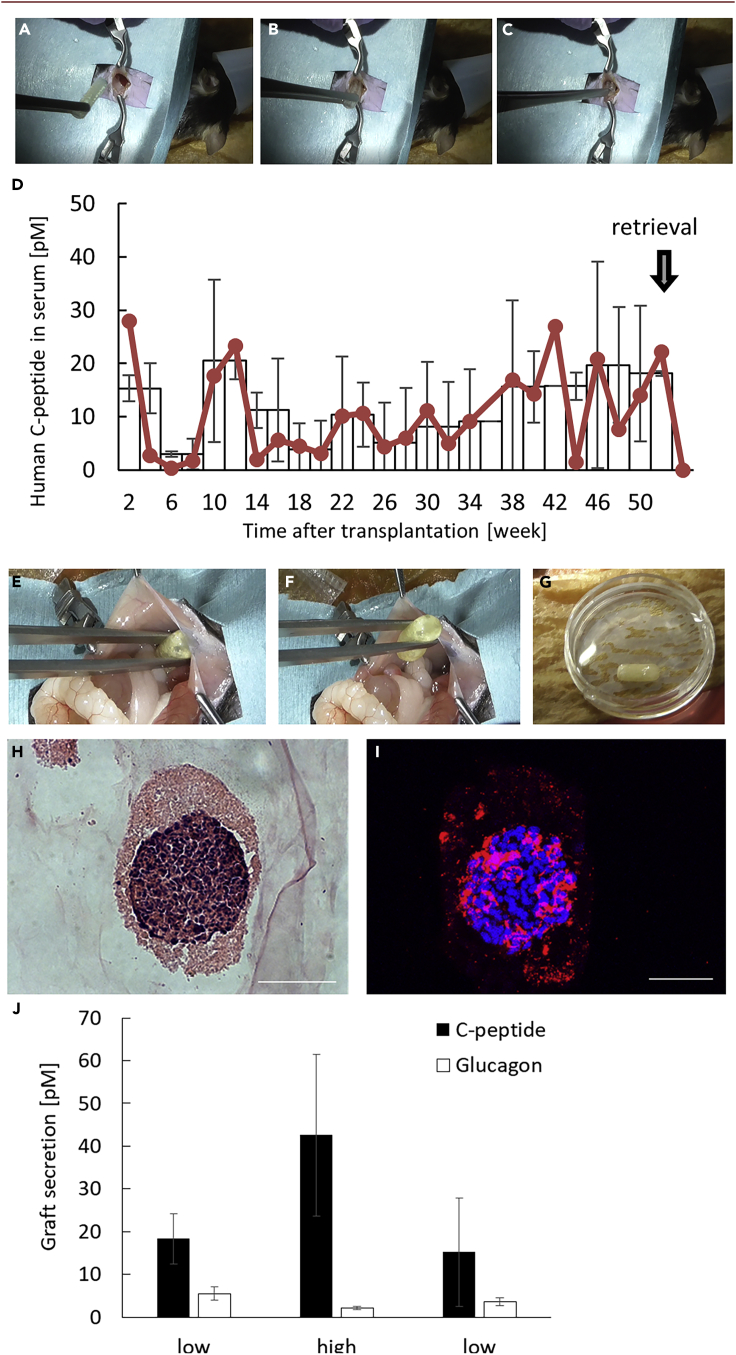
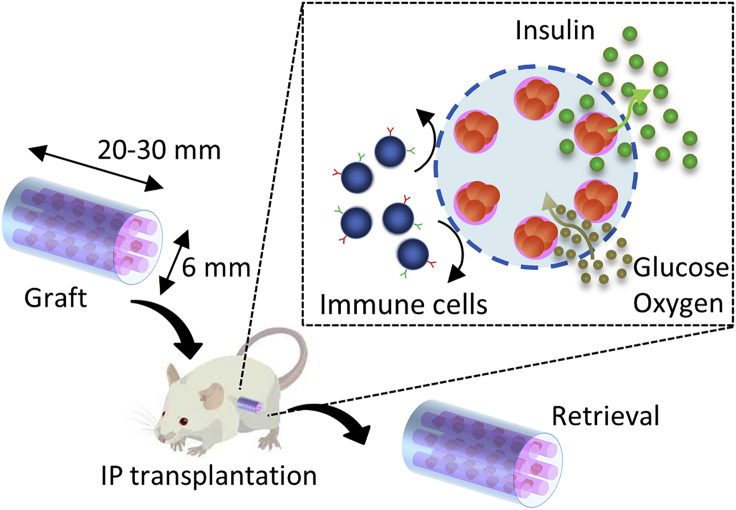
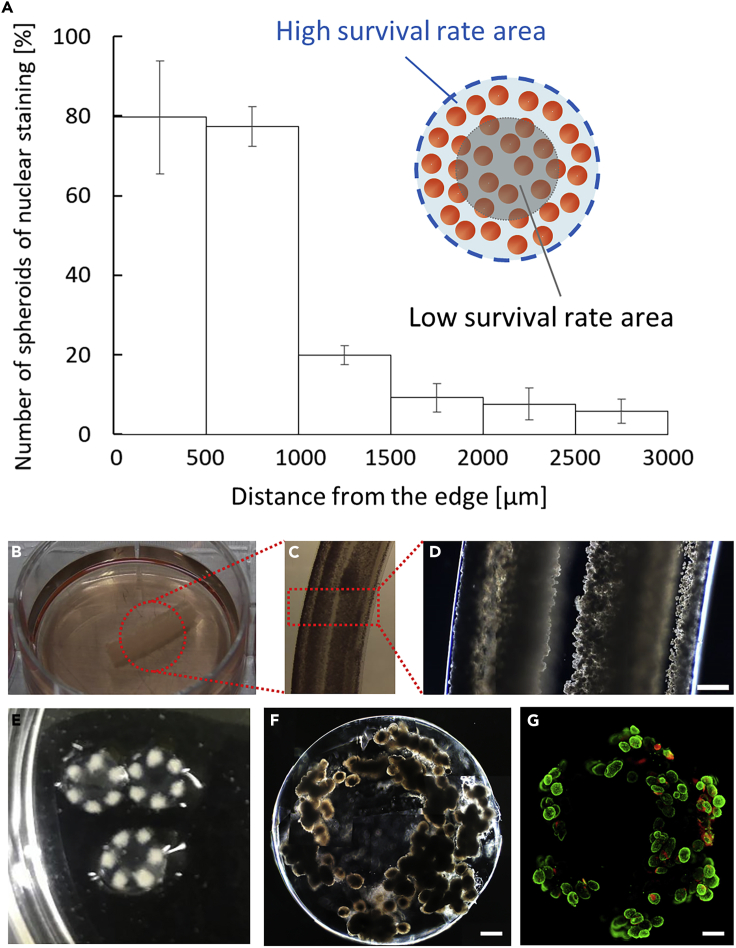
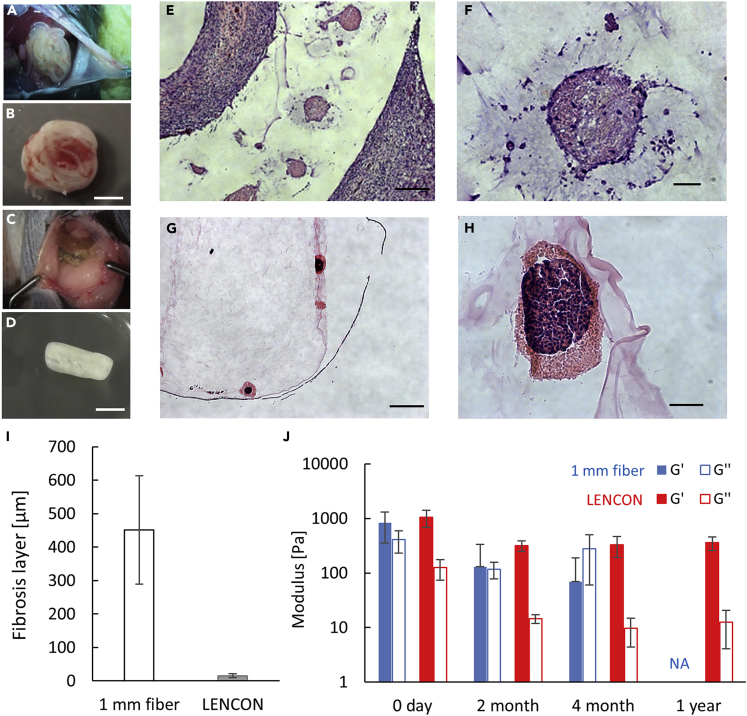
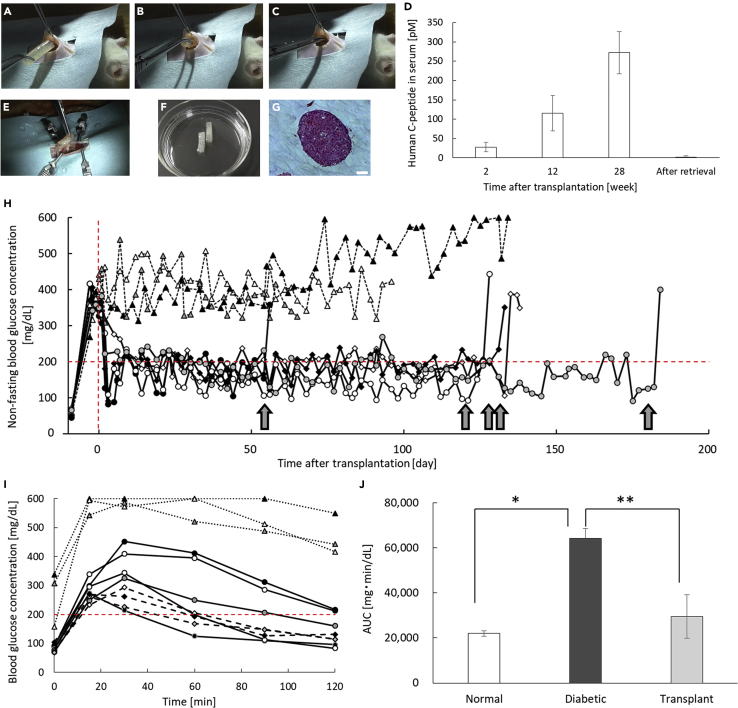
Cell therapy using human-stem-cell-derived pancreatic beta cells (hSC-βs) is a potential treatment method for type 1 diabetes mellitus (T1D). For therapeutic safety, hSC-βs need encapsulation in grafts that are scalable and retrievable. In this study, we developed a lotus-root-shaped cell-encapsulated construct (LENCON) as a graft that can be retrieved after long-term hSC-β transplantation. This graft had six multicores encapsulating hSC-βs located within 1 mm from the edge. It controlled the recipient blood glucose levels for a long-term, following transplantation in immunodeficient diabetic mice. LENCON xenotransplanted into immunocompetent mice exhibited retrievability and maintained the functionality of hSC-βs for over 1 year after transplantation. We believe that LENCON can contribute to the treatment of T1D through long-term transplantation of hSC-βs and in many other forms of cell therapy.
使用人干细胞衍生的胰腺β细胞(hSC-βs)进行细胞治疗是1型糖尿病(T1D)的一种潜在治疗方法。为了治疗安全,hSC-βs需要封装在可扩展且可回收的移植物中。在本研究中,我们开发了一种莲藕形细胞封装构建体(LENCON)作为一种移植物,在长期hSC-β移植后可以回收。这种移植物有六个封装hSC-βs的多核,位于距离边缘1毫米以内。在免疫缺陷糖尿病小鼠中移植后,它长期控制受体血糖水平。异种移植到免疫活性小鼠体内的LENCON表现出可回收性,并且在移植后1年多保持hSC-βs的功能。我们相信LENCON可以通过hSC-βs的长期移植以及许多其他形式的细胞治疗为T1D的治疗做出贡献。