Research Triangle Institute International, Research Triangle Park, NC, United States.
North Carolina Agricultural and Technical State University, Greensboro, NC, United States.
JMIR Public Health Surveill. 2021 May 27;7(5):e29298. doi: 10.2196/29298.
The opioid crisis in the United States may be exacerbated by the COVID-19 pandemic. Increases in opioid use, emergency medical services (EMS) runs for opioid-related overdoses, and opioid overdose deaths have been reported. No study has examined changes in multiple naloxone administrations, an indicator of overdose severity, during the COVID-19 pandemic.
This study examines changes in the occurrence of naloxone administrations and multiple naloxone administrations during EMS runs for opioid-related overdoses during the COVID-19 pandemic in Guilford County, North Carolina (NC).
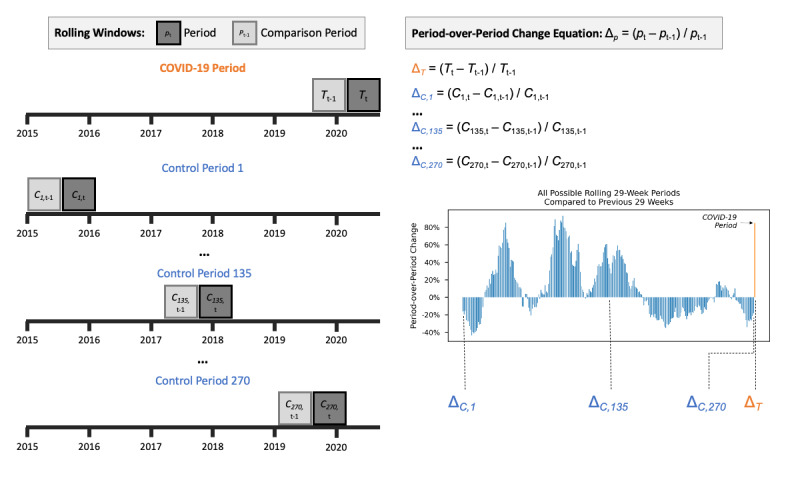
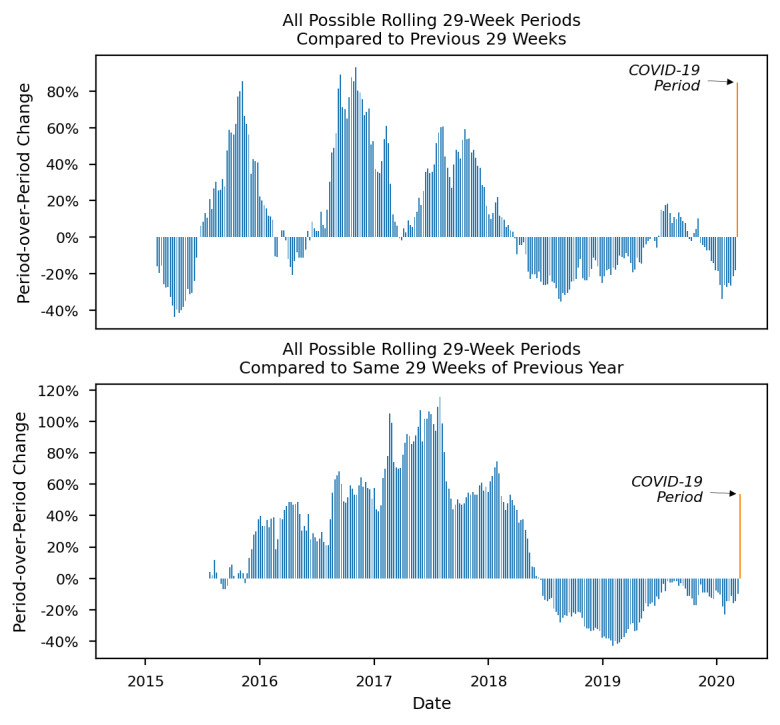
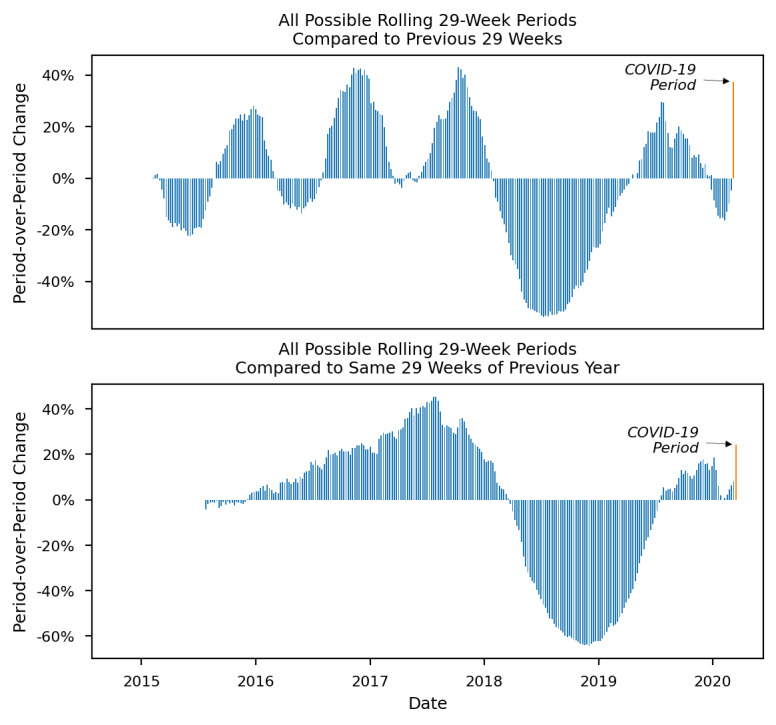
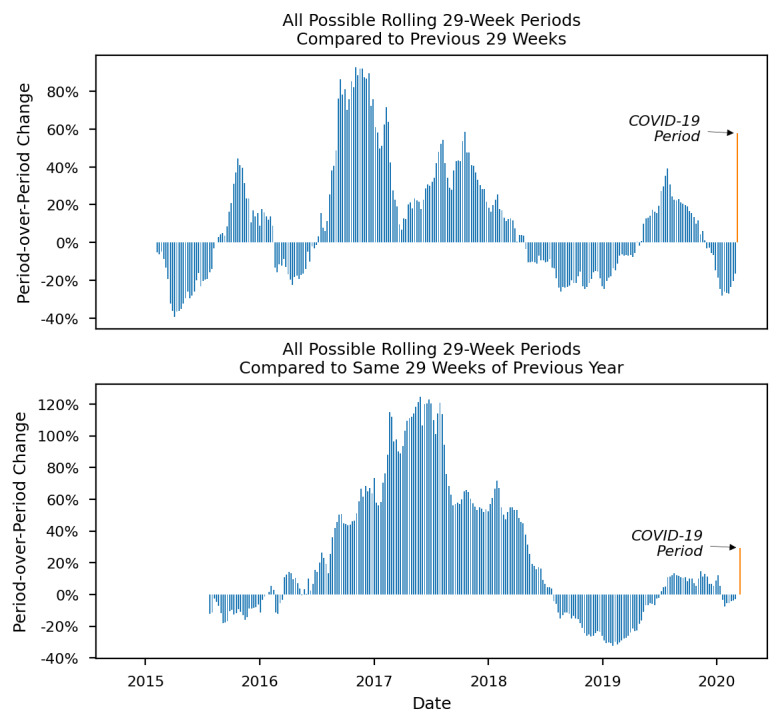
Using a period-over-period approach, we compared the occurrence of opioid-related EMS runs, naloxone administrations, and multiple naloxone administrations during the 29-week period before (September 1, 2019, to March 9, 2020) and after NC's COVID-19 state of emergency declaration (ie, the COVID-19 period of March 10 to September 30, 2020). Furthermore, historical data were used to generate a quasi-control distribution of period-over-period changes to compare the occurrence of each outcome during the COVID-19 period to each 29-week period back to January 1, 2014.
All outcomes increased during the COVID-19 period. Compared to the previous 29 weeks, the COVID-19 period experienced increases in the weekly mean number of opioid-related EMS runs (25.6, SD 5.6 vs 18.6, SD 6.6; P<.001), naloxone administrations (22.3, SD 6.2 vs 14.1, SD 6.0; P<.001), and multiple naloxone administrations (5.0, SD 1.9 vs 2.7, SD 1.9; P<.001), corresponding to proportional increases of 37.4%, 57.8%, and 84.8%, respectively. Additionally, the increases during the COVID-19 period were greater than 91% of all historical 29-week periods analyzed.
The occurrence of EMS runs for opioid-related overdoses, naloxone administrations, and multiple naloxone administrations during EMS runs increased during the COVID-19 pandemic in Guilford County, NC. For a host of reasons that need to be explored, the COVID-19 pandemic appears to have exacerbated the opioid crisis.
美国的阿片类药物危机可能因 COVID-19 大流行而加剧。阿片类药物使用增加、与阿片类药物相关的过量急救医疗服务 (EMS) 运行以及阿片类药物过量死亡的报道有所增加。没有研究调查 COVID-19 大流行期间多次纳洛酮给药(过量严重程度的指标)的变化情况。
本研究检查了北卡罗来纳州吉尔福德县 COVID-19 大流行期间与阿片类药物相关的 EMS 运行中纳洛酮给药和多次纳洛酮给药的发生变化。
使用时期-时期比较法,我们比较了 COVID-19 紧急状态声明前(2019 年 9 月 1 日至 2020 年 3 月 9 日)和北卡罗来纳州 COVID-19 紧急状态声明后(即 COVID-19 时期,2020 年 3 月 10 日至 9 月 30 日)的与阿片类药物相关的 EMS 运行、纳洛酮给药和多次纳洛酮给药的发生情况。此外,历史数据用于生成时期-时期变化的准控制分布,以比较 COVID-19 期间每种结果的发生情况与每个 29 周期间回溯至 2014 年 1 月 1 日的情况。
所有结果在 COVID-19 期间均增加。与前 29 周相比,COVID-19 期间每周平均与阿片类药物相关的 EMS 运行次数(25.6,SD 5.6 与 18.6,SD 6.6;P<.001)、纳洛酮给药次数(22.3,SD 6.2 与 14.1,SD 6.0;P<.001)和多次纳洛酮给药次数(5.0,SD 1.9 与 2.7,SD 1.9;P<.001)均有所增加,相应的比例分别增加了 37.4%、57.8%和 84.8%。此外,COVID-19 期间的增加大于分析的所有历史 29 周期间的 91%。
北卡罗来纳州吉尔福德县 COVID-19 大流行期间,与阿片类药物相关的 EMS 运行、纳洛酮给药和多次纳洛酮给药的 EMS 运行次数增加。由于需要探讨的诸多原因,COVID-19 大流行似乎加剧了阿片类药物危机。