Department of Orthopaedics, University Clinic Aachen, RWTH Aachen University Clinic, Pauwelsstraße 30, 52074, Aachen, Germany.
Department of Medicine, Surgery and Dentistry, University of Salerno, Via S. Allende, 84081, Baronissi, SA, Italy.
J Orthop Surg Res. 2021 May 18;16(1):318. doi: 10.1186/s13018-021-02474-7.
Biochemical markers of bone turnover (BTMs), such as bone alkaline phosphatase (bALP), procollagen type I N propeptide (PINP), serum cross-linked C-telopeptides of type I collagen (bCTx), and urinary cross-linked N-telopeptides of type I collagen (NTx), are commonly used for therapy monitoring purposes for osteoporotic patients. The present study evaluated the potential role of BTMs as therapy monitoring.
All randomized clinical trials (RCTs) comparing two or more pharmacological treatments for postmenopausal osteoporosis were accessed. Only studies that reported the value of bALP, PINP, bCTx, and NTx at last follow-up were included. A multivariate analysis was performed to assess associations between these biomarkers and clinical outcomes and rate of adverse events in patients with postmenopausal osteoporosis. A multiple linear model regression analysis through the Pearson product-moment correlation coefficient was used.
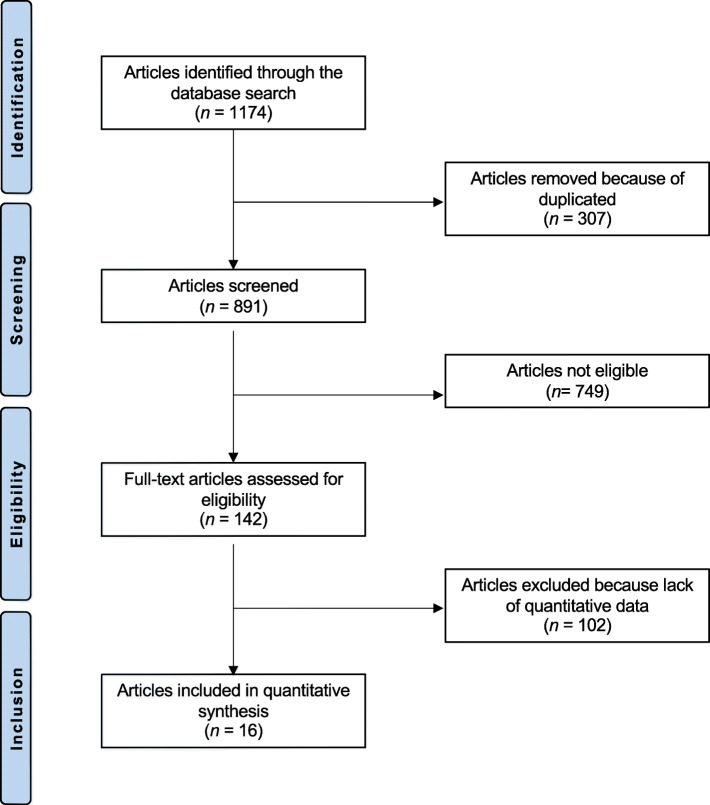
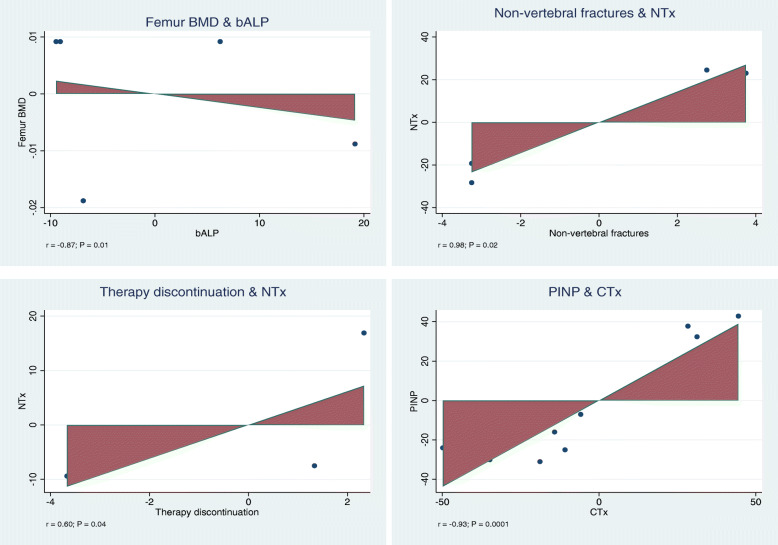
A total of 16 RCTs (14,446 patients) were included. The median age was 67 years, and the median BMI 25.4 kg/m. The median vertebral BMD was 0.82, hip BMD 0.79, and femur BMD 0.64 g/cm. The ANOVA test found optimal within-group variance concerning mean age, body mass index, and BMD. Greater bALP was associated with lower femoral BMD (P = 0.01). Greater NTx was associated with a greater number of non-vertebral fractures (P = 0.02). Greater NTx was associated with greater rate of therapy discontinuation (P = 0.04). No other statistically significant associations were detected.
Our analysis supports the adoption of BTMs in therapy monitoring of osteoporotic patients.
Level I, systematic review of RCTs.
骨转换生化标志物(BTMs),如骨碱性磷酸酶(bALP)、I 型前胶原氨基端前肽(PINP)、I 型胶原交联 C 端肽(bCTx)和 I 型胶原交联 N 端肽(NTx),常用于监测骨质疏松症患者的治疗。本研究评估了 BTMs 作为治疗监测的潜在作用。
检索了所有比较两种或两种以上药物治疗绝经后骨质疏松症的随机临床试验(RCTs)。仅纳入报告最后随访时 bALP、PINP、bCTx 和 NTx 值的研究。采用多元分析评估这些生物标志物与绝经后骨质疏松症患者临床结局和不良事件发生率之间的关联。通过皮尔逊积矩相关系数进行多元线性模型回归分析。
共纳入 16 项 RCT(14446 例患者)。中位年龄为 67 岁,中位 BMI 为 25.4kg/m2。中位椎体 BMD 为 0.82g/cm2,髋部 BMD 为 0.79g/cm2,股骨 BMD 为 0.64g/cm2。方差分析发现,平均年龄、体重指数和 BMD 的组内方差最佳。bALP 越高,股骨 BMD 越低(P=0.01)。NTx 越高,非椎体骨折数越多(P=0.02)。NTx 越高,停药率越高(P=0.04)。未发现其他具有统计学意义的相关性。
我们的分析支持采用 BTMs 监测骨质疏松症患者的治疗。
I 级,RCT 的系统评价。