Hawkins-Taylor Chamika, Taylor Michael B, Carlson Angeline M
South Dakota State University College of Pharmacy.
South Dakota State University College of Arts and Sciences.
Innov Pharm. 2018 Nov 30;9(4). doi: 10.24926/iip.v9i4.994. eCollection 2018.
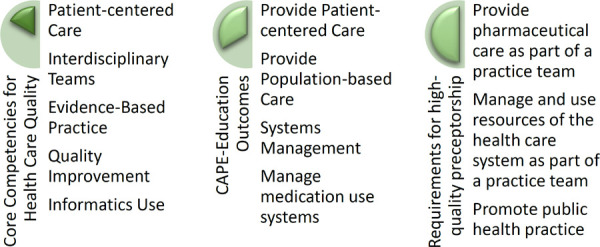
Pharmacists must be prepared to care for populations where health disparities are greatest and their services can best impact public health needs. Such preparation requires that students have access to practice experiences in underserved environments where pharmacy practice, cultural competence and knowledge of population health are experienced simultaneously. The correctional facility is such a place. The American Society of Health-System Pharmacists recommends that students receive preceptorship opportunities within the correctional system. The occasional collaboration or experiential opportunity, like Kingston's early model, has occurred between health professional schools and correctional facilities. However, to date, the correctional facility-experiential site remains an untapped opportunity, at least in a complete, coordinated, pharmaceutical care, patient management framework. Consequently, a short research study asked: To what extent is there potential for correctional facilities to serve as experiential practice sites for pharmacy students? The research objective was to identify pharmaceutical practices within South Dakota correctional system and compare those practices to the guidelines established by the Association of American College of Pharmacy's as optimal for student training. To understand medical and pharmaceutical practices in SDPS, three South Dakota Adult prison facilities were included in the exploratory study. Data was collected through a mixed methods approach designed to obtain perspectives about the SDPS health care system from individuals representing the numerous job levels and roles that exist within the health care continuum. Interviews and a web-based surveys were used to collect data. A review of a 36-page transcript along with 498 freeform survey comments revealed that while exact themes from the Exemplary Practice Framework may not have been evident, related words or synonyms for patient-centered care, informatics, public health, medication therapy management, and quality improvement appeared with great frequency.
药剂师必须做好准备,为健康差距最大且其服务能对公共卫生需求产生最大影响的人群提供护理。这种准备工作要求学生有机会在服务不足的环境中积累实践经验,在这些环境中,药学实践、文化能力和人群健康知识能够同时得到体验。惩教机构就是这样一个地方。美国卫生系统药师协会建议学生在惩教系统内获得带教机会。健康专业学校和惩教机构之间偶尔会有合作或实践机会,就像金斯顿早期的模式那样。然而,到目前为止,惩教机构作为实践场所这一机会尚未得到充分利用,至少在一个完整、协调的药学护理、患者管理框架中是这样。因此,一项简短的研究提出了这样一个问题:惩教机构在多大程度上有可能成为药学专业学生的实践场所?该研究的目标是确定南达科他州惩教系统内的药学实践,并将这些实践与美国药学院协会制定的、对学生培训而言堪称最佳的指导方针进行比较。为了解南达科他州惩教系统(SDPS)中的医疗和药学实践情况,该探索性研究纳入了南达科他州的三所成人监狱设施。数据通过一种混合方法收集,旨在从代表医疗保健连续体中众多工作级别和角色的个人那里获取有关SDPS医疗保健系统的观点。通过访谈和基于网络的调查来收集数据。对一份36页的文字记录以及498条自由格式的调查评论进行审查后发现,虽然《模范实践框架》中的确切主题可能并不明显,但以患者为中心的护理、信息学、公共卫生、药物治疗管理和质量改进等相关词汇或同义词出现的频率很高。