Centre for Structural Systems Biology, Hamburg, Germany.
Bernhard Nocht Institute for Tropical Medicinegrid.424065.1, Hamburg, Germany.
mBio. 2022 Apr 26;13(2):e0062322. doi: 10.1128/mbio.00623-22. Epub 2022 Apr 11.
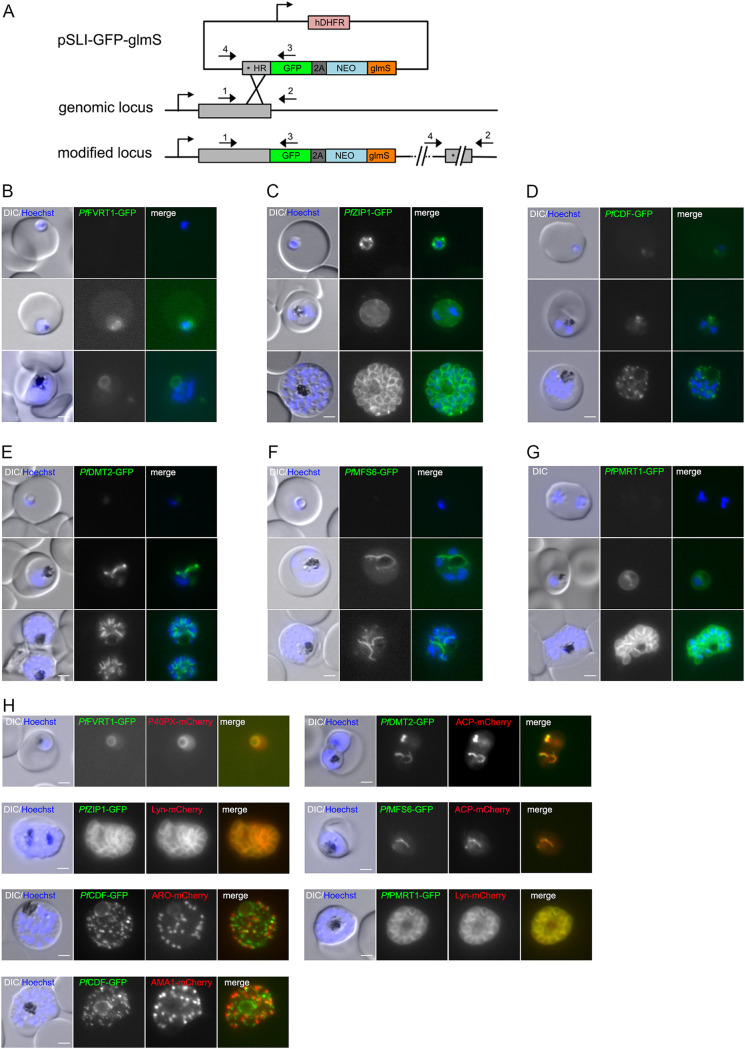
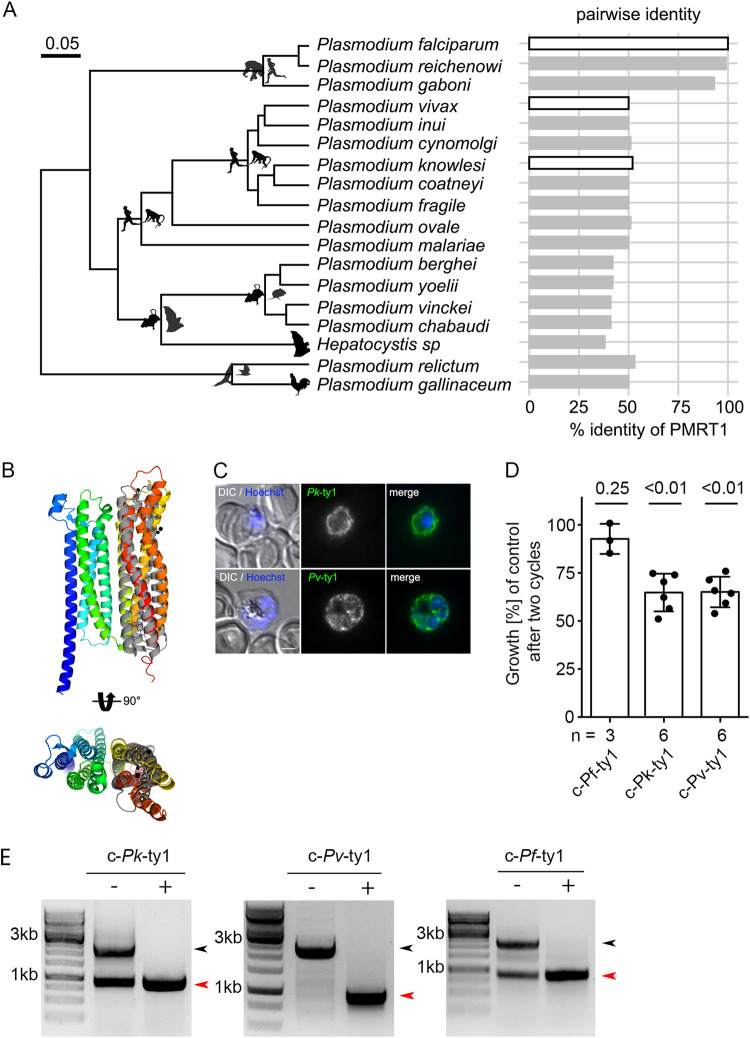
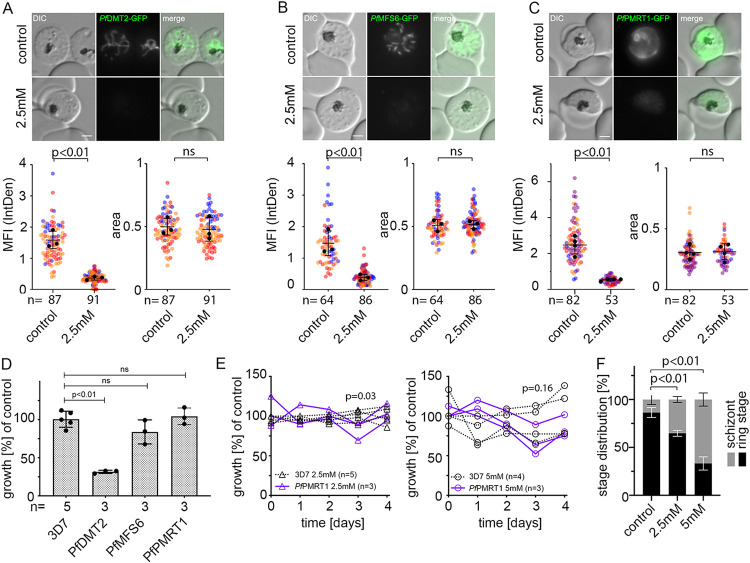
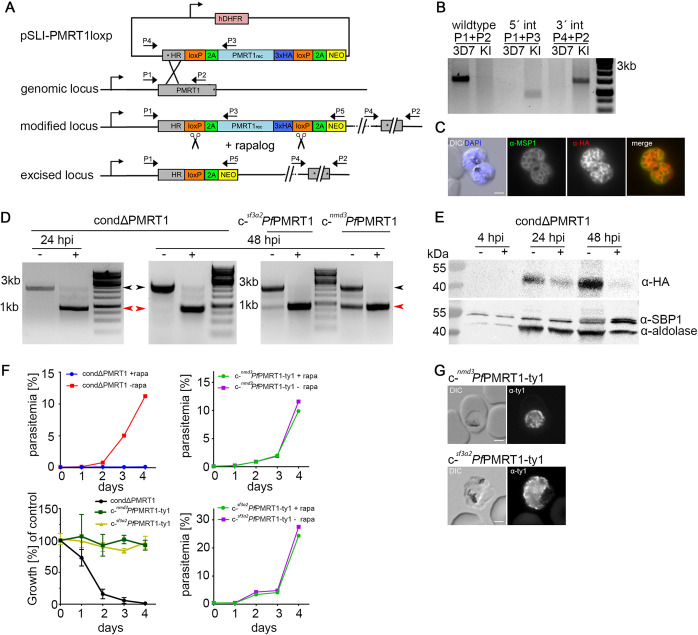
Membrane transport proteins perform crucial roles in cell physiology. The obligate intracellular parasite Plasmodium falciparum, an agent of human malaria, relies on membrane transport proteins for the uptake of nutrients from the host, disposal of metabolic waste, exchange of metabolites between organelles, and generation and maintenance of transmembrane electrochemical gradients for its growth and replication within human erythrocytes. Despite their importance for cellular physiology, the functional roles of a number of membrane transport proteins remain unclear, which is particularly true for orphan membrane transporters that have no or limited sequence homology to transporter proteins in other evolutionary lineages. Therefore, in the current study, we applied endogenous tagging, targeted gene disruption, conditional knockdown, and knockout approaches to investigate the subcellular localization and essentiality of six membrane transporters during intraerythrocytic development of P. falciparum parasites. They are localized at different subcellular structures-the food vacuole, the apicoplast, and the parasite plasma membrane-and four out of the six membrane transporters are essential during asexual development. Additionally, the plasma membrane resident transporter 1 (PMRT1; PF3D7_1135300), a unique -specific plasma membrane transporter, was shown to be essential for gametocytogenesis and functionally conserved within the genus . Overall, we reveal the importance of four orphan transporters to blood stage P. falciparum development, which have diverse intracellular localizations and putative functions. Plasmodium falciparum-infected erythrocytes possess multiple compartments with designated membranes. Transporter proteins embedded in these membranes not only facilitate movement of nutrients, metabolites, and other molecules between these compartments, but also are common therapeutic targets and can confer antimalarial drug resistance. Orphan membrane transporters in P. falciparum without sequence homology to transporters in other evolutionary lineages and divergent from host transporters may constitute attractive targets for novel intervention approaches. Here, we localized six of these putative transporters at different subcellular compartments and probed their importance during asexual parasite growth by using reverse genetic approaches. In total, only two candidates turned out to be dispensable for the parasite, highlighting four candidates as putative targets for therapeutic interventions. This study reveals the importance of several orphan transporters to blood stage P. falciparum development.
膜转运蛋白在细胞生理学中发挥着至关重要的作用。疟原虫是一种专性细胞内寄生虫,也是人类疟疾的病原体,它依赖于膜转运蛋白从宿主中摄取营养物质、处理代谢废物、在细胞器之间交换代谢物,并为其在人类红细胞内的生长和复制生成和维持跨膜电化学梯度。尽管它们对细胞生理学很重要,但许多膜转运蛋白的功能作用仍不清楚,特别是对于那些与其他进化谱系中的转运蛋白没有或有限序列同源性的孤儿膜转运蛋白更是如此。因此,在目前的研究中,我们应用内源性标记、靶向基因敲除、条件性敲低和敲除方法来研究疟原虫红内期发育过程中 6 种膜转运蛋白的亚细胞定位和必需性。它们定位于不同的亚细胞结构——食物泡、质体和疟原虫质膜——并且这 6 种膜转运蛋白中有 4 种在无性发育过程中是必需的。此外,质膜驻留转运蛋白 1(PMRT1;PF3D7_1135300)是一种独特的 -特异性质膜转运蛋白,对配子体形成是必需的,并且在属内具有功能保守性。总的来说,我们揭示了 4 种孤儿转运蛋白对疟原虫红内期发育的重要性,它们具有不同的细胞内定位和潜在的功能。感染疟原虫的红细胞具有多个具有指定膜的隔室。嵌入这些膜中的转运蛋白不仅促进了这些隔室之间营养物质、代谢物和其他分子的运动,而且还是常见的治疗靶点,并可能导致抗疟药物耐药性。疟原虫中没有与其他进化谱系中的转运蛋白序列同源性且与宿主转运蛋白不同的孤儿膜转运蛋白可能构成新的干预方法的有吸引力的靶标。在这里,我们使用反向遗传方法将其中的 6 种假定转运蛋白定位到不同的亚细胞隔室,并研究了它们在无性寄生虫生长过程中的重要性。总的来说,只有 2 个候选物对寄生虫是可有可无的,这突出了 4 个候选物作为潜在的治疗干预靶点。这项研究揭示了几种孤儿转运蛋白对疟原虫红内期发育的重要性。