Department of Pathology, School of Basic Medical Sciences, Southern Medical University, Guangzhou, China.
Department of Pathology, The Eighth Affiliated Hospital, Sun Yat-Sen University, Shenzhen, China.
J Transl Med. 2021 May 20;19(1):216. doi: 10.1186/s12967-021-02877-4.
Eukaryotic translation initiation factor 6 (eIF6) has a crucial function in the maturation of 60S ribosomal subunits, and it controls the initiation of protein translation. Although emerging studies indicate that eIF6 is aberrantly expressed in various types of cancers, the functions and underlying molecular mechanisms of eIF6 in the pathological progression of hepatocellular carcinoma (HCC) remain unclear. This study aimed to evaluate the potential diagnostic and prognostic value of eIF6 in patients with HCC.
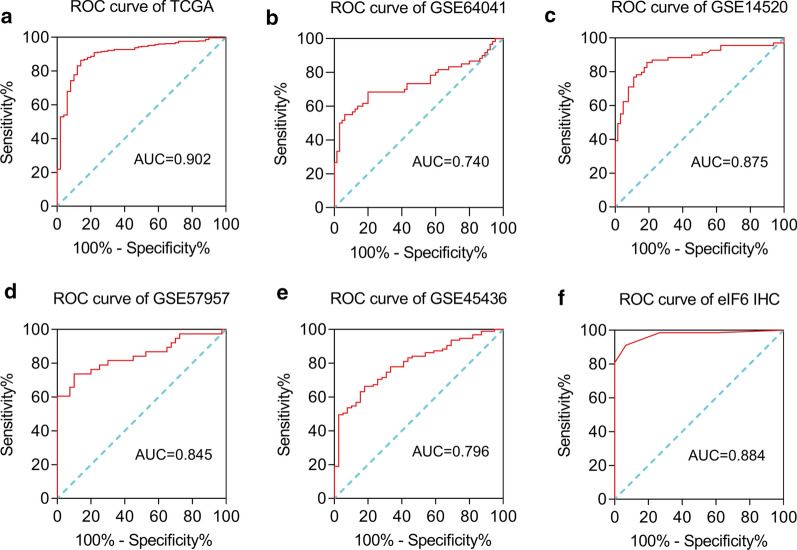
HCC samples enrolled from The Cancer Genome Atlas (TCGA), Gene Expression Omnibus (GEO) and our cohort were used to explore the role and mechanism of eIF6 in HCC. The diagnostic power of eIF6 was verified by receiver operating characteristic curve (ROC) analysis and its prognostic value was assessed by Kaplan-Meier analysis, and then related biological functions of eIF6 were determined in vitro and in vivo cancer models. In addition, potential molecular mechanism of eIF6 in HCC was unveiled by the gene set enrichment analysis and western blot assay.
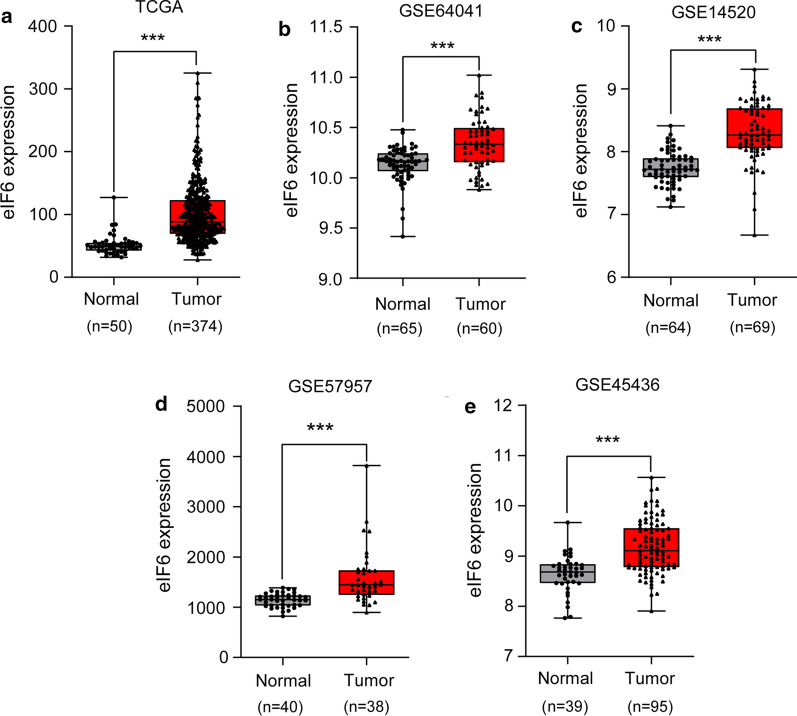
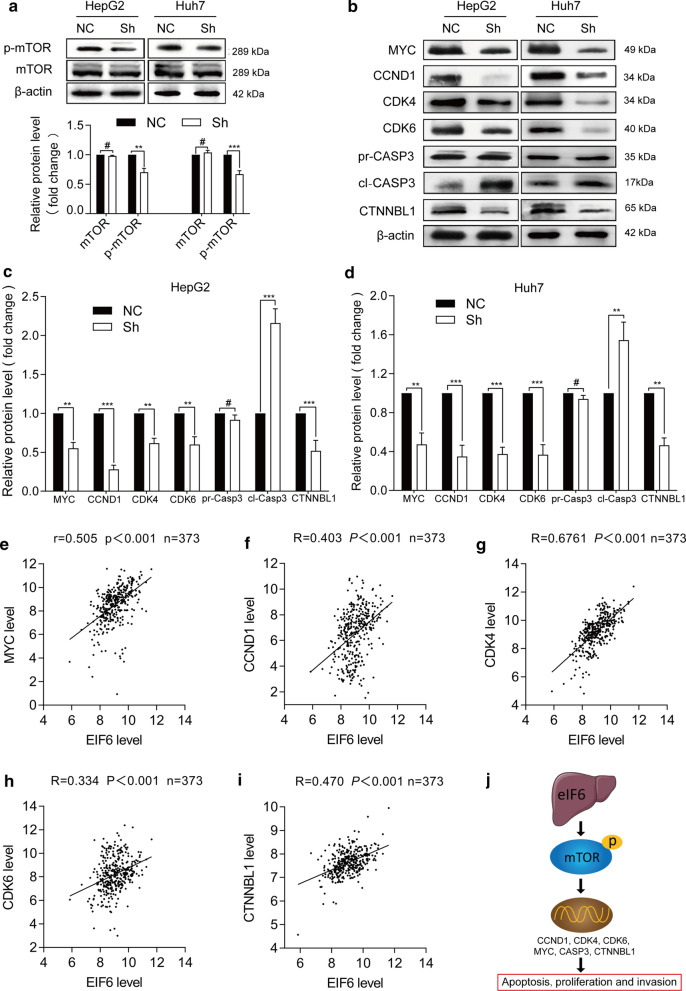
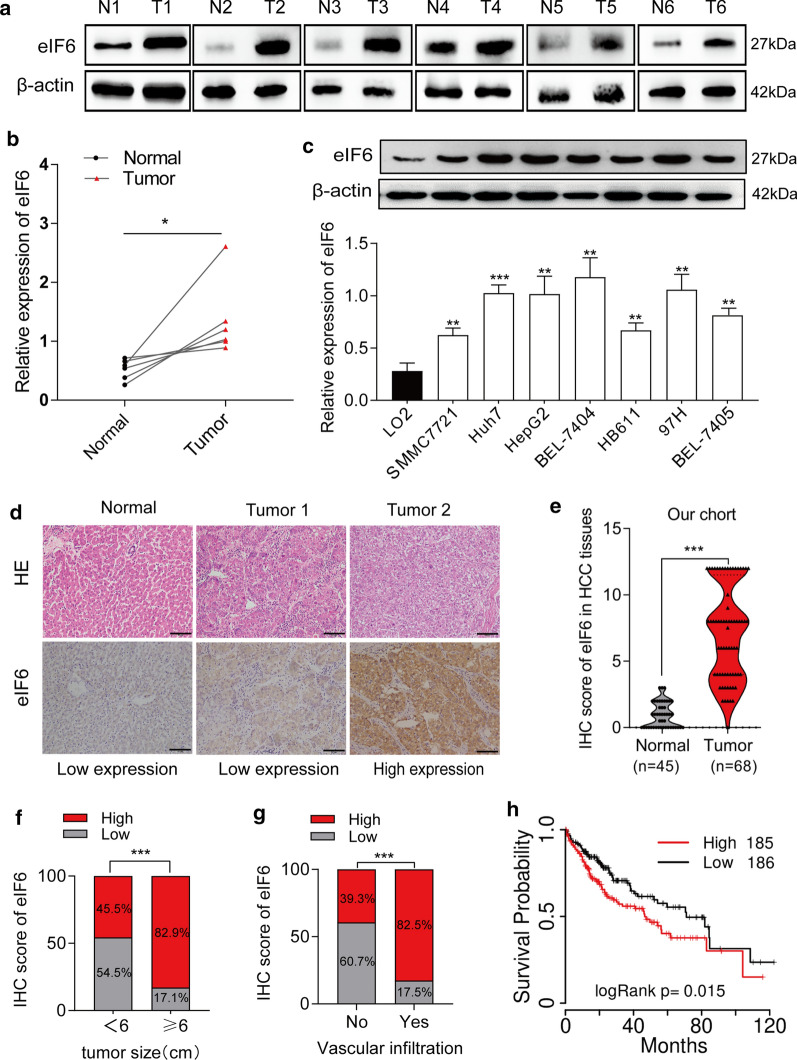
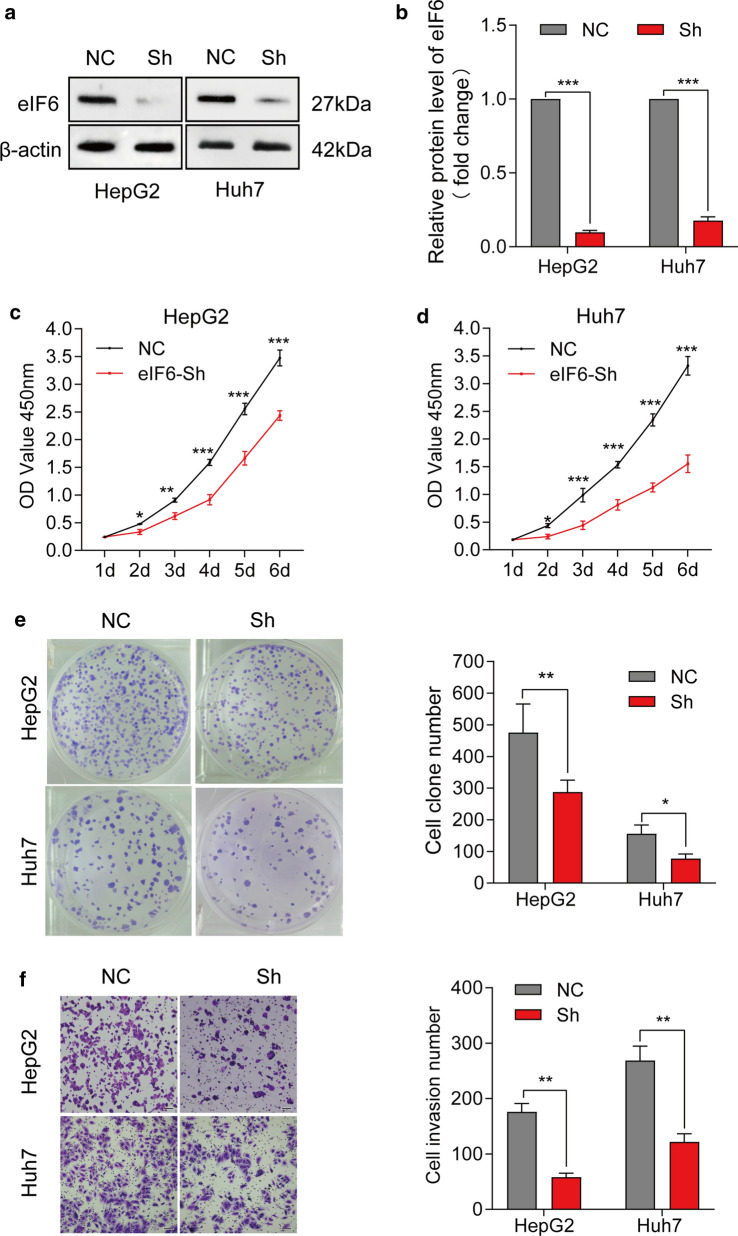
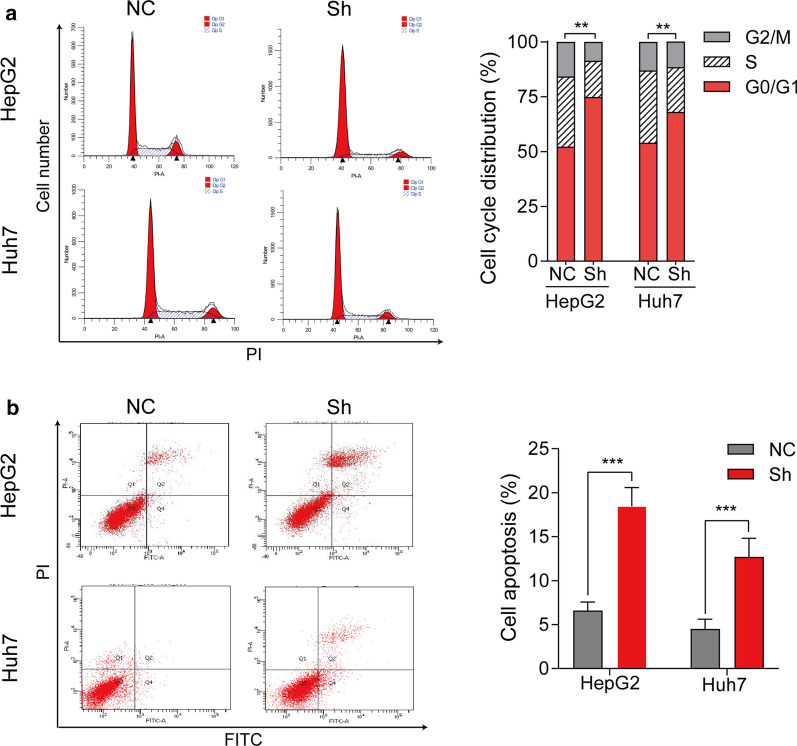
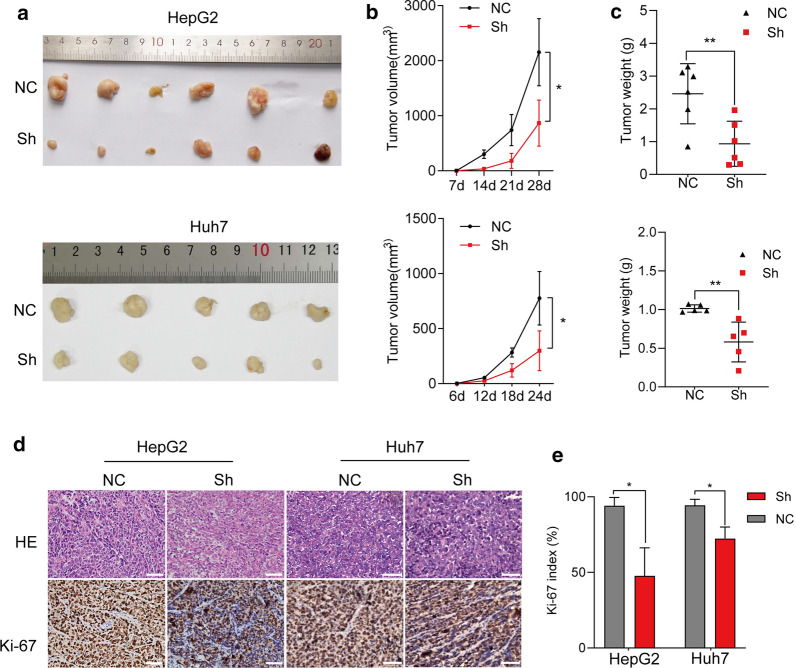
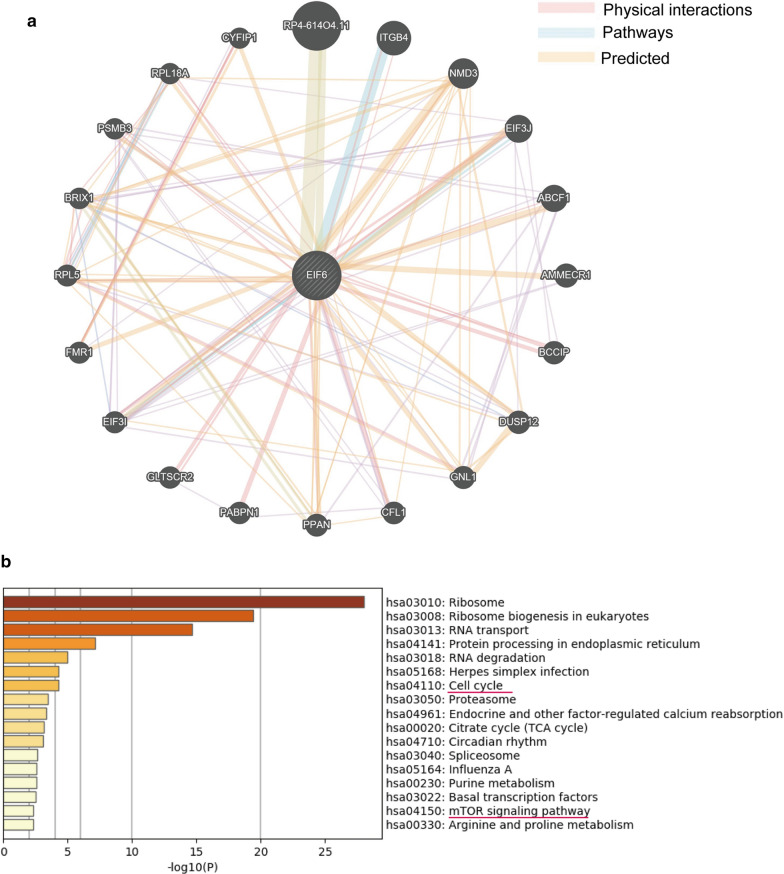
We demonstrated that eIF6 expression was markedly increased in HCC, and elevated eIF6 expression correlated with pathological progression of HCC. Besides, eIF6 served as not only a new diagnostic biomarker but also an independent risk factor for OS in HCC patients. Functional studies indicated that the deletion of eIF6 displayed tumor-suppressor activity in HCC cells. Furthermore, we found that eIF6 could activate the mTOR-related signaling pathway and regulate the expression level of its target genes, such as CCND1, CDK4, CDK6, MYC, CASP3 and CTNNBL1, and these activities promoted proliferation and invasion of HCC cells.
The findings of this study provided a novel basis for understanding the potential role of eIF6 in promoting tumor growth and invasion, and exploited a promising strategy for improving diagnosis and prognosis of HCC.
真核翻译起始因子 6(eIF6)在 60S 核糖体亚基的成熟过程中具有关键功能,并且控制蛋白质翻译的起始。尽管新兴研究表明 eIF6 在各种类型的癌症中异常表达,但 eIF6 在肝细胞癌(HCC)病理进展中的功能和潜在分子机制仍不清楚。本研究旨在评估 eIF6 在 HCC 患者中的潜在诊断和预后价值。
使用来自癌症基因组图谱(TCGA)、基因表达综合数据库(GEO)和我们队列的 HCC 样本,探讨 eIF6 在 HCC 中的作用和机制。通过接收者操作特征曲线(ROC)分析验证 eIF6 的诊断能力,并通过 Kaplan-Meier 分析评估其预后价值,然后在体外和体内癌症模型中确定 eIF6 的相关生物学功能。此外,通过基因集富集分析和 Western blot 分析揭示了 eIF6 在 HCC 中的潜在分子机制。
我们证明 eIF6 的表达在 HCC 中明显增加,并且升高的 eIF6 表达与 HCC 的病理进展相关。此外,eIF6 不仅是 HCC 患者 OS 的新诊断生物标志物,也是独立的预后因素。功能研究表明,eIF6 的缺失在 HCC 细胞中显示出肿瘤抑制活性。此外,我们发现 eIF6 可以激活 mTOR 相关信号通路并调节其靶基因的表达水平,如 CCND1、CDK4、CDK6、MYC、CASP3 和 CTNNBL1,这些活性促进了 HCC 细胞的增殖和侵袭。
本研究的结果为理解 eIF6 在促进肿瘤生长和侵袭中的潜在作用提供了新的依据,并探索了改善 HCC 诊断和预后的有前途的策略。