Precision Medicine Center, The First Affiliated Hospital of Zhengzhou University, Zhengzhou 450052, China.
Key Laboratory of Clinical Medicine, The First Affiliated Hospital of Zhengzhou University, Zhengzhou 450052, China.
Dis Markers. 2020 Jan 13;2020:2514090. doi: 10.1155/2020/2514090. eCollection 2020.
Studies show that patients with hepatocellular carcinoma (HCC) have poor prognosis, particularly when patients are diagnosed at late stages of the disease development. The flap endonuclease 1 (FEN1) gene is overexpressed in multiple malignant tumors and may promote tumor aggressiveness. However, its expression profile and functional roles in HCC are still unclear. Here, we evaluated the molecular mechanisms of FEN1 in HCC.
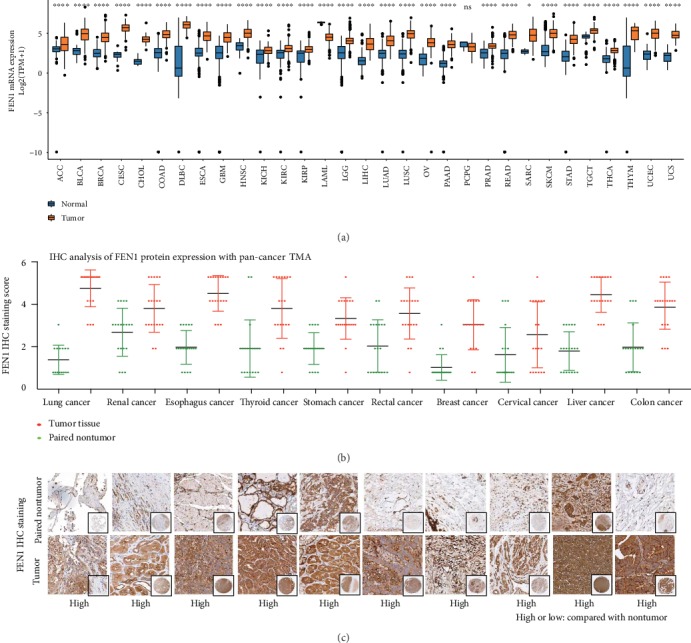
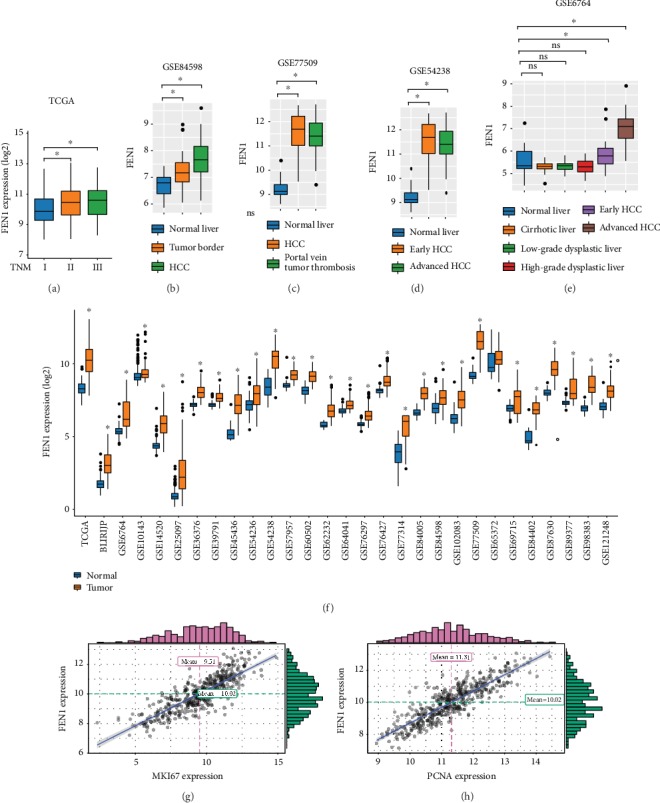
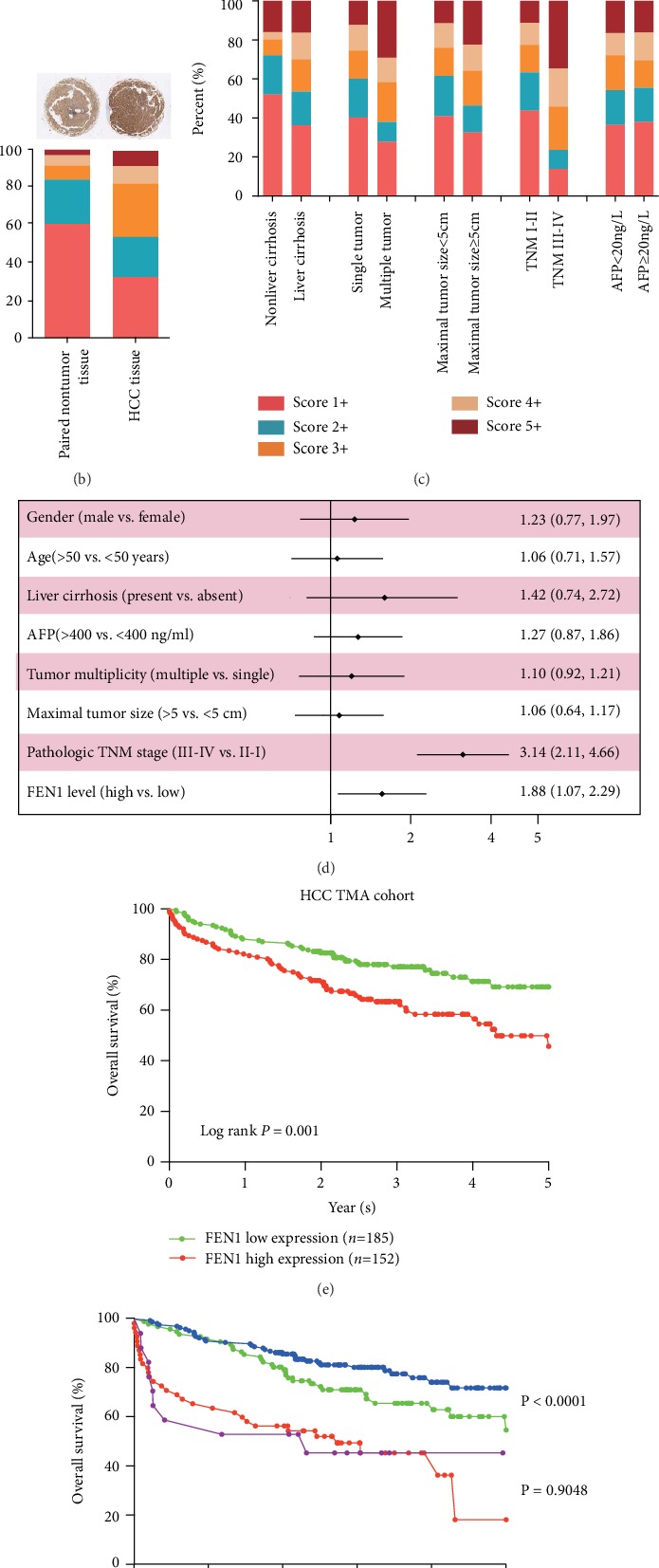
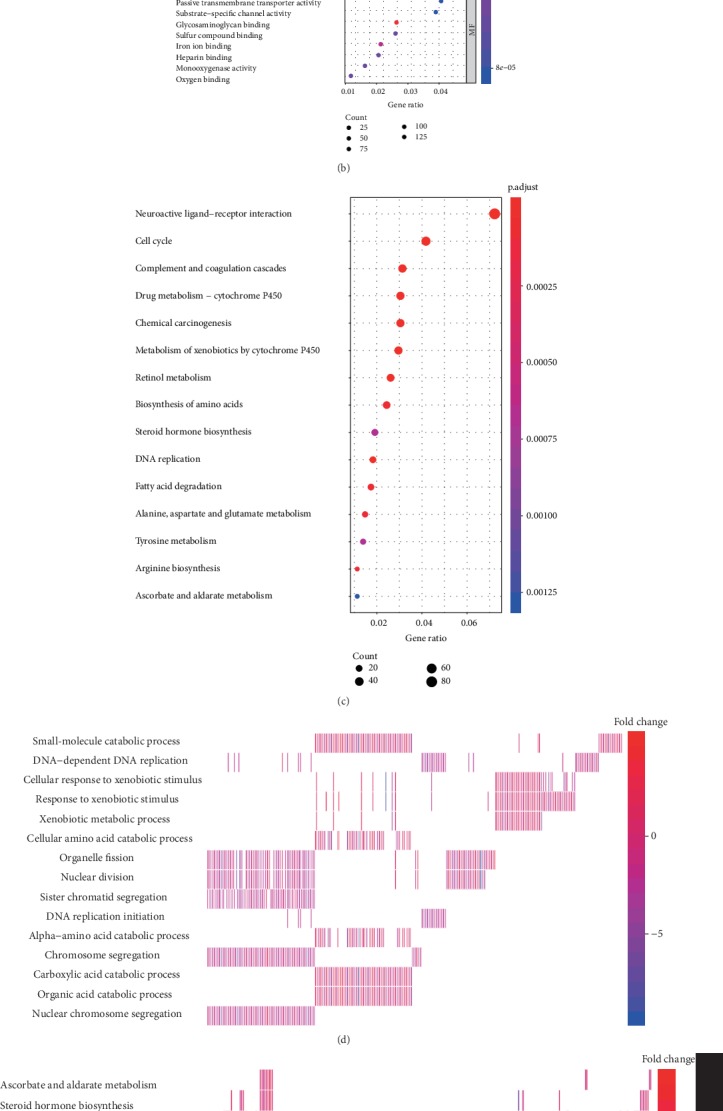
The expression of FEN1 in HCC was evaluated using HCC mRNA expression data from TCGA and GEO databases. The expression of FEN1 was also confirmed by immunohistochemistry (IHC) using a tissue microarray (TMA) cohort with a total of 396 HCC patients. Kaplan-Meier analysis and univariate and multivariate Cox regression analyses were used to determine the correlation between FEN1 expression and survival rate of HCC patients. The molecular mechanism and biological functions of FEN1 in HCC were predicted using functional and pathway enrichment analysis experiments.
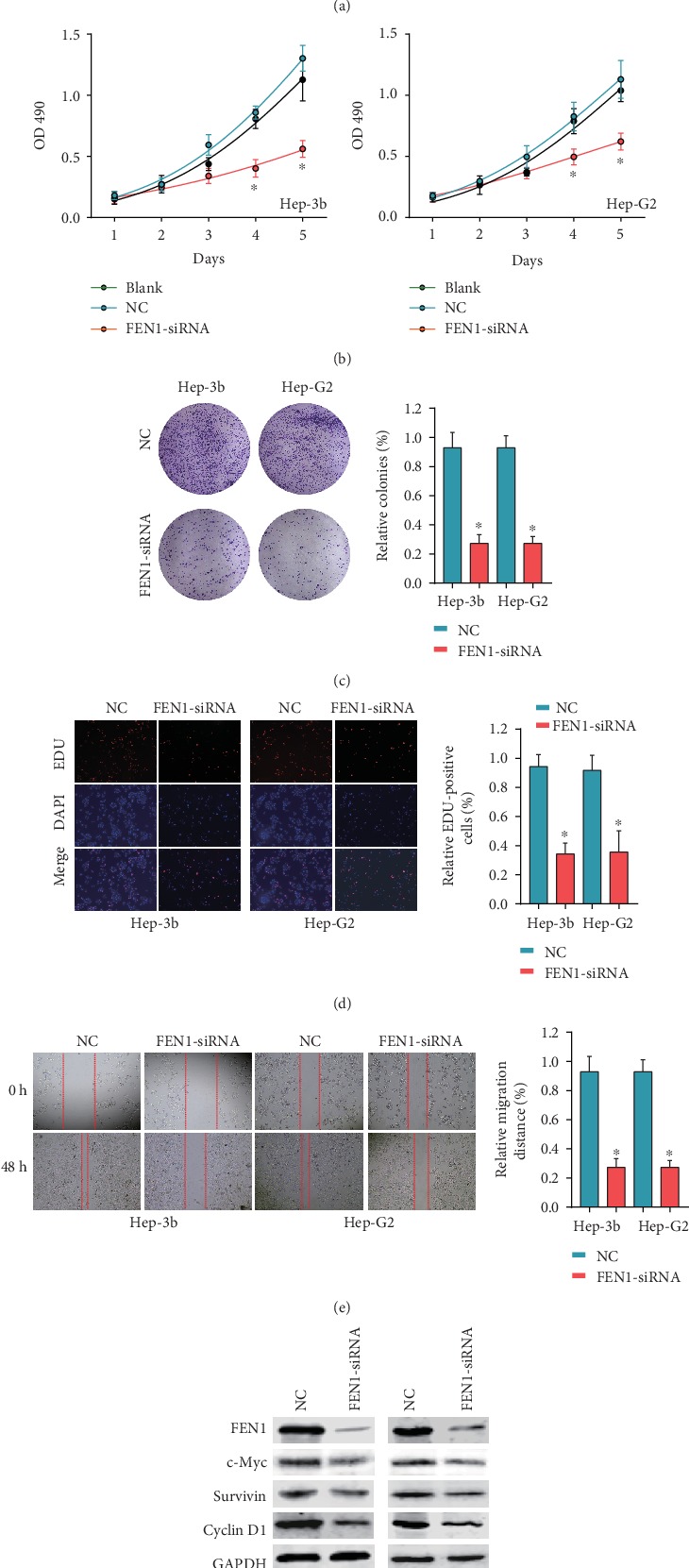
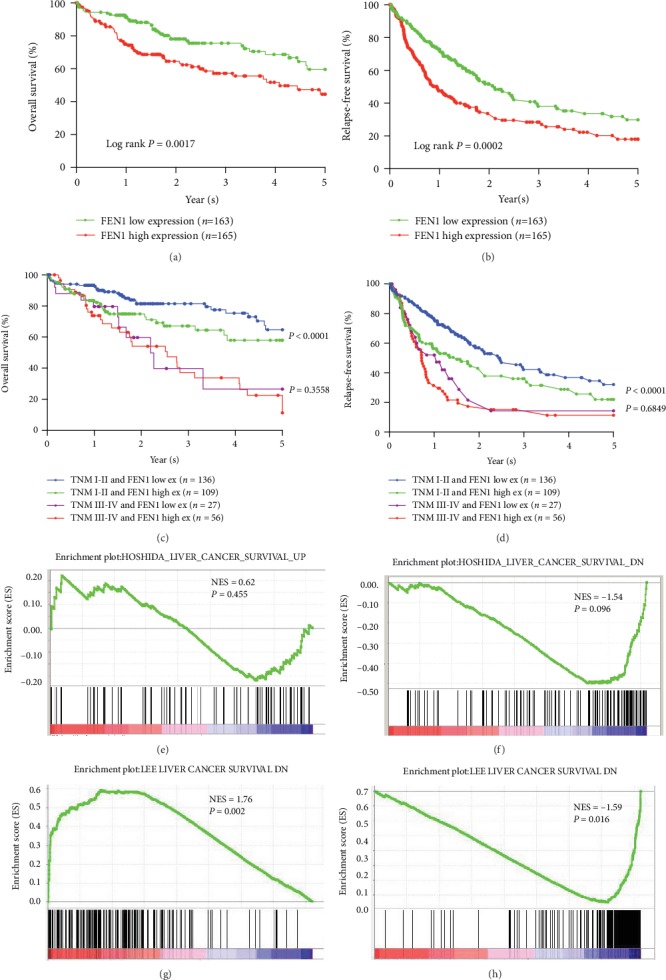
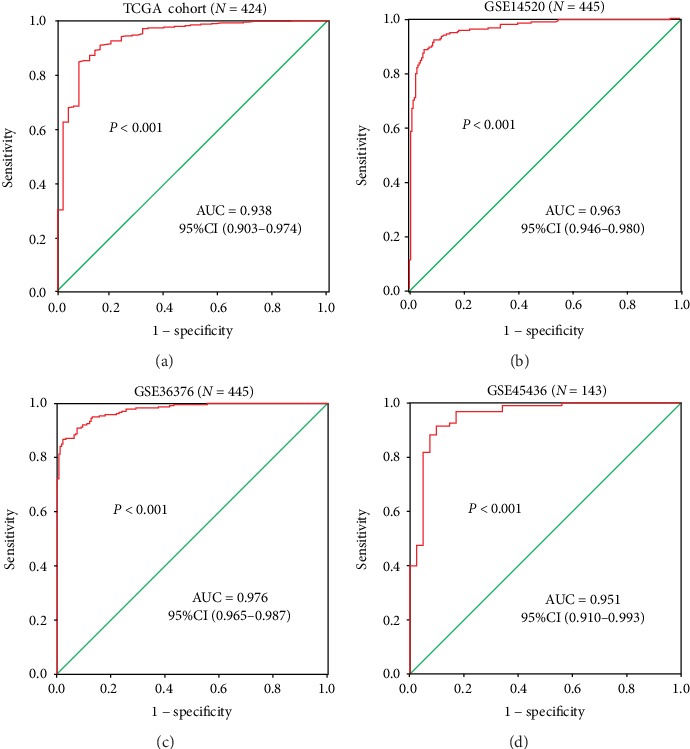
FEN1 was overexpressed in multiple HCC cohorts at both mRNA and protein levels. The receiver operating characteristic (ROC) curve showed that FEN1 can serve as a diagnostic predictor of HCC. Meanwhile, patients with high FEN1 expression levels showed lower overall survival (OS) and relapse-free survival (RFS) rates than those with low FEN1 expression. More importantly, we found that FEN1 elevation was an independent prognostic factor for OS and RFS in HCC patients based on univariate and multivariate analyses, indicating that FEN1 might be a potential prognostic marker in HCC. Furthermore, knocking down FEN1 resulted in suppressed cell proliferation and migration . This could have been due to regulation expressions of c-Myc, survivin, and cyclin D1 genes, indicating that FEN1 may function as an oncogene through its role in the cell cycle and DNA replication pathway.
Our study indicated that high FEN1 expression might function as a biomarker for diagnosis and prognosis. In addition, the study confirms that FEN1 is an oncogene in HCC progression.
研究表明,肝细胞癌(HCC)患者的预后较差,特别是在疾病发展的晚期诊断时。Flap endonuclease 1(FEN1)基因在多种恶性肿瘤中过度表达,可能促进肿瘤侵袭性。然而,其在 HCC 中的表达谱和功能作用尚不清楚。在这里,我们评估了 FEN1 在 HCC 中的分子机制。
使用 TCGA 和 GEO 数据库中的 HCC mRNA 表达数据评估 FEN1 在 HCC 中的表达。使用包含 396 例 HCC 患者的组织微阵列(TMA)队列的免疫组织化学(IHC)进一步验证 FEN1 的表达。Kaplan-Meier 分析和单因素及多因素 Cox 回归分析用于确定 FEN1 表达与 HCC 患者生存率之间的相关性。使用功能和通路富集分析实验预测 FEN1 在 HCC 中的分子机制和生物学功能。
FEN1 在多个 HCC 队列中均在 mRNA 和蛋白水平上过度表达。受试者工作特征(ROC)曲线表明 FEN1 可作为 HCC 的诊断预测指标。同时,FEN1 高表达水平的患者的总生存期(OS)和无复发生存期(RFS)均低于 FEN1 低表达水平的患者。更重要的是,我们发现,基于单因素和多因素分析,FEN1 升高是 HCC 患者 OS 和 RFS 的独立预后因素,表明 FEN1 可能是 HCC 的潜在预后标志物。此外,敲低 FEN1 导致细胞增殖和迁移受到抑制。这可能是由于 c-Myc、survivin 和 cyclin D1 基因的调节表达所致,表明 FEN1 可能通过其在细胞周期和 DNA 复制途径中的作用发挥致癌基因的功能。
我们的研究表明,高 FEN1 表达可能作为诊断和预后的生物标志物。此外,该研究证实 FEN1 是 HCC 进展中的致癌基因。