Huang Shulin, Fan Peizhi, Zhang Chaojie, Xie Jing, Gu Xiaowen, Lei Shanshan, Chen Zihua, Huang Zhongcheng
The Hunan Provincial Key Lab of Precision Diagnosis and Treatment for Gastrointestinal Tumor, Xiangya Hospital, Central South University, Changsha, 410008, Hunan, China.
Department of Breast and Thyroid Surgery, Hunan Provincial People's Hospital (The First Affiliated Hospital of Hunan Normal University), Changsha, 410005, Hunan, China.
Cell Death Discov. 2021 May 20;7(1):119. doi: 10.1038/s41420-021-00492-2.
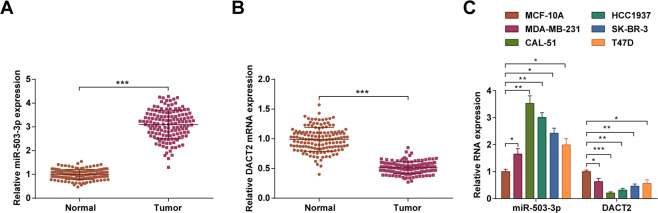
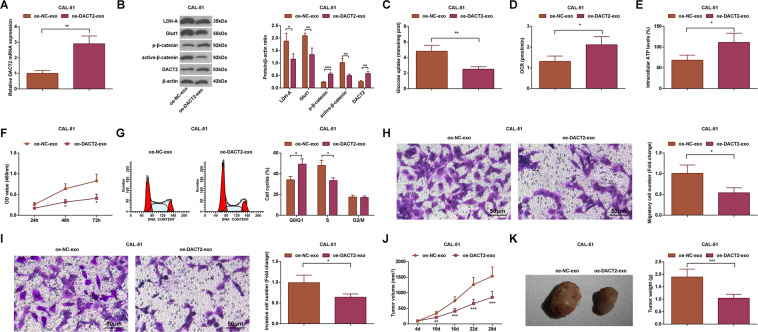
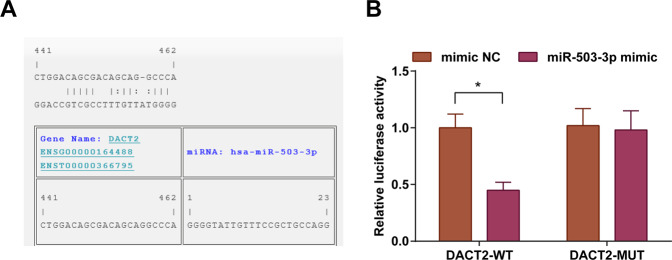
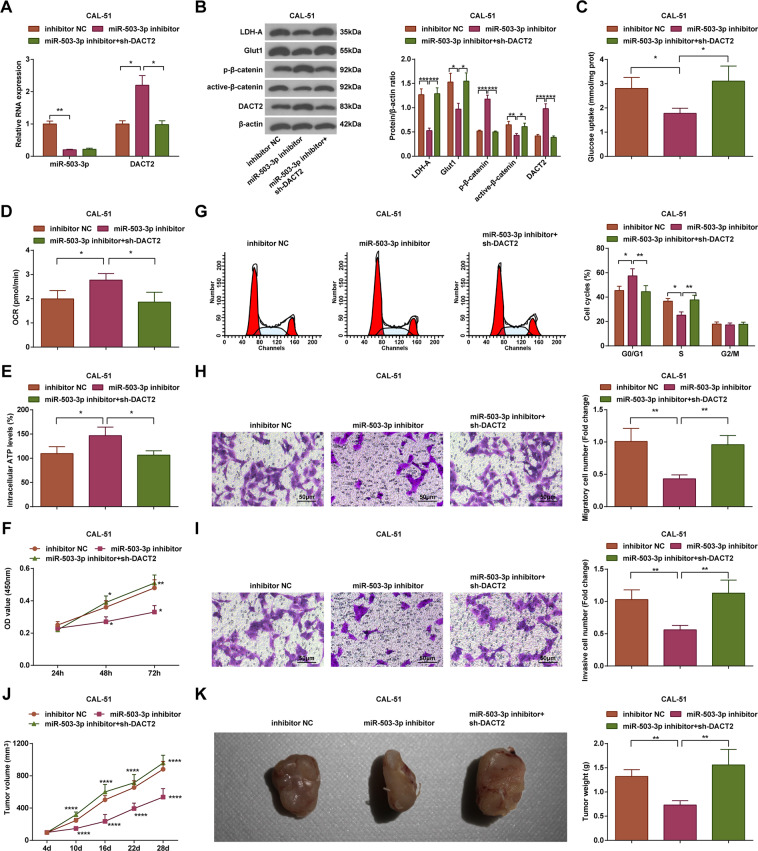
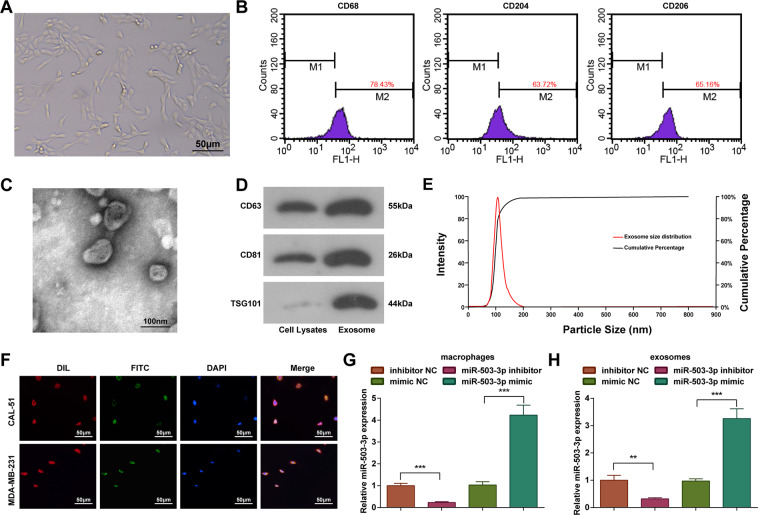
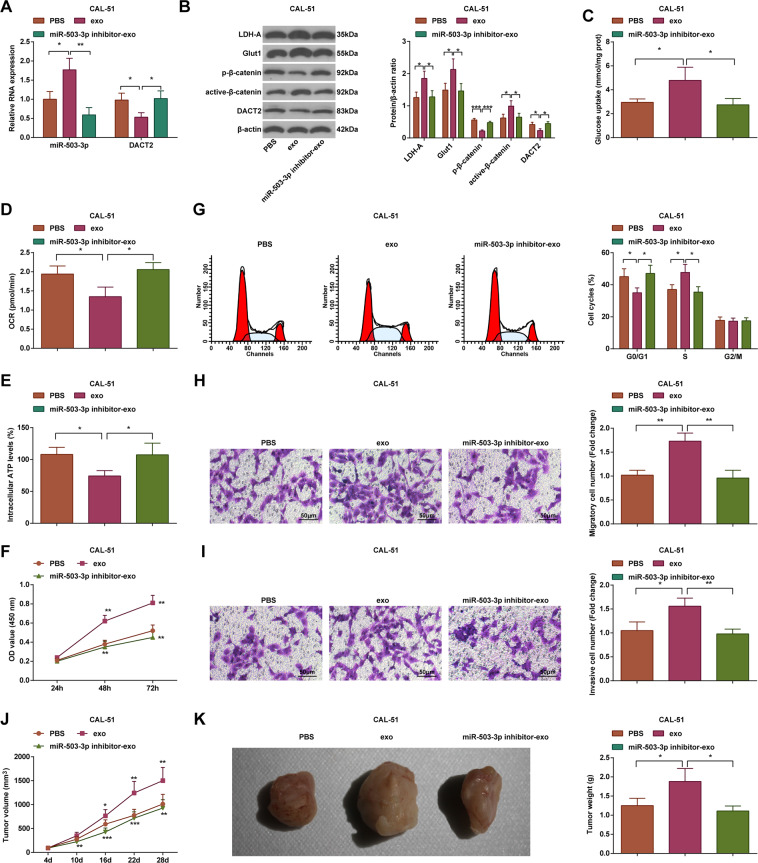
MicroRNAs (miRNAs) are emerging drivers in tumor progression, while the role of miR-503-3p in breast cancer (BC) remains largely unknown. We aimed to explore the impact of macrophage-derived exosomal miR-503-3p in the development of BC by regulating disheveled-associated binding antagonist of beta-catenin 2 (DACT2). miR-503-3p and DACT2 expression in BC tissues and cells was assessed, and the expression of Wnt/β-catenin signaling pathway-related proteins in BC cells was also evaluated. Macrophages were induced and exosomes were extracted. The screened BC cell lines were, respectively, treated with exosomes, miR-503-3p inhibitor/mimic or upregulated/inhibited DACT2, and then the phenotypes, glucose intake, oxygen consumption rate, and adenosine-triphosphate (ATP) level of BC cells were determined. Cell growth in vivo was also observed. MiR-503-3p was elevated, DACT2 was reduced, and Wnt/β-catenin signaling pathway was activated in BC cells. Macrophage-derived exosomes, upregulated miR-503-3p or inhibited DACT2 promoted malignant behaviors of BC cells, glucose intake, and activity of the Wnt/β-catenin signaling pathway, while repressed oxygen consumption rate and ATP level in BC cells. Reversely, reduced miR-503-3p or upregulated DACT2 exerted opposite effects. This study revealed that reduction of macrophage-derived exosomal miR-503-3p repressed glycolysis and promoted mitochondrial oxidative phosphorylation in BC by elevating DACT2 and inactivating Wnt/β-catenin signaling pathway. Our research may provide novel targets for BC treatment.
微小RNA(miRNA)是肿瘤进展过程中新出现的驱动因素,而miR-503-3p在乳腺癌(BC)中的作用仍 largely未知。我们旨在通过调节β-连环蛋白2的无序相关结合拮抗剂(DACT2)来探讨巨噬细胞衍生的外泌体miR-503-3p在BC发生发展中的作用。评估了BC组织和细胞中miR-503-3p和DACT2的表达,并评估了BC细胞中Wnt/β-连环蛋白信号通路相关蛋白的表达。诱导巨噬细胞并提取外泌体。分别用外泌体、miR-503-3p抑制剂/模拟物或上调/抑制DACT2处理筛选出的BC细胞系,然后测定BC细胞的表型、葡萄糖摄取、氧消耗率和三磷酸腺苷(ATP)水平。还观察了体内细胞生长情况。BC细胞中miR-503-3p升高,DACT2降低,Wnt/β-连环蛋白信号通路被激活。巨噬细胞衍生的外泌体、上调的miR-503-3p或抑制的DACT2促进了BC细胞的恶性行为、葡萄糖摄取以及Wnt/β-连环蛋白信号通路的活性,同时降低了BC细胞的氧消耗率和ATP水平。相反,降低miR-503-3p或上调DACT2则产生相反的效果。本研究表明,减少巨噬细胞衍生的外泌体miR-503-3p可通过升高DACT2和使Wnt/β-连环蛋白信号通路失活来抑制BC中的糖酵解并促进线粒体氧化磷酸化。我们的研究可能为BC治疗提供新的靶点。