Department of Surgery, Washington University School of Medicine, Saint Louis, Missouri.
Department of Surgery, The University of Maryland, Baltimore, Maryland.
J Heart Lung Transplant. 2021 Jul;40(7):562-568. doi: 10.1016/j.healun.2021.03.017. Epub 2021 Mar 26.
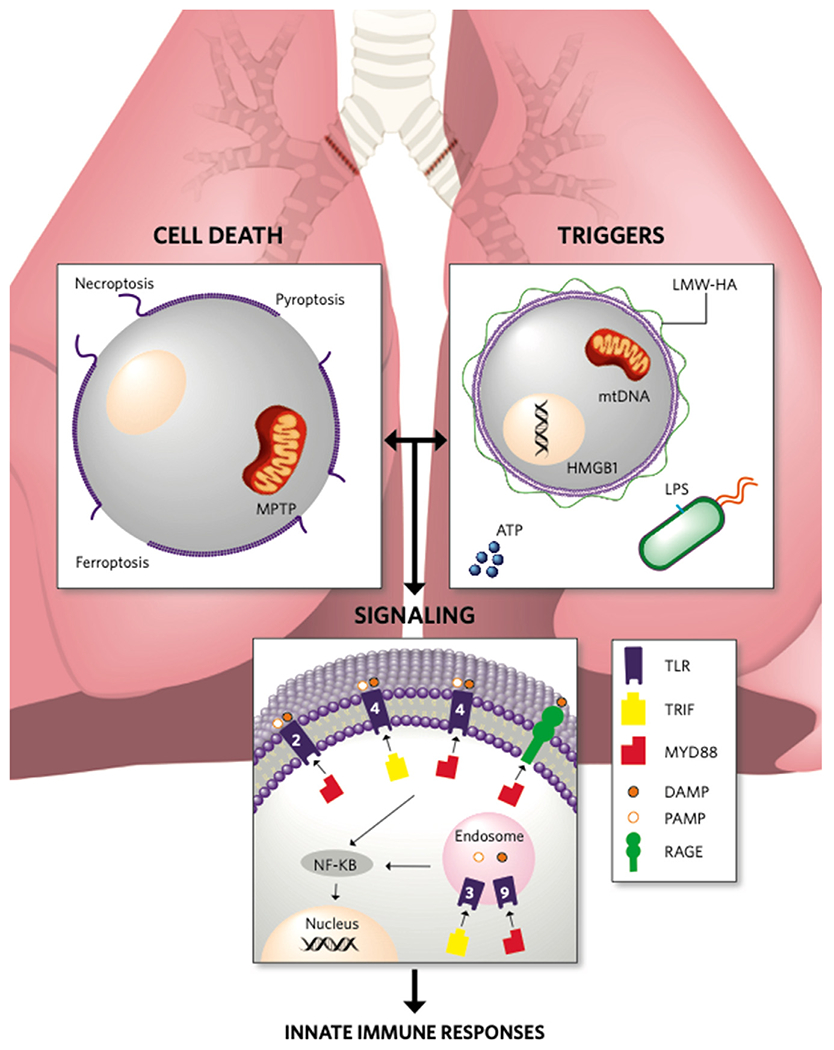
Innate immune pathways early after pulmonary transplantation have been shown to cause primary graft dysfunction (PGD) and also predispose to late graft failure. Recent studies in animal models have elucidated critical mechanisms governing such innate immune responses. Here, we discuss pathways of inflammatory cell death, triggers for sterile and infectious inflammation, and signaling cascades that mediate lung injury early after transplantation. These studies highlight potential avenues for lung-specific therapies early following lung transplantation to dampen innate immune responses and improve outcomes.
已有的研究表明,肺移植后早期的固有免疫途径会导致原发性移植物功能障碍(PGD),并使移植物易于发生晚期失功。近期的动物模型研究阐明了固有免疫反应的关键调控机制。在此,我们讨论了炎性细胞死亡途径、非感染性和感染性炎症的触发因素,以及介导移植后早期肺损伤的信号级联反应。这些研究强调了在肺移植后早期采用肺特异性治疗方案来抑制固有免疫反应、改善预后的潜在途径。