Marcinczyk Natalia, Gołaszewska Agata, Gromotowicz-Poplawska Anna, Misztal Tomasz, Strawa Jakub, Tomczyk Michał, Kasacka Irena, Chabielska Ewa
Department of Biopharmacy, Medical University of Bialystok, Bialystok, Poland.
Department of Physical Chemistry, Medical University of Bialystok, Bialystok, Poland.
Front Pharmacol. 2021 May 5;12:682987. doi: 10.3389/fphar.2021.682987. eCollection 2021.
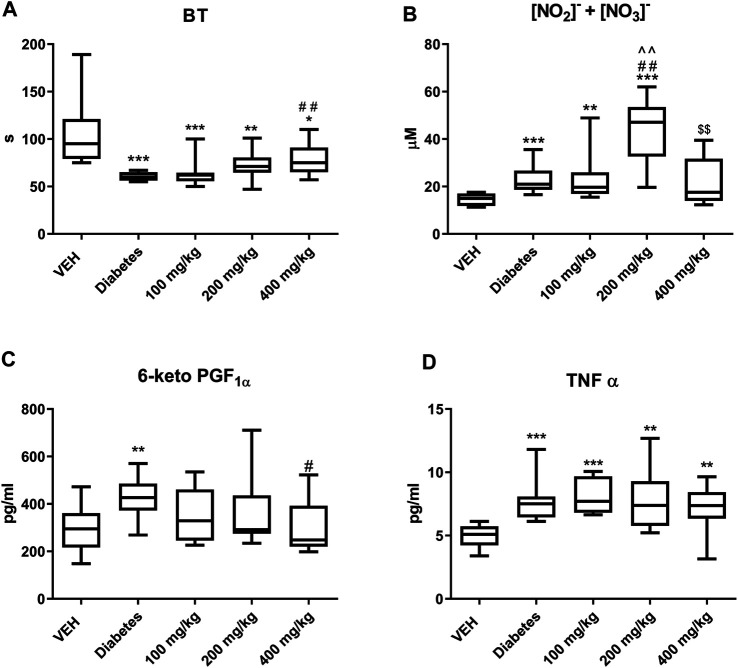
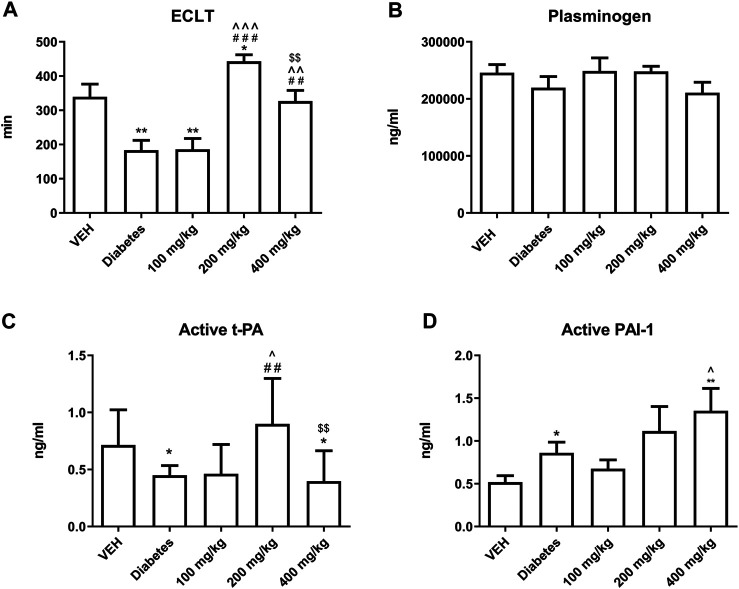
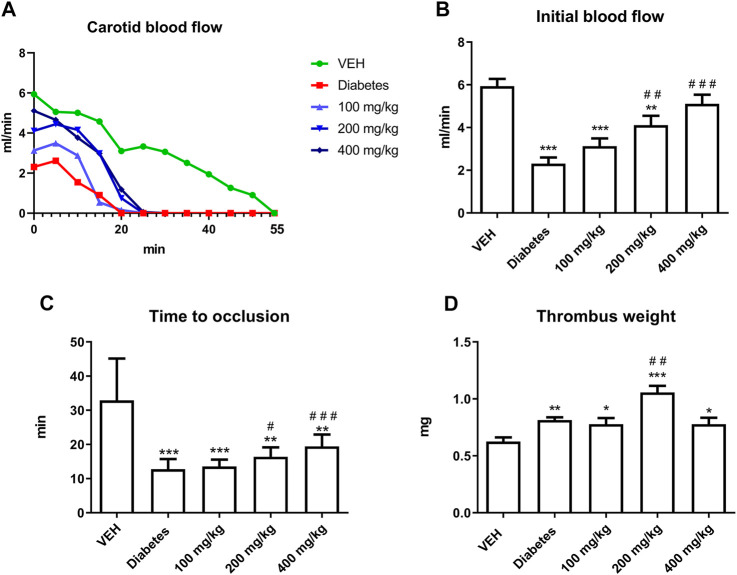
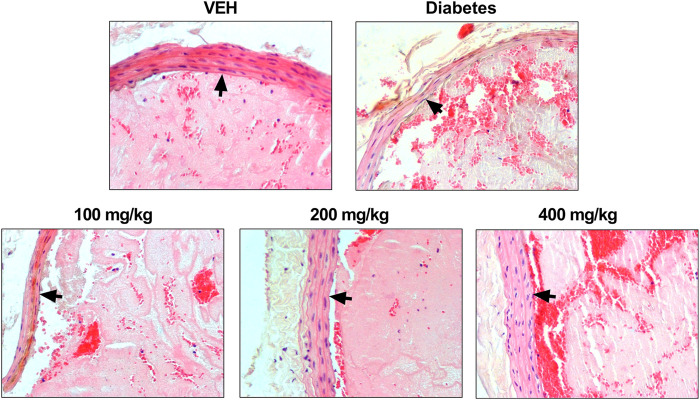
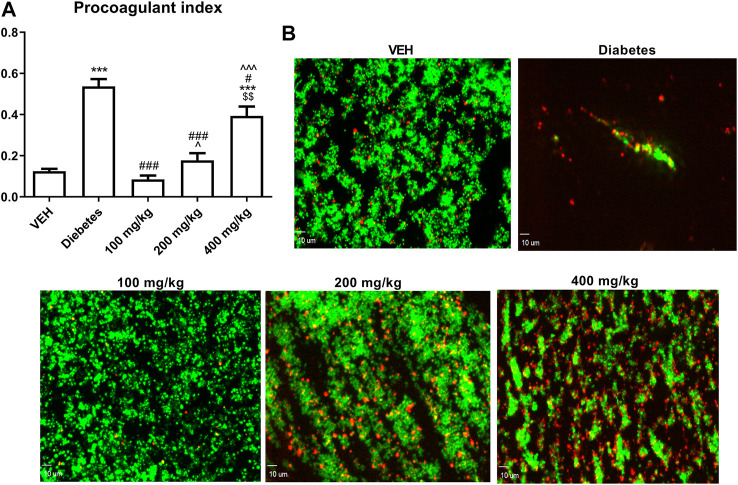
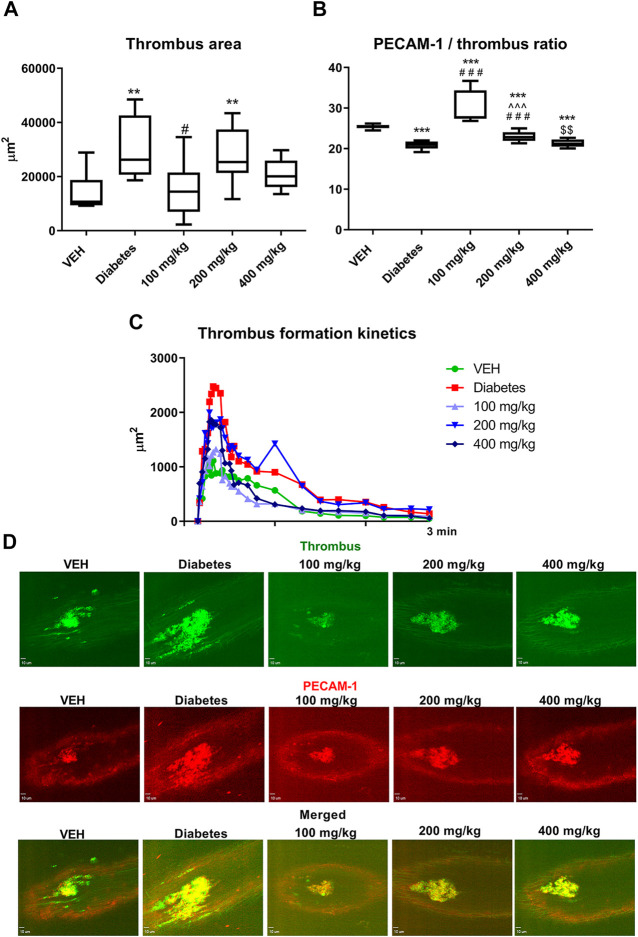
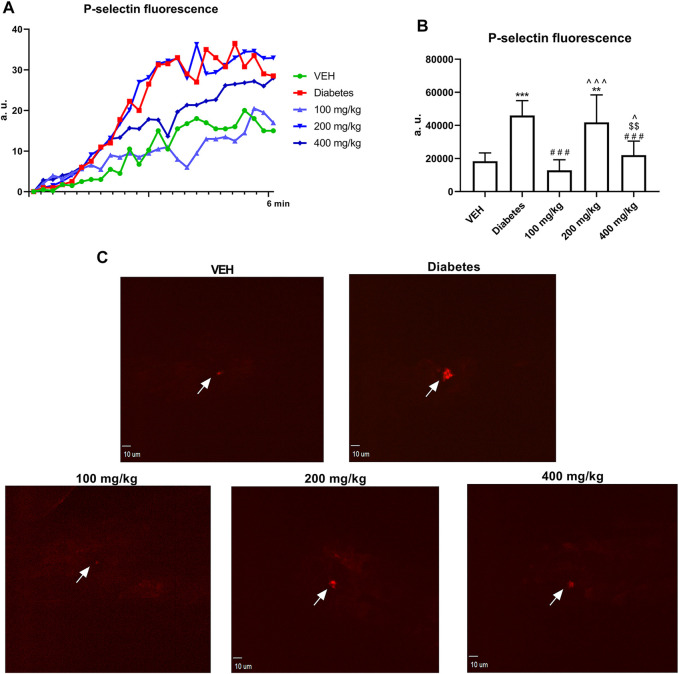
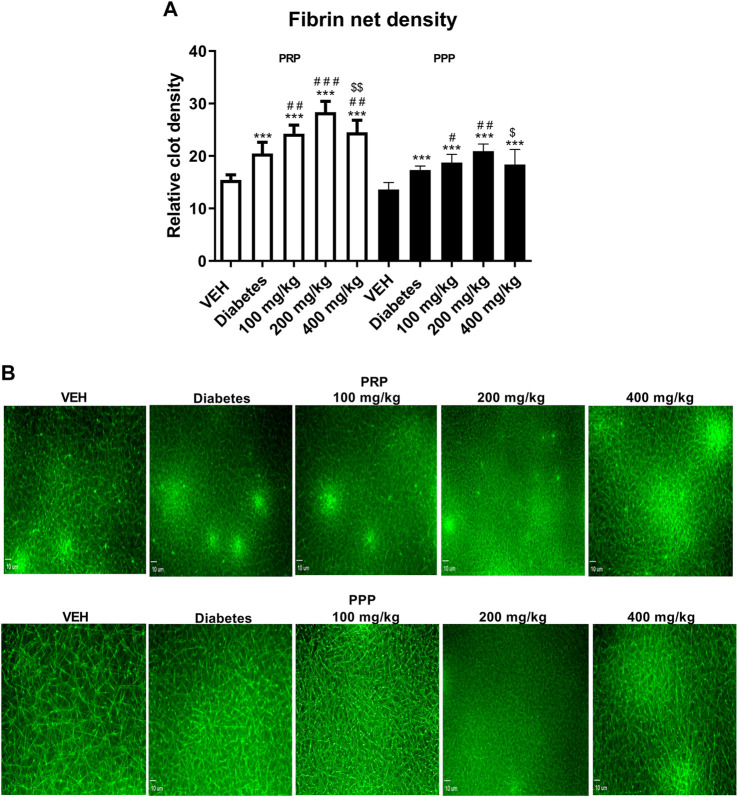
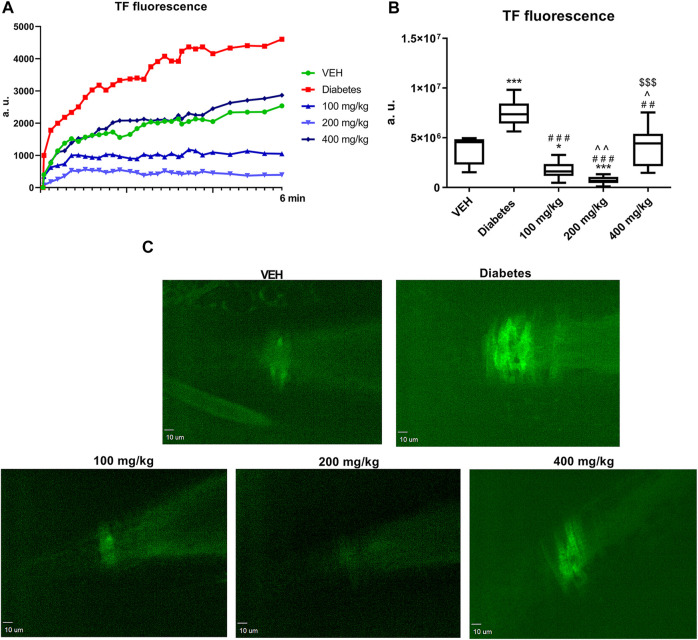
In our previous study, we showed that ellagitannin- and procyanidin-rich tormentil extract (TE) decreased experimental arterial thrombosis in normoglycemic rats through platelet inhibition. TE also slightly increased coagulation and attenuated fibrinolysis; however, these effects did not nullify the antithrombotic effect of TE. The present study aimed to assess whether TE exerts antithrombotic activity in streptozotocin (STZ)-induced diabetes, which is characterized by pre-existing increased coagulation and impaired fibrinolysis, in and thrombosis assays. TE (100, 200, or 400 mg/kg, ) was administered for 14 days to STZ-induced diabetic rats and mice. TE at 100 mg/kg dose decreased the thrombus area in the mice model of laser-induced thrombosis through its potent antiplatelet effect. However, TE at 200 mg/kg dose increased thrombus weight in electrically induced arterial thrombosis in rats. The prothrombotic effect could be due to increased coagulation and attenuated fibrinolysis. TE at 400 mg/kg dose also improved vascular functions, which was mainly reflected as an increase in the arterial blood flow, bleeding time prolongation, and thickening of the arterial wall. However, TE at 400 mg/kg dose did not exert antithrombotic effect. Summarizing, the present results show that TE may exert multidirectional effects on hemostasis in STZ-induced diabetic rats and mice. TE inhibited platelet activity and improved endothelial functions, but it also showed unfavorable effects by increasing the activity of the coagulation system and by inhibiting fibrinolysis. These contrasting effects could be the reason for model-specific influence of TE on the thrombotic process in STZ-induced diabetes.
在我们之前的研究中,我们发现富含鞣花单宁和原花青素的委陵菜提取物(TE)通过抑制血小板减少了正常血糖大鼠的实验性动脉血栓形成。TE也轻微增加了凝血并减弱了纤维蛋白溶解;然而,这些作用并未抵消TE的抗血栓作用。本研究旨在评估TE在链脲佐菌素(STZ)诱导的糖尿病中是否具有抗血栓活性,STZ诱导的糖尿病的特征是预先存在的凝血增加和纤维蛋白溶解受损,通过体内和体外血栓形成试验进行评估。将TE(100、200或400mg/kg,腹腔注射)给予STZ诱导的糖尿病大鼠和小鼠14天。100mg/kg剂量的TE通过其强大的抗血小板作用减少了激光诱导血栓形成小鼠模型中的血栓面积。然而,200mg/kg剂量的TE增加了大鼠电诱导动脉血栓形成中的血栓重量。促血栓形成作用可能是由于凝血增加和纤维蛋白溶解减弱。400mg/kg剂量的TE也改善了血管功能,这主要表现为动脉血流量增加、出血时间延长和动脉壁增厚。然而,400mg/kg剂量的TE没有发挥抗血栓作用。总之,目前的结果表明TE可能对STZ诱导的糖尿病大鼠和小鼠的止血产生多方向影响。TE抑制血小板活性并改善内皮功能,但它也通过增加凝血系统活性和抑制纤维蛋白溶解显示出不利影响。这些相反的作用可能是TE对STZ诱导的糖尿病血栓形成过程产生模型特异性影响的原因。