Pietschmann Jan, Voepel Nadja, Voß Leonie, Rasche Stefan, Schubert Max, Kleines Michael, Krause Hans-Joachim, Shaw Tamlyn M, Spiegel Holger, Schroeper Florian
Fraunhofer Institute for Molecular Biology and Applied Ecology IME, Aachen, Germany.
Laboratory Diagnostic Center, University Hospital RWTH Aachen, Aachen, Germany.
Front Microbiol. 2021 May 5;12:643275. doi: 10.3389/fmicb.2021.643275. eCollection 2021.
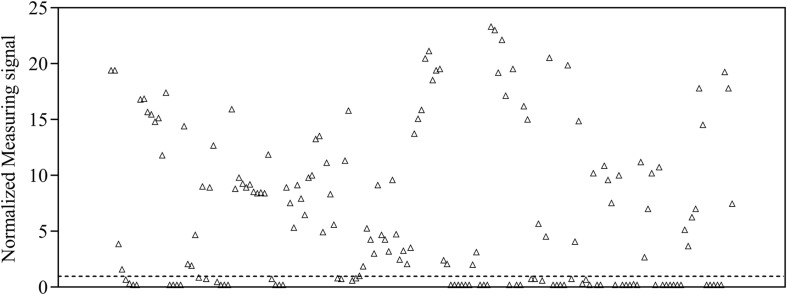
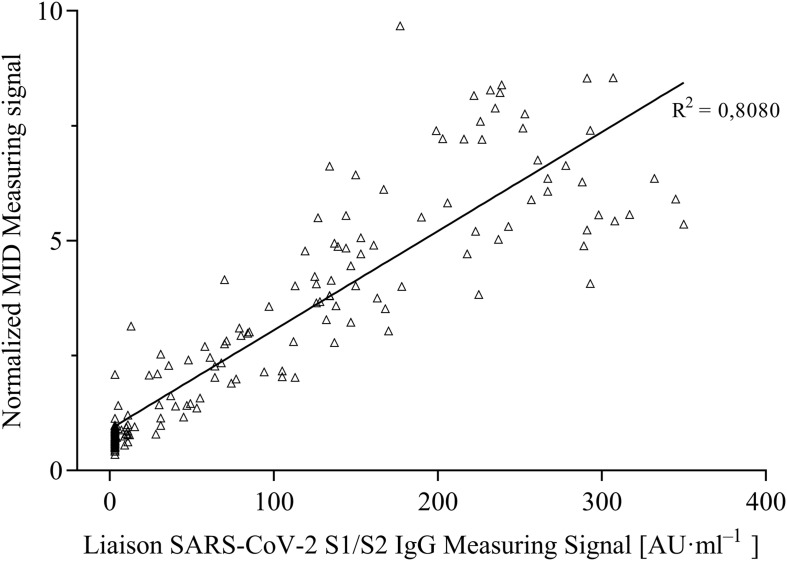
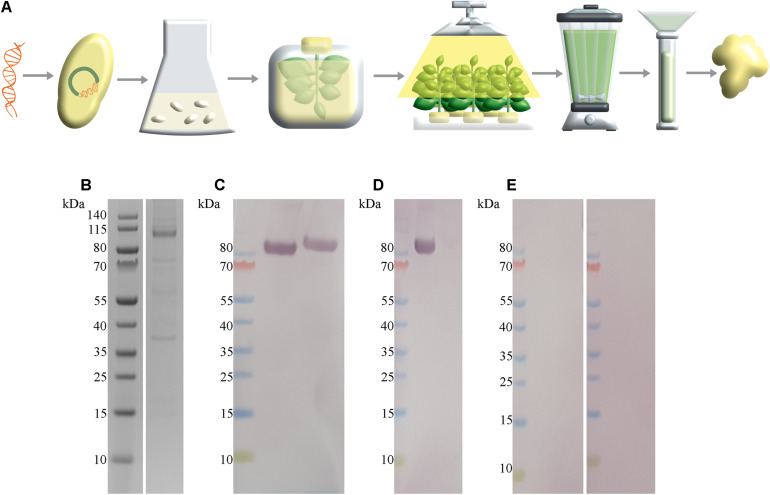
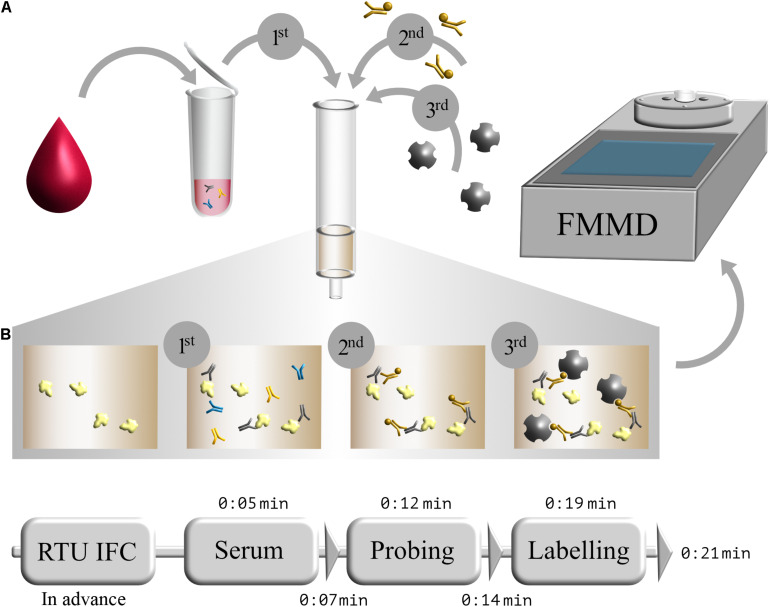
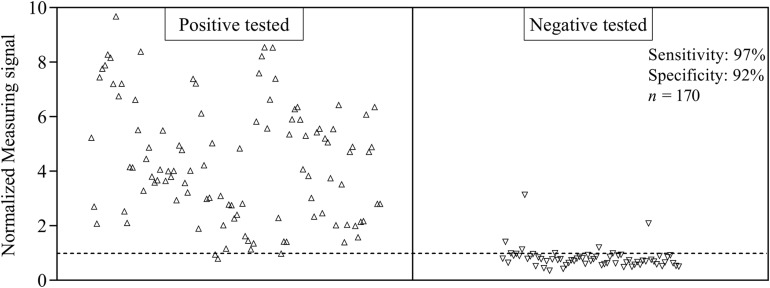
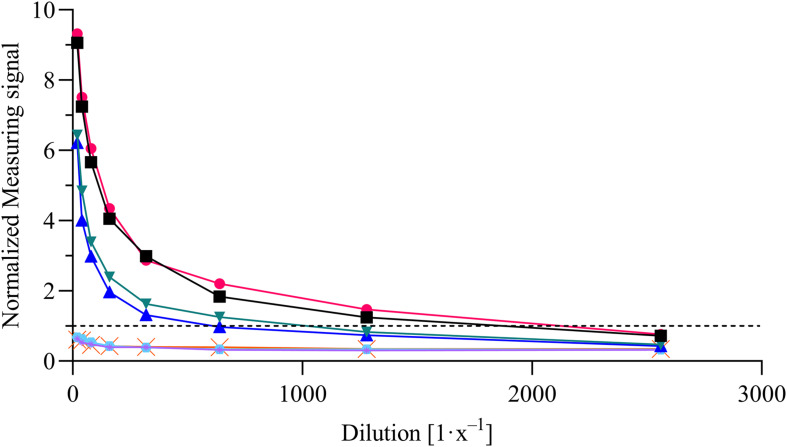
A novel severe acute respiratory syndrome coronavirus-2 (SARS-CoV-2) emerged in China in December 2019, causing an ongoing, rapidly spreading global pandemic. Worldwide, vaccination is now expected to provide containment of the novel virus, resulting in an antibody-mediated immunity. To verify this, serological antibody assays qualitatively as well as quantitatively depicting the amount of generated antibodies are of great importance. Currently available test methods are either laboratory based or do not have the ability to indicate an estimation about the immune response. To overcome this, a novel and rapid serological magnetic immunodetection (MID) point-of-care (PoC) assay was developed, with sensitivity and specificity comparable to laboratory-based DiaSorin Liaison SARS-CoV-2 S1/S2 IgG assay. To specifically enrich human antibodies against SARS-CoV-2 in immunofiltration columns (IFCs) from patient sera, a SARS-CoV-2 S1 antigen was transiently produced in plants, purified and immobilized on the IFC. Then, an IgG-specific secondary antibody could bind to the retained antibodies, which was finally labeled using superparamagnetic nanoparticles. Based on frequency magnetic mixing technology (FMMD), the magnetic particles enriched in IFC were detected using a portable FMMD device. The obtained measurement signal correlates with the amount of SARS-CoV-2-specific antibodies in the sera, which could be demonstrated by titer determination. In this study, a MID-based assay could be developed, giving qualitative as well as semiquantitative results of SARS-CoV-2-specific antibody levels in patient's sera within 21 min of assay time with a sensitivity of 97% and a specificity of 92%, based on the analysis of 170 sera from hospitalized patients that were tested using an Food and Drug Administration (FDA)-certified chemiluminescence assay.
2019年12月,一种新型严重急性呼吸综合征冠状病毒2(SARS-CoV-2)在中国出现,引发了一场持续且迅速蔓延的全球大流行。在全球范围内,目前预计接种疫苗可控制这种新型病毒,产生抗体介导的免疫力。为了验证这一点,定性和定量描述所产生抗体量的血清学抗体检测非常重要。目前可用的检测方法要么基于实验室,要么无法指示对免疫反应的估计。为了克服这一问题,开发了一种新型快速血清学磁免疫检测(MID)即时检测(PoC)方法,其灵敏度和特异性与基于实验室的DiaSorin Liaison SARS-CoV-2 S1/S2 IgG检测相当。为了从患者血清的免疫过滤柱(IFC)中特异性富集针对SARS-CoV-2的人抗体,在植物中瞬时产生、纯化并固定在IFC上一种SARS-CoV-2 S1抗原。然后,IgG特异性二抗可与保留的抗体结合,最后使用超顺磁性纳米颗粒进行标记。基于频率磁混合技术(FMMD),使用便携式FMMD设备检测IFC中富集的磁性颗粒。获得的测量信号与血清中SARS-CoV-2特异性抗体的量相关,这可以通过滴度测定来证明。在本研究中,基于对170份住院患者血清的分析,使用食品药品监督管理局(FDA)认证的化学发光检测法进行检测,开发了一种基于MID的检测方法,可在21分钟的检测时间内给出患者血清中SARS-CoV-2特异性抗体水平的定性以及半定量结果,灵敏度为97%,特异性为92%。