• 文献检索
  • 文档翻译
  • 深度研究
  • 学术资讯
  • Suppr Zotero 插件Zotero 插件
  • 邀请有礼
  • 套餐&价格
  • 历史记录
应用&插件
Suppr Zotero 插件Zotero 插件浏览器插件Mac 客户端Windows 客户端微信小程序
定价
高级版会员购买积分包购买API积分包
服务
文献检索文档翻译深度研究API 文档MCP 服务
关于我们
关于 Suppr公司介绍联系我们用户协议隐私条款
关注我们

Suppr 超能文献

核心技术专利:CN118964589B侵权必究
粤ICP备2023148730 号-1Suppr @ 2026

文献检索

告别复杂PubMed语法,用中文像聊天一样搜索,搜遍4000万医学文献。AI智能推荐,让科研检索更轻松。

立即免费搜索

文件翻译

保留排版,准确专业,支持PDF/Word/PPT等文件格式,支持 12+语言互译。

免费翻译文档

深度研究

AI帮你快速写综述,25分钟生成高质量综述,智能提取关键信息,辅助科研写作。

立即免费体验

稻瘿矮病毒通过其叶蝉传播介体进入植物韧皮部会激活胼胝质沉积以增强病毒传播。

Delivery of Rice Gall Dwarf Virus Into Plant Phloem by Its Leafhopper Vectors Activates Callose Deposition to Enhance Viral Transmission.

作者信息

Yi Ge, Wu Wei, Wei Taiyun

机构信息

State Key Laboratory of Ecological Pest Control for Fujian and Taiwan Crops, Fujian Agriculture and Forestry University, Fuzhou, China.

出版信息

Front Microbiol. 2021 May 5;12:662577. doi: 10.3389/fmicb.2021.662577. eCollection 2021.

DOI:10.3389/fmicb.2021.662577
PMID:34025616
原文链接:https://pmc.ncbi.nlm.nih.gov/articles/PMC8132966/
Abstract

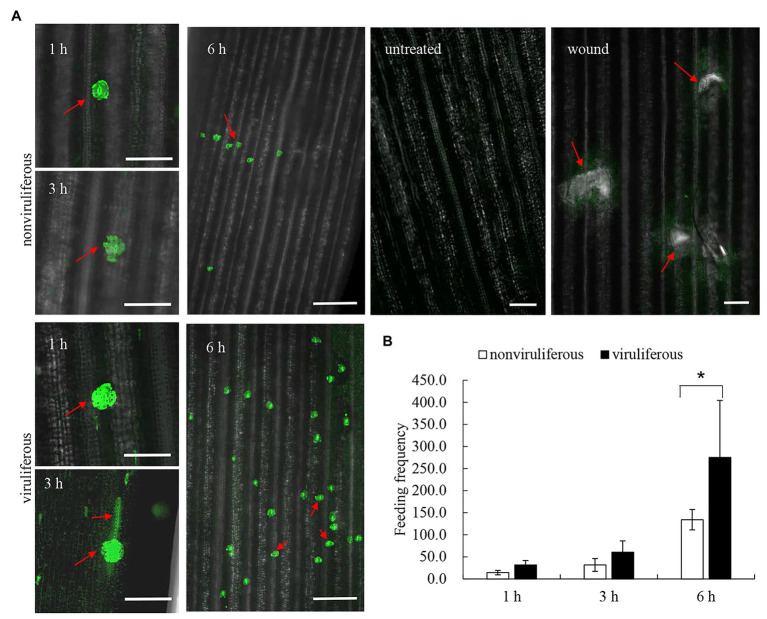
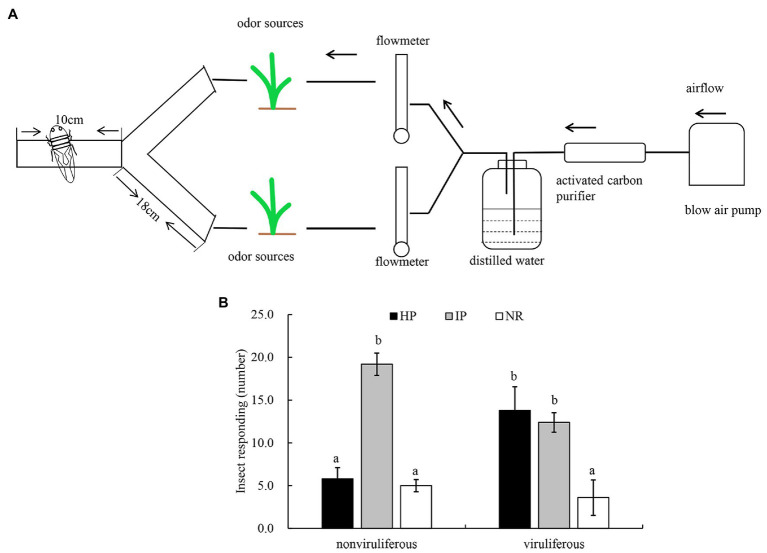
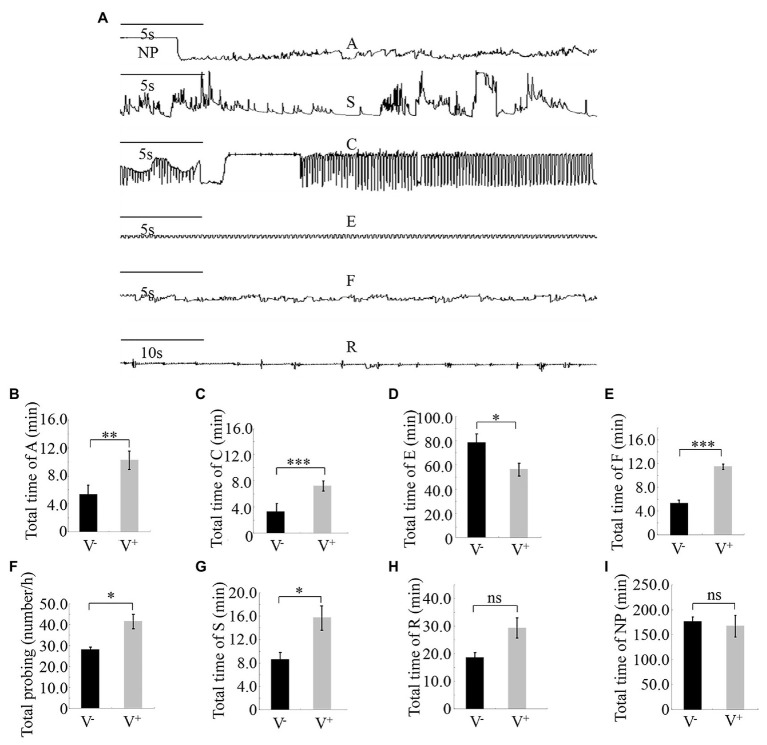
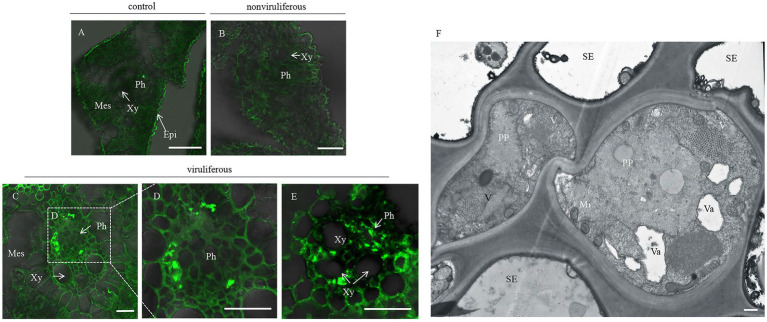
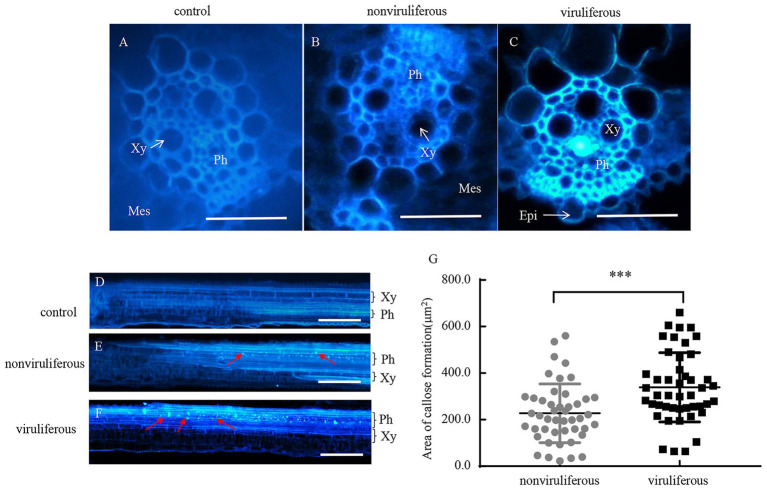
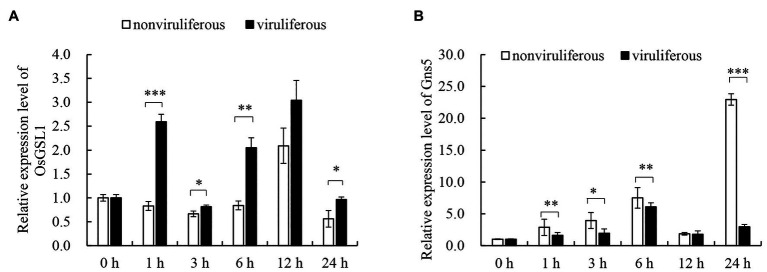
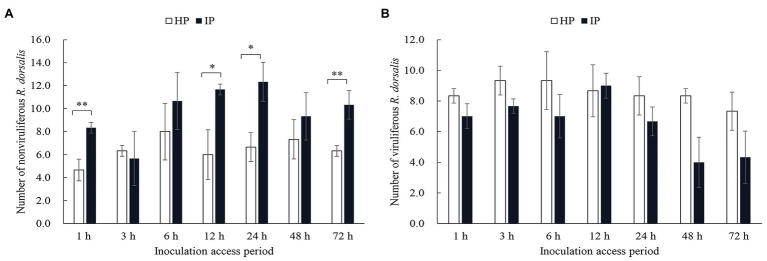
Rice gall dwarf virus (RGDV) and its leafhopper vector are plant phloem-inhabiting pests. Currently, how the delivery of plant viruses into plant phloem piercing-sucking insects modulates callose deposition to promote viral transmission remains poorly understood. Here, we initially demonstrated that nonviruliferous preferred feeding on RGDV-infected rice plants than viruliferous counterpart. Electrical penetration graph assay showed that viruliferous encountered stronger physical barriers than nonviruliferous insects during feeding, finally prolonging salivary secretion and ingestion probing. Viruliferous feeding induced more defense-associated callose deposition on sieve plates of rice phloem. Furthermore, RGDV infection significantly increased the cytosolic Ca level in rice plants, triggering substantial callose deposition. Such a virus-mediated insect feeding behavior change potentially impedes insects from continuously ingesting phloem sap and promotes the secretion of more infectious virions from the salivary glands into rice phloem. This is the first study demonstrating that the delivery of a phloem-limited virus by piercing-sucking insects into the plant phloem activates the defense-associated callose deposition to enhance viral transmission.

摘要

水稻瘤矮病毒(RGDV)及其叶蝉传播介体是寄生于植物韧皮部的害虫。目前,关于刺吸式昆虫如何将植物病毒传递到植物韧皮部从而调节胼胝质沉积以促进病毒传播,仍知之甚少。在此,我们首次证明无毒叶蝉比带毒叶蝉更倾向于取食感染RGDV的水稻植株。刺探电位图谱分析表明,带毒叶蝉在取食过程中比无毒叶蝉遇到更强的物理屏障,最终延长了唾液分泌和取食刺探时间。带毒叶蝉取食诱导水稻韧皮部筛板上更多与防御相关的胼胝质沉积。此外,RGDV感染显著提高了水稻植株胞质钙水平,引发大量胼胝质沉积。这种病毒介导的昆虫取食行为变化可能阻碍昆虫持续摄取韧皮部汁液,并促进更多感染性病毒粒子从唾液腺分泌到水稻韧皮部。这是第一项证明刺吸式昆虫将韧皮部受限病毒传递到植物韧皮部会激活与防御相关的胼胝质沉积以增强病毒传播的研究。
https://cdn.ncbi.nlm.nih.gov/pmc/blobs/19b6/8132966/673e638c4653/fmicb-12-662577-g007.jpg
https://cdn.ncbi.nlm.nih.gov/pmc/blobs/19b6/8132966/81c799f627be/fmicb-12-662577-g001.jpg
https://cdn.ncbi.nlm.nih.gov/pmc/blobs/19b6/8132966/43c3e534b047/fmicb-12-662577-g002.jpg
https://cdn.ncbi.nlm.nih.gov/pmc/blobs/19b6/8132966/02240085aa55/fmicb-12-662577-g003.jpg
https://cdn.ncbi.nlm.nih.gov/pmc/blobs/19b6/8132966/4fd4b101c6e3/fmicb-12-662577-g004.jpg
https://cdn.ncbi.nlm.nih.gov/pmc/blobs/19b6/8132966/456077b138b1/fmicb-12-662577-g005.jpg
https://cdn.ncbi.nlm.nih.gov/pmc/blobs/19b6/8132966/e9889a941579/fmicb-12-662577-g006.jpg
https://cdn.ncbi.nlm.nih.gov/pmc/blobs/19b6/8132966/673e638c4653/fmicb-12-662577-g007.jpg
https://cdn.ncbi.nlm.nih.gov/pmc/blobs/19b6/8132966/81c799f627be/fmicb-12-662577-g001.jpg
https://cdn.ncbi.nlm.nih.gov/pmc/blobs/19b6/8132966/43c3e534b047/fmicb-12-662577-g002.jpg
https://cdn.ncbi.nlm.nih.gov/pmc/blobs/19b6/8132966/02240085aa55/fmicb-12-662577-g003.jpg
https://cdn.ncbi.nlm.nih.gov/pmc/blobs/19b6/8132966/4fd4b101c6e3/fmicb-12-662577-g004.jpg
https://cdn.ncbi.nlm.nih.gov/pmc/blobs/19b6/8132966/456077b138b1/fmicb-12-662577-g005.jpg
https://cdn.ncbi.nlm.nih.gov/pmc/blobs/19b6/8132966/e9889a941579/fmicb-12-662577-g006.jpg
https://cdn.ncbi.nlm.nih.gov/pmc/blobs/19b6/8132966/673e638c4653/fmicb-12-662577-g007.jpg

相似文献

1
Delivery of Rice Gall Dwarf Virus Into Plant Phloem by Its Leafhopper Vectors Activates Callose Deposition to Enhance Viral Transmission.稻瘿矮病毒通过其叶蝉传播介体进入植物韧皮部会激活胼胝质沉积以增强病毒传播。
Front Microbiol. 2021 May 5;12:662577. doi: 10.3389/fmicb.2021.662577. eCollection 2021.
2
Rice Gall Dwarf Virus Promotes the Propagation and Transmission of Rice Stripe Mosaic Virus by Co-infected Insect Vectors.水稻瘤矮病毒通过共同感染的昆虫介体促进水稻条纹花叶病毒的增殖和传播。
Front Microbiol. 2022 Feb 11;13:834712. doi: 10.3389/fmicb.2022.834712. eCollection 2022.
3
A leafhopper saliva protein mediates horizontal transmission of viral pathogens from insect vectors into rice phloem.一种叶蝉唾液蛋白介导病毒病原体从昆虫媒介到水稻韧皮部的水平传播。
Commun Biol. 2022 Mar 4;5(1):204. doi: 10.1038/s42003-022-03160-y.
4
Adverse Effects of Rice gall dwarf virus upon its Insect Vector Recilia dorsalis (Hemiptera: Cicadellidae).水稻瘤矮病毒对其昆虫介体黑尾叶蝉(半翅目:叶蝉科)的不良影响
Plant Dis. 2016 Apr;100(4):784-790. doi: 10.1094/PDIS-06-15-0713-RE. Epub 2016 Feb 4.
5
Sieve element occlusion: Interactions with phloem sap-feeding insects. A review.筛管阻塞:与韧皮部取食昆虫的相互作用。综述。
J Plant Physiol. 2022 Feb;269:153582. doi: 10.1016/j.jplph.2021.153582. Epub 2021 Dec 5.
6
Rice gall dwarf virus exploits tubules to facilitate viral spread among cultured insect vector cells derived from leafhopper Recilia dorsalis.水稻瘿瘤矮缩病毒利用微管来促进其在由褐飞虱 Recilia dorsalis 衍生的培养昆虫载体细胞间的传播。
Front Microbiol. 2013 Jul 23;4:206. doi: 10.3389/fmicb.2013.00206. eCollection 2013.
7
Plant viruses exploit insect salivary GAPDH to modulate plant defenses.植物病毒利用昆虫唾液 GAPDH 来调节植物防御。
Nat Commun. 2024 Aug 12;15(1):6918. doi: 10.1038/s41467-024-51369-8.
8
Viral Release Threshold in the Salivary Gland of Leafhopper Vector Mediates the Intermittent Transmission of Rice Dwarf Virus.叶蝉载体唾液腺中的病毒释放阈值介导水稻矮缩病毒的间歇性传播。
Front Microbiol. 2021 Feb 4;12:639445. doi: 10.3389/fmicb.2021.639445. eCollection 2021.
9
Herbivore-induced callose deposition on the sieve plates of rice: an important mechanism for host resistance.植食性昆虫诱导水稻筛板胼胝质沉积:宿主抗性的重要机制
Plant Physiol. 2008 Apr;146(4):1810-20. doi: 10.1104/pp.107.111484. Epub 2008 Feb 1.
10
Scavenging HO of plant host by saliva catalase of leafhopper vector benefits viral transmission.叶蝉唾液中的过氧化氢酶清除植物宿主中的过氧化氢有利于病毒传播。
New Phytol. 2024 Sep;243(6):2368-2384. doi: 10.1111/nph.19988. Epub 2024 Jul 29.

引用本文的文献

1
Exploring Virus Diversity in the (), an Economically Important Agricultural Pest.探究()中的病毒多样性,()是一种具有重要经济意义的农业害虫。
Viruses. 2024 Aug 16;16(8):1305. doi: 10.3390/v16081305.
2
Plant viruses exploit insect salivary GAPDH to modulate plant defenses.植物病毒利用昆虫唾液 GAPDH 来调节植物防御。
Nat Commun. 2024 Aug 12;15(1):6918. doi: 10.1038/s41467-024-51369-8.
3
Insect ribosome-rescuer Pelo-Hbs1 complex on sperm surface mediates paternal arbovirus transmission.精子表面的昆虫核糖体修复蛋白 Pelo-Hbs1 复合物介导亲代虫媒病毒传播。

本文引用的文献

1
Challenging battles of plants with phloem-feeding insects and prokaryotic pathogens.植物与韧皮部取食昆虫和原核病原体的艰难战斗。
Proc Natl Acad Sci U S A. 2019 Nov 19;116(47):23390-23397. doi: 10.1073/pnas.1915396116. Epub 2019 Nov 11.
2
Changes in Bemisia tabaci feeding behaviors caused directly and indirectly by cucurbit chlorotic yellows virus.由瓜类黄花叶病毒直接和间接引起的烟粉虱取食行为的变化。
Virol J. 2019 Aug 22;16(1):106. doi: 10.1186/s12985-019-1215-8.
3
Viral pathogens hitchhike with insect sperm for paternal transmission.
Nat Commun. 2024 Aug 9;15(1):6817. doi: 10.1038/s41467-024-51020-6.
4
Leafhopper salivary carboxylesterase suppresses JA-Ile synthesis to facilitate initial arbovirus transmission in rice phloem.叶蝉唾液羧酸酯酶抑制 JA-Ile 合成,从而促进韧皮部初始 arbovirus 传播。
Plant Commun. 2024 Sep 9;5(9):100939. doi: 10.1016/j.xplc.2024.100939. Epub 2024 May 9.
5
Leafhopper salivary vitellogenin mediates virus transmission to plant phloem.叶蝉唾液卵黄原蛋白介导病毒向植物韧皮部的传播。
Nat Commun. 2024 Jan 2;15(1):3. doi: 10.1038/s41467-023-43488-5.
6
Variation of endosymbiont and (CTV) titers in the Huanglongbing insect vector, on CTV-infected plants.黄龙病昆虫传播媒介体内内共生菌及柑橘速衰病毒(CTV)滴度在感染CTV的植株上的变化情况 。
Front Microbiol. 2023 Sep 22;14:1236731. doi: 10.3389/fmicb.2023.1236731. eCollection 2023.
7
The multifarious role of callose and callose synthase in plant development and environment interactions.胼胝质和胼胝质合成酶在植物发育及与环境相互作用中的多种作用
Front Plant Sci. 2023 May 31;14:1183402. doi: 10.3389/fpls.2023.1183402. eCollection 2023.
8
A leafhopper saliva protein mediates horizontal transmission of viral pathogens from insect vectors into rice phloem.一种叶蝉唾液蛋白介导病毒病原体从昆虫媒介到水稻韧皮部的水平传播。
Commun Biol. 2022 Mar 4;5(1):204. doi: 10.1038/s42003-022-03160-y.
9
Rice Gall Dwarf Virus Promotes the Propagation and Transmission of Rice Stripe Mosaic Virus by Co-infected Insect Vectors.水稻瘤矮病毒通过共同感染的昆虫介体促进水稻条纹花叶病毒的增殖和传播。
Front Microbiol. 2022 Feb 11;13:834712. doi: 10.3389/fmicb.2022.834712. eCollection 2022.
病毒病原体搭乘昆虫精子进行父系传播。
Nat Commun. 2019 Feb 27;10(1):955. doi: 10.1038/s41467-019-08860-4.
4
Adverse Effects of Rice gall dwarf virus upon its Insect Vector Recilia dorsalis (Hemiptera: Cicadellidae).水稻瘤矮病毒对其昆虫介体黑尾叶蝉(半翅目:叶蝉科)的不良影响
Plant Dis. 2016 Apr;100(4):784-790. doi: 10.1094/PDIS-06-15-0713-RE. Epub 2016 Feb 4.
5
Rice dwarf virus infection alters green rice leafhopper host preference and feeding behavior.水稻矮缩病毒感染改变了褐飞虱对水稻的取食偏好和行为。
PLoS One. 2018 Sep 7;13(9):e0203364. doi: 10.1371/journal.pone.0203364. eCollection 2018.
6
Newly Distinguished Cell Punctures Associated with Transmission of the Semipersistent Phloem-Limited Beet Yellows Virus.新发现的与半持久韧皮部局限型黄化病毒传播有关的细胞穿刺现象。
J Virol. 2018 Oct 12;92(21). doi: 10.1128/JVI.01076-18. Print 2018 Nov 1.
7
Evolutionary Determinants of Host and Vector Manipulation by Plant Viruses.植物病毒对宿主和媒介的操纵的进化决定因素。
Adv Virus Res. 2018;101:189-250. doi: 10.1016/bs.aivir.2018.02.007. Epub 2018 May 7.
8
Silicon amendment to rice plants contributes to reduced feeding in a phloem-sucking insect through modulation of callose deposition.硅对水稻植株的施用通过调节胼胝质沉积,有助于减少韧皮部取食昆虫的取食。
Ecol Evol. 2017 Dec 3;8(1):631-637. doi: 10.1002/ece3.3653. eCollection 2018 Jan.
9
Vector mediated transmission of persistently transmitted plant viruses.载体介导的持续性植物病毒传播。
Curr Opin Virol. 2018 Feb;28:127-132. doi: 10.1016/j.coviro.2017.12.004. Epub 2018 Jan 4.
10
Endosymbionts Differentially Alter Exploratory Probing Behavior of a Nonpersistent Plant Virus Vector.内共生体差异改变非持久植物病毒载体的探索性探测行为。
Microb Ecol. 2018 Aug;76(2):453-458. doi: 10.1007/s00248-017-1133-5. Epub 2017 Dec 30.