Zhang Yanming, Zhang Zhen, Zhang Yi, Liu Denghua, Wu Jie, Huang Yu, Zhang Guojun
State Key Lab of Digital Manufacturing Equipment & Technology, School of Mechanical Science and Engineering, Huazhong University of Science and Technology, Wuhan, Hubei 430074, PR China.
Department of Mechanical Engineering, Northwestern University, Evanston, IL, USA.
J Adv Res. 2020 Dec 15;30:39-51. doi: 10.1016/j.jare.2020.12.005. eCollection 2021 May.
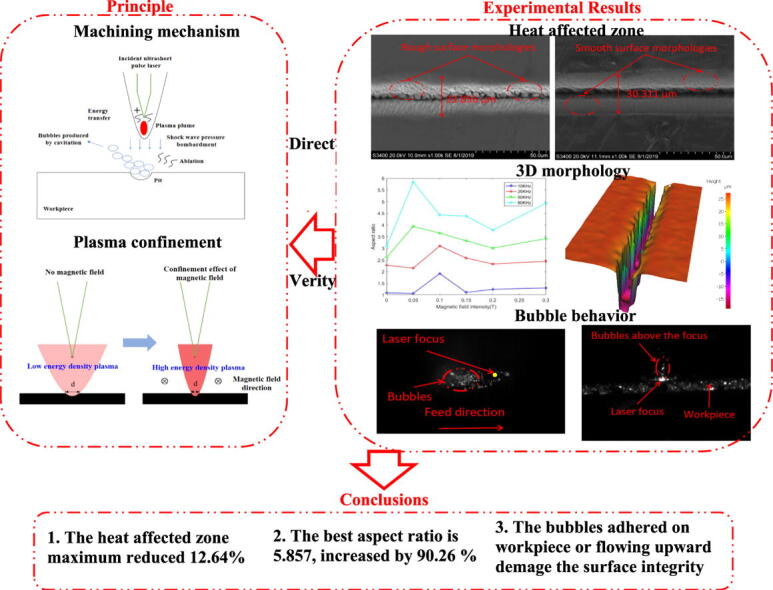
Laser induced plasma micro-machining (LIPMM) has proved its superiority in micro-machining of hard and brittle materials due to less thermal defects, smaller heat affected zone and larger aspect ratio compared to conventional laser ablation.
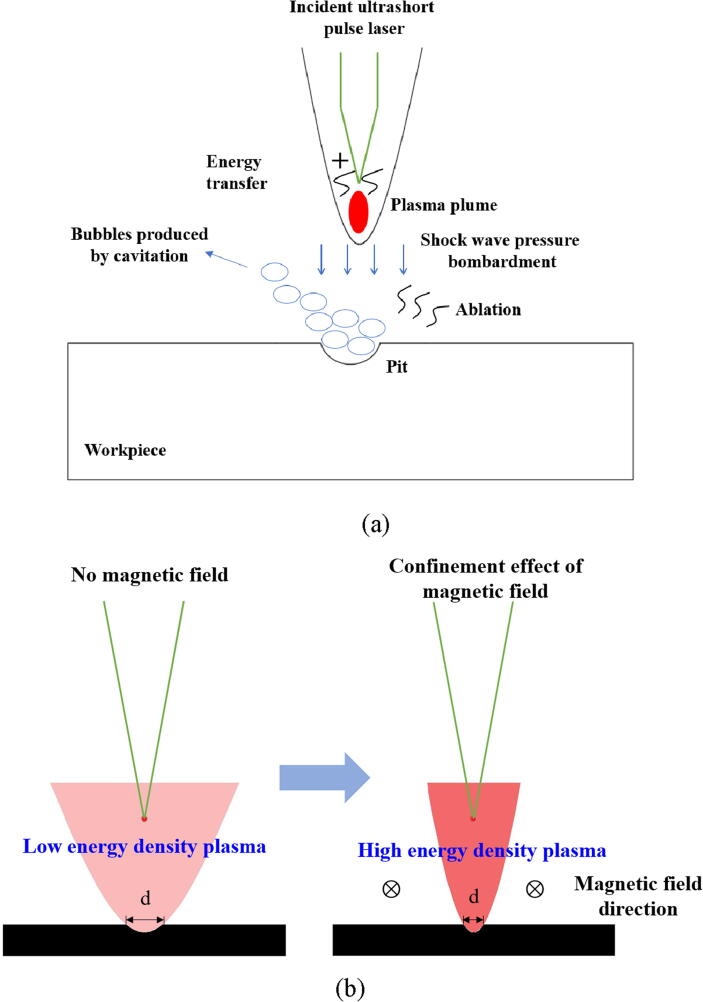
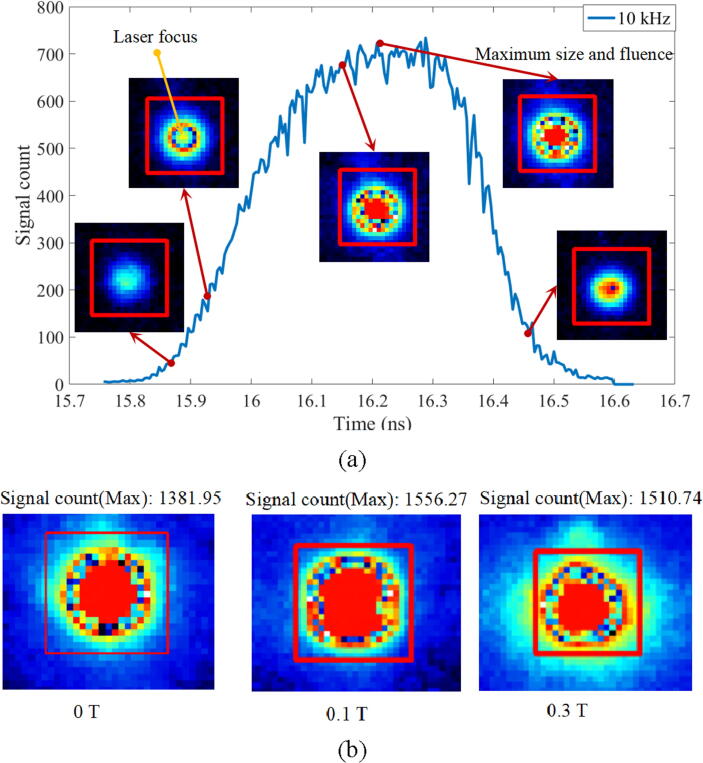
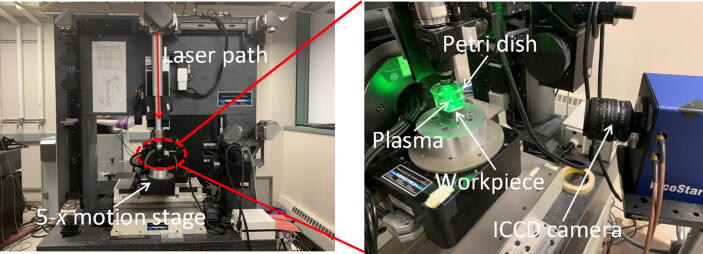
In order to improve characteristics and stability of induced plasma, this paper proposed magnetically controlled LIPMM (MC-LIPMM) to achieve a good performance of processing single-crystal silicon which is widely used in solid state electronics and infrared optical applications.
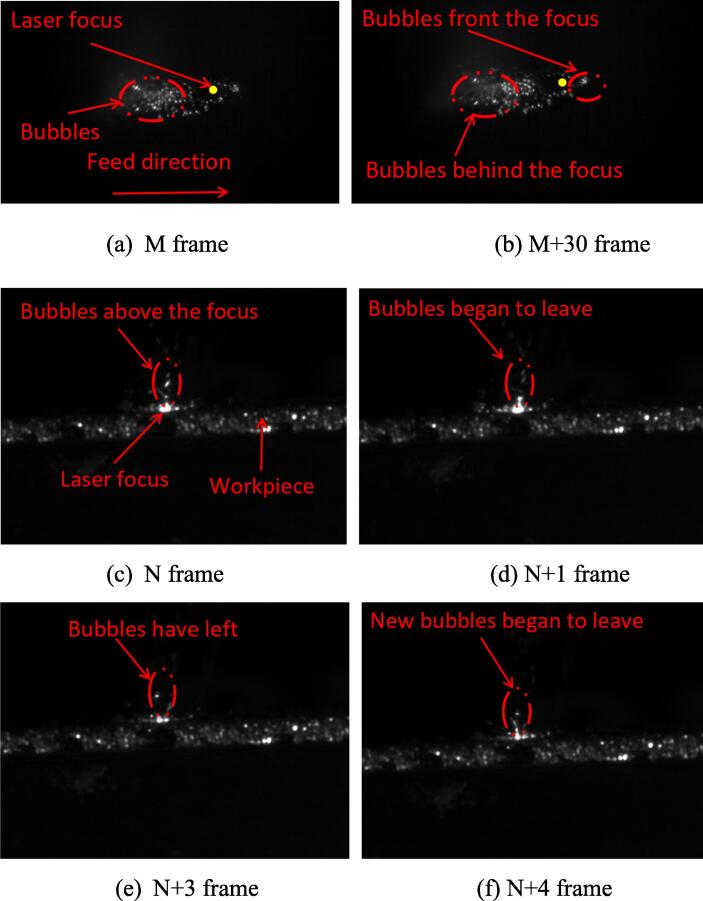
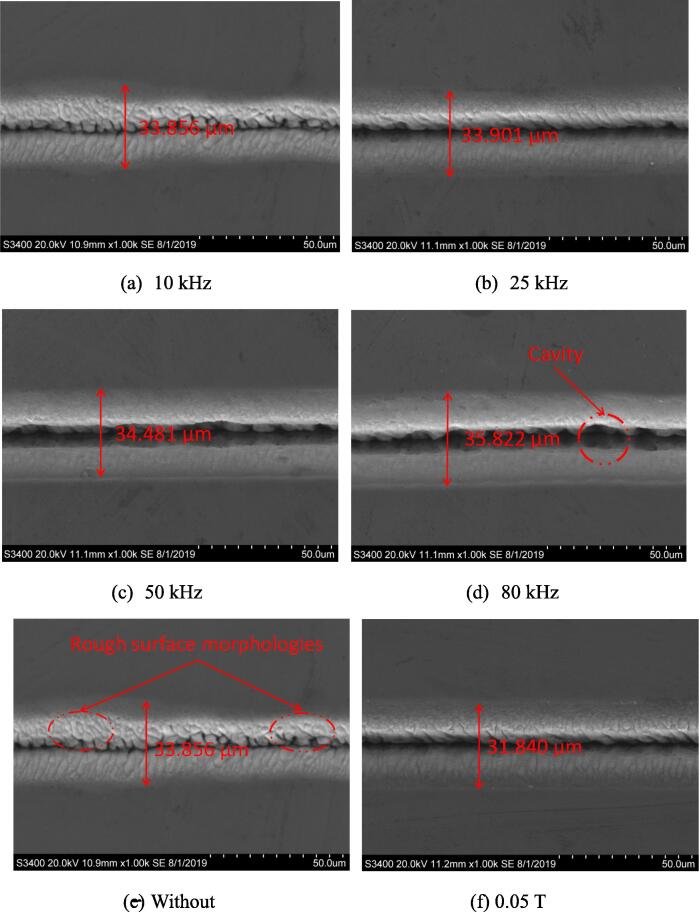
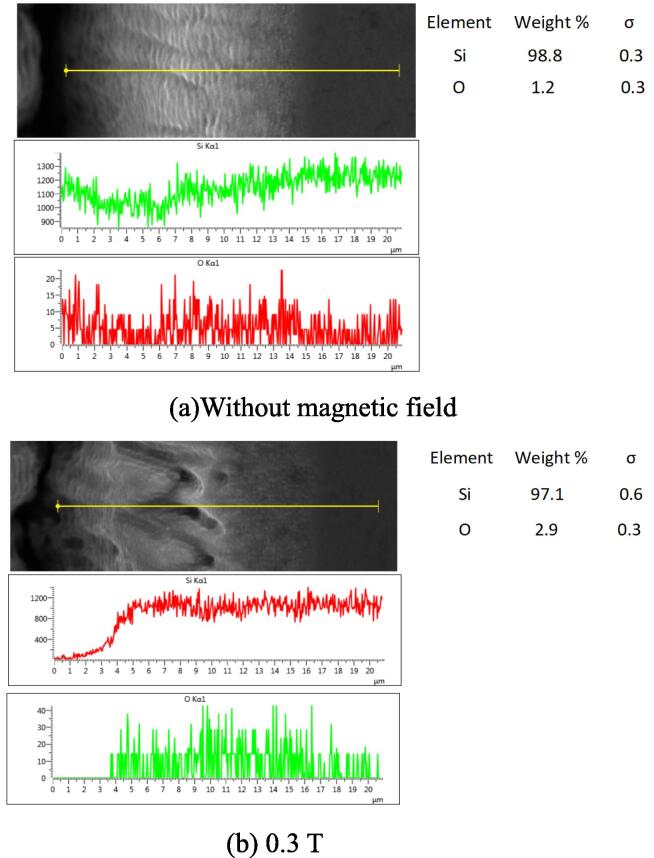
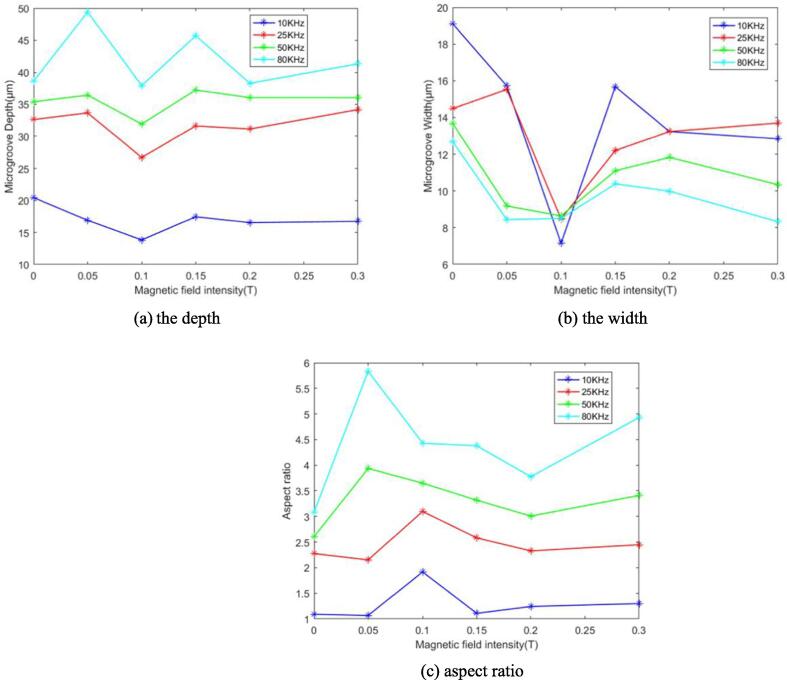
A comprehensive study on surface integrity and geometrical shape was conducted based on the experimental method. Firstly, the mechanism of MC-LIPMM including laser-plasma, laser-materials interactions and transport effects was theoretically analyzed. Then a series of experiments was conducted to completely investigate the effect of magnetic field intensity, pulse repetition frequency, and bubble behavior on surface integrity and geometrical shape of micro channels.
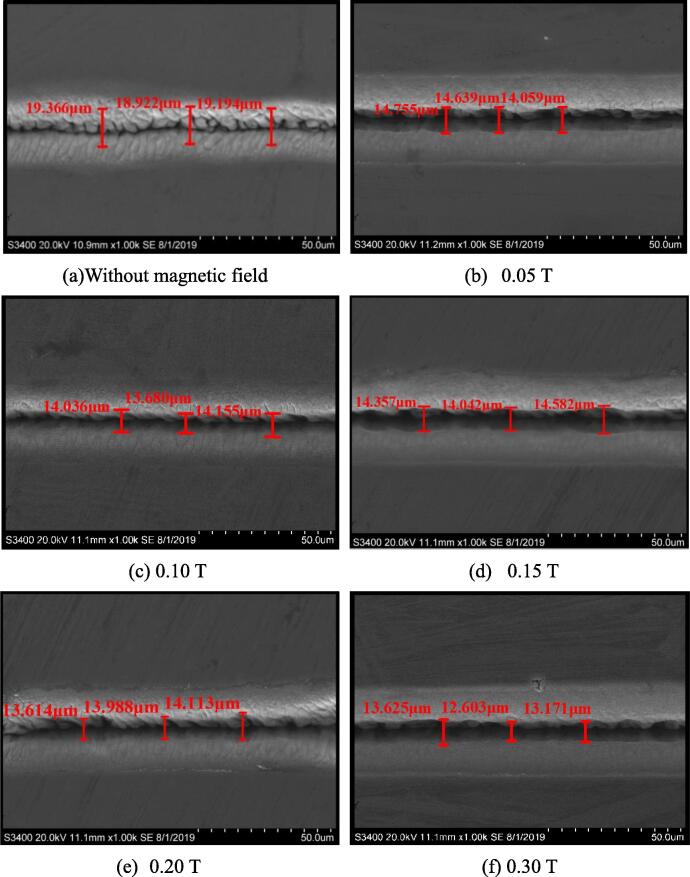
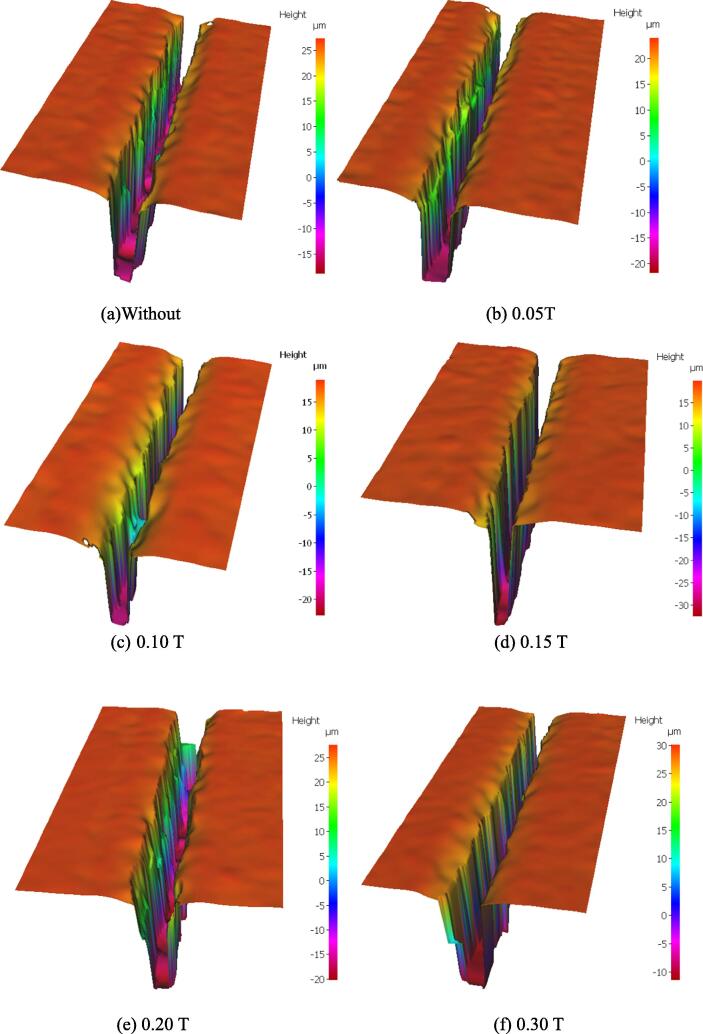
It revealed that magnetic field contributed to maximum reduction of 12.64% for heat affected zone and 62.57% for width while maximum increase of 26.23% for depth and 90.26% for aspect ratio.
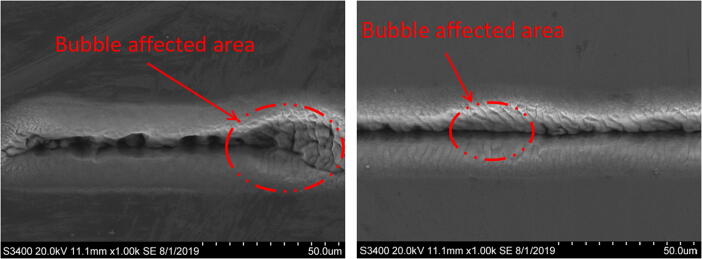
This research confirms that MC-LIPMM can improve the machining characteristics of silicon materials and cavitation bubbles shows an apparently negative impact on the surface morphology.
与传统激光烧蚀相比,激光诱导等离子体微加工(LIPMM)在硬脆材料的微加工中已证明其优势,因为其热缺陷少、热影响区小且深宽比大。
为了改善诱导等离子体的特性和稳定性,本文提出了磁控激光诱导等离子体微加工(MC-LIPMM),以实现对广泛应用于固态电子和红外光学应用中的单晶硅的良好加工性能。
基于实验方法对表面完整性和几何形状进行了全面研究。首先,从理论上分析了磁控激光诱导等离子体微加工的机理,包括激光-等离子体、激光-材料相互作用和传输效应。然后进行了一系列实验,以全面研究磁场强度、脉冲重复频率和气泡行为对微通道表面完整性和几何形状的影响。
结果表明,磁场使热影响区最大减少了12.64%,宽度最大减少了62.57%,而深度最大增加了26.23%,深宽比最大增加了90.26%。
本研究证实,磁控激光诱导等离子体微加工可以改善硅材料的加工特性,并且空化气泡对表面形貌有明显的负面影响。