HIV Vaccine Translational Research Laboratory, Translational Health Science & Technology Institute, NCR Biotech Science Cluster, Faridabad, Haryana, India.
International AIDS Vaccine Initiative, New Delhi, India.
PLoS One. 2021 May 24;16(5):e0251969. doi: 10.1371/journal.pone.0251969. eCollection 2021.
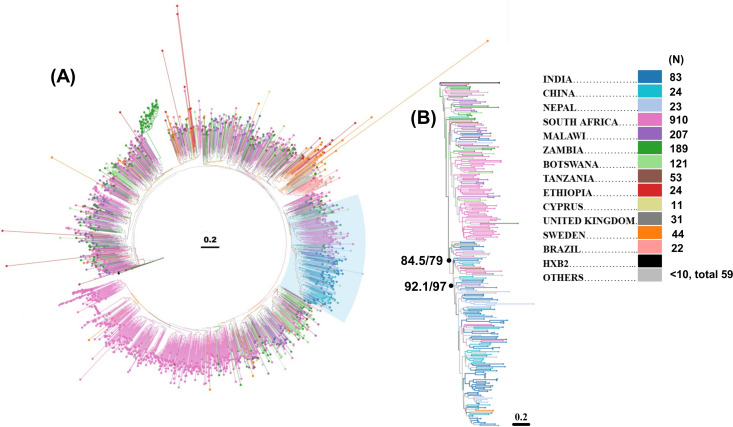
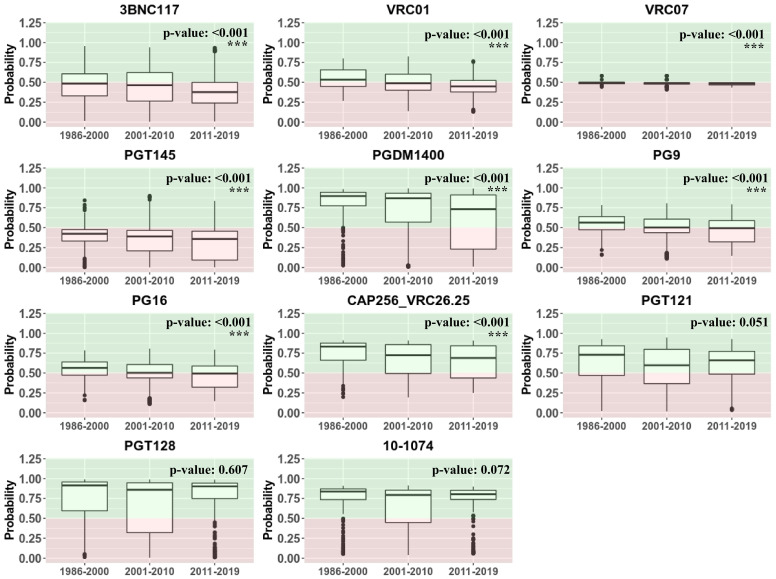
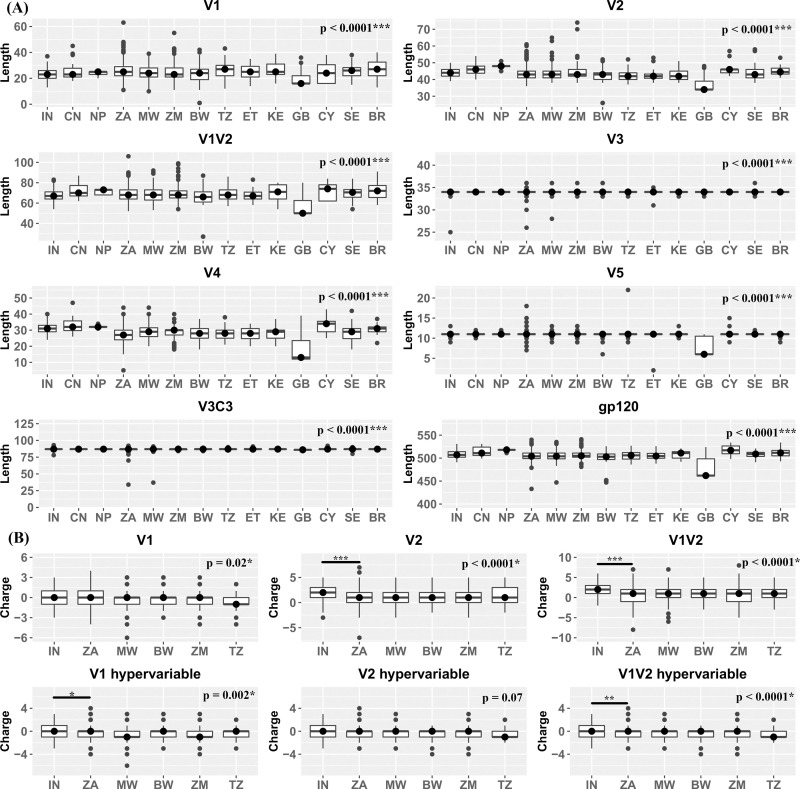
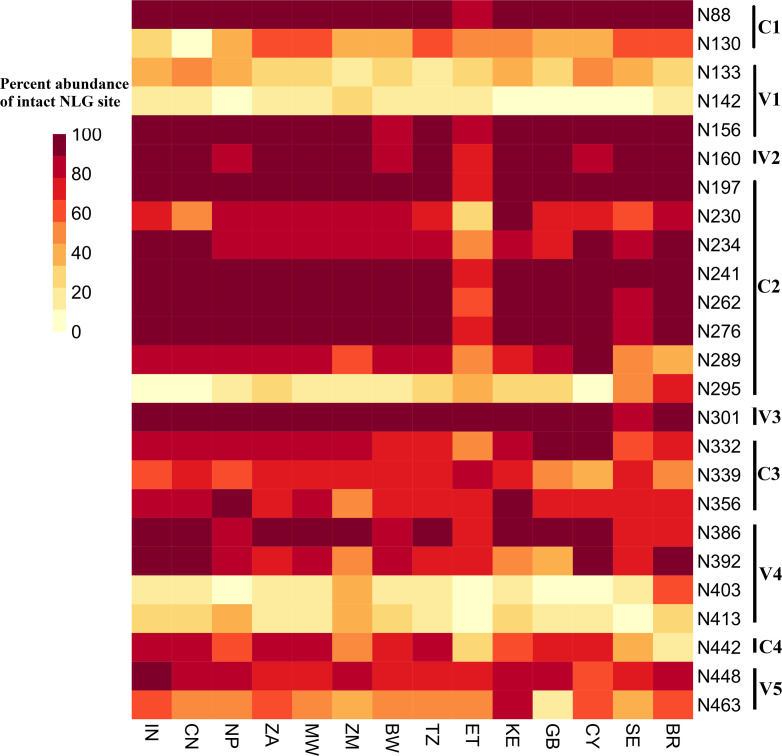
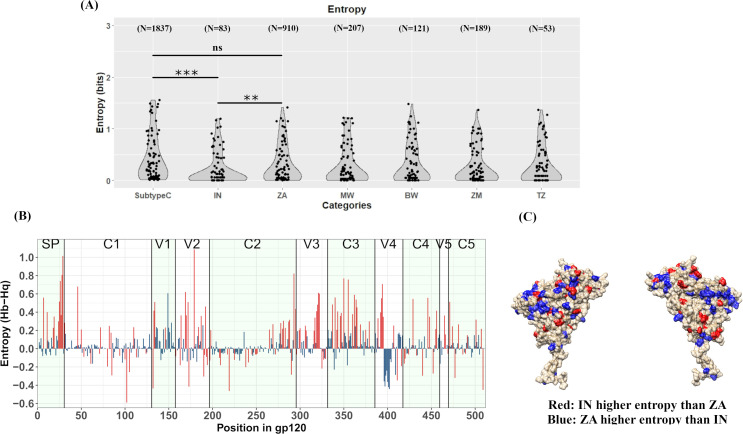
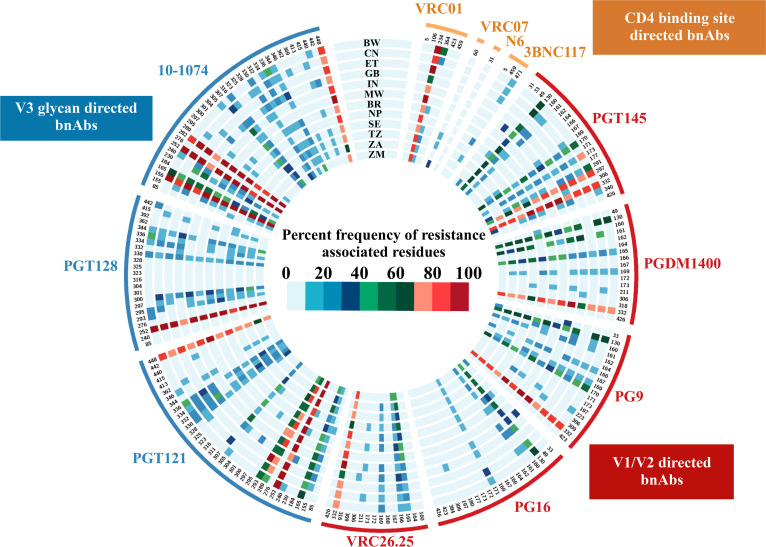
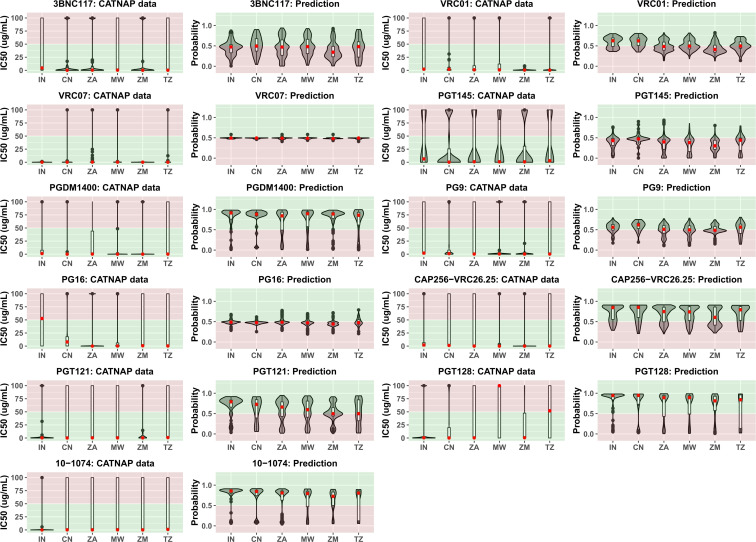
Evolving diversity in globally circulating HIV-1 subtypes presents a formidable challenge in defining and developing neutralizing antibodies for prevention and treatment. HIV-1 subtype C is responsible for majority of global HIV-1 infections. In the present study, we examined the diversity in genetic signatures and attributes that differentiate region-specific HIV-1 subtype C gp120 sequences associated with virus neutralization outcomes to key bnAbs having distinct epitope specificities. A total of 1814 full length HIV-1 subtype C gp120 sequence from 37 countries were retrieved from Los Alamos National Laboratory HIV database (www.hiv.lanl.gov). The amino acid sequences were assessed for their phylogenetic association, variable loop lengths and prevalence of potential N-linked glycosylation sites (pNLGS). Responses of these sequences to bnAbs were predicted with a machine learning algorithm 'bNAb-ReP' and compared with those reported in the CATNAP database. Subtype C sequences from Asian countries including India differed phylogenetically when compared with that from African countries. Variable loop lengths and charges within Indian and African clusters were also found to be distinct from each other, specifically for V1, V2 and V4 loops. Pairwise analyses at each of the 25 pNLG sites indicated distinct country specific profiles. Highly significant differences (p<0.001***) were observed in prevalence of four pNLGS (N130, N295, N392 and N448) between South Africa and India, having most disease burden associated with subtype C. Our findings highlight that distinctly evolving clusters within global intra-subtype C gp120 sequences are likely to influence the disparate region-specific sensitivity of circulating HIV-1 subtype C to bnAbs.
不断变化的全球循环 HIV-1 亚型多样性给预防和治疗中性抗体的定义和开发带来了巨大挑战。HIV-1 亚型 C 是导致全球大多数 HIV-1 感染的原因。在本研究中,我们研究了遗传特征和属性的多样性,这些特征和属性区分了与病毒中和结果相关的特定区域 HIV-1 亚型 C gp120 序列,这些序列与具有不同表位特异性的关键 bnAbs 有关。从洛斯阿拉莫斯国家实验室 HIV 数据库(www.hiv.lanl.gov)共检索到来自 37 个国家的 1814 个全长 HIV-1 亚型 C gp120 序列。评估了氨基酸序列的系统发育相关性、可变环长度和潜在 N-连接糖基化位点(pNLGS)的流行程度。使用机器学习算法“bNAb-ReP”预测这些序列对 bnAbs 的反应,并与 CATNAP 数据库中报告的反应进行比较。与来自非洲国家的序列相比,来自亚洲国家(包括印度)的亚型 C 序列在系统发育上有所不同。还发现印度和非洲群集中的可变环长度和电荷彼此不同,特别是对于 V1、V2 和 V4 环。在每个 25 个 pNLG 位点的成对分析中,表明存在独特的国家特定特征。在南非和印度之间,四个 pNLGS(N130、N295、N392 和 N448)的流行率存在高度显著差异(p<0.001***),这与亚型 C 相关的疾病负担最大。我们的研究结果表明,全球亚型内 C gp120 序列中明显进化的聚类可能会影响循环 HIV-1 亚型 C 对 bnAbs 的不同区域特异性敏感性。