Metabolic and Biomolecular Engineering National Research Laboratory, Systems Metabolic Engineering and Systems Healthcare Cross-Generation Collaborative Laboratory, Department of Chemical and Biomolecular Engineering (BK21 plus program), Institute for the BioCentury, Korea Advanced Institute of Science and Technology (KAIST), Daejeon, 34141, Republic of Korea.
BioProcess Engineering Research Center, KAIST, Daejeon, 34141, Republic of Korea.
Adv Sci (Weinh). 2021 Jul;8(13):e2100743. doi: 10.1002/advs.202100743. Epub 2021 May 25.
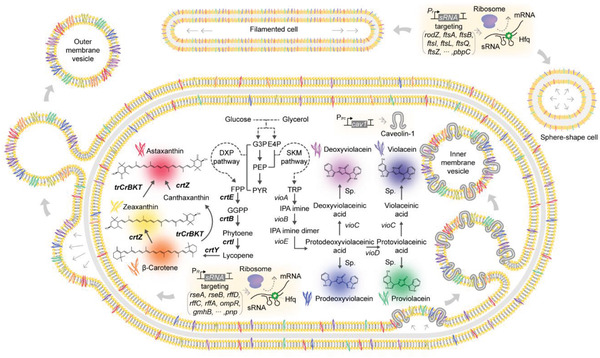
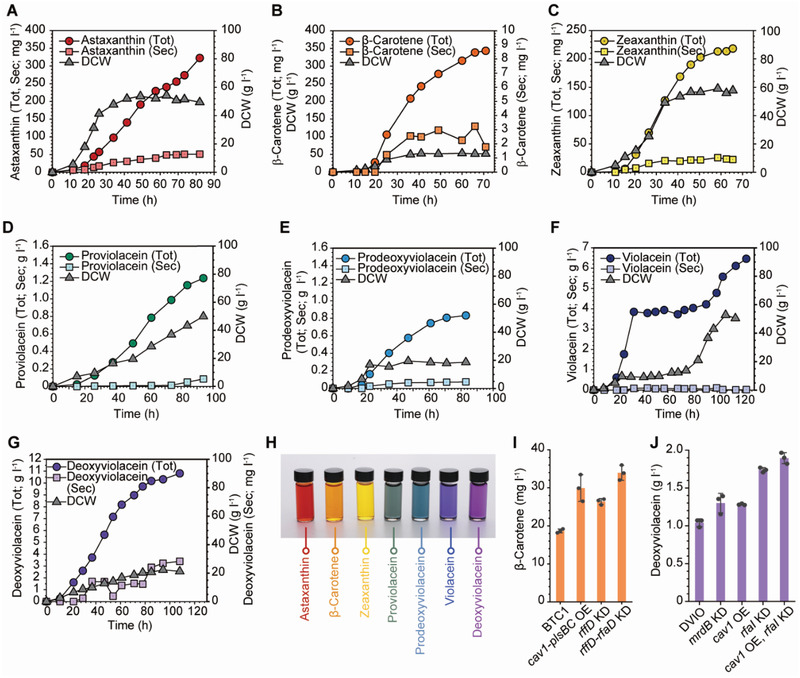
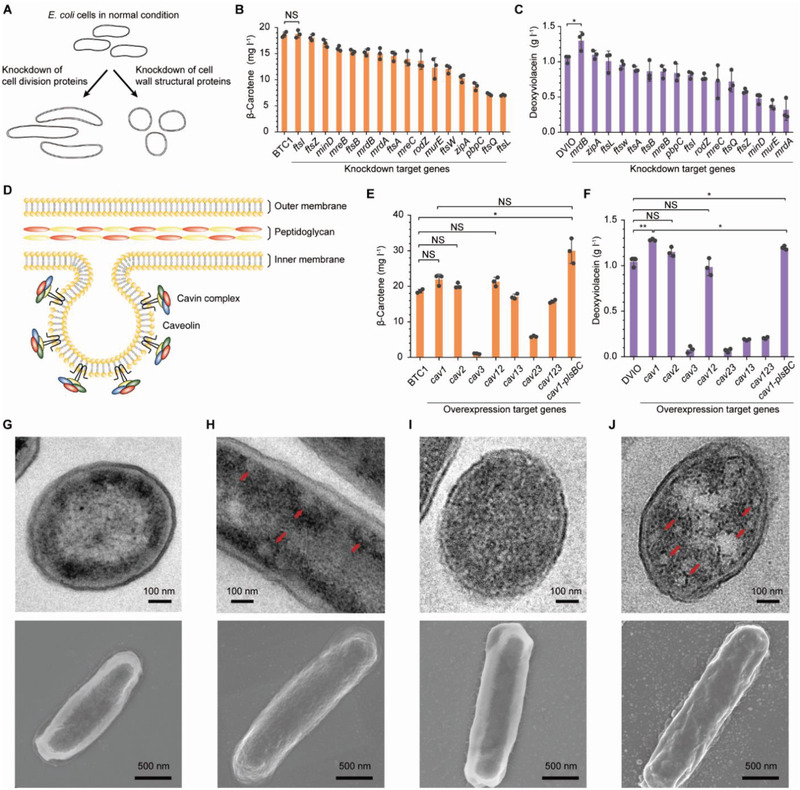
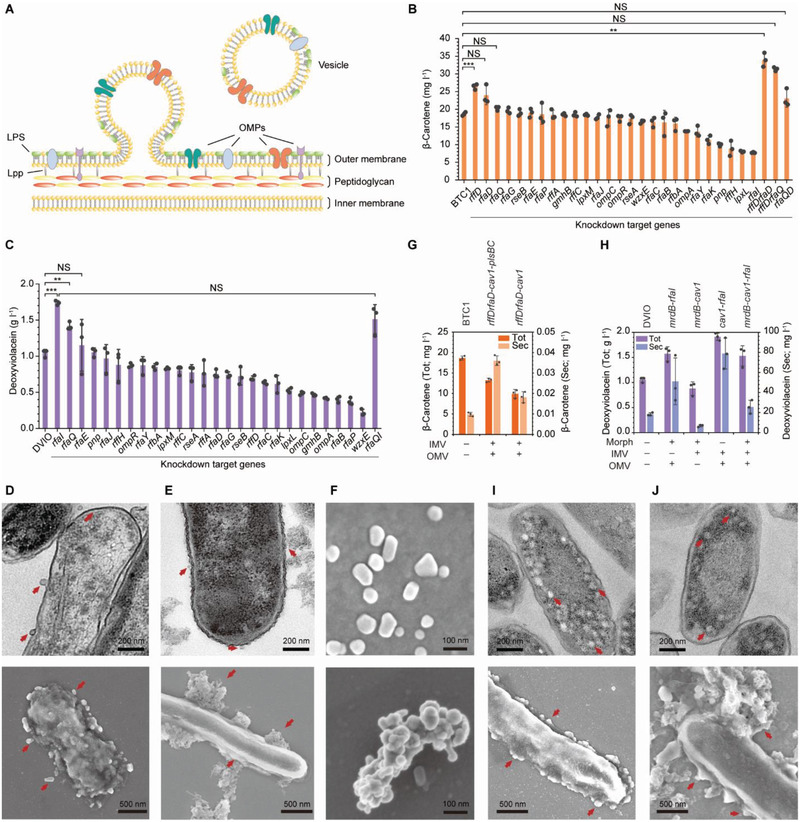
There has been much interest in producing natural colorants to replace synthetic colorants of health concerns. Escherichia coli has been employed to produce natural colorants including carotenoids, indigo, anthocyanins, and violacein. However, production of natural green and navy colorants has not been reported. Many natural products are hydrophobic, which are accumulated inside or on the cell membrane. This causes cell growth limitation and consequently reduces production of target chemicals. Here, integrated membrane engineering strategies are reported for the enhanced production of rainbow colorants-three carotenoids and four violacein derivatives-as representative hydrophobic natural products in E. coli. By integration of systems metabolic engineering, cell morphology engineering, inner- and outer-membrane vesicle formation, and fermentation optimization, production of rainbow colorants are significantly enhanced to 322 mg L of astaxanthin (red), 343 mg L of β-carotene (orange), 218 mg L of zeaxanthin (yellow), 1.42 g L of proviolacein (green), 0.844 g L of prodeoxyviolacein (blue), 6.19 g L of violacein (navy), and 11.26 g L of deoxyviolacein (purple). The membrane engineering strategies reported here are generally applicable to microbial production of a broader range of hydrophobic natural products, contributing to food, cosmetic, chemical, and pharmaceutical industries.
人们一直致力于生产天然色素以替代存在健康隐患的合成色素。大肠杆菌已被用于生产天然色素,包括类胡萝卜素、靛蓝、花青素和紫色素。然而,尚未有关于天然绿色和深蓝色色素生产的报道。许多天然产物是疏水性的,它们会在细胞内或细胞膜上积累。这会导致细胞生长受限,从而减少目标化学品的产量。在这里,我们报告了综合膜工程策略,用于增强大肠杆菌中彩虹色素(三种类胡萝卜素和四种紫色素衍生物)等代表性疏水性天然产物的生产。通过整合系统代谢工程、细胞形态工程、内外膜囊泡形成和发酵优化,彩虹色素的产量显著提高,达到虾青素(红色)322mg/L、β-胡萝卜素(橙色)343mg/L、玉米黄质(黄色)218mg/L、原紫色素(绿色)1.42g/L、原脱氧紫色素(蓝色)0.844g/L、紫色素(深蓝色)6.19g/L 和脱氧紫色素(深紫色)11.26g/L。这里报道的膜工程策略通常适用于更广泛的疏水性天然产物的微生物生产,为食品、化妆品、化学和制药行业做出贡献。