De Mol Maarten L, Vandamme Erick J
Centre for Industrial Biotechnology and Biocatalysis (InBio.be), Department of Biotechnology, Faculty of Bioscience Engineering, Ghent University, Coupure Links 653, 9000 Ghent, Belgium.
J Ind Microbiol Biotechnol. 2024 Jan 9;51. doi: 10.1093/jimb/kuae049.
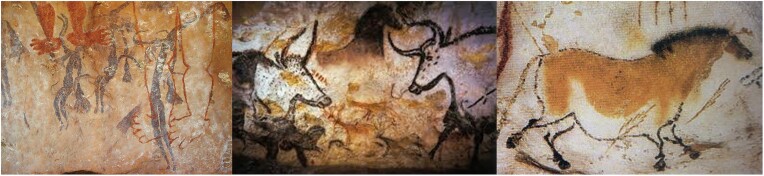
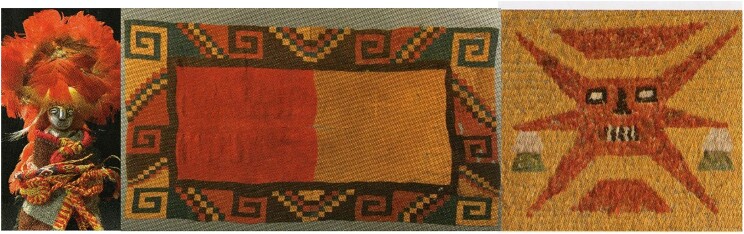
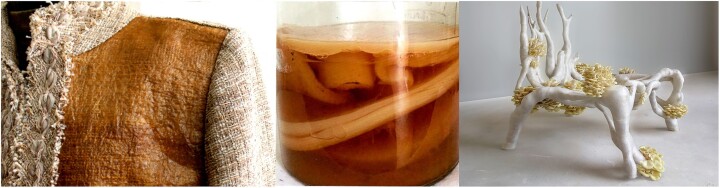
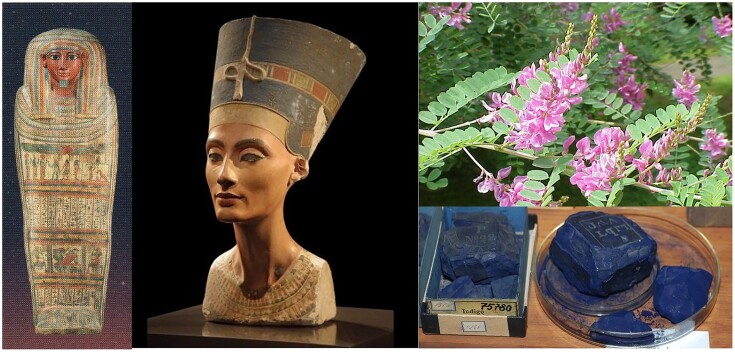
Nature has inspired and provided humans with ideas, concepts, and thoughts on design, art, and performance for millennia. From early societies when humankind often took shelter in caves, until today, many materials and colorants to express feelings or communicate with one another were derived from plants, animals, or microbes. In this manuscript, an overview of these natural products used in the creation of art is given, from paintings on rocks to fashionable dresses made from bacterial cellulose. Besides offering many examples of art works, the origin and application of various biomaterials and colorants are discussed. While many facets of our daily lives have changed over millennia, one certainty has been that humans have an intrinsic need to conceptualize and create to express themselves. Driven by technological advances in the past decades and in the light of global warming, new and often more sustainable materials and colorants have been discovered and implemented. The impact of art on human societies remains relevant and powerful.
ONE-SENTENCE SUMMARY: This manuscript discusses the use of biomaterials and biocolorants in art from a historical perspective, spanning 37,000 bc until today.
几千年来,大自然一直启发并为人类提供有关设计、艺术和表演的理念、概念和思想。从早期人类常常在洞穴中避难的社会,到如今,许多用于表达情感或相互交流的材料和着色剂都源自植物、动物或微生物。在本手稿中,概述了这些用于艺术创作的天然产物,从岩石上的绘画到由细菌纤维素制成的时尚服装。除了列举许多艺术作品的例子外,还讨论了各种生物材料和着色剂的起源及应用。尽管几千年来我们日常生活的许多方面都发生了变化,但有一点是肯定的,即人类有一种内在需求,需要通过概念化和创造来表达自己。在过去几十年技术进步的推动下,鉴于全球变暖,人们发现并采用了新的、往往更具可持续性的材料和着色剂。艺术对人类社会的影响仍然具有相关性和强大力量。
本手稿从历史角度探讨了生物材料和生物着色剂在艺术中的应用,时间跨度从公元前37000年至今。