
炎症信号足以诱导小鼠和人 CD8+ T 细胞中 TOX 的表达。
Inflammatory signals are sufficient to elicit TOX expression in mouse and human CD8+ T cells.
机构信息
Vaccine and Infectious Disease Division, Fred Hutchinson Cancer Research Center, Seattle, Washington, USA.
Molecular and Cellular Biology Graduate Program, University of Washington, Seattle, Washington, USA.
出版信息
JCI Insight. 2021 Jul 8;6(13):150744. doi: 10.1172/jci.insight.150744.
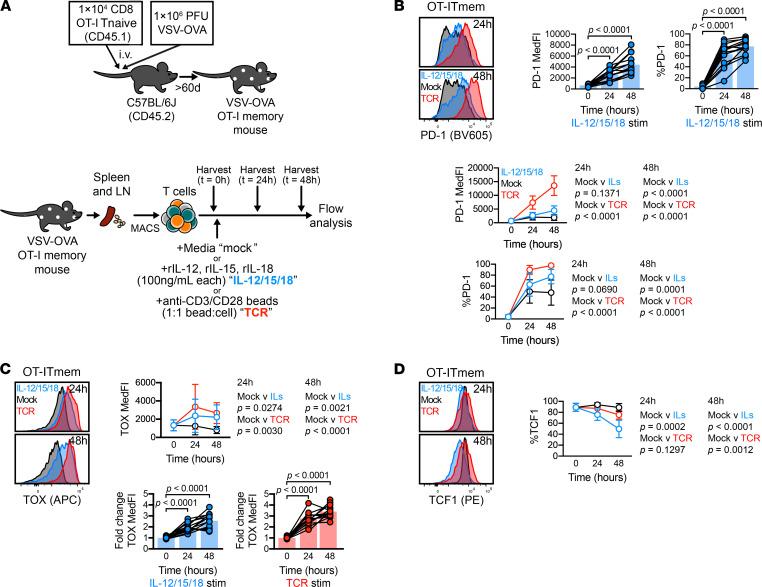
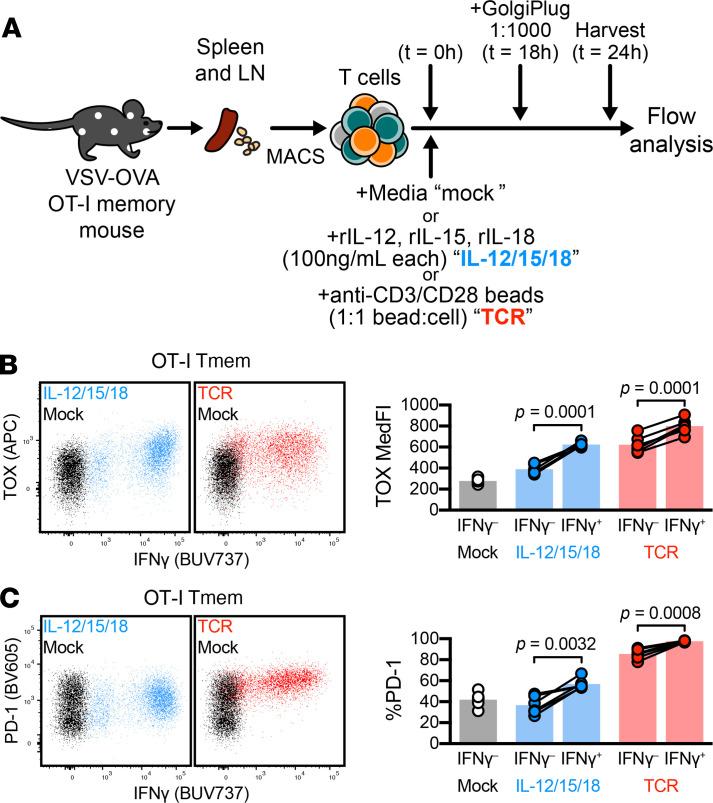
T cell receptor (TCR) stimulation leads to the expression of the transcription factor thymocyte selection-associated high-mobility group box (TOX). Prolonged TCR signaling, such as encountered during chronic infections or in tumors, leads to sustained TOX expression, which is required for the induction of a state of exhaustion or dysfunction. Although CD8+ memory T (Tmem) cells in mice typically do not express TOX at steady state, some human Tmem cells express TOX but appear fully functional. This seeming discrepancy between mouse and human T cells has led to the speculation that TOX is differentially regulated between these species, which could complicate the interpretation of preclinical mouse model studies. We report here that, similar to TCR-mediated signals, inflammatory cytokines are also sufficient to increase TOX expression in human and mouse Tmem cells. Thus, TOX expression is controlled by the environment, which provides an explanation for the different TOX expression patterns encountered in T cells isolated from specific pathogen-free laboratory mice versus humans. Finally, we report that TOX is not necessary for cytokine-driven expression of programmed cell death 1. Overall, our data highlight that the mechanisms regulating TOX expression are conserved across species and indicate that TOX expression reflects a T cell's activation state and does not necessarily correlate with T cell dysfunction.
T 细胞受体 (TCR) 刺激导致转录因子胸腺细胞选择相关高迁移率族框 (TOX) 的表达。在慢性感染或肿瘤中遇到的延长 TCR 信号,导致持续的 TOX 表达,这是诱导衰竭或功能障碍状态所必需的。尽管小鼠中的 CD8+记忆 T (Tmem) 细胞通常在稳态下不表达 TOX,但一些人类 Tmem 细胞表达 TOX 但似乎具有完全的功能。这种小鼠和人类 T 细胞之间的明显差异导致了这样的推测,即 TOX 在这些物种之间存在差异调节,这可能会使临床前小鼠模型研究的解释复杂化。我们在这里报告,类似于 TCR 介导的信号,炎性细胞因子也足以增加人类和小鼠 Tmem 细胞中的 TOX 表达。因此,TOX 表达受环境控制,这解释了从特定无病原体实验室小鼠和人类分离的 T 细胞中遇到的不同 TOX 表达模式。最后,我们报告 TOX 对于细胞因子驱动的程序性细胞死亡 1 的表达不是必需的。总体而言,我们的数据强调了调节 TOX 表达的机制在物种间是保守的,并表明 TOX 表达反映了 T 细胞的激活状态,不一定与 T 细胞功能障碍相关。



 Zotero 插件