Shi Honghao, Chen Xianwen, Liu Xueli, Zhu He, Yu Fei, Ung Carolina Oi Lam, Chan Wai Sin, Hu Hao, Han Sheng
State Key Laboratory of Quality Research in Chinese Medicine, Institute of Chinese Medical Sciences, University of Macau, Macao, China.
International Research Center for Medicinal Administration, Peking University, Beijing, China.
J Pharm Policy Pract. 2021 May 25;14(1):45. doi: 10.1186/s40545-021-00325-8.
This research aimed to evaluate analgesic utilization in public hospitals from 2013 to 2018 by analyzing the procurement data of 793 hospitals in China.
This study applied a retrospective observational study by using a database of the Chinese Pharmaceutical Association. The final dataset covers 30 provinces and municipalities in China, with a total of 793 public hospitals with complete procurement records of analgesics from January 2013 to December 2018. Procurement cost and dosage utilization were analyzed through descriptive trend statistics.
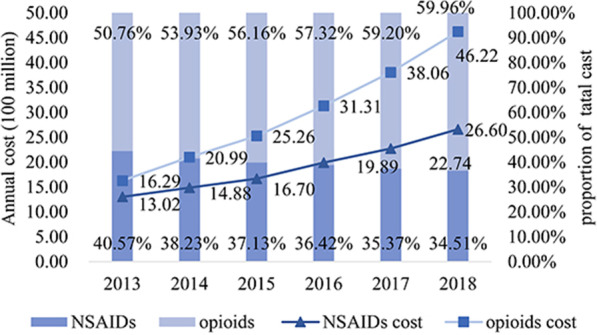
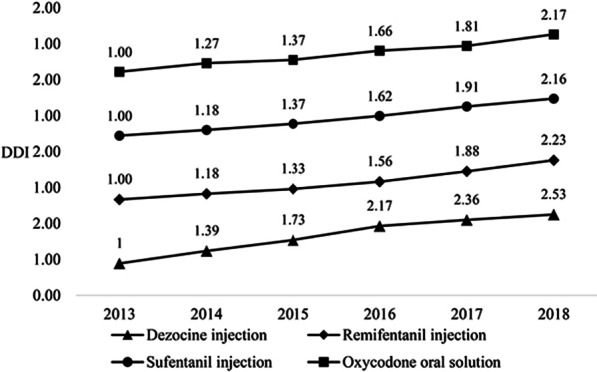
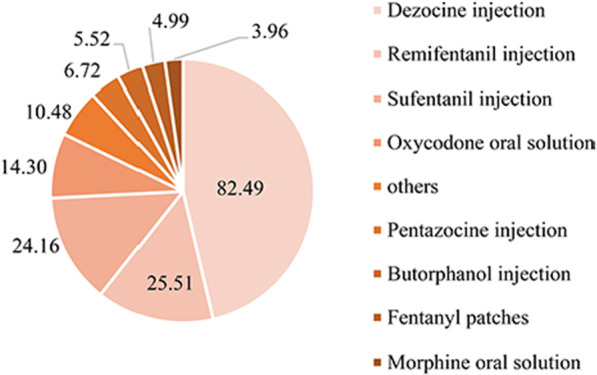
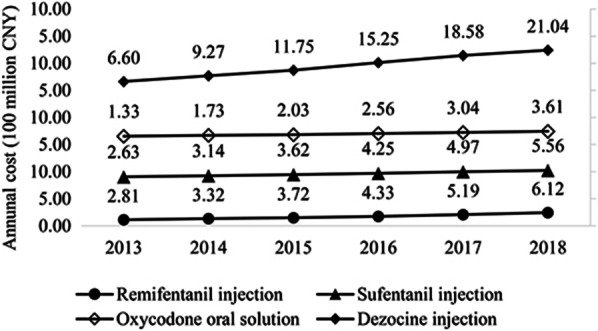
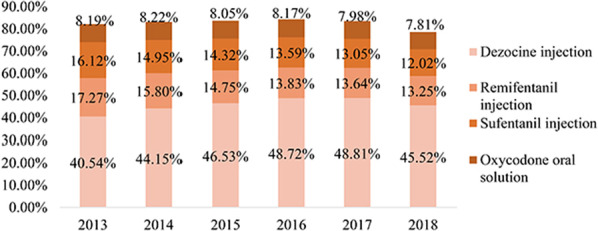
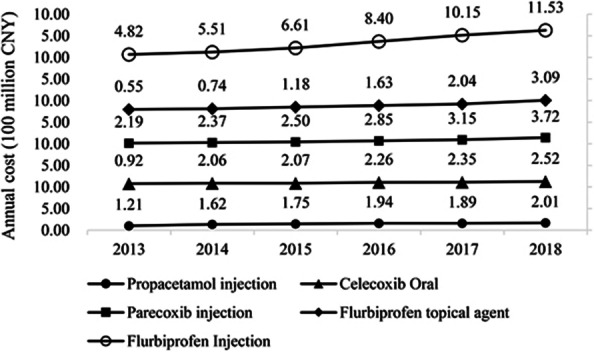
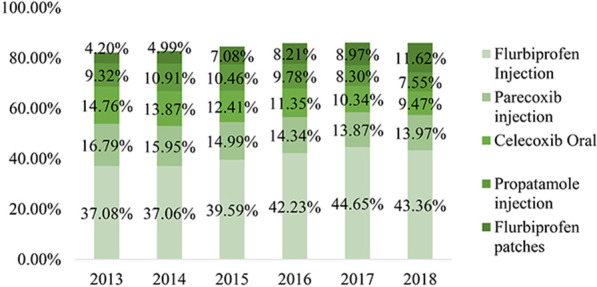
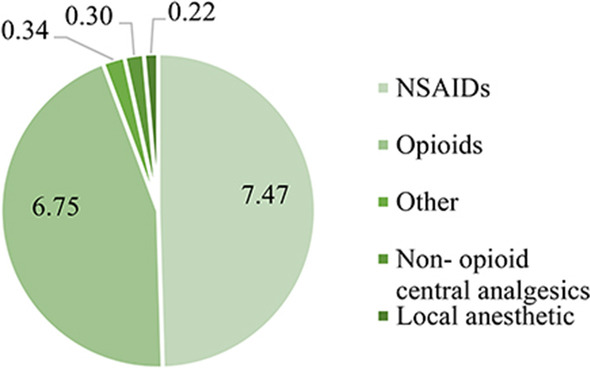
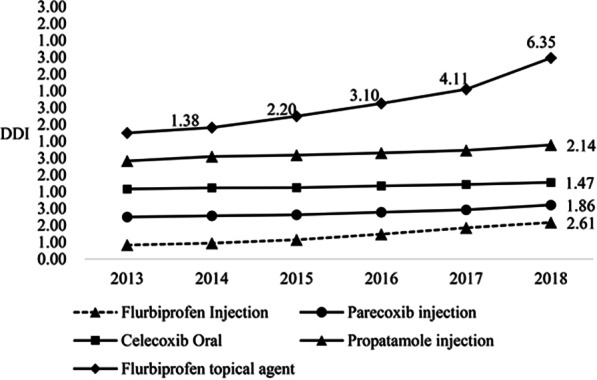
From the procurement cost data, analgesics mainly consisted of opioids and non-steroidal anti-inflammatory drugs (NSAIDs), and the annual cost of both types of drugs increased yearly. The 6-year total cost of opioids accounts for 57% (17,800 million CNY), followed by the cost of NSAIDs accounts for 37% (11,400 million CNY). From 2013 to 2018, the annual cost of opioids nearly doubled, while the annual cost of NSAIDs doubled. The total 6-year clinical drug dosage of opioids accounts for 45% (675 million total defined daily dose (DDD)), and the NSAIDs account for 50% (747 million total DDD). From 2013 to 2018, the annual clinical drug dosage of NSAIDs increased by about 0.6 times. The annual clinical drug dosage of opioids has more than doubled. The top three opioid drugs were dezocine injection, remifentanil injection, and sufentanil injection solution. the top three NSAIDs were flurbiprofen injection, parecoxib injection, and celecoxib oral solution.
In China, analgesics utilization increased rapidly at public hospitals from 2013 to 2018. The utilization of analgesics was highly concentrated in NSAIDs and opioids. Within the two types of analgesics, the main analgesics utilization is also highly concentrated, with some highly risky analgesics. The rational guideline for the utilization of analgesics needs to be established with the support of real-world evidence.
本研究旨在通过分析中国793家医院的采购数据,评估2013年至2018年公立医院的镇痛药使用情况。
本研究采用回顾性观察研究,使用中国药学会的数据库。最终数据集覆盖中国30个省和直辖市,共有793家公立医院,其2013年1月至2018年12月有完整的镇痛药采购记录。通过描述性趋势统计分析采购成本和用量。
从采购成本数据来看,镇痛药主要由阿片类药物和非甾体抗炎药(NSAIDs)组成,两类药物的年度成本均逐年增加。阿片类药物6年总成本占57%(178亿元人民币),其次是非甾体抗炎药成本占37%(114亿元人民币)。2013年至2018年,阿片类药物年度成本几乎翻了一番,而非甾体抗炎药年度成本翻了一番。阿片类药物6年临床用药总量占45%(总计6.75亿限定日剂量(DDD)),非甾体抗炎药占50%(总计7.47亿DDD)。2013年至2018年,非甾体抗炎药年度临床用药量增加了约0.6倍。阿片类药物年度临床用药量增加了一倍多。排名前三的阿片类药物是地佐辛注射液、瑞芬太尼注射液和舒芬太尼注射液。排名前三的非甾体抗炎药是氟比洛芬注射液、帕瑞昔布注射液和塞来昔布口服溶液。
2013年至2018年,中国公立医院的镇痛药使用量迅速增加。镇痛药的使用高度集中在非甾体抗炎药和阿片类药物上。在这两类镇痛药中,主要镇痛药的使用也高度集中,存在一些高风险镇痛药。需要在真实世界证据的支持下制定合理的镇痛药使用指南。