Gene Expression Laboratory, Salk Institute for Biological Studies, La Jolla, CA, USA.
Integrative Genomics and Bioinformatics Core, Salk Institute for Biological Studies, La Jolla, CA, USA.
Nat Commun. 2021 May 25;12(1):3094. doi: 10.1038/s41467-021-23353-z.
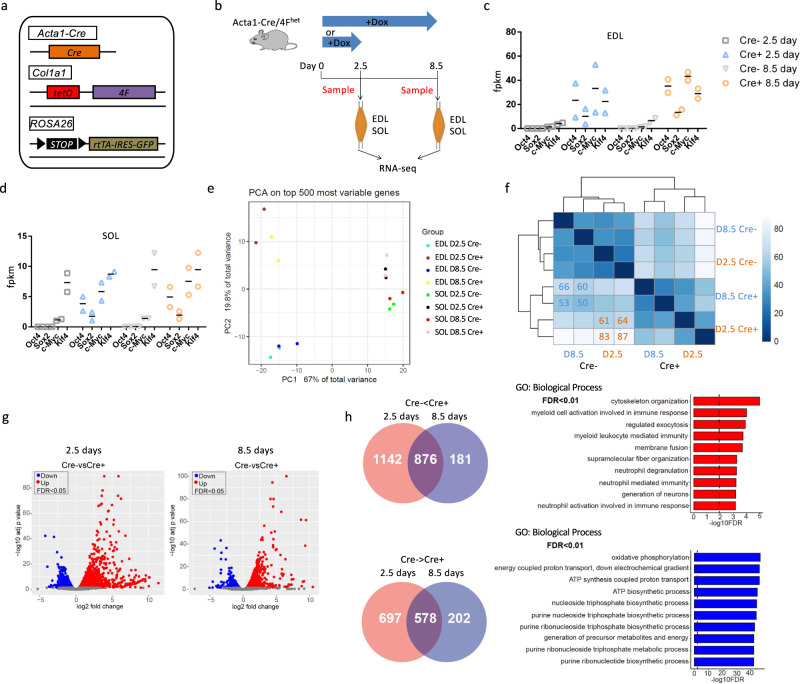
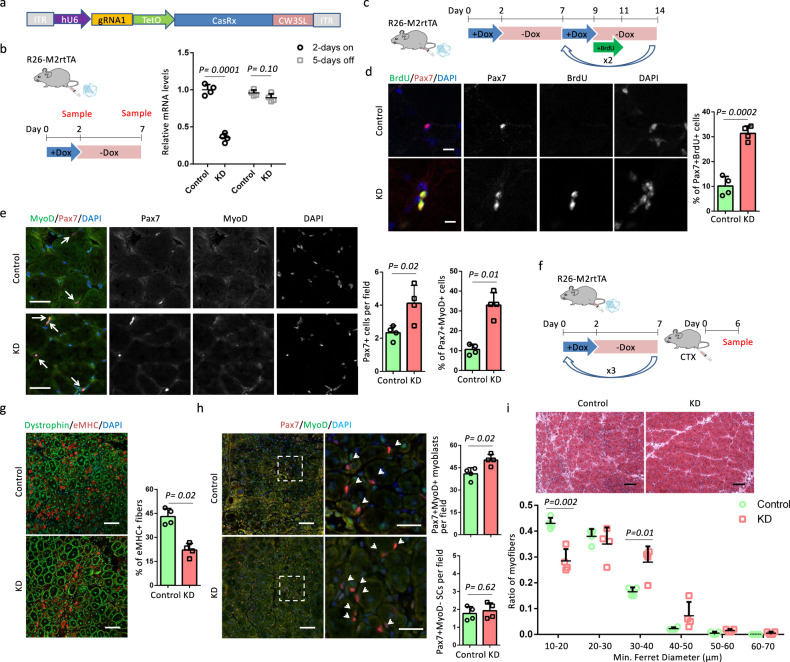
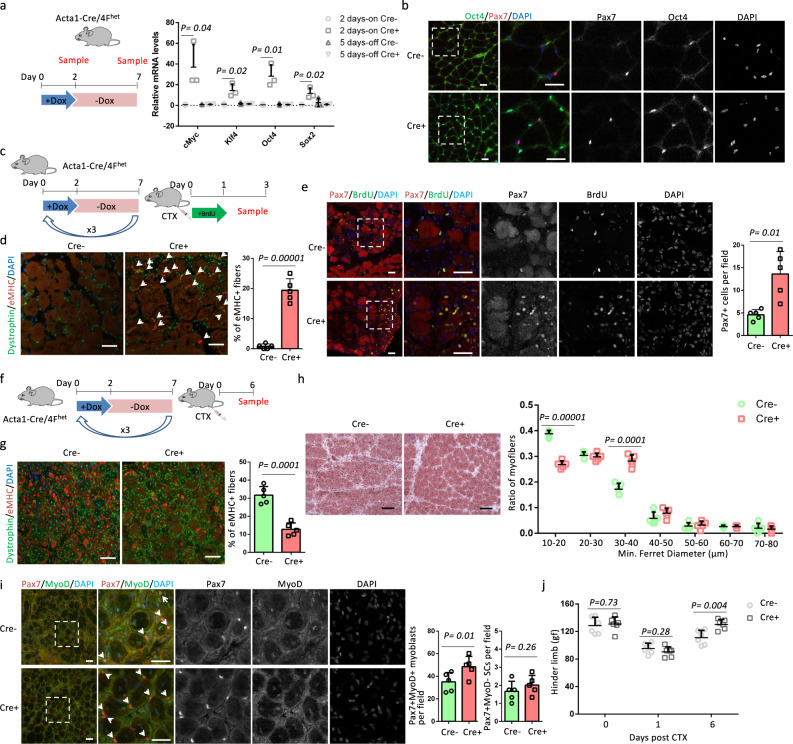
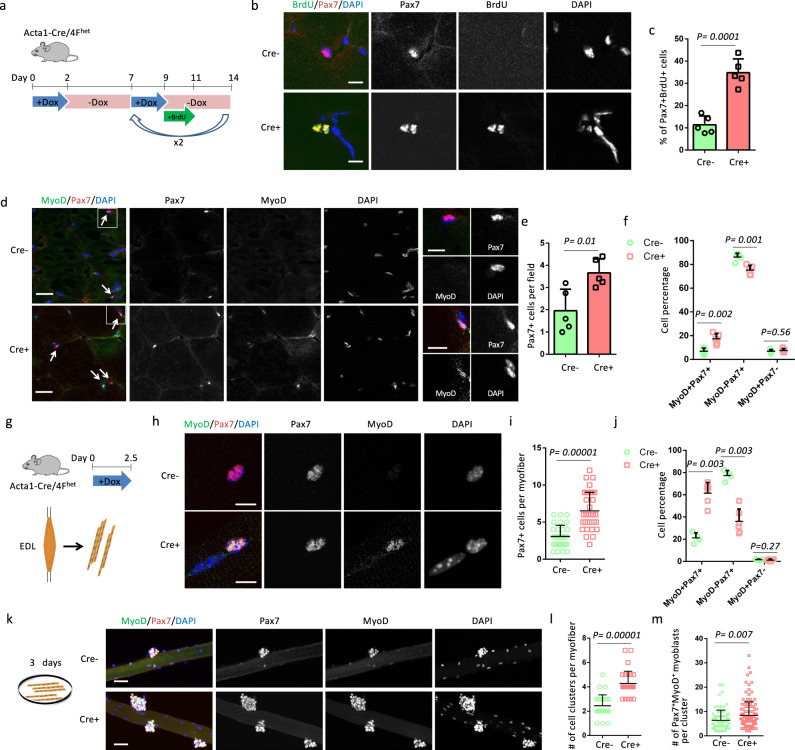
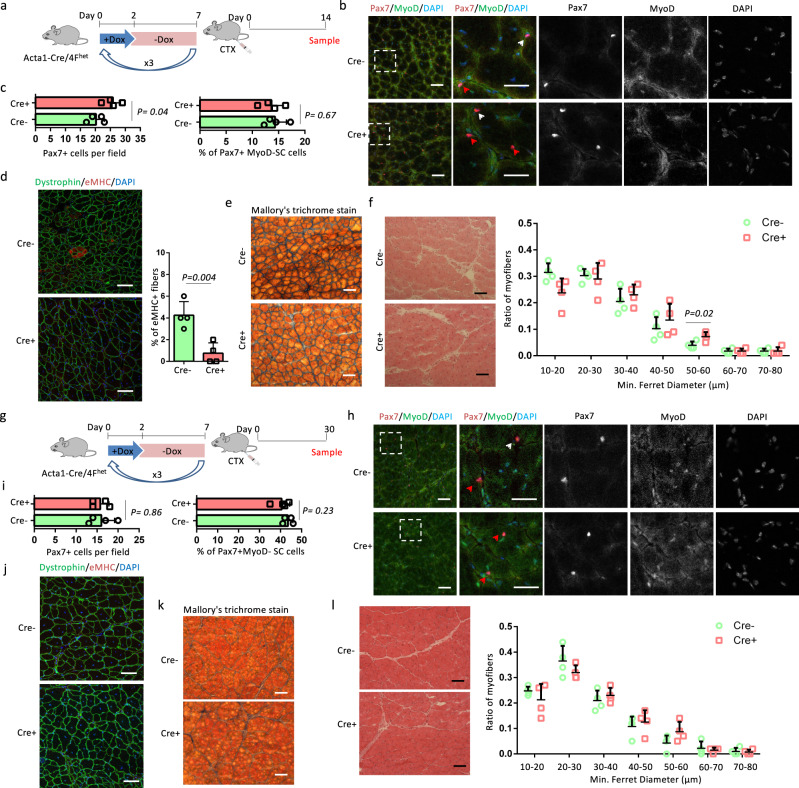
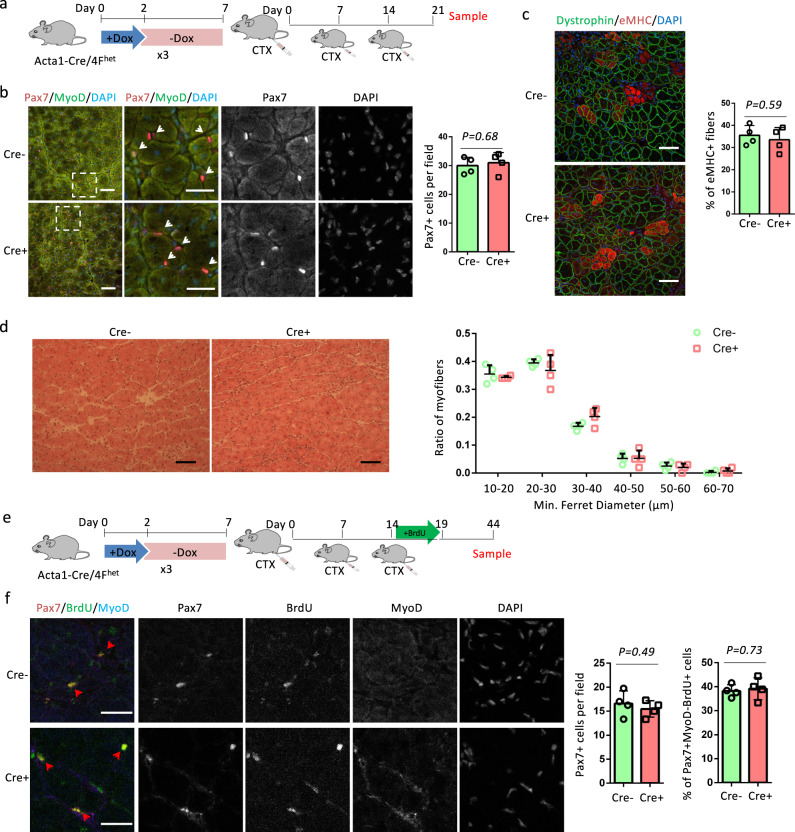
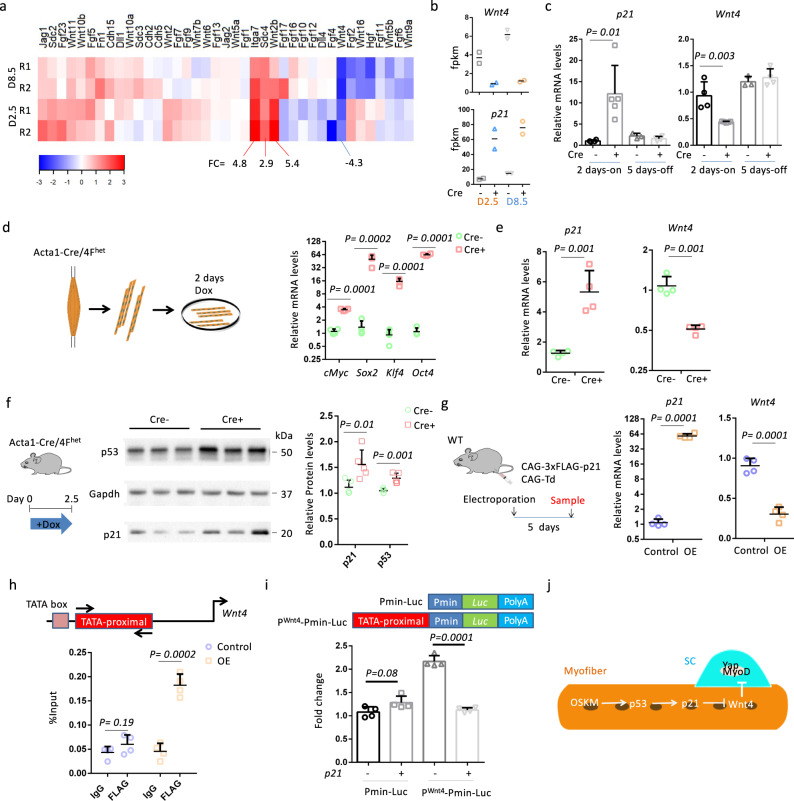
Short-term, systemic expression of the Yamanaka reprogramming factors (Oct-3/4, Sox2, Klf4 and c-Myc [OSKM]) has been shown to rejuvenate aging cells and promote tissue regeneration in vivo. However, the mechanisms by which OSKM promotes tissue regeneration are unknown. In this work, we focus on a specific tissue and demonstrate that local expression of OSKM, specifically in myofibers, induces the activation of muscle stem cells or satellite cells (SCs), which accelerates muscle regeneration in young mice. In contrast, expressing OSKM directly in SCs does not improve muscle regeneration. Mechanistically, expressing OSKM in myofibers regulates the expression of genes important for the SC microenvironment, including upregulation of p21, which in turn downregulates Wnt4. This is critical because Wnt4 is secreted by myofibers to maintain SC quiescence. Thus, short-term induction of the Yamanaka factors in myofibers may promote tissue regeneration by modifying the stem cell niche.
短期系统性表达 Yamanaka 重编程因子(Oct-3/4、Sox2、Klf4 和 c-Myc [OSKM])已被证明可以使衰老细胞年轻化并促进体内组织再生。然而,OSKM 促进组织再生的机制尚不清楚。在这项工作中,我们专注于特定组织,并证明 OSKM 的局部表达,特别是在肌纤维中,会激活肌肉干细胞或卫星细胞(SCs),从而加速年轻小鼠的肌肉再生。相比之下,直接在 SCs 中表达 OSKM 并不能改善肌肉再生。从机制上讲,在肌纤维中表达 OSKM 会调节对 SC 微环境很重要的基因的表达,包括上调 p21,p21 反过来又下调 Wnt4。这是至关重要的,因为 Wnt4 是由肌纤维分泌的,以维持 SC 的静止状态。因此,在肌纤维中短期诱导 Yamanaka 因子可能通过改变干细胞生态位来促进组织再生。