Rare Diseases, Moderna, Inc, Cambridge, MA, USA.
INSERM UMR1213, Université Claude Bernard Lyon 1, Lyon, France.
Nat Commun. 2021 May 25;12(1):3090. doi: 10.1038/s41467-021-23318-2.
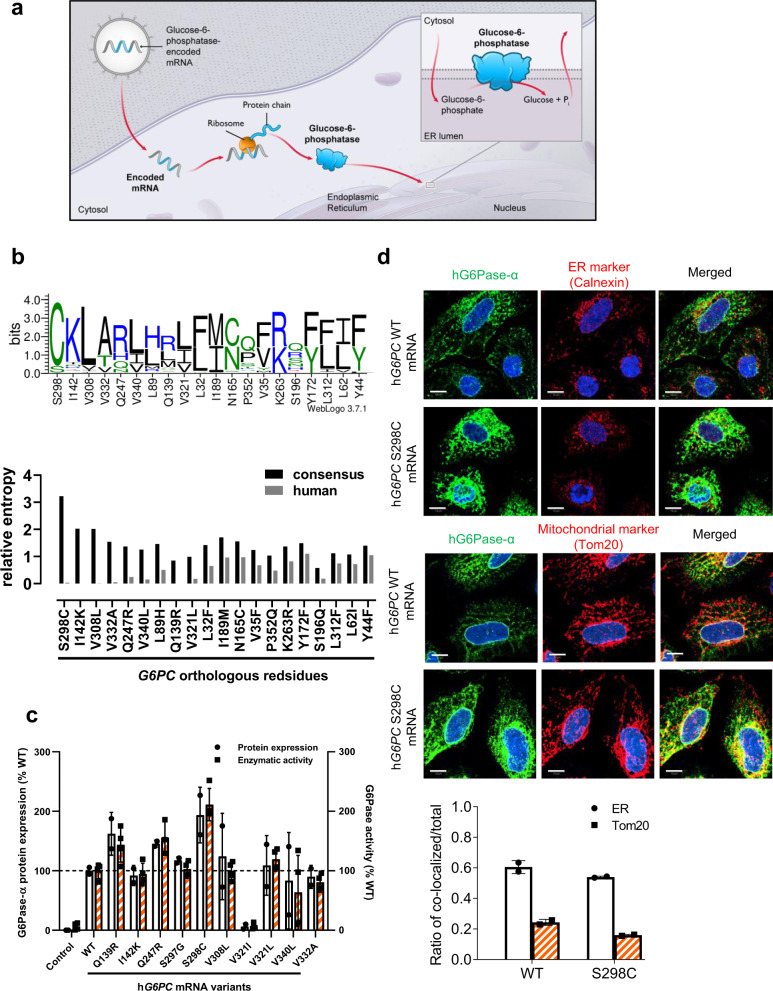
Glycogen Storage Disease 1a (GSD1a) is a rare, inherited metabolic disorder caused by deficiency of glucose 6-phosphatase (G6Pase-α). G6Pase-α is critical for maintaining interprandial euglycemia. GSD1a patients exhibit life-threatening hypoglycemia and long-term liver complications including hepatocellular adenomas (HCAs) and carcinomas (HCCs). There is no treatment for GSD1a and the current standard-of-care for managing hypoglycemia (Glycosade/modified cornstarch) fails to prevent HCA/HCC risk. Therapeutic modalities such as enzyme replacement therapy and gene therapy are not ideal options for patients due to challenges in drug-delivery, efficacy, and safety. To develop a new treatment for GSD1a capable of addressing both the life-threatening hypoglycemia and HCA/HCC risk, we encapsulated engineered mRNAs encoding human G6Pase-α in lipid nanoparticles. We demonstrate the efficacy and safety of our approach in a preclinical murine model that phenotypically resembles the human condition, thus presenting a potential therapy that could have a significant therapeutic impact on the treatment of GSD1a.
糖原贮积病 1a 型(GSD1a)是一种罕见的遗传性代谢紊乱,由葡萄糖 6-磷酸酶(G6Pase-α)缺乏引起。G6Pase-α 对于维持餐间血糖稳态至关重要。GSD1a 患者表现出危及生命的低血糖和长期肝脏并发症,包括肝细胞腺瘤(HCA)和肝癌(HCC)。目前尚无治疗 GSD1a 的方法,管理低血糖的标准治疗方法(Glycosade/改性玉米淀粉)未能预防 HCA/HCC 风险。由于药物递送、疗效和安全性方面的挑战,酶替代疗法和基因疗法等治疗方式并不适合患者。为了开发一种新的治疗 GSD1a 的方法,既能解决危及生命的低血糖问题,又能解决 HCA/HCC 风险,我们将编码人 G6Pase-α 的工程化 mRNA 包裹在脂质纳米颗粒中。我们在一种临床前的小鼠模型中证明了我们方法的疗效和安全性,该模型在表型上与人类疾病相似,因此提出了一种潜在的治疗方法,可能对 GSD1a 的治疗产生重大的治疗影响。