Department of Gastroenterology and Advanced Medical Sciences, Asahikawa Medical University, 2-1-1-1, Midorigaoka, Asahikawa, Hokkaido, 078-8510, Japan.
Division of Metabolism and Biosystemic Science, Gastroenterology, and Hematology/Oncology, Department of Medicine, Asahikawa Medical University, Hokkaido, Japan.
Sci Rep. 2021 May 26;11(1):11070. doi: 10.1038/s41598-021-90707-4.
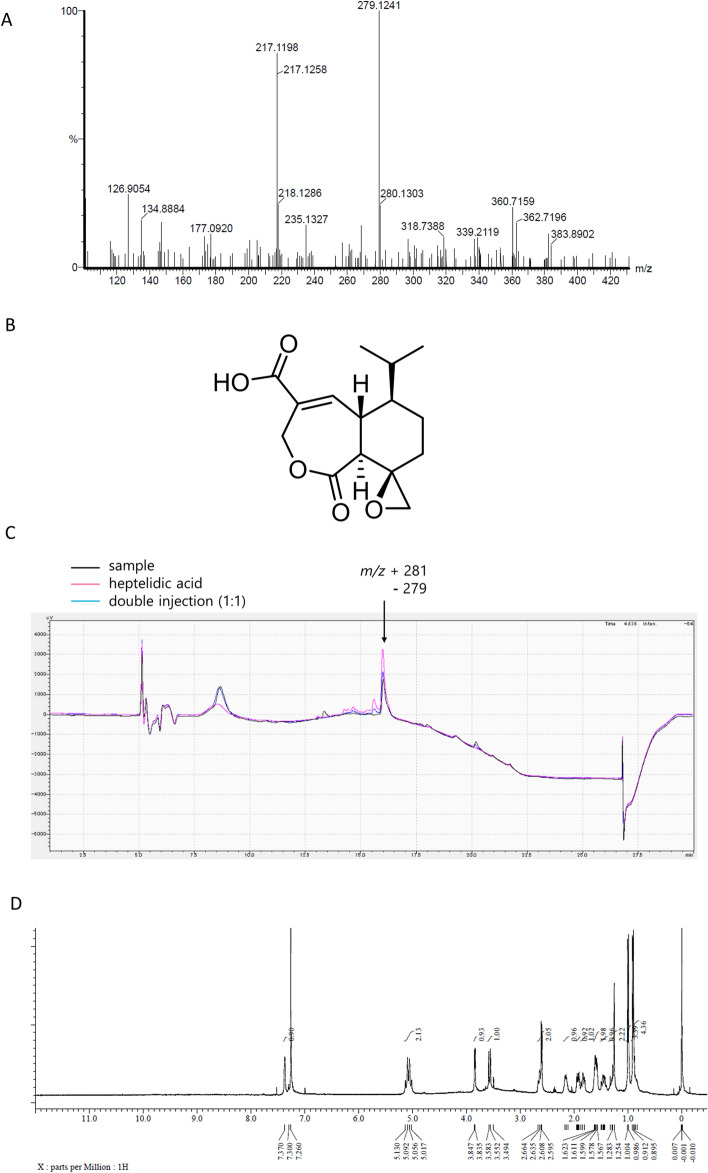
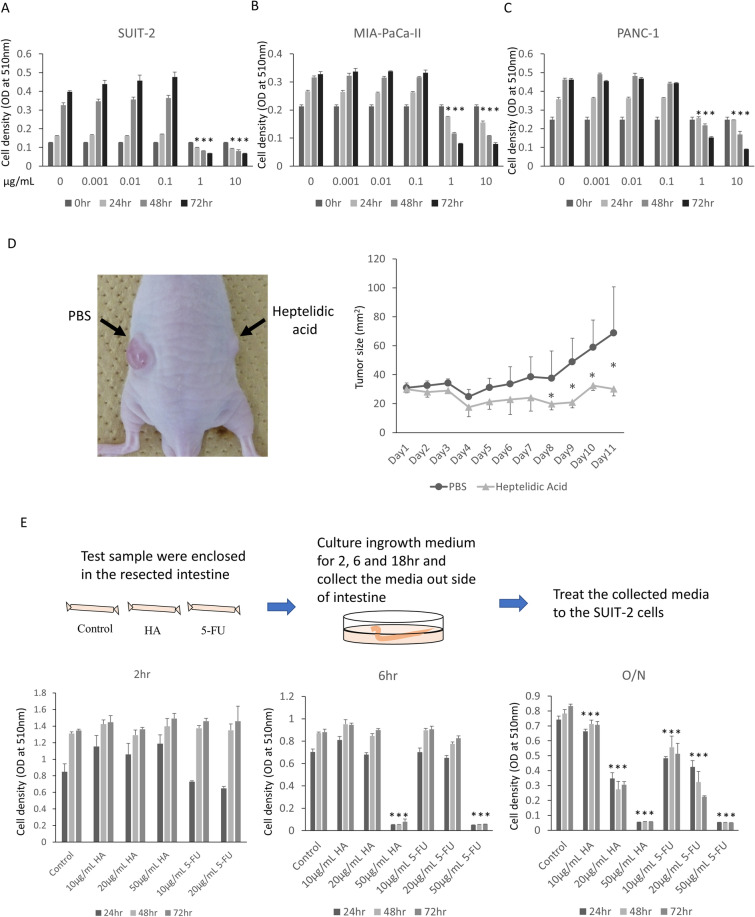
Intake of probiotics or fermented food produced by some probiotic bacteria is believed to exert anti-tumor functions in various cancers, including pancreatic cancer, because several studies have demonstrated the anti-tumor effects of probiotic bacteria in vitro and in vivo in animal carcinogenesis models. However, the mechanisms underlying the anticancer effects of probiotics on pancreatic cancer have not been clarified. In this study, we assessed the anti-tumor effects of probiotic bacteria against pancreatic cancer cells. Among the known probiotic bacteria, Aspergillus oryzae exhibited a strong pancreatic tumor suppression effect. The culture supernatant of A. oryzae was separated by HPLC. Heptelidic acid was identified as an anti-tumor molecule derived from A. oryzae by LC-MS and NMR analysis. The anti-tumor effect of heptelidic acid was exhibited in vitro and in vivo in a xenograft model of pancreatic cancer cells. The anti-tumor effect of heptelidic acid was exerted by the p38 MAPK signaling pathway. Heptelidic acid traverses the intestinal mucosa and exerts anti-tumor effects on pancreatic cancer cells. This is a novel anti-tumor mechanism induced by beneficial bacteria against pancreatic cancer in which bacterial molecules pass through the intestinal tract, reach the extra-intestinal organs, and then induce apoptosis via an inducible signaling pathway.
摄入某些益生菌或由其发酵产生的食物被认为对包括胰腺癌在内的各种癌症具有抗肿瘤功能,因为有几项研究已经证明了益生菌在体外和动物致癌模型中的体内对肿瘤的抑制作用。然而,益生菌对胰腺癌的抗癌作用的机制尚未阐明。在这项研究中,我们评估了益生菌对胰腺癌细胞的抗肿瘤作用。在已知的益生菌中,米曲霉表现出强烈的胰腺肿瘤抑制作用。通过 HPLC 分离了米曲霉的培养上清液。通过 LC-MS 和 NMR 分析鉴定庚酸为米曲霉衍生的抗肿瘤分子。庚酸在胰腺癌细胞的异种移植模型中表现出体外和体内的抗肿瘤作用。庚酸的抗肿瘤作用是通过 p38 MAPK 信号通路发挥的。庚酸穿过肠黏膜,对胰腺癌细胞发挥抗肿瘤作用。这是一种有益细菌对抗胰腺癌的新型抗肿瘤机制,其中细菌分子穿过肠道,到达肠外器官,然后通过诱导信号通路诱导细胞凋亡。