UCD Perinatal Research Centre, School of Medicine, University College Dublin, National Maternity Hospital, Dublin, Ireland.
Eur J Clin Nutr. 2022 Feb;76(2):227-234. doi: 10.1038/s41430-021-00935-0. Epub 2021 May 26.
BACKGROUND/OBJECTIVES: Women with gestational diabetes (GDM) are advised to adapt a low glycaemic index (GI) diet, which may impact consumption of low-calorie sweeteners (LCS). LCS are increasingly popular as they add sweetness without contributing calories. This study aims to investigate the reported intakes of LCS-containing foods in women during pregnancy.
SUBJECTS/METHODS: Pregnant women recruited for the ROLO study were included in this analysis (n = 571). Women were randomised to receive either an intervention of low-GI dietary advice or usual antenatal care. Women completed a 3-day food diary in each trimester. Nine LCS-containing food groups were identified, and the quantity (g/day) consumed was calculated.
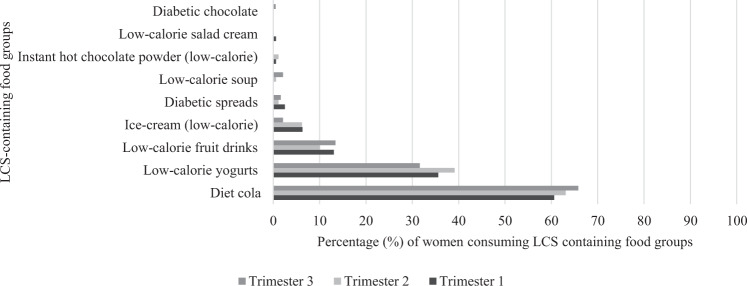
One-third of all pregnant women consumed LCS across each trimester of pregnancy. Of those in the intervention group who were LCS consumers in trimester 1, 71.6% were consumers in trimester 2, and 54.1% remained consumers in trimester 3. In the control group, less women remained consumers in trimester 2 and 3 at 58.1% and 41.9%, respectively. In trimester 2, following the dietary intervention, the proportion of LCS consumers in the intervention group was significantly higher than the proportion of consumers who were in the control group (p < 0.001). The most commonly consumed food groups were low-calorie fruit drinks, diet-cola drinks, and low-calorie yoghurts.
One-third of pregnant women consumed LCS. The proportion of LCS consumers increased in the intervention group compared to the control group. Further research is needed to determine exposure levels to individual LCS, and the effect of prenatal exposure to LCS on maternal and child health outcomes.
背景/目的:患有妊娠糖尿病(GDM)的女性被建议采用低血糖生成指数(GI)饮食,这可能会影响低卡路里甜味剂(LCS)的摄入。LCS 越来越受欢迎,因为它们可以增加甜味而不增加热量。本研究旨在调查妊娠期间报告的 LCS 含量食品的摄入量。
受试者/方法:本分析纳入了参与 ROLO 研究的孕妇(n=571)。这些女性被随机分配接受低 GI 饮食建议干预或常规产前保健。孕妇在每个孕期完成 3 天的食物日记。确定了 9 个含有 LCS 的食物组,并计算了每种食物的摄入量(g/天)。
三分之一的孕妇在整个孕期都摄入了 LCS。在第 1 孕期的干预组中,有 71.6%的孕妇在第 2 孕期摄入 LCS,54.1%的孕妇在第 3 孕期摄入 LCS。在对照组中,较少的孕妇在第 2 和第 3 孕期继续摄入 LCS,比例分别为 58.1%和 41.9%。在第 2 孕期,在饮食干预后,干预组中 LCS 消费者的比例明显高于对照组(p<0.001)。最常食用的食物组是低卡路里果汁饮料、健怡可乐和低卡路里酸奶。
三分之一的孕妇摄入了 LCS。与对照组相比,干预组中 LCS 的消费者比例增加。需要进一步研究来确定个体 LCS 的暴露水平,以及产前接触 LCS 对母婴健康结果的影响。