Lang Ziting, Qiao Shunda, He Ying, Ma Yufei
National Key Laboratory of Science and Technology on Tunable Laser, Harbin Institute of Technology, Harbin 150001, China.
Photoacoustics. 2021 May 15;22:100272. doi: 10.1016/j.pacs.2021.100272. eCollection 2021 Jun.
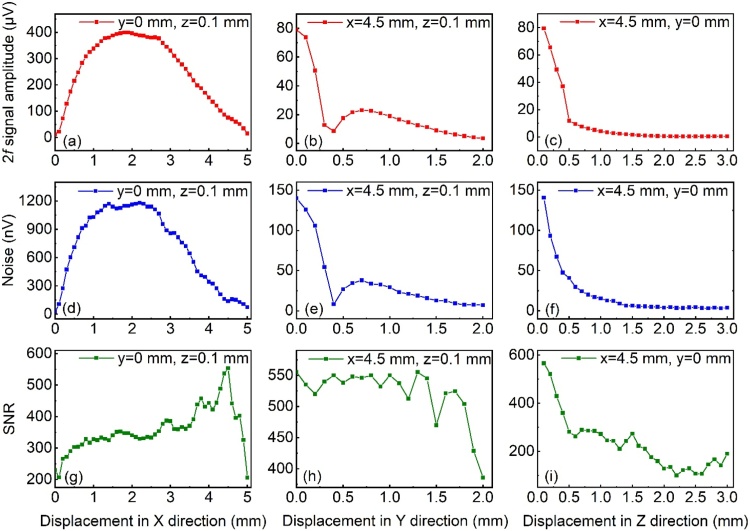
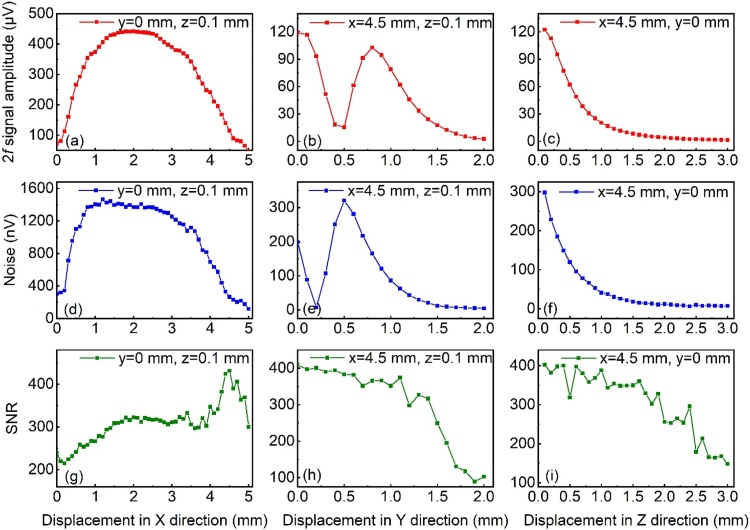
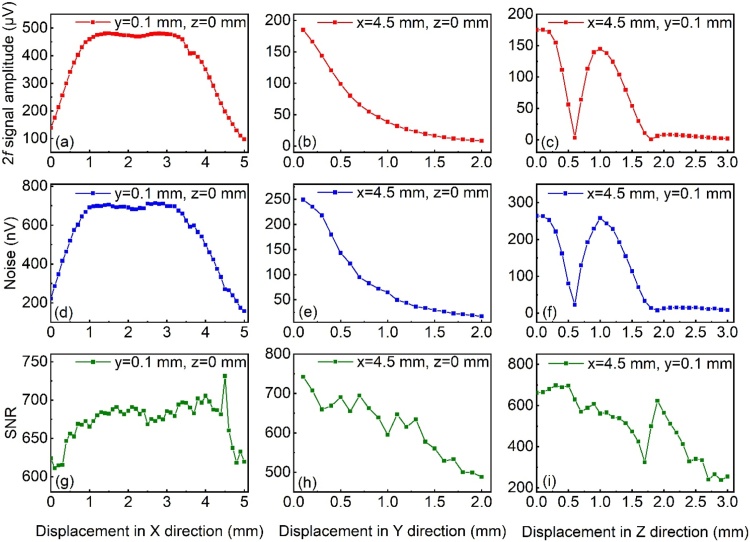
A gas sensing method based on quartz-enhanced photothermal spectroscopy (QEPTS) demodulated by quartz tuning fork (QTF) sensing acoustic wave is reported for the first time. Different from traditional QEPTS, the method proposed in this paper utilizes the second QTF to sense acoustic wave produced by the first QTF owing to the vibration resulted from photo-thermo-elastic effect. This indirect demodulation by acoustic wave sensing can avoid QTF being irradiated by laser beam and therefore get less noise and realize better detection sensitivity. Four different sensing configurations are designed and verified. Acetylene (CH) with a volume concentration of 1.95 % is selected as the target gas. A model of sound field produced by the first QTF vibrating is established by finite element method to explain the variation trend of signal and noise in the second QTF. The measured results indicate that this technique had an enhanced signal-to-noise ratio (SNR) of 1.36 times when compared to the traditional QEPTS. Further improvement methods for such technique is proposed.
首次报道了一种基于石英增强光热光谱(QEPTS)的气体传感方法,该方法由石英音叉(QTF)传感声波进行解调。与传统的QEPTS不同,本文提出的方法利用第二个QTF来传感由第一个QTF因光热弹性效应产生的振动而产生的声波。这种通过声波传感的间接解调可以避免QTF受到激光束照射,从而获得更少的噪声并实现更好的检测灵敏度。设计并验证了四种不同的传感配置。选择体积浓度为1.95%的乙炔(CH)作为目标气体。通过有限元方法建立了第一个QTF振动产生的声场模型,以解释第二个QTF中信号和噪声的变化趋势。测量结果表明,与传统的QEPTS相比,该技术的信噪比(SNR)提高了1.36倍。还提出了该技术的进一步改进方法。