Tadepalle Nimesha, Rugarli Elena I
Molecular and Cell Biology Laboratory, Salk Institute of Biological Sciences, La Jolla, CA, United States.
Institute for Genetics, University of Cologne, Cologne, Germany.
Front Mol Biosci. 2021 May 10;8:673977. doi: 10.3389/fmolb.2021.673977. eCollection 2021.
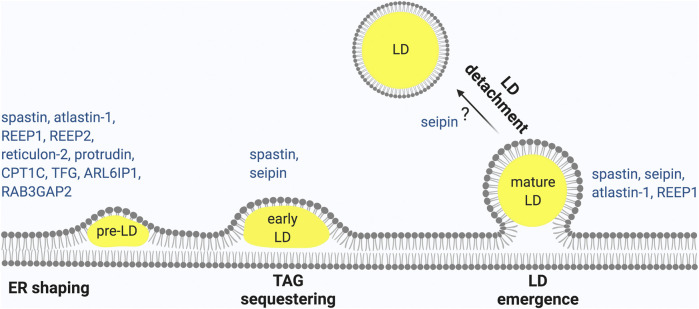
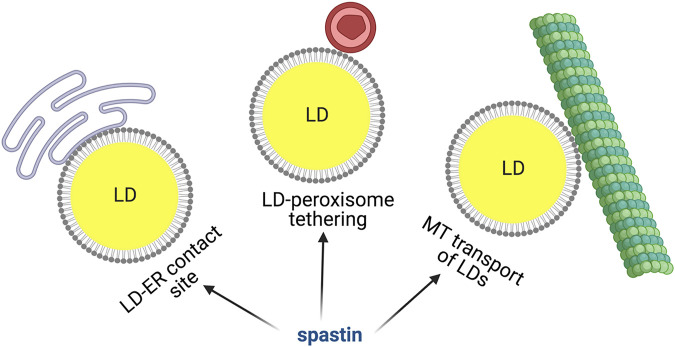
Hereditary spastic paraplegias (HSPs) are genetically heterogeneous conditions caused by the progressive dying back of the longest axons in the central nervous system, the corticospinal axons. A wealth of data in the last decade has unraveled disturbances of lipid droplet (LD) biogenesis, maturation, turnover and contact sites in cellular and animal models with perturbed expression and function of HSP proteins. As ubiquitous organelles that segregate neutral lipid into a phospholipid monolayer, LDs are at the cross-road of several processes including lipid metabolism and trafficking, energy homeostasis, and stress signaling cascades. However, their role in brain cells, especially in neurons remains enigmatic. Here, we review experimental findings linking LD abnormalities to defective function of proteins encoded by HSP genes, and discuss arising questions in the context of the pathogenesis of HSP.
遗传性痉挛性截瘫(HSPs)是由中枢神经系统中最长的轴突即皮质脊髓轴突进行性退变所导致的基因异质性疾病。过去十年里,大量数据揭示了在细胞和动物模型中,随着HSP蛋白表达和功能受到干扰,脂滴(LD)的生物合成、成熟、周转及接触位点出现紊乱。作为将中性脂质分隔到磷脂单层中的普遍存在的细胞器,脂滴处于多个过程的交叉点,包括脂质代谢与运输、能量稳态以及应激信号级联反应。然而,它们在脑细胞尤其是神经元中的作用仍然成谜。在此,我们综述了将脂滴异常与HSP基因编码蛋白的功能缺陷相联系的实验发现,并在HSP发病机制的背景下讨论由此产生的问题。