International Ph.D. Program in Medicine, College of Medicine, Taipei Medical University, Taipei 110, Taiwan.
Department of Clinical Pathology and Laboratory Medicine, Faculty of Medicine, Public Health and Nursing, Universitas Gadjah Mada, Yogyakarta 55281, Indonesia.
J Immunol Res. 2021 May 6;2021:6654617. doi: 10.1155/2021/6654617. eCollection 2021.
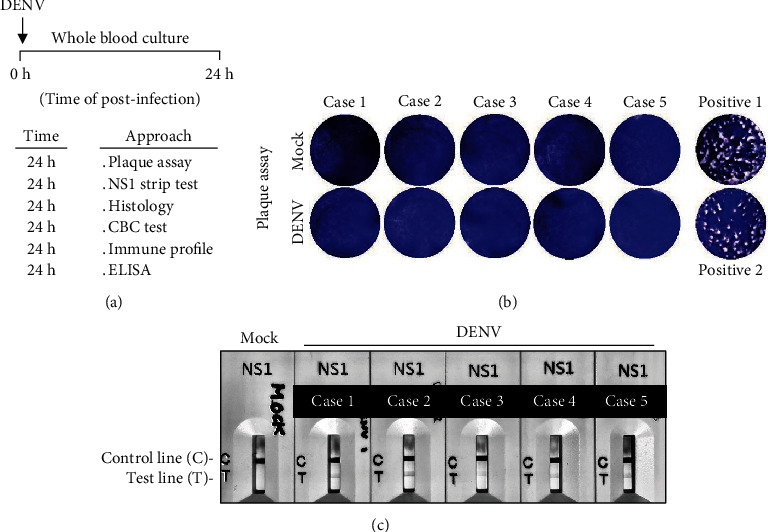
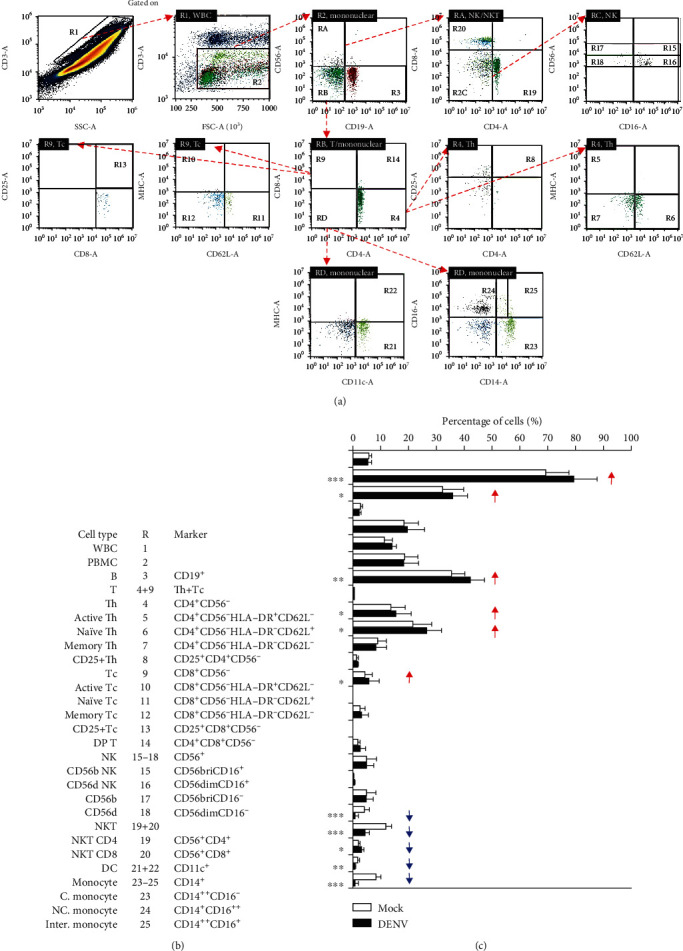
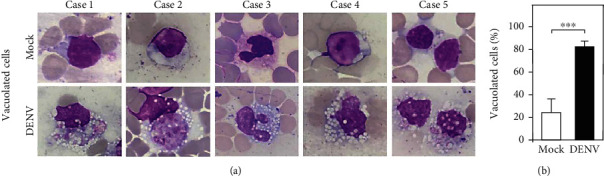
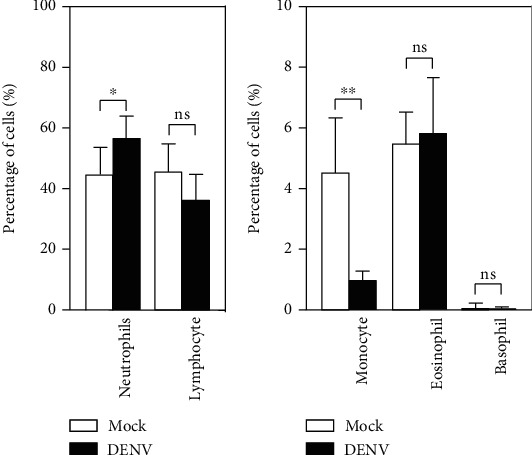
During the acute febrile phase of dengue virus (DENV) infection, viremia can cause severe systemic immune responses accompanied by hematologic disorders. This study investigated the potential induction and mechanism of the cytopathic effects of DENV on peripheral blood cells . At one day postinfection, there was viral nonstructural protein NS1 but no further virus replication measured in the whole blood culture. Notably, DENV exposure caused significant vacuolization in monocytic phagocytes. With a minor change in the complete blood cell count, except for a minor increase in neutrophils and a significant decrease in monocytes, the immune profiling assay identified several changes, particularly a significant reduction in CD14-positive monocytes as well as CD11c-positive dendritic cells. Abnormal production of TNF- was highly associated with the induction of vacuolization. Manipulating TNF- expression resulted in cytopathogenic effects. These results demonstrate the potential hematological damage caused by DENV-induced TNF-.
在登革热病毒(DENV)感染的急性发热期,病毒血症可引起严重的全身免疫反应,并伴有血液学紊乱。本研究探讨了 DENV 对外周血细胞产生细胞病变作用的潜在诱导和机制。在感染后 1 天,全血培养物中检测到病毒非结构蛋白 NS1,但没有进一步的病毒复制。值得注意的是,DENV 暴露可导致单核吞噬细胞明显空泡化。除了中性粒细胞略有增加和单核细胞显著减少外,全血细胞计数只有微小变化,免疫分析鉴定出了几种变化,特别是 CD14 阳性单核细胞和 CD11c 阳性树突状细胞显著减少。TNF-α 的异常产生与空泡化的诱导高度相关。操纵 TNF-α 的表达可导致细胞病变作用。这些结果表明 DENV 诱导的 TNF-α 可能导致血液学损伤。