TUM School of Life Sciences, Department of Life Science Systems, Technical University of Munich, 85354, Freising, Germany.
Helmholtz Zentrum München - Deutsches Forschungszentrum für Gesundheit und Umwelt (GmbH), 85764, Oberschleißheim, Germany.
Int J Biometeorol. 2021 Nov;65(11):1983-1993. doi: 10.1007/s00484-021-02154-5. Epub 2021 May 27.
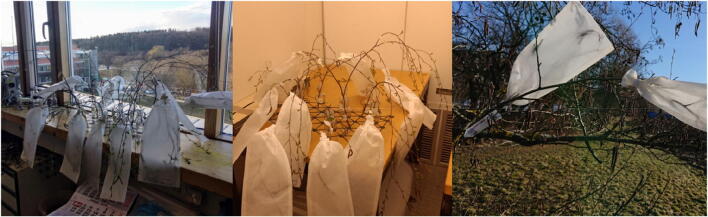
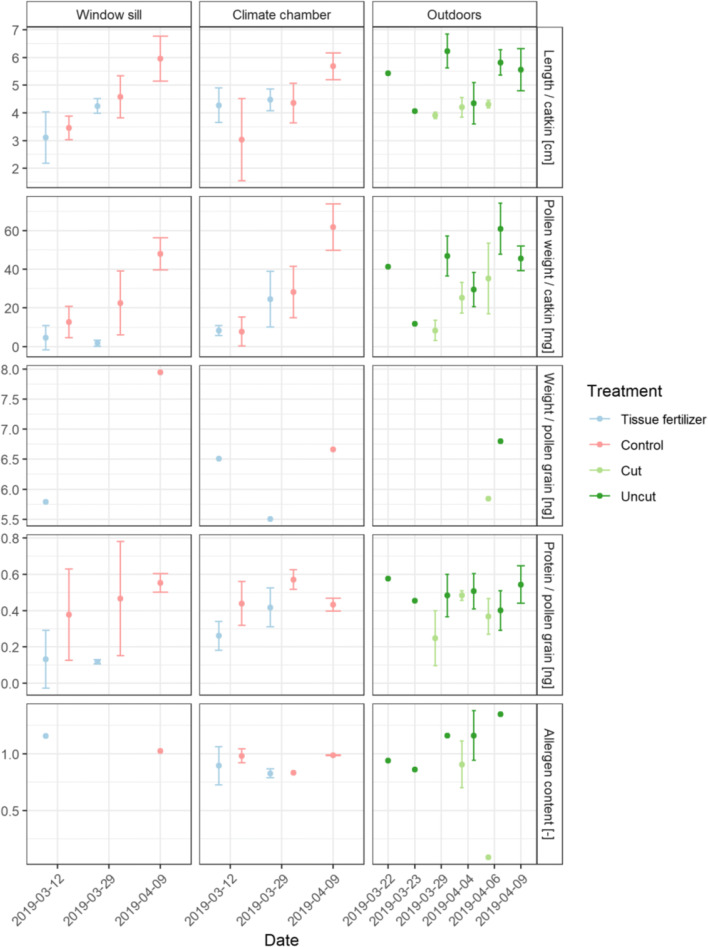
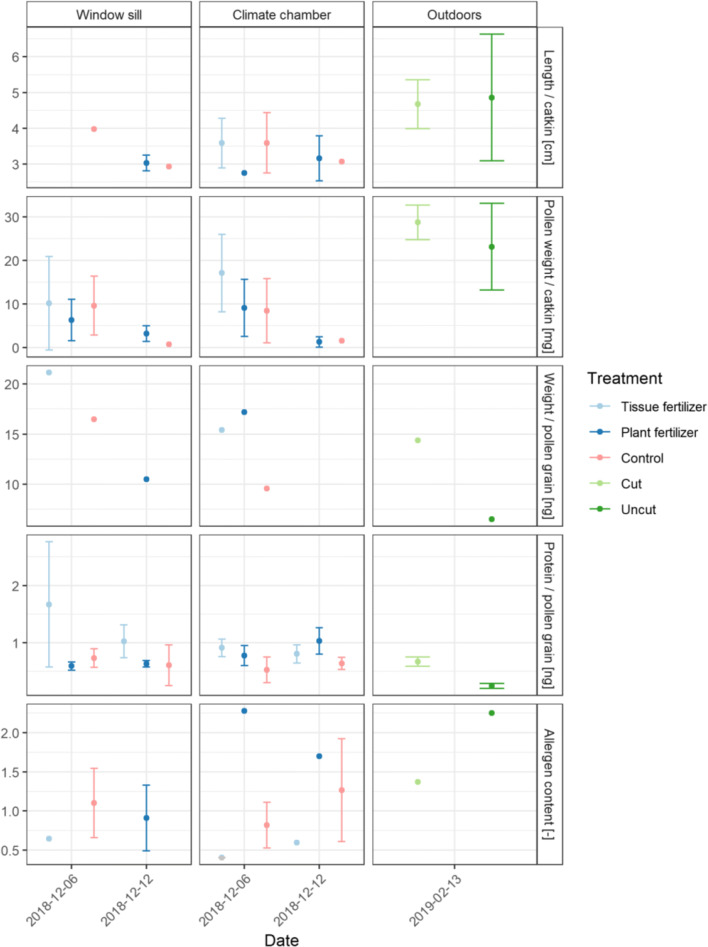
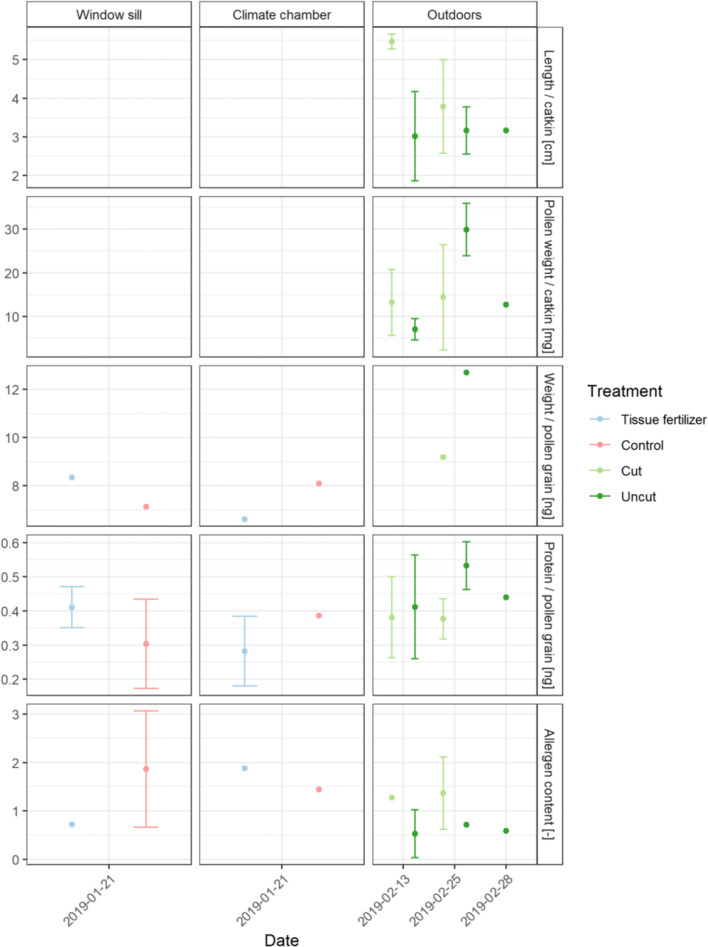
The twig method in climate chambers has been shown to successfully work as a proxy for outdoor manipulations in various experimental setups. This study was conducted to further establish this method for the investigation of allergenic pollen from tree species (hazel, alder, and birch). Direct comparison under outdoor conditions revealed that the cut twigs compared to donor trees were similar in the timing of flowering and the amount of pollen produced. Cut twigs were able to flower in climate chambers and produced a sufficient amount of pollen for subsequent laboratory analysis. The addition of different plant or tissue fertilizers in the irrigation of the twigs did not have any influence; rather, the regular exchange of water and the usage of fungicide were sufficient for reaching the stage of flowering. In the experimental setup, the twigs were cut in different intervals before the actual flowering and were put under warming conditions in the climate chamber. An impact of warming on the timing of flowering/pollen characteristics could be seen for the investigated species. Therefore, the twig method is well applicable for experimental settings in pollen research simulating, e.g., accelerated warming under climate change.
在各种实验设置中,气候室中的小枝方法已被证明可成功作为室外操作的替代方法。本研究旨在进一步为研究树木花粉(榛子、桤木和桦木)的致敏性建立这种方法。在户外条件下进行的直接比较表明,与供体树木相比,剪下的小枝在开花时间和产生的花粉量方面相似。剪下的小枝能够在气候室中开花,并产生足够数量的花粉用于随后的实验室分析。在小枝的灌溉中添加不同的植物或组织肥料没有任何影响;相反,定期换水和使用杀菌剂就足以使小枝进入开花阶段。在实验设置中,在实际开花前以不同的间隔剪下小枝,并在气候室中进行加温处理。被研究的物种的开花/花粉特性受到了变暖的影响。因此,小枝方法非常适用于花粉研究的实验设置,例如,模拟气候变化下的加速变暖。