Department of Neurology, Yonsei University College of Medicine, Seoul, Korea.
Department of Neurology, CHA Bundang Medical Center, Seongnam, Korea.
PLoS One. 2021 May 27;16(5):e0252042. doi: 10.1371/journal.pone.0252042. eCollection 2021.
High blood pressure is a major risk factor for the development and rupture of cerebral aneurysm. Endovascular coil embolization and surgical clipping are established procedures to treat cerebral aneurysm. However, longitudinal data of blood pressure after the treatment of cerebral aneurysm and its impact on long-term prognosis are not well known.
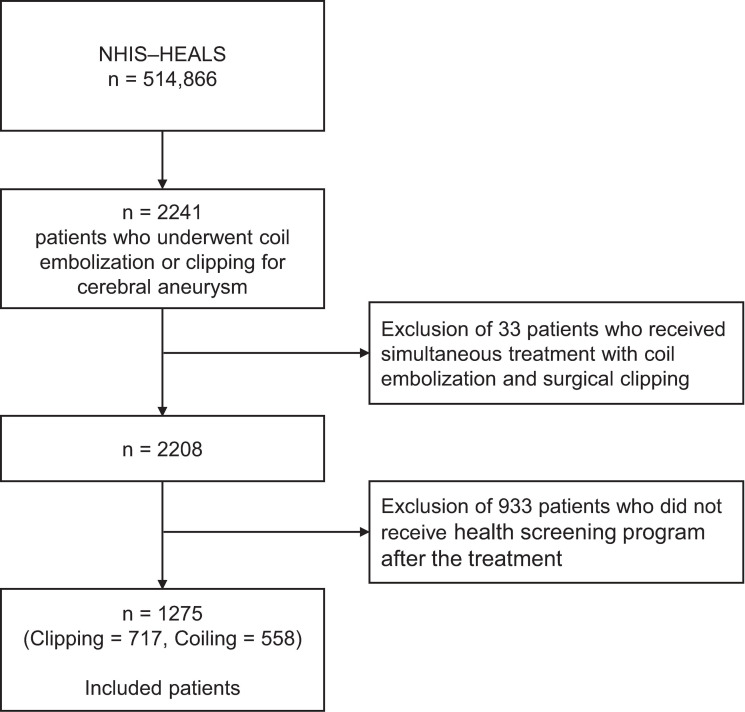
This retrospective cohort study included 1275 patients who underwent endovascular coil embolization (n = 558) or surgical clipping (n = 717) of cerebral aneurysm in 2002-2015 using the nationwide health screening database of Korea. Systolic and diastolic blood pressure of patients were repeatedly obtained from the nationwide health screening program. We performed a multivariate time-dependent Cox regression analysis of the primary composite outcome of stroke, myocardial infarction, and all-cause death.
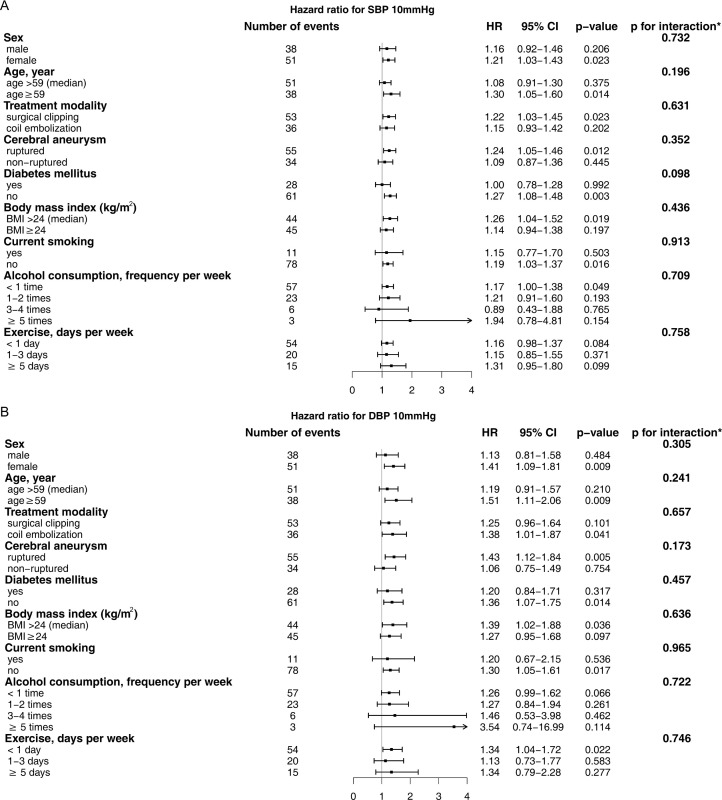
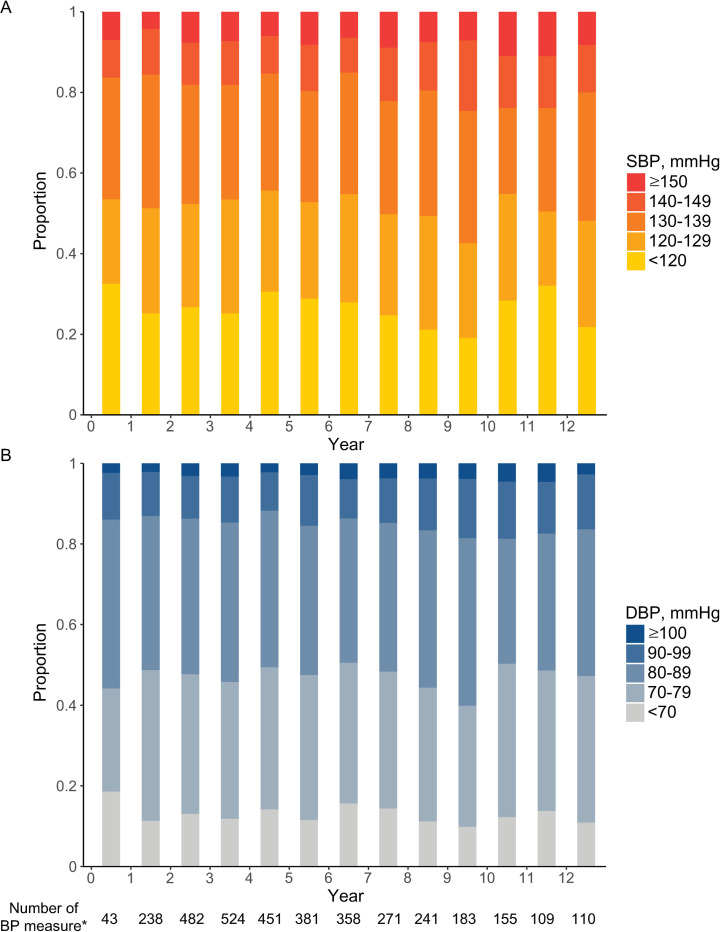
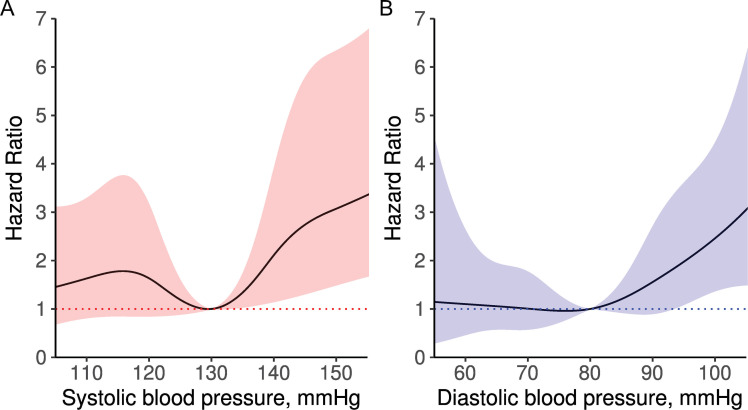
During the mean follow-up period of 6.13 ± 3.41 years, 89 patients suffered the primary outcome. Among the total 3546 times of blood pressure measurement, uncontrolled high blood pressure (systolic ≥140 mmHg or diastolic ≥90 mmHg) was 22.9%. There was a significantly increased risk of primary outcome with high systolic (adjusted HR [95% CI] per 10 mmHg, 1.16 [1.01-1.35]) and diastolic (adjusted HR [95% CI] per 10 mmHg, 1.32 [1.06-1.64]) blood pressure.
High blood pressure is prevalent even in patients who received treatment for cerebral aneurysm, which is significantly associated with poor outcome. Strict control of high blood pressure may further improve the prognosis of patients with cerebral aneurysm.
高血压是脑动脉瘤发生和破裂的一个主要危险因素。血管内线圈栓塞和手术夹闭是治疗脑动脉瘤的既定方法。然而,关于脑动脉瘤治疗后血压的纵向数据及其对长期预后的影响尚不清楚。
本回顾性队列研究纳入了 2002 年至 2015 年期间在韩国全国健康筛查数据库中接受血管内线圈栓塞(n = 558)或手术夹闭(n = 717)治疗的 1275 例脑动脉瘤患者。通过全国健康筛查计划,多次重复获取患者的收缩压和舒张压。我们对主要复合结局(卒中、心肌梗死和全因死亡)进行了多变量时间依赖性 Cox 回归分析。
在平均 6.13 ± 3.41 年的随访期间,89 例患者发生了主要结局。在总共 3546 次血压测量中,未控制的高血压(收缩压≥140 mmHg 或舒张压≥90 mmHg)占 22.9%。收缩压(每 10 mmHg 的调整 HR [95%CI],1.16 [1.01-1.35])和舒张压(每 10 mmHg 的调整 HR [95%CI],1.32 [1.06-1.64])较高与主要结局风险显著增加相关。
即使在接受脑动脉瘤治疗的患者中,高血压也很常见,且与不良结局显著相关。严格控制高血压可能进一步改善脑动脉瘤患者的预后。