State Key Laboratory of Ophthalmology, Zhongshan Ophthalmic Center, Sun Yat-sen University, 54 Xianlie Road, Guangzhou, 510060, China.
Research Center for Drug Discovery, School of Pharmaceutical Sciences, Sun Yat-sen University, Guangzhou, 510006, People's Republic of China.
BMC Ophthalmol. 2021 May 27;21(1):235. doi: 10.1186/s12886-021-01994-4.
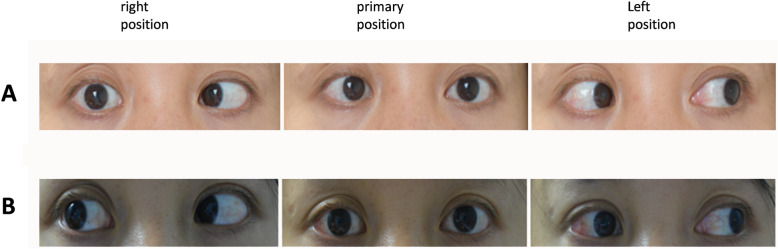
Recently, we found that maximal medial rectus recession and lateral rectus resection in patients with complete lateral rectus paralysis resulted in a partial restoration of abduction. In an attempt to understand some of the mechanisms involved with this effect we examined gene expression profiles of lateral recti from these patients, with our focus being directed to genes related to myogenesis.
Lateral recti resected from patients with complete lateral rectus paralysis and those from concomitant esotropia (controls) were collected. Differences in gene expression profiles between these two groups were examined using microarray analysis and quantitative Reverse-transcription PCR (qRT-PCR).
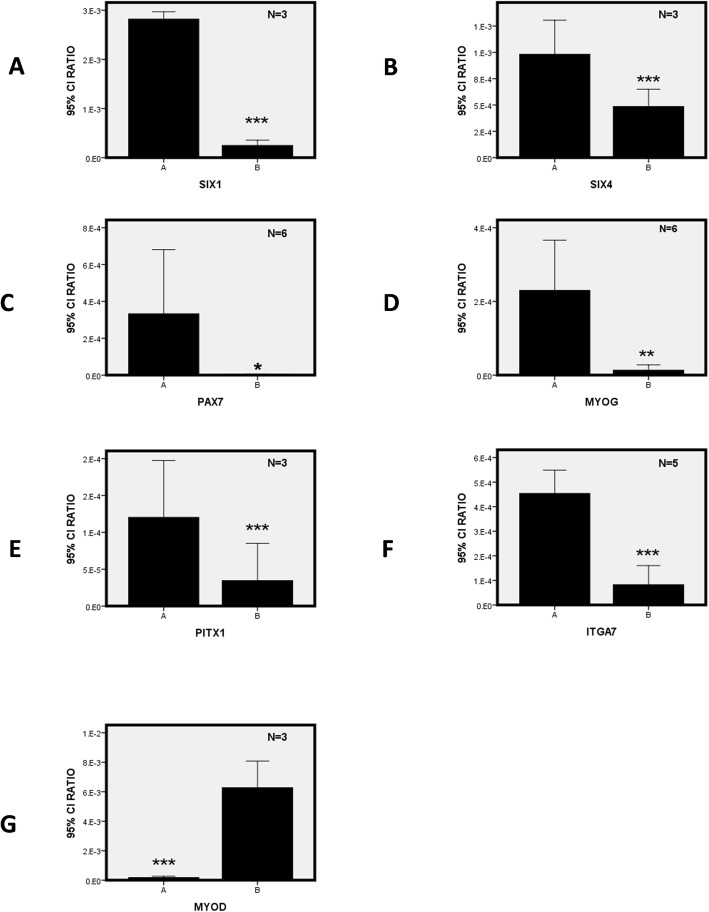
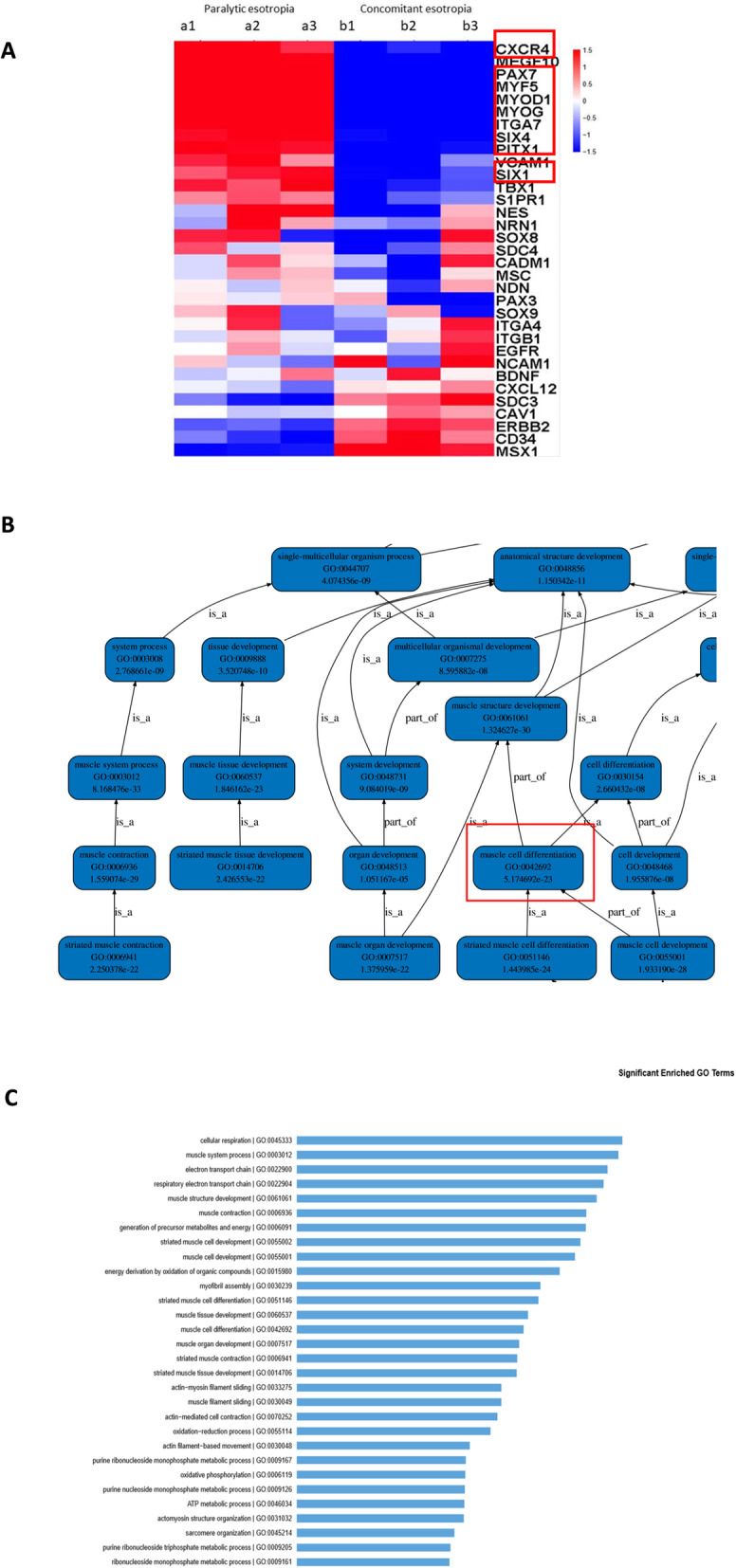
A total of 3056 differentially expressed genes (DEGs) were identified between these two groups. Within the paralytic esotropia group, 2081 genes were up-regulated and 975 down-regulated. The results of RT-PCR revealed that PAX7, MYOG, PITX1, SIX1 and SIX4 showed higher levels of expression, while that of MYOD a lower level of expression within the paralytic esotropia group as compared with that in the control group (p < 0.05).
The decreased expression of MYOD in the paralytic esotropia group suggested that extraocular muscle satellite cell (EOMSCs) differentiation processes were inhibited. Whereas the high expression levels of PAX7, SIX1/4 and MYOG, suggested that the EOMSCs were showing an effective potential for differentiation. The stimulation resulting from muscle surgery may induce EOMSCs to differentiate and thus restore abduction function.
最近,我们发现完全性外直肌麻痹患者行最大内直肌后退和外直肌截除术可部分恢复外展。为了了解这种效果涉及的一些机制,我们检测了这些患者的外直肌的基因表达谱,重点是与肌发生相关的基因。
收集了完全性外直肌麻痹患者和共同性内斜视(对照)患者的外直肌。使用微阵列分析和定量逆转录 PCR(qRT-PCR)检查这两组之间的基因表达谱差异。
这两组之间共鉴定出 3056 个差异表达基因(DEGs)。在麻痹性斜视组中,2081 个基因上调,975 个基因下调。RT-PCR 的结果显示,PAX7、MYOG、PITX1、SIX1 和 SIX4 的表达水平较高,而 MYOD 的表达水平较低(p < 0.05)。
麻痹性斜视组中 MYOD 的表达降低表明眼外肌卫星细胞(EOMSCs)分化过程受到抑制。而 PAX7、SIX1/4 和 MYOG 的高表达水平表明 EOMSCs 具有有效的分化潜能。肌肉手术的刺激可能诱导 EOMSCs 分化,从而恢复外展功能。