Shandong Engineering Research Center for Smart Materials and Regenerative Medicine, Weifang, 261053, People's Republic of China.
College of Pharmacy, Weifang Medical University, Weifang, 261053, People's Republic of China.
Int J Nanomedicine. 2021 May 18;16:3457-3472. doi: 10.2147/IJN.S306269. eCollection 2021.
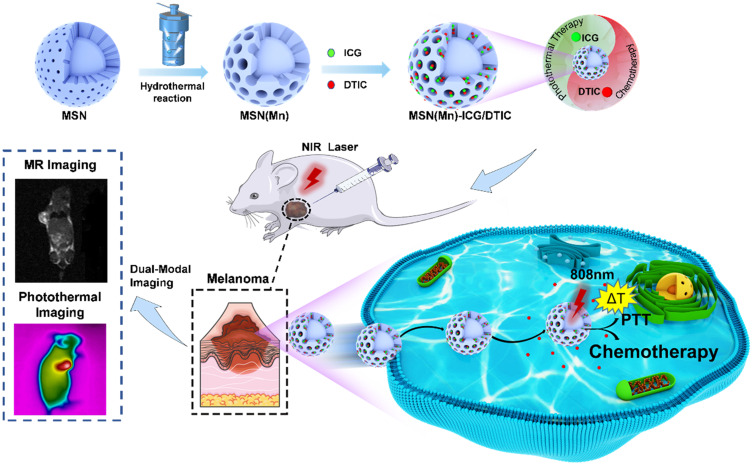
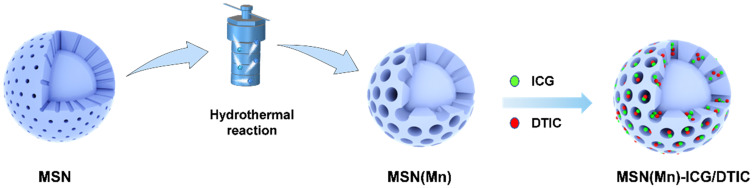
Malignant melanoma is one of the most devastating types of cancer with rapid relapse and low survival rate. Novel strategies for melanoma treatment are currently needed to enhance therapeutic efficiency for this disease. In this study, we fabricated a multifunctional drug delivery system that incorporates dacarbazine (DTIC) and indocyanine green (ICG) into manganese-doped mesoporous silica nanoparticles (MSN(Mn)) coupled with magnetic resonance imaging (MRI) and photothermal imaging (PI), for achieving the superior antitumor effect of combined chemo-photothermal therapy.
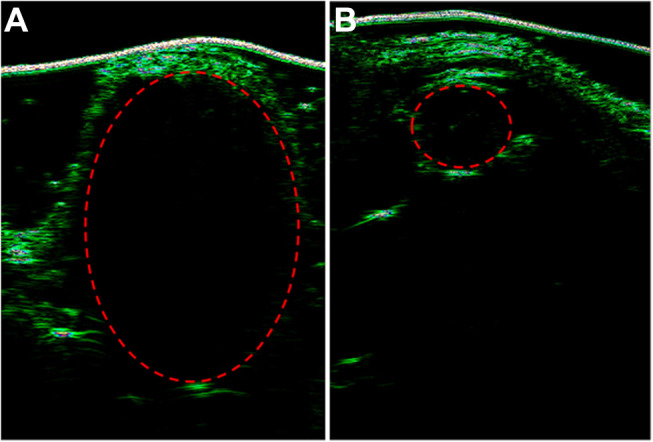
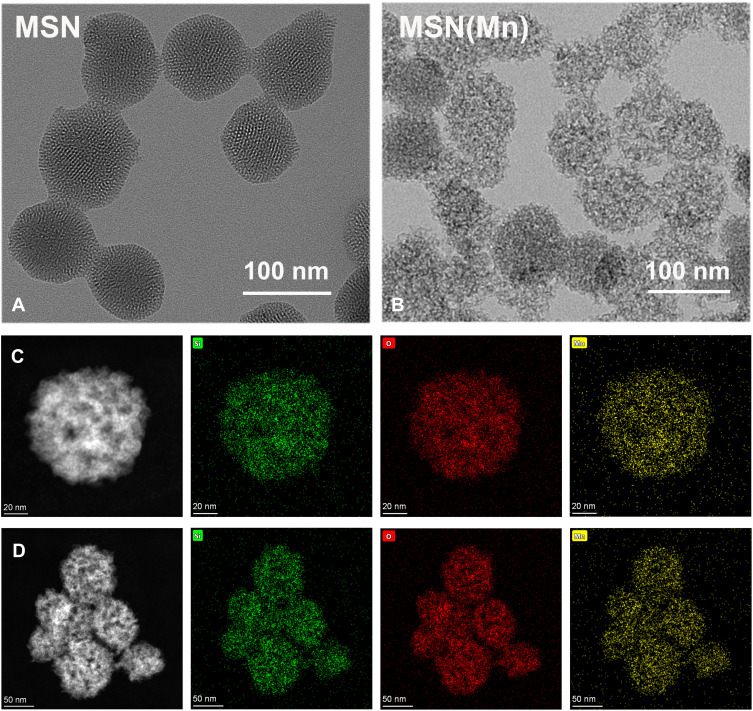
MSN(Mn) were characterized in terms of size and structural properties, and drug loading and release efficiency MSN(Mn)-ICG/DTIC were analyzed by UV spectra. Photothermal imaging effect and MR imaging effect of MSN(Mn)-ICG/DTIC were detected by thermal imaging system and 3.0 T MRI scanner, respectively. Then, the combined chemo-phototherapy was verified in vitro and in vivo by morphological evaluation, ultrasonic and pathological evaluation.
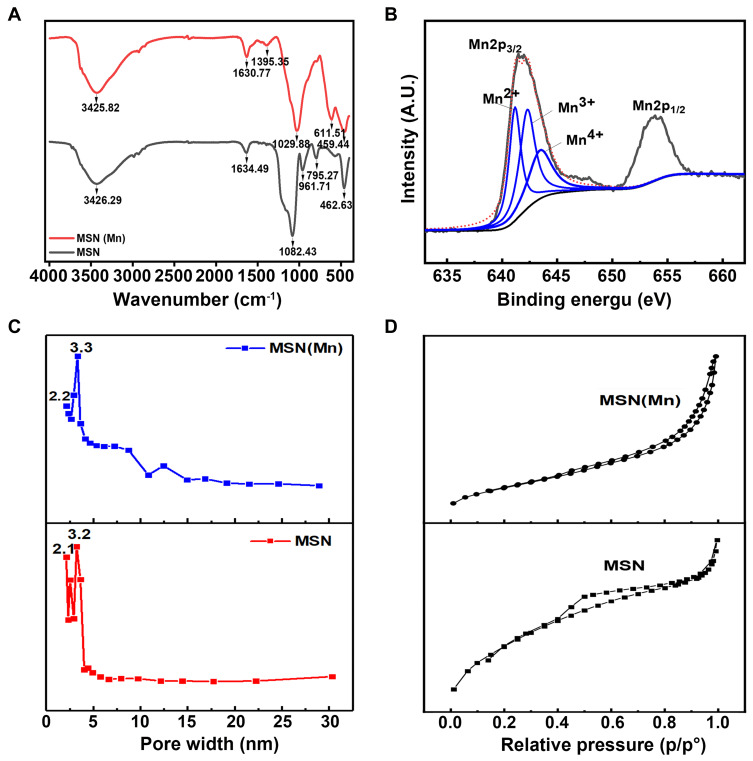
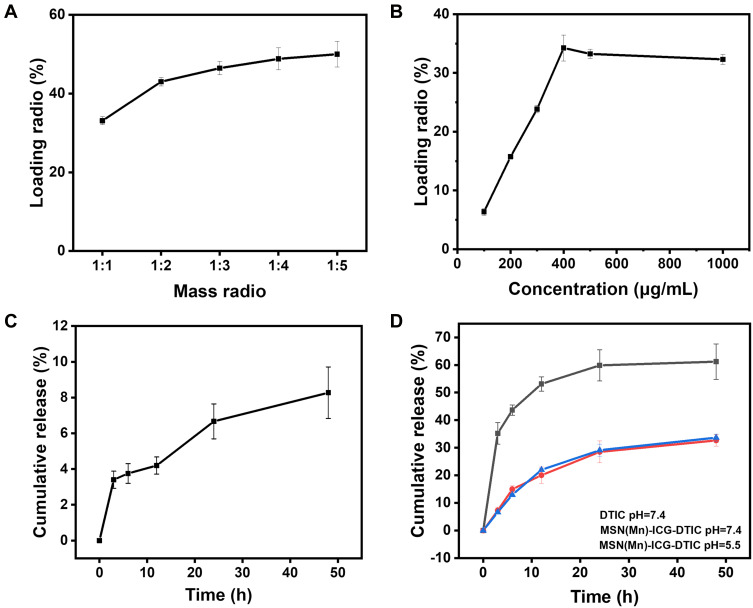
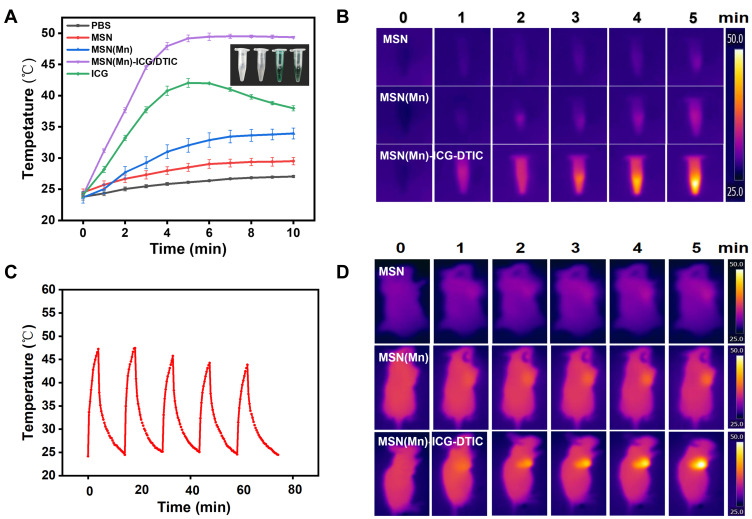
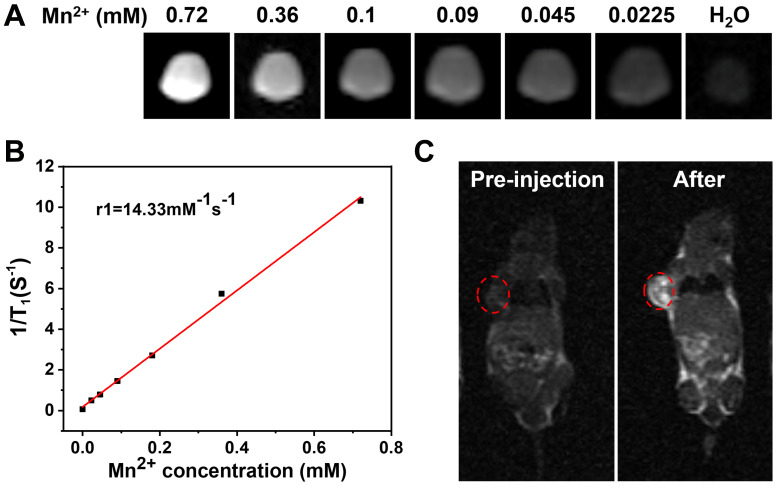
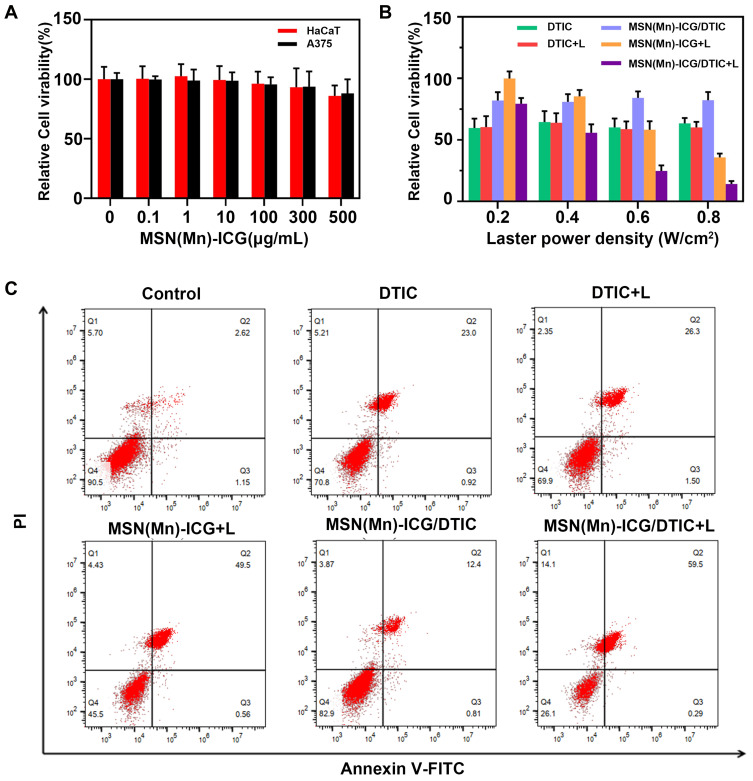
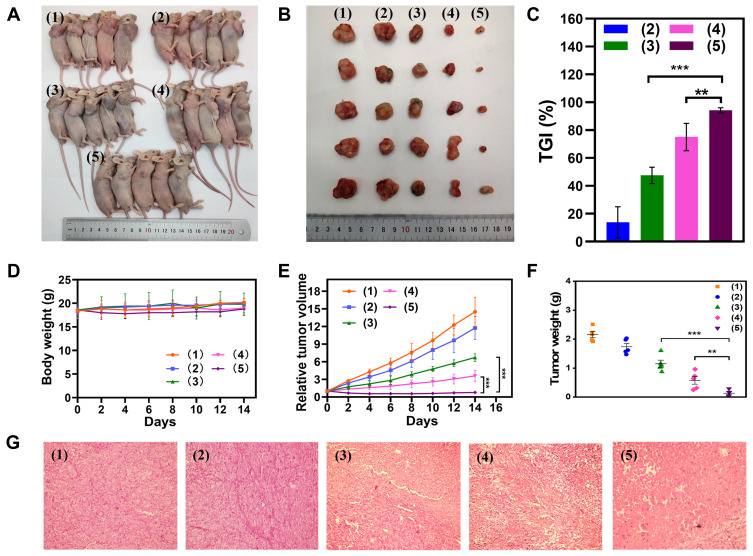
The as-synthesized MSN(Mn) were characterized as mesoporous spherical nanoparticles with 125.57±5.96 nm. MSN(Mn)-ICG/DTIC have the function of drug loading-release which loading ratio of ICG and DTIC could reach to 34.25±2.20% and 50.00±3.24%, and 32.68±2.10% of DTIC was released, respectively. Manganese doping content could reach up to 65.09±2.55 wt%, providing excellent imaging capability in vivo which the corresponding relaxation efficiency was 14.33 mMs. And outstanding photothermal heating ability and stability highlighted the potential biomedical applicability of MSN(Mn)-ICG/DTIC to kill cancer cells. Experiments by A375 melanoma cells and tumor-bearing mice demonstrated that the compound MSN(Mn)-ICG/DTIC have excellent biocompatibility and our combined therapy platform delivered a superior antitumor effect compared to standalone treatment in vivo and in vitro.
Our findings demonstrate that composite MSN(Mn)-ICG/DTIC could serve as a multifunctional platform to achieve a highly effective chemo-photothermal combined therapy for melanoma treatment.
恶性黑色素瘤是一种极具破坏性的癌症,具有快速复发和低生存率的特点。目前需要新的策略来治疗黑色素瘤,以提高这种疾病的治疗效果。在本研究中,我们构建了一种多功能药物输送系统,将达卡巴嗪(DTIC)和吲哚菁绿(ICG)整合到锰掺杂介孔硅纳米粒子(MSN(Mn))中,结合磁共振成像(MRI)和光热成像(PI),以实现联合化疗-光热治疗的卓越抗肿瘤效果。
通过紫外光谱分析了 MSN(Mn)的粒径和结构特性以及药物的负载和释放效率。通过热成像系统和 3.0 T MRI 扫描仪分别检测了 MSN(Mn)-ICG/DTIC 的光热成像效果和磁共振成像效果。然后,通过形态学评价、超声和病理评价,在体外和体内验证了联合化疗-光热治疗。
合成的 MSN(Mn)呈介孔球形纳米粒子,粒径为 125.57±5.96nm。MSN(Mn)-ICG/DTIC 具有载药-释药功能,ICG 和 DTIC 的载药率分别可达 34.25±2.20%和 50.00±3.24%,DTIC 的释放率为 32.68±2.10%。锰掺杂含量可达 65.09±2.55wt%,在体内提供了优异的成像能力,相应的弛豫效率为 14.33 mMs。出色的光热加热能力和稳定性突出了 MSN(Mn)-ICG/DTIC 在杀死癌细胞方面的潜在生物医学应用。通过 A375 黑色素瘤细胞和荷瘤小鼠的实验表明,该复合 MSN(Mn)-ICG/DTIC 具有良好的生物相容性,与单独治疗相比,我们的联合治疗平台在体内和体外均具有优异的抗肿瘤效果。
我们的研究结果表明,复合 MSN(Mn)-ICG/DTIC 可以作为一种多功能平台,实现黑色素瘤治疗的高效化疗-光热联合治疗。