Ma Yu, Zhou Hao, Li Chunpei, Zou Xiaobing, Luo Xuerong, Wu Lijie, Li Tingyu, Chen Xiang, Mao Meng, Huang Yi, Li Erzhen, An Yanpeng, Zhang Lili, Wang Tianqi, Xu Xiu, Yan Weili, Jiang Yonghui, Wang Yi
Department of Neurology, Children's Hospital of Fudan University, Shanghai, China.
Department of Pediatrics, Guizhou Provincial People's Hospital, Guiyang, China.
Front Psychiatry. 2021 May 11;12:624767. doi: 10.3389/fpsyt.2021.624767. eCollection 2021.
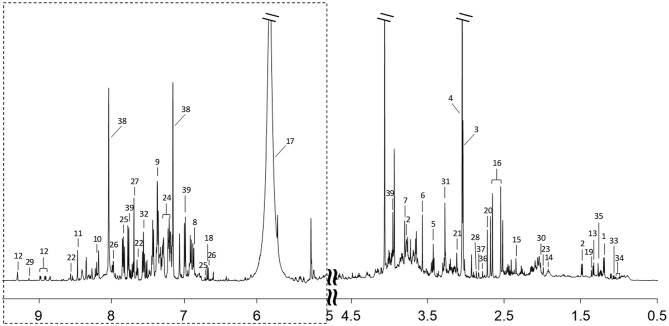
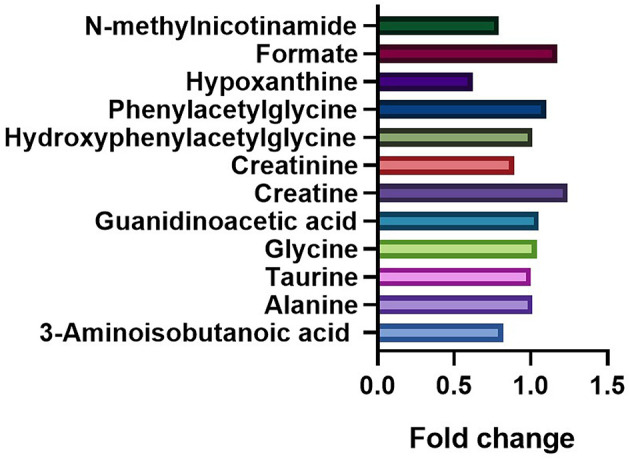
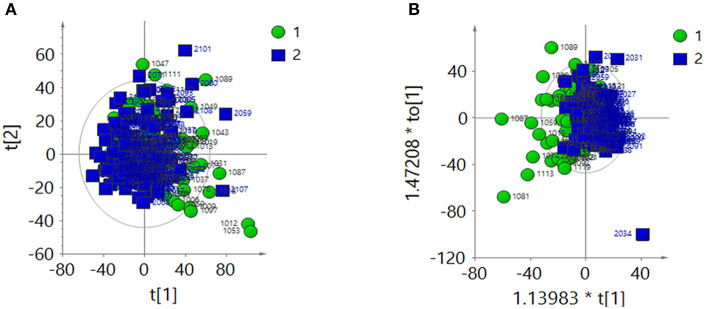
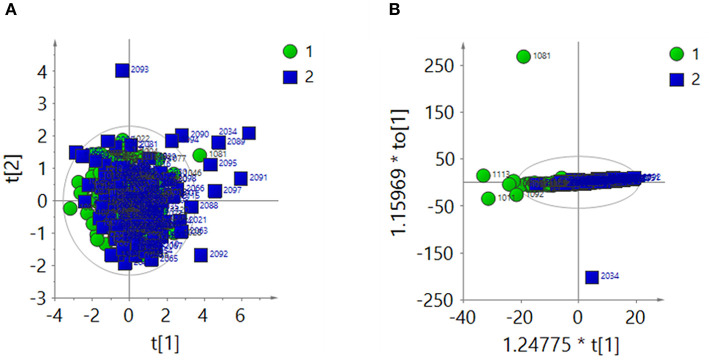
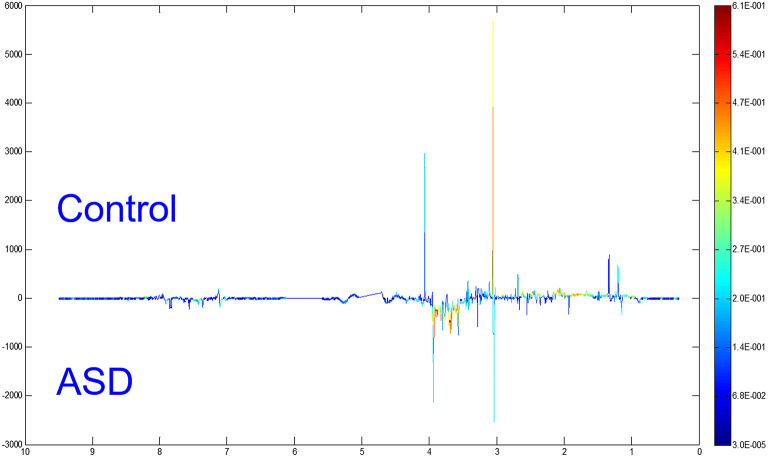
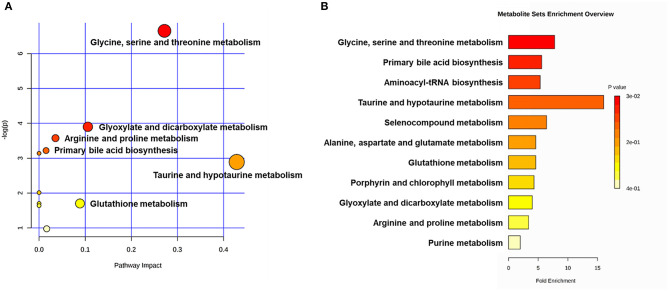
Autism spectrum disorder (ASD) is a group of early-onset neurodevelopmental disorders. However, there is no valuable biomarker for the early diagnosis of ASD. Our large-scale and multi-center study aims to identify metabolic variations between ASD and healthy children and to investigate differential metabolites and associated pathogenic mechanisms. One hundred and seventeen autistic children and 119 healthy children were recruited from research centers of 7 cities. Urine samples were assayed by H-NMR metabolomics analysis to detect metabolic variations. Multivariate statistical analysis, including principal component analysis (PCA), and orthogonal projection to latent structure discriminant analysis (OPLS-DA), as well as univariate analysis were used to assess differential metabolites between the ASD and control groups. The differential metabolites were further analyzed by receiver operating characteristics (ROC) curve analysis and metabolic pathways analysis. Compared with the control group, the ASD group showed higher levels of glycine, guanidinoacetic acid, creatine, hydroxyphenylacetylglycine, phenylacetylglycine, and formate and lower levels of 3-aminoisobutanoic acid, alanine, taurine, creatinine, hypoxanthine, and N-methylnicotinamide. ROC curve showed relatively significant diagnostic values for hypoxanthine [area under the curve (AUC) = 0.657, 95% CI 0.588 to 0.726], creatinine (AUC = 0.639, 95% CI 0.569 to 0.709), creatine (AUC = 0.623, 95% CI 0.552 to 0.694), N-methylnicotinamide (AUC = 0.595, 95% CI 0.523 to 0.668), and guanidinoacetic acid (AUC = 0.574, 95% CI 0.501 to 0.647) in the ASD group. Combining the metabolites creatine, creatinine and hypoxanthine, the AUC of the ROC curve reached 0.720 (95% CI 0.659 to 0.777). Significantly altered metabolite pathways associated with differential metabolites were glycine, serine and threonine metabolism, arginine and proline metabolism, and taurine and hypotaurine metabolism. Urinary amino acid metabolites were significantly altered in children with ASD. Amino acid metabolic pathways might play important roles in the pathogenic mechanisms of ASD.
自闭症谱系障碍(ASD)是一组早发性神经发育障碍。然而,目前尚无用于ASD早期诊断的有价值生物标志物。我们的大规模多中心研究旨在确定ASD患儿与健康儿童之间的代谢差异,并研究差异代谢物及相关致病机制。从7个城市的研究中心招募了117名自闭症儿童和119名健康儿童。通过氢核磁共振(H-NMR)代谢组学分析检测尿液样本,以发现代谢差异。采用多元统计分析,包括主成分分析(PCA)和正交投影到潜在结构判别分析(OPLS-DA),以及单变量分析来评估ASD组与对照组之间的差异代谢物。通过受试者工作特征(ROC)曲线分析和代谢途径分析对差异代谢物进行进一步分析。与对照组相比,ASD组的甘氨酸、胍基乙酸、肌酸、羟苯乙酰甘氨酸、苯乙酰甘氨酸和甲酸水平较高,而3-氨基异丁酸、丙氨酸、牛磺酸、肌酐、次黄嘌呤和N-甲基烟酰胺水平较低。ROC曲线显示,次黄嘌呤[曲线下面积(AUC)=0.657,95%置信区间0.588至0.726]、肌酐(AUC = 0.639,95%置信区间0.569至0.709)、肌酸(AUC = 0.623,95%置信区间0.552至0.694)、N-甲基烟酰胺(AUC = 0.595,95%置信区间0.523至0.668)和胍基乙酸(AUC = 0.574,95%置信区间0.501至0.647)在ASD组中具有相对显著的诊断价值。联合肌酸、肌酐和次黄嘌呤这几种代谢物,ROC曲线的AUC达到0.720(95%置信区间0.659至0.777)。与差异代谢物相关的显著改变的代谢途径有甘氨酸、丝氨酸和苏氨酸代谢、精氨酸和脯氨酸代谢以及牛磺酸和低牛磺酸代谢。ASD患儿尿液中的氨基酸代谢物有显著改变。氨基酸代谢途径可能在ASD的致病机制中起重要作用。