Cardiology Department, Freeman Hospital, Newcastle upon Tyne, United Kingdom.
Translational and Clinical Research Institute, Cardiovascular Biology and Medicine, Newcastle University, Newcastle-upon-Tyne, United Kingdom.
Front Immunol. 2021 May 5;12:605857. doi: 10.3389/fimmu.2021.605857. eCollection 2021.
Latent cytomegalovirus (CMV) infection is associated with adverse cardiovascular outcomes. Virus-specific CXCR1 effector memory T-cells may be instrumental in this process due to their pro-inflammatory properties. We investigated the role of CXCR1 (fractalkine receptor) in CMV-related lymphocyte kinetics and cardiac remodeling in patients with ST-elevation myocardial infarction (STEMI) undergoing primary percutaneous coronary intervention (pPCI).
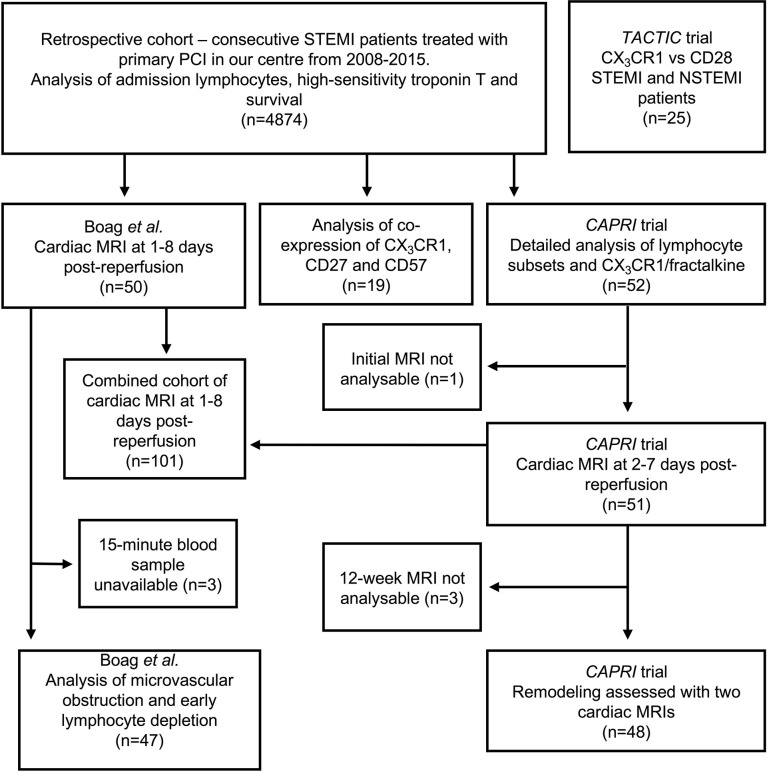
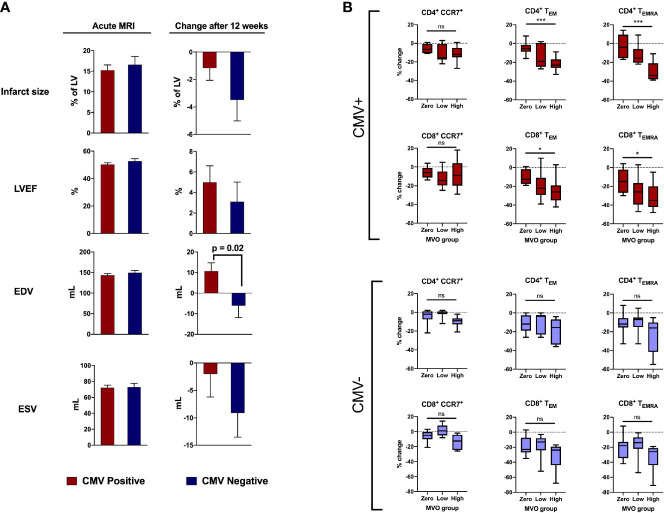
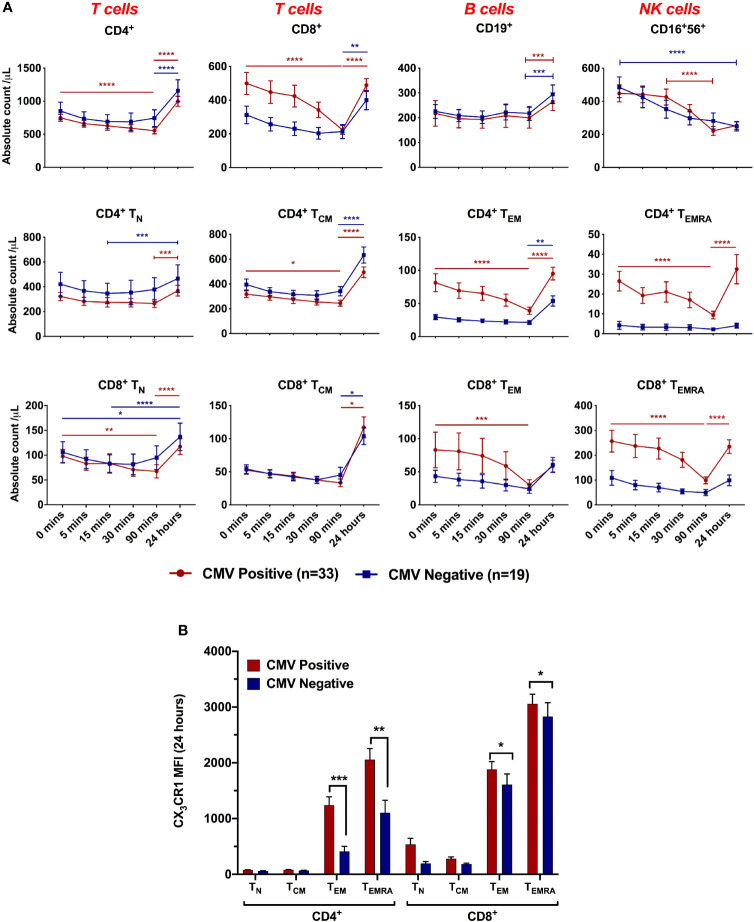
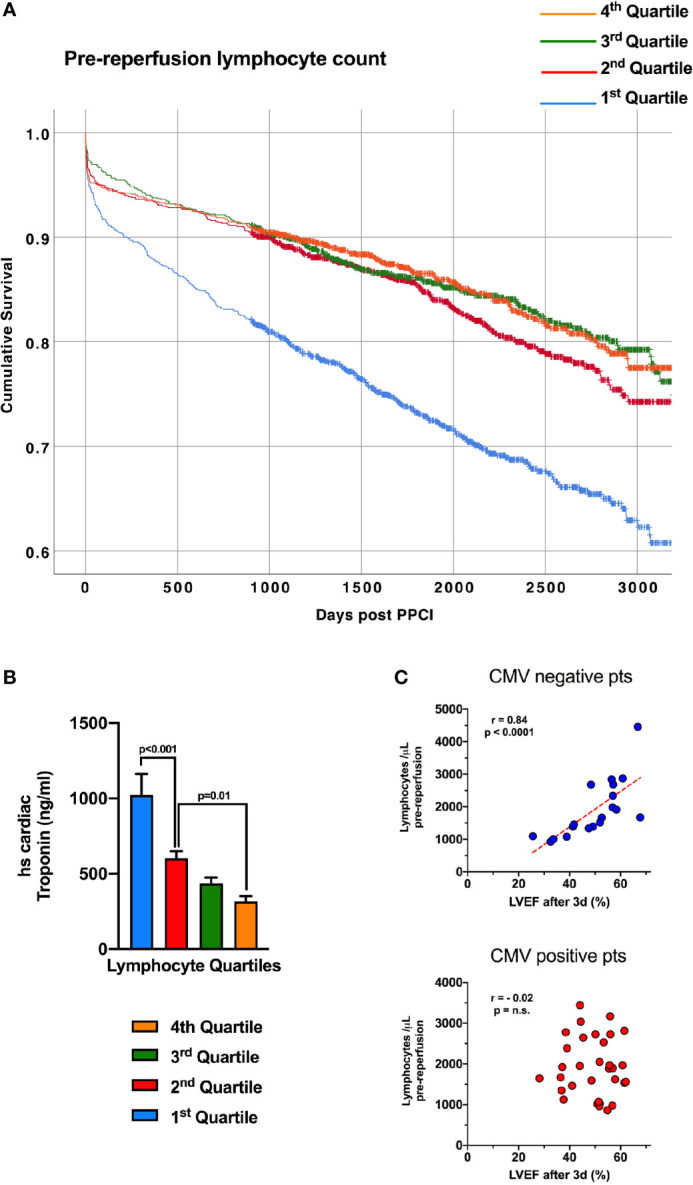
We retrospectively analysed lymphocyte count, troponin, and survival in 4874 STEMI/pPCI patients, evaluated lymphocyte kinetics during reperfusion in a prospective cohort, and obtained sequential cardiac MRI (cMRI) to assess remodeling. Pre-reperfusion lymphopenia independently predicted mortality at 7.5 years. Prior to reperfusion, CCR7 T-lymphocytes appeared to be depleted. After reperfusion, T-lymphocytes expressing CXCR1 were depleted predominantly in CMV-seropositive patients. During ischaemia/reperfusion, a drop in CXCR1 T-lymphocytes was significantly linked with microvascular obstruction in CMV+ patients, suggesting increased fractalkine-receptor interaction. At 12 weeks, CMV+ patients displayed adverse LV remodeling.
We show that lymphopenia occurs before and after reperfusion in STEMI by different mechanisms and predicts long-term outcome. In CMV+ patients, increased fractalkine induction and sequestration of CXCR1 T-cells may contribute to adverse remodeling, suggesting a pro-inflammatory pathomechanism which presents a novel therapeutic target.
潜伏性巨细胞病毒 (CMV) 感染与不良心血管结局相关。病毒特异性 CXCR1 效应记忆 T 细胞由于其促炎特性,可能在这一过程中发挥重要作用。我们研究了 CXCR1(趋化因子受体 1)在接受直接经皮冠状动脉介入治疗 (pPCI) 的 ST 段抬高型心肌梗死 (STEMI) 患者中 CMV 相关淋巴细胞动力学和心脏重构中的作用。
我们回顾性分析了 4874 例 STEMI/pPCI 患者的淋巴细胞计数、肌钙蛋白和存活率,前瞻性队列评估了再灌注期间的淋巴细胞动力学,并获得了连续的心脏 MRI (cMRI) 以评估重构。再灌注前的淋巴细胞减少独立预测了 7.5 年后的死亡率。在再灌注前,似乎耗尽了 CCR7 T 淋巴细胞。再灌注后,CXCR1 表达的 T 淋巴细胞主要在 CMV 血清阳性患者中被耗尽。在缺血/再灌注期间,CMV+患者中 CXCR1 T 淋巴细胞的下降与微血管阻塞显著相关,提示 fractalkine 受体相互作用增加。在 12 周时,CMV+患者表现出不良的 LV 重构。
我们表明,STEMI 患者在再灌注前后通过不同的机制发生淋巴细胞减少,并预测长期结局。在 CMV+患者中,增加的 fractalkine 诱导和 CXCR1 T 细胞的隔离可能导致不良重构,提示存在促炎的病理机制,为治疗提供了新的靶点。