Abdelnabi Rana, Boudewijns Robbert, Foo Caroline S, Seldeslachts Laura, Sanchez-Felipe Lorena, Zhang Xin, Delang Leen, Maes Piet, Kaptein Suzanne J F, Weynand Birgit, Vande Velde Greetje, Neyts Johan, Dallmeier Kai
KU Leuven Department of Microbiology, Immunology and Transplantation, Rega Institute for Medical Research, Laboratory of Virology and Chemotherapy, B-3000 Leuven, Belgium; GVN, Global Virus Network, Baltimore, MD, USA.
KU Leuven Department of Microbiology, Immunology and Transplantation, Rega Institute for Medical Research, Laboratory of Virology and Chemotherapy, B-3000 Leuven, Belgium; Molecular Vaccinology and Vaccine Discovery, Belgium; GVN, Global Virus Network, Baltimore, MD, USA.
EBioMedicine. 2021 Jun;68:103403. doi: 10.1016/j.ebiom.2021.103403. Epub 2021 May 25.
Within one year after its emergence, more than 108 million people acquired SARS-CoV-2 and almost 2·4 million succumbed to COVID-19. New SARS-CoV-2 variants of concern (VoC) are emerging all over the world, with the threat of being more readily transmitted, being more virulent, or escaping naturally acquired and vaccine-induced immunity. At least three major prototypic VoC have been identified, i.e. the United Kingdom, UK (B.1.1.7), South African (B.1.351) and Brazilian (B.1.1.28.1) variants. These are replacing formerly dominant strains and sparking new COVID-19 epidemics.
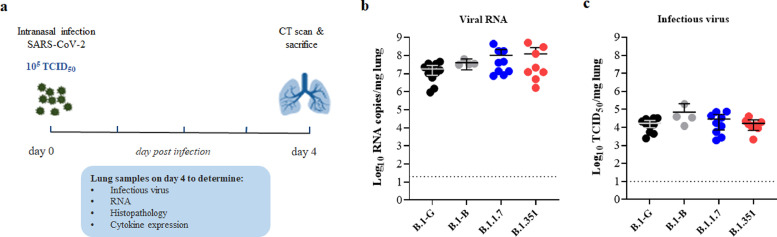
We studied the effect of infection with prototypic VoC from both B.1.1.7 and B.1.351 variants in female Syrian golden hamsters to assess their relative infectivity and virulence in direct comparison to two basal SARS-CoV-2 strains isolated in early 2020.
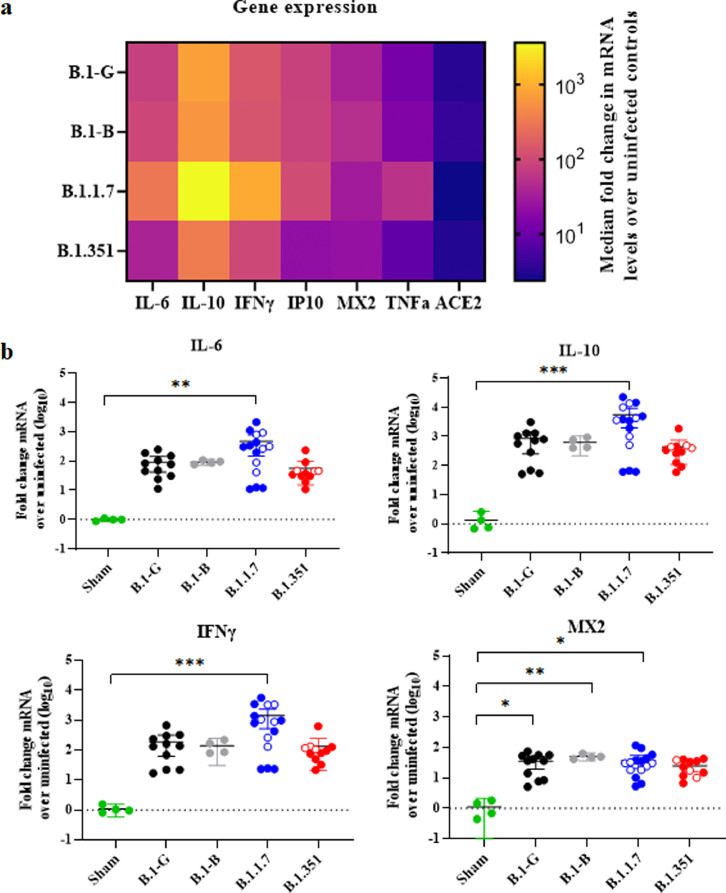
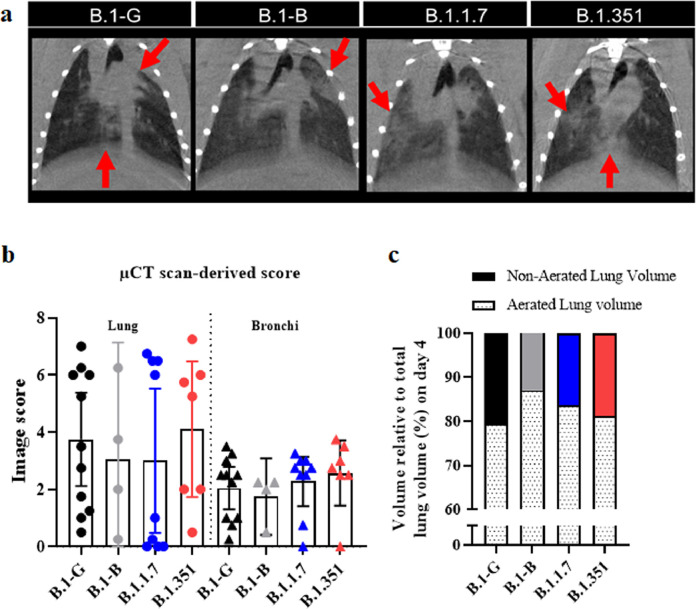
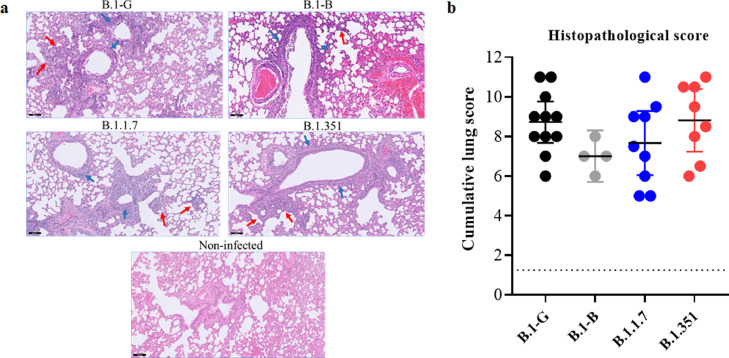
A very efficient infection of the lower respiratory tract of hamsters by these VoC is observed. In line with clinical evidence from patients infected with these VoC, no major differences in disease outcome were observed as compared to the original strains as was quantified by (i) histological scoring, (ii) micro-computed tomography, and (iii) analysis of the expression profiles of selected antiviral and pro-inflammatory cytokine genes. Noteworthy however, in hamsters infected with VoC B.1.1.7, a particularly strong elevation of proinflammatory cytokines was detected.
We established relevant preclinical infection models that will be pivotal to assess the efficacy of current and future vaccine(s) (candidates) as well as therapeutics (small molecules and antibodies) against two important SARS-CoV-2 VoC.
Stated in the acknowledgment.
在新冠病毒出现后的一年内,超过1.08亿人感染了严重急性呼吸综合征冠状病毒2(SARS-CoV-2),近240万人死于新冠病毒病(COVID-19)。新的值得关注的SARS-CoV-2变异株(VoC)在全球各地出现,它们有可能更易传播、毒性更强或逃避自然获得的免疫力及疫苗诱导的免疫力。至少已鉴定出三种主要的原型VoC,即英国(B.1.1.7)、南非(B.1.351)和巴西(B.1.1.28.1)变异株。这些变异株正在取代先前占主导地位的毒株,并引发新的COVID-19疫情。
我们研究了感染B.1.1.7和B.1.351变异株的原型VoC对雌性叙利亚金黄地鼠的影响,以直接与2020年初分离的两种基础SARS-CoV-2毒株比较,评估它们的相对传染性和毒力。
观察到这些VoC能非常有效地感染地鼠的下呼吸道。与感染这些VoC的患者的临床证据一致,通过(i)组织学评分、(ii)微型计算机断层扫描和(iii)分析选定的抗病毒和促炎细胞因子基因的表达谱进行量化,与原始毒株相比,在疾病结果方面未观察到重大差异。然而,值得注意的是,在感染VoC B.1.1.7的地鼠中,检测到促炎细胞因子有特别强烈的升高。
我们建立了相关的临床前感染模型,这对于评估当前和未来疫苗(候选疫苗)以及针对两种重要的SARS-CoV-2 VoC的治疗方法(小分子和抗体)的疗效至关重要。
致谢中声明。