Department of Psychiatry, McGill University, Montréal, Québec, Canada.
Institute for Interdisciplinary Brain and Behavioral Sciences, Chapman University, Irvine, CA, USA.
Q J Exp Psychol (Hove). 2021 Dec;74(12):2057-2074. doi: 10.1177/17470218211024826. Epub 2021 Jun 30.
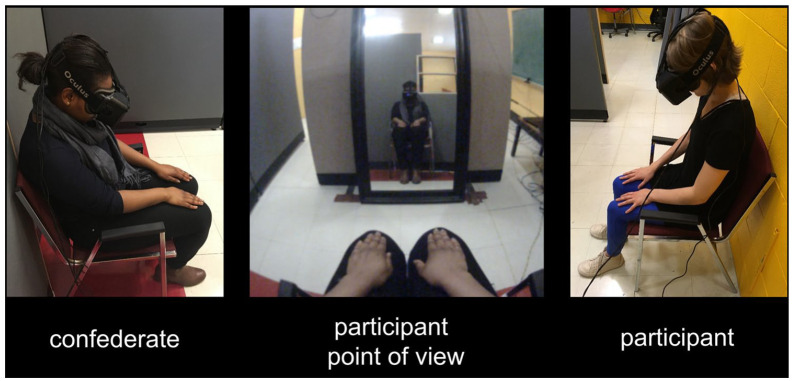
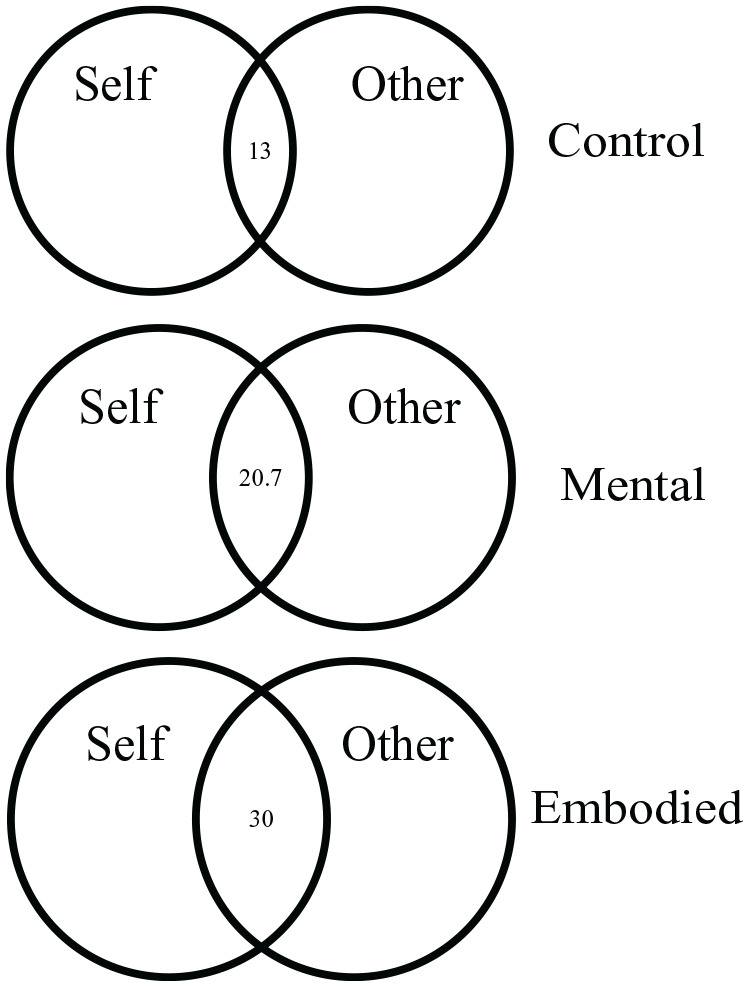
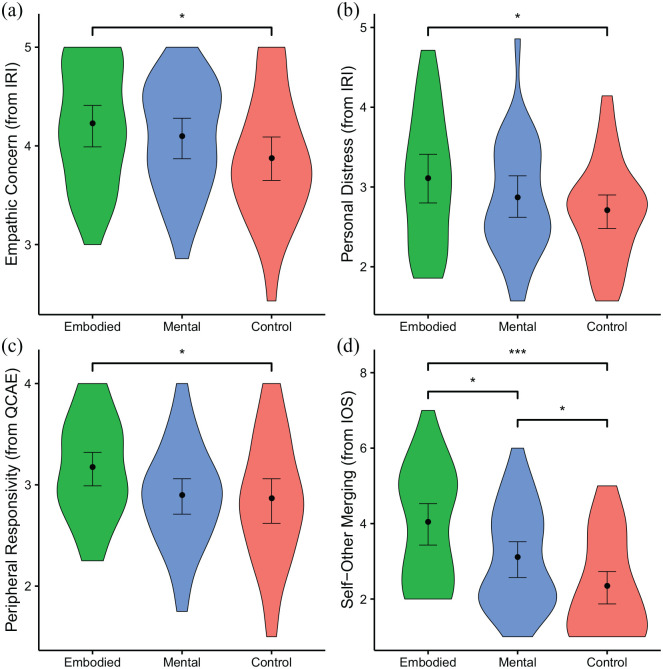
Perspective-taking, whether through imagination or virtual-reality interventions, seems to improve intergroup relations; however, which intervention leads to better outcomes remains unclear. This preregistered study collected measures of empathy and race bias from 90 participants, split into one of three perspective-taking groups: embodied perspective-taking, mental perspective-taking, and a control group. We drew on virtual-reality technology alongside a Black confederate across all conditions. Only in the first group, participants got to exchange real-time viewpoints with the confederate and literally "see through the eyes of another." In the two other conditions, participants either imagined a day in the life of the Black confederate or in their own life, respectively. Our findings show that, compared with the control group, the embodied perspective-taking group scored higher on empathy sub-components. On the contrary, both perspective-taking interventions differentially affected neither explicit nor implicit race bias. Our study suggests that embodiment of an outgroup can enhance empathy.
换位思考,无论是通过想象还是虚拟现实干预,似乎都能改善群体间关系;然而,哪种干预手段能带来更好的效果尚不清楚。本预注册研究从 90 名参与者中收集了同理心和种族偏见的测量结果,将他们分为三种换位思考组之一:具身换位思考、心理换位思考和对照组。在所有条件下,我们都利用虚拟现实技术和一名黑人同谋者。只有在第一组中,参与者才能与同谋者实时交换观点,真正“从另一个人的角度看问题”。在另外两种情况下,参与者分别想象了黑人同谋者或自己生活中的一天。我们的研究结果表明,与对照组相比,具身换位思考组在同理心的子成分上得分更高。相反,这两种换位思考干预都没有对显性或隐性的种族偏见产生影响。我们的研究表明,对一个外群体的认同可以增强同理心。