Urban Wildlife Institute, Department of Conservation and Science, Lincoln Park Zoo, Chicago, IL, USA.
Department of Interdisciplinary Studies, University of British Columbia, Vancouver, British Columbia, Canada.
BMC Public Health. 2021 May 29;21(1):1008. doi: 10.1186/s12889-021-11095-y.
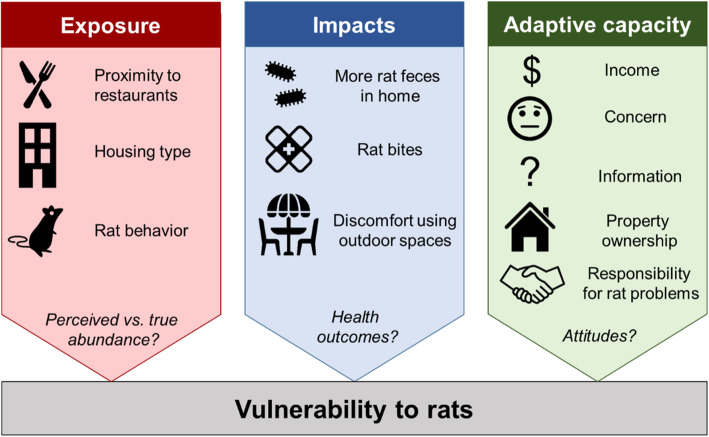
Encounters with rats in urban areas increase risk of human exposure to rat-associated zoonotic pathogens and act as a stressor associated with psychological distress. The frequency and nature of human-rat encounters may be altered by social distancing policies to mitigate the COVID-19 pandemic. For example, restaurant closures may reduce food availability for rats and promote rat activity in nearby residential areas, thus increasing public health risks during a period of public health crisis. In this study, we aimed to identify factors associated with increased perceived exposure to rats during a stay-at-home order, describe residents' encounters with rats relevant to their health and well-being, and identify factors associated with increased use of rodent control.
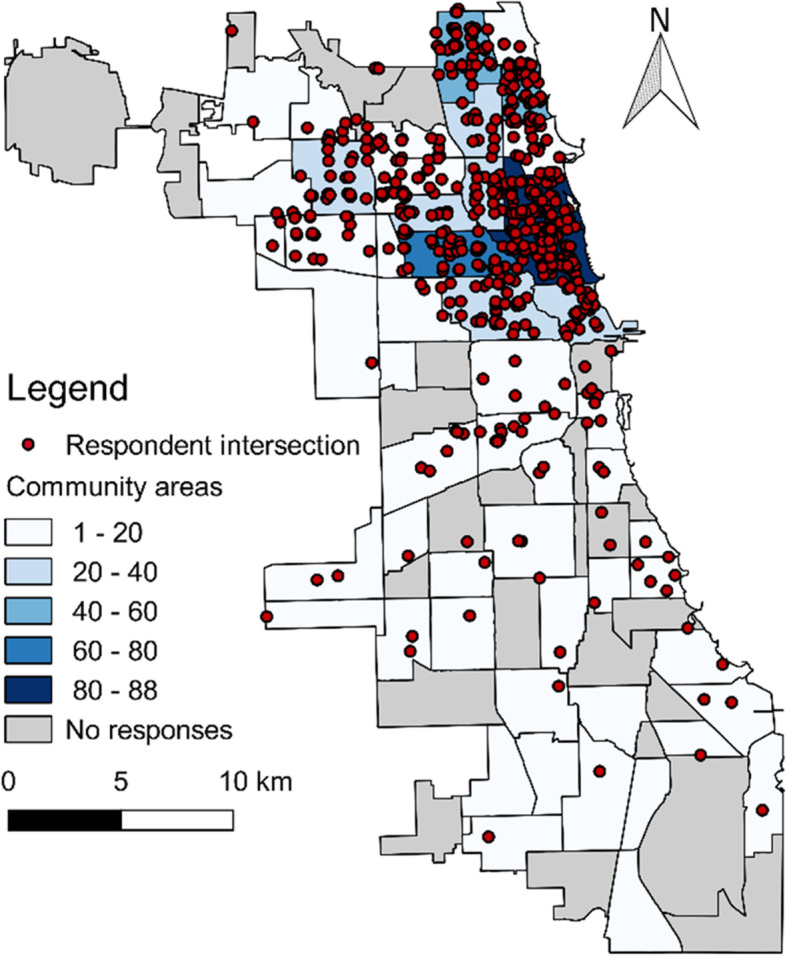
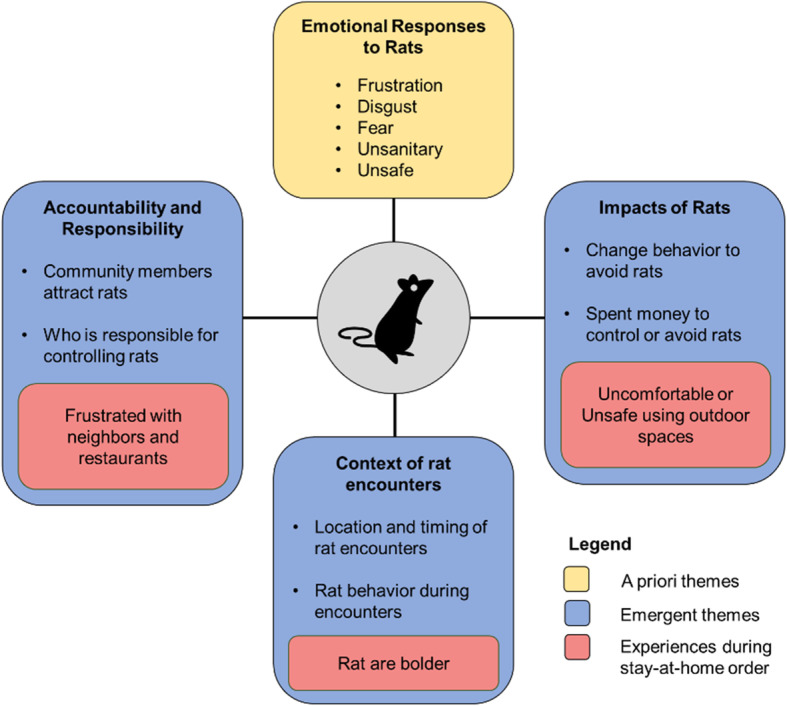
Urban residents in Chicago, a large city with growing concerns about rats and health disparities, completed an online questionnaire including fixed response and open-ended questions during the spring 2020 stay-at-home order. Analyses included ordinal multivariate regression, spatial analysis, and thematic analysis for open-ended responses.
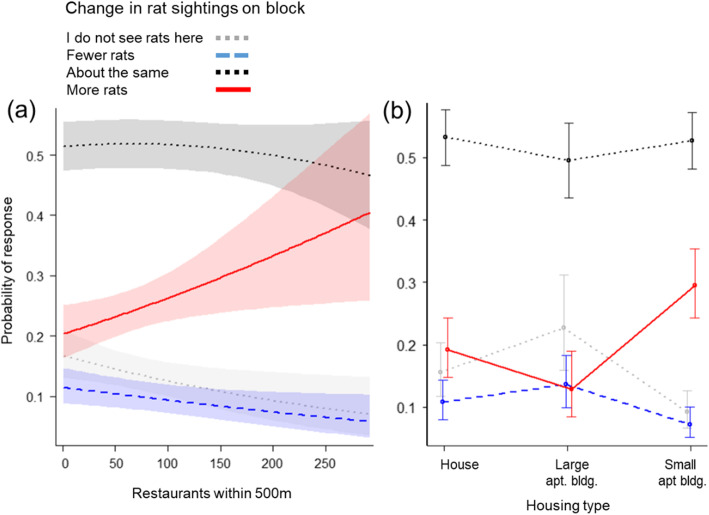
Overall, 21% of respondents (n = 835) reported an increase in rat sightings around their homes during the stay-at-home order and increased rat sightings was positively associated with proximity to restaurants, low-rise apartment buildings, and rat feces in the home (p ≤ 0.01). Many respondents described feeling unsafe using their patio or yard, and afraid of rats entering their home or spreading disease. Greater engagement with rodent control was associated with property ownership, information about rat control, and areas with lower incomes (p ≤ 0.01).
More frequent rat encounters may be an unanticipated public health concern during periods of social distancing, especially in restaurant-dense areas or in low-rise apartment buildings. Rat presence may also limit residents' ability to enjoy nearby outdoor spaces, which otherwise might buffer stress experienced during a stay-at-home order. Proactive rat control may be needed to mitigate rat-associated health risks during future stay-at-home orders.
在城市地区与老鼠的接触会增加人类接触与老鼠相关的人畜共患病病原体的风险,并成为与心理困扰相关的应激源。为了减轻 COVID-19 大流行,社会隔离政策可能会改变人与老鼠的接触频率和性质。例如,餐馆关闭可能会减少老鼠的食物供应,并促进附近居民区的老鼠活动,从而在公共卫生危机期间增加公共卫生风险。在这项研究中,我们旨在确定在居家令期间与人们对老鼠的感知接触增加相关的因素,描述与居民健康和福祉相关的老鼠接触事件,并确定与增加使用灭鼠措施相关的因素。
在 2020 年春季居家令期间,芝加哥市的城市居民完成了一份在线问卷,其中包括固定反应和开放式问题。分析包括有序多变量回归、空间分析和开放式回答的主题分析。
总体而言,21%的受访者(n=835)报告在居家令期间,他们家周围的老鼠目击事件有所增加,并且老鼠目击事件的增加与靠近餐馆、低层公寓楼以及家中的老鼠粪便呈正相关(p≤0.01)。许多受访者描述说,他们在使用露台或院子时感到不安全,并且担心老鼠进入家中或传播疾病。与老鼠控制的更多接触与财产所有权、有关老鼠控制的信息以及收入较低的地区有关(p≤0.01)。
在社会隔离期间,更频繁的老鼠接触可能是一个意想不到的公共卫生问题,尤其是在餐馆密集的地区或低层公寓楼。老鼠的存在也可能限制居民享受附近户外空间的能力,而户外空间在居家令期间可能会缓冲所经历的压力。在未来的居家令期间,可能需要积极采取灭鼠措施来减轻与老鼠相关的健康风险。