• 文献检索
  • 文档翻译
  • 深度研究
  • 学术资讯
  • Suppr Zotero 插件Zotero 插件
  • 邀请有礼
  • 套餐&价格
  • 历史记录
应用&插件
Suppr Zotero 插件Zotero 插件浏览器插件Mac 客户端Windows 客户端微信小程序
定价
高级版会员购买积分包购买API积分包
服务
文献检索文档翻译深度研究API 文档MCP 服务
关于我们
关于 Suppr公司介绍联系我们用户协议隐私条款
关注我们

Suppr 超能文献

核心技术专利:CN118964589B侵权必究
粤ICP备2023148730 号-1Suppr @ 2026

文献检索

告别复杂PubMed语法,用中文像聊天一样搜索,搜遍4000万医学文献。AI智能推荐,让科研检索更轻松。

立即免费搜索

文件翻译

保留排版,准确专业,支持PDF/Word/PPT等文件格式,支持 12+语言互译。

免费翻译文档

深度研究

AI帮你快速写综述,25分钟生成高质量综述,智能提取关键信息,辅助科研写作。

立即免费体验

人类多能干细胞衍生的脑类器官作为研究神经疾病和癌症的体外模型。

Human pluripotent stem cell-derived brain organoids as in vitro models for studying neural disorders and cancer.

作者信息

Luo Juan, Li Peng

机构信息

Scientific Research Center, The Seventh Affiliated Hospital of Sun Yat-Sen University, Shenzhen, 518107, China.

出版信息

Cell Biosci. 2021 May 28;11(1):99. doi: 10.1186/s13578-021-00617-1.

DOI:10.1186/s13578-021-00617-1
PMID:34049587
原文链接:https://pmc.ncbi.nlm.nih.gov/articles/PMC8161602/
Abstract

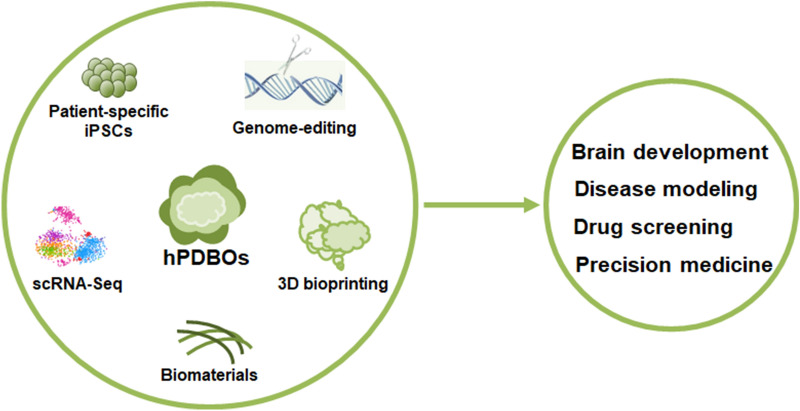
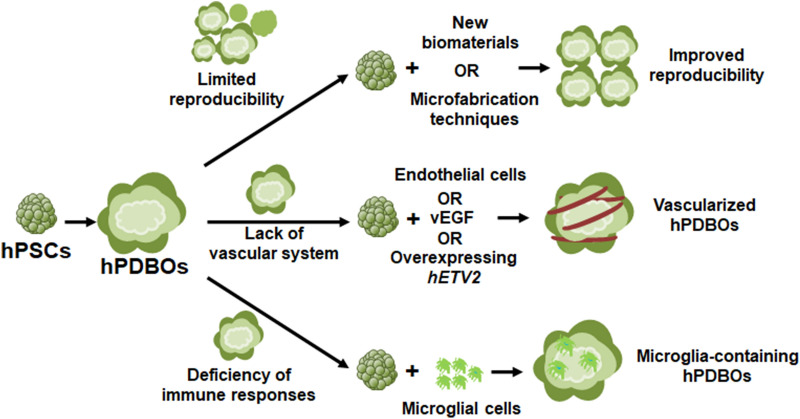
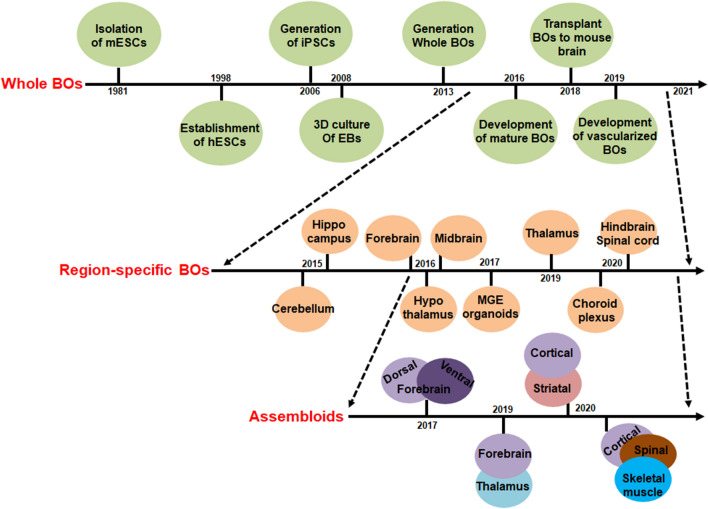
The sheer complexities of brain and resource limitation of human brain tissue greatly hamper our understanding of the brain disorders and cancers. Recently developed three-dimensional (3D) brain organoids (BOs) are self-organized and spontaneously differentiated from human pluripotent stem cells (hPSCs) in vitro, which exhibit similar features with cell type diversity, structural organization, and functional connectivity as the developing human brain. Based on these characteristics, hPSC-derived BOs (hPDBOs) provide new opportunities to recapitulate the complicated processes during brain development, neurodegenerative disorders, and brain cancers in vitro. In this review, we will provide an overview of existing BO models and summarize the applications of this technology in modeling the neural disorders and cancers. Furthermore, we will discuss the challenges associated with their use as in vitro models for disease modeling and the potential future direction.

摘要

大脑的极端复杂性以及人类脑组织的资源限制极大地阻碍了我们对脑部疾病和癌症的理解。最近开发的三维(3D)脑类器官(BOs)是在体外由人类多能干细胞(hPSCs)自组织并自发分化形成的,其在细胞类型多样性、结构组织和功能连接性方面表现出与发育中的人类大脑相似的特征。基于这些特性,源自hPSC的BOs(hPDBOs)为在体外重现大脑发育、神经退行性疾病和脑癌期间的复杂过程提供了新机会。在本综述中,我们将概述现有的BO模型,并总结该技术在模拟神经疾病和癌症方面的应用。此外,我们将讨论将其用作疾病建模体外模型所面临的挑战以及潜在的未来发展方向。
https://cdn.ncbi.nlm.nih.gov/pmc/blobs/946b/8161602/ed5046f16075/13578_2021_617_Fig3_HTML.jpg
https://cdn.ncbi.nlm.nih.gov/pmc/blobs/946b/8161602/c58627cdc5c3/13578_2021_617_Fig1_HTML.jpg
https://cdn.ncbi.nlm.nih.gov/pmc/blobs/946b/8161602/99f7a12d1478/13578_2021_617_Fig2_HTML.jpg
https://cdn.ncbi.nlm.nih.gov/pmc/blobs/946b/8161602/ed5046f16075/13578_2021_617_Fig3_HTML.jpg
https://cdn.ncbi.nlm.nih.gov/pmc/blobs/946b/8161602/c58627cdc5c3/13578_2021_617_Fig1_HTML.jpg
https://cdn.ncbi.nlm.nih.gov/pmc/blobs/946b/8161602/99f7a12d1478/13578_2021_617_Fig2_HTML.jpg
https://cdn.ncbi.nlm.nih.gov/pmc/blobs/946b/8161602/ed5046f16075/13578_2021_617_Fig3_HTML.jpg

相似文献

1
Human pluripotent stem cell-derived brain organoids as in vitro models for studying neural disorders and cancer.人类多能干细胞衍生的脑类器官作为研究神经疾病和癌症的体外模型。
Cell Biosci. 2021 May 28;11(1):99. doi: 10.1186/s13578-021-00617-1.
2
Human pluripotent stem cell-derived lung organoids: Potential applications in development and disease modeling.人多能干细胞衍生的肺类器官:在发育和疾病建模中的潜在应用。
Wiley Interdiscip Rev Dev Biol. 2021 Nov;10(6):e399. doi: 10.1002/wdev.399. Epub 2020 Nov 3.
3
Modeling and Targeting Alzheimer's Disease With Organoids.利用类器官对阿尔茨海默病进行建模与靶向研究。
Front Pharmacol. 2020 Mar 31;11:396. doi: 10.3389/fphar.2020.00396. eCollection 2020.
4
Patterning of brain organoids derived from human pluripotent stem cells.人脑类器官的模式形成。
Curr Opin Neurobiol. 2022 Jun;74:102536. doi: 10.1016/j.conb.2022.102536. Epub 2022 Apr 8.
5
Modelling neurodegenerative diseases with 3D brain organoids.用 3D 脑类器官模型来模拟神经退行性疾病。
Biol Rev Camb Philos Soc. 2020 Oct;95(5):1497-1509. doi: 10.1111/brv.12626. Epub 2020 Jun 22.
6
Challenges in Modeling Human Neural Circuit Formation via Brain Organoid Technology.通过脑类器官技术模拟人类神经回路形成面临的挑战。
Front Cell Neurosci. 2020 Dec 3;14:607399. doi: 10.3389/fncel.2020.607399. eCollection 2020.
7
Generating CNS organoids from human induced pluripotent stem cells for modeling neurological disorders.利用人类诱导多能干细胞生成中枢神经系统类器官以模拟神经疾病。
Int J Physiol Pathophysiol Pharmacol. 2017 Jun 15;9(3):101-111. eCollection 2017.
8
Disease Modeling Using 3D Organoids Derived from Human Induced Pluripotent Stem Cells.利用源自人类诱导多能干细胞的 3D 类器官进行疾病建模。
Int J Mol Sci. 2018 Mar 21;19(4):936. doi: 10.3390/ijms19040936.
9
Insights Into Human Development and Disease From Human Pluripotent Stem Cell Derived Intestinal Organoids.从人多能干细胞衍生的肠道类器官中洞察人类发育与疾病
Front Med (Lausanne). 2019 Dec 17;6:297. doi: 10.3389/fmed.2019.00297. eCollection 2019.
10
Modeling Neurological Disorders in 3D Organoids Using Human-Derived Pluripotent Stem Cells.利用人源多能干细胞在3D类器官中模拟神经疾病
Front Cell Dev Biol. 2021 May 10;9:640212. doi: 10.3389/fcell.2021.640212. eCollection 2021.

引用本文的文献

1
Brain tumors and induced pluripotent stem cell technology: a systematic review of the literature.脑肿瘤与诱导多能干细胞技术:文献系统综述
Ann Med Surg (Lond). 2025 Jan 9;87(1):250-264. doi: 10.1097/MS9.0000000000002760. eCollection 2025 Jan.
2
Recent Progress in Flexible Microelectrode Arrays for Combined Electrophysiological and Electrochemical Sensing.用于联合电生理和电化学传感的柔性微电极阵列的最新进展
Biosensors (Basel). 2025 Feb 10;15(2):100. doi: 10.3390/bios15020100.
3
Neuropathogenesis-on-chips for neurodegenerative diseases.

本文引用的文献

1
Commitment and oncogene-induced plasticity of human stem cell-derived pancreatic acinar and ductal organoids.人干细胞来源的胰腺腺泡和导管类器官的分化和癌基因诱导的可塑性。
Cell Stem Cell. 2021 Jun 3;28(6):1090-1104.e6. doi: 10.1016/j.stem.2021.03.022. Epub 2021 Apr 28.
2
Modeling plasticity and dysplasia of pancreatic ductal organoids derived from human pluripotent stem cells.基于人多能干细胞的胰腺导管类器官的可塑性和发育异常建模。
Cell Stem Cell. 2021 Jun 3;28(6):1105-1124.e19. doi: 10.1016/j.stem.2021.03.005. Epub 2021 Apr 28.
3
A logical network-based drug-screening platform for Alzheimer's disease representing pathological features of human brain organoids.
神经退行性疾病的类脑芯片研究进展
Nat Commun. 2024 Mar 12;15(1):2219. doi: 10.1038/s41467-024-46554-8.
4
Preclinical Models of Neuroblastoma-Current Status and Perspectives.神经母细胞瘤的临床前模型——现状与展望
Cancers (Basel). 2023 Jun 23;15(13):3314. doi: 10.3390/cancers15133314.
5
Modeling Human Brain Tumors and the Microenvironment Using Induced Pluripotent Stem Cells.利用诱导多能干细胞对人脑肿瘤及微环境进行建模
Cancers (Basel). 2023 Feb 16;15(4):1253. doi: 10.3390/cancers15041253.
6
Cartilage organoids for cartilage development and cartilage-associated disease modeling.用于软骨发育和软骨相关疾病建模的软骨类器官
Front Cell Dev Biol. 2023 Jan 30;11:1125405. doi: 10.3389/fcell.2023.1125405. eCollection 2023.
7
Accelerated neuronal aging ∼melting watch ∼.加速的神经元衰老 ∼ 融化的手表 ∼
Front Aging Neurosci. 2022 Aug 9;14:868770. doi: 10.3389/fnagi.2022.868770. eCollection 2022.
8
Human mini brains and spinal cords in a dish: Modeling strategies, current challenges, and prospective advances.培养皿中的人类微型大脑和脊髓:建模策略、当前挑战及未来进展
J Tissue Eng. 2022 Jul 21;13:20417314221113391. doi: 10.1177/20417314221113391. eCollection 2022 Jan-Dec.
9
Brain and Retinal Organoids for Disease Modeling: The Importance of In Vitro Blood-Brain and Retinal Barriers Studies.脑和视网膜类器官用于疾病建模:体外血脑和视网膜屏障研究的重要性。
Cells. 2022 Mar 25;11(7):1120. doi: 10.3390/cells11071120.
10
Building on a Solid Foundation: Adding Relevance and Reproducibility to Neurological Modeling Using Human Pluripotent Stem Cells.筑牢坚实基础:利用人类多能干细胞增强神经建模的相关性和可重复性
Front Cell Neurosci. 2021 Nov 18;15:767457. doi: 10.3389/fncel.2021.767457. eCollection 2021.
基于逻辑网络的阿尔茨海默病药物筛选平台,代表了人脑类器官的病理特征。
Nat Commun. 2021 Jan 12;12(1):280. doi: 10.1038/s41467-020-20440-5.
4
Generation of Functional Human 3D Cortico-Motor Assembloids.生成功能性人类三维皮质运动组合体。
Cell. 2020 Dec 23;183(7):1913-1929.e26. doi: 10.1016/j.cell.2020.11.017. Epub 2020 Dec 16.
5
Generation and long-term culture of advanced cerebral organoids for studying later stages of neural development.用于研究神经发育后期阶段的高级脑类器官的生成与长期培养。
Nat Protoc. 2021 Feb;16(2):579-602. doi: 10.1038/s41596-020-00433-w. Epub 2020 Dec 16.
6
Generation of human striatal organoids and cortico-striatal assembloids from human pluripotent stem cells.从人类多能干细胞中生成人类纹状体类器官和皮质纹状体集合体。
Nat Biotechnol. 2020 Dec;38(12):1421-1430. doi: 10.1038/s41587-020-00763-w. Epub 2020 Dec 3.
7
Trends and challenges in modeling glioma using 3D human brain organoids.使用 3D 人类大脑类器官建模神经胶质瘤的趋势和挑战。
Cell Death Differ. 2021 Jan;28(1):15-23. doi: 10.1038/s41418-020-00679-7. Epub 2020 Dec 1.
8
APOE4 exacerbates synapse loss and neurodegeneration in Alzheimer's disease patient iPSC-derived cerebral organoids.载脂蛋白 E4 加剧了阿尔茨海默病患者 iPSC 衍生脑类器官中的突触损失和神经退行性变。
Nat Commun. 2020 Nov 2;11(1):5540. doi: 10.1038/s41467-020-19264-0.
9
A human tissue screen identifies a regulator of ER secretion as a brain-size determinant.一项人体组织筛查将内质网分泌的一种调节因子鉴定为脑容量决定因素。
Science. 2020 Nov 20;370(6519):935-941. doi: 10.1126/science.abb5390. Epub 2020 Oct 29.
10
Dissecting Alzheimer's disease pathogenesis in human 2D and 3D models.在二维和三维人类模型中剖析阿尔茨海默病的发病机制。
Mol Cell Neurosci. 2021 Jan;110:103568. doi: 10.1016/j.mcn.2020.103568. Epub 2020 Oct 14.