Human-Computer Interaction Institute, Carnegie Mellon University, Pittsburgh, PA, USA.
Department of Otolaryngology-Head and Neck Surgery, The Ohio State University, Columbus, OH, USA.
Sci Rep. 2021 May 28;11(1):11263. doi: 10.1038/s41598-021-90743-0.
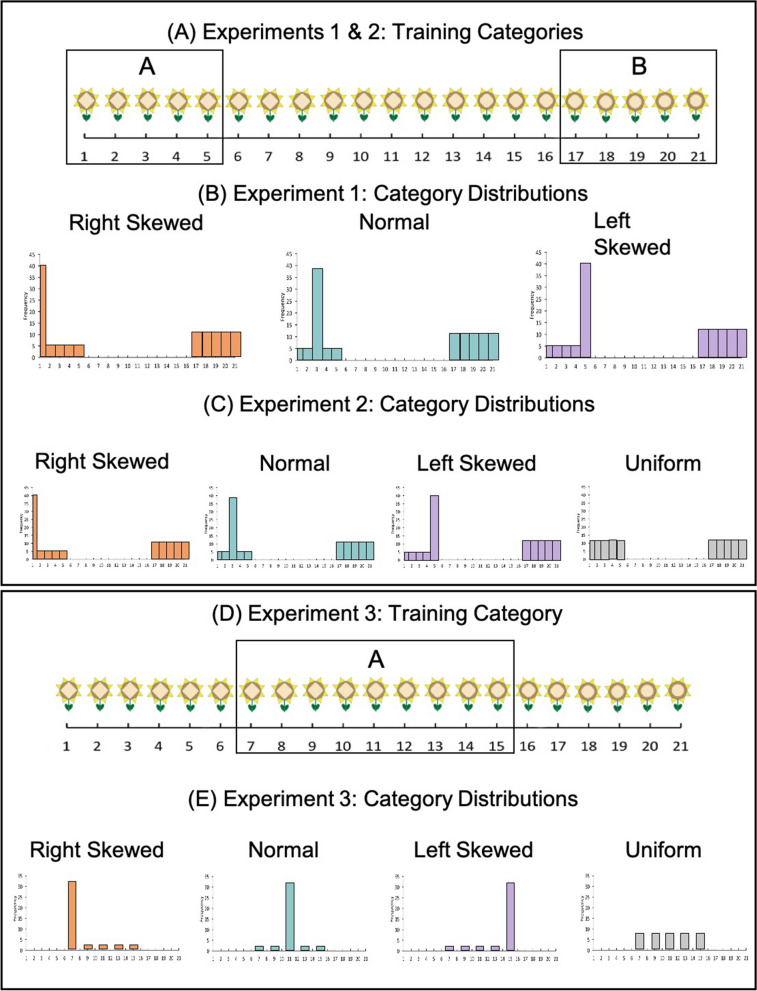
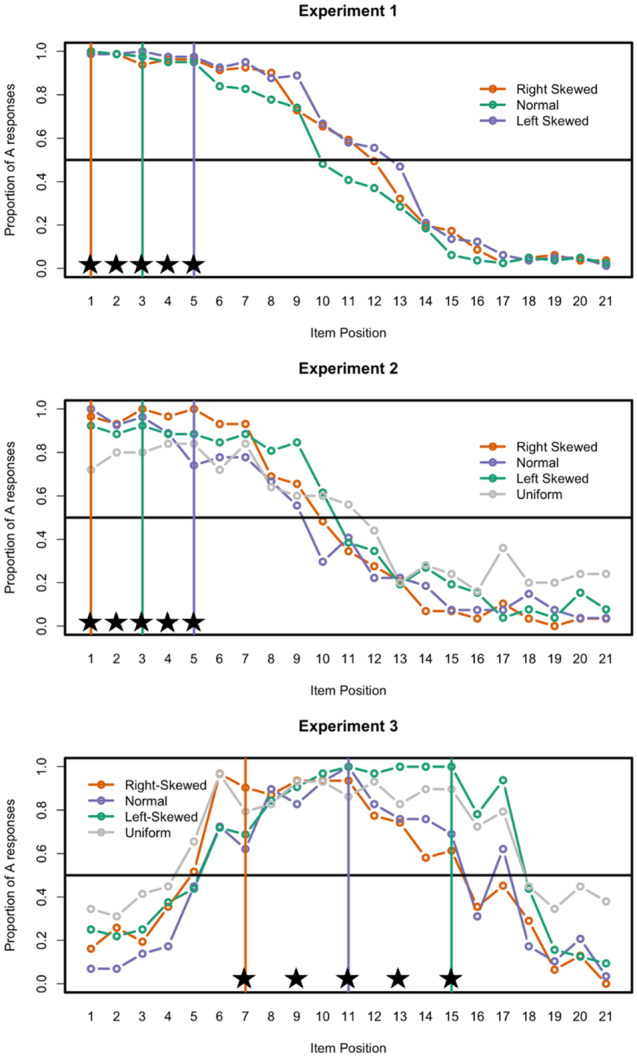
What we learn about the world is affected by the input we receive. Many extant category learning studies use uniform distributions as input in which each exemplar in a category is presented the same number of times. Another common assumption on input used in previous studies is that exemplars from the same category form a roughly normal distribution. However, recent corpus studies suggest that real-world category input tends to be organized around skewed distributions. We conducted three experiments to examine the distributional properties of the input on category learning and generalization. Across all studies, skewed input distributions resulted in broader generalization than normal input distributions. Uniform distributions also resulted in broader generalization than normal input distributions. Our results not only suggest that current category learning theories may underestimate category generalization but also challenge current theories to explain category learning in the real world with skewed, instead of the normal or uniform distributions often used in experimental studies.
我们对世界的了解受到所接收信息的影响。许多现有的类别学习研究使用均匀分布作为输入,其中每个类别中的示例出现的次数相同。之前研究中使用输入的另一个常见假设是,来自同一类别的示例大致呈正态分布。然而,最近的语料库研究表明,现实世界中的类别输入往往围绕倾斜分布组织。我们进行了三项实验来检验类别学习和泛化过程中输入的分布特征。在所有研究中,倾斜输入分布导致比正态输入分布更广泛的泛化。均匀分布也导致比正态输入分布更广泛的泛化。我们的结果不仅表明当前的类别学习理论可能低估了类别泛化,而且还挑战了当前理论,要求其用倾斜分布(而不是实验研究中常用的正态或均匀分布)来解释现实世界中的类别学习。