Raymo James M, Uchikoshi Fumiya, Yoda Shohei
Department of Sociology and Office of Population Research, Princeton University.
National Institute of Population and Social Security Research, Tokyo.
Demogr Res. 2021 Jan-Jun;44:67-98. doi: 10.4054/demres.2021.44.3. Epub 2021 Jan 12.
Understanding the trend toward later and less marriage is particularly important in low-fertility societies where alternatives to marriage are limited and childbearing outside of marriage remains rare.
Our goal in this paper is to advance our understanding of the wide variety of explanations offered for later and less marriage in Japan by focusing explicitly on marriage intentions and desires.
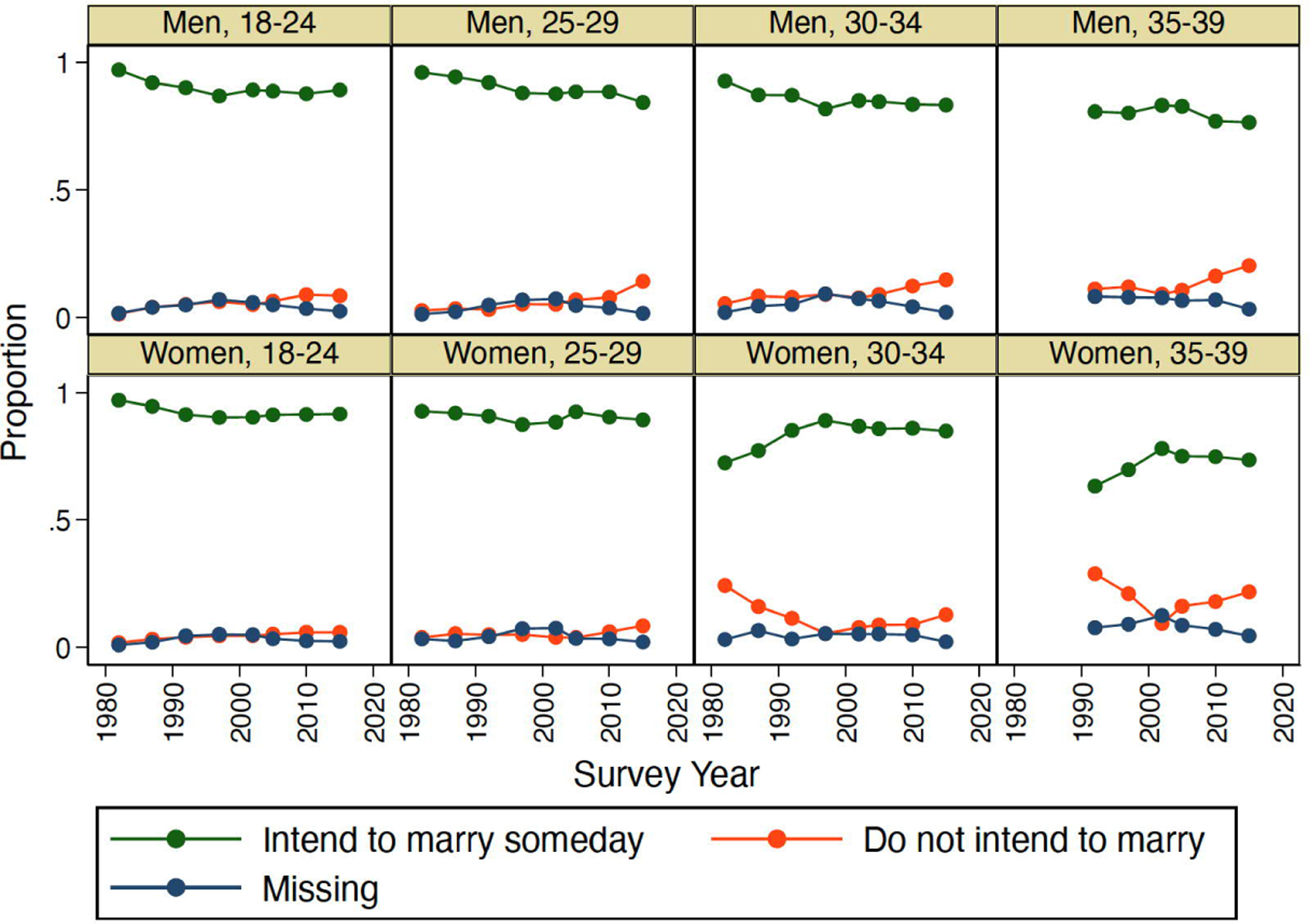
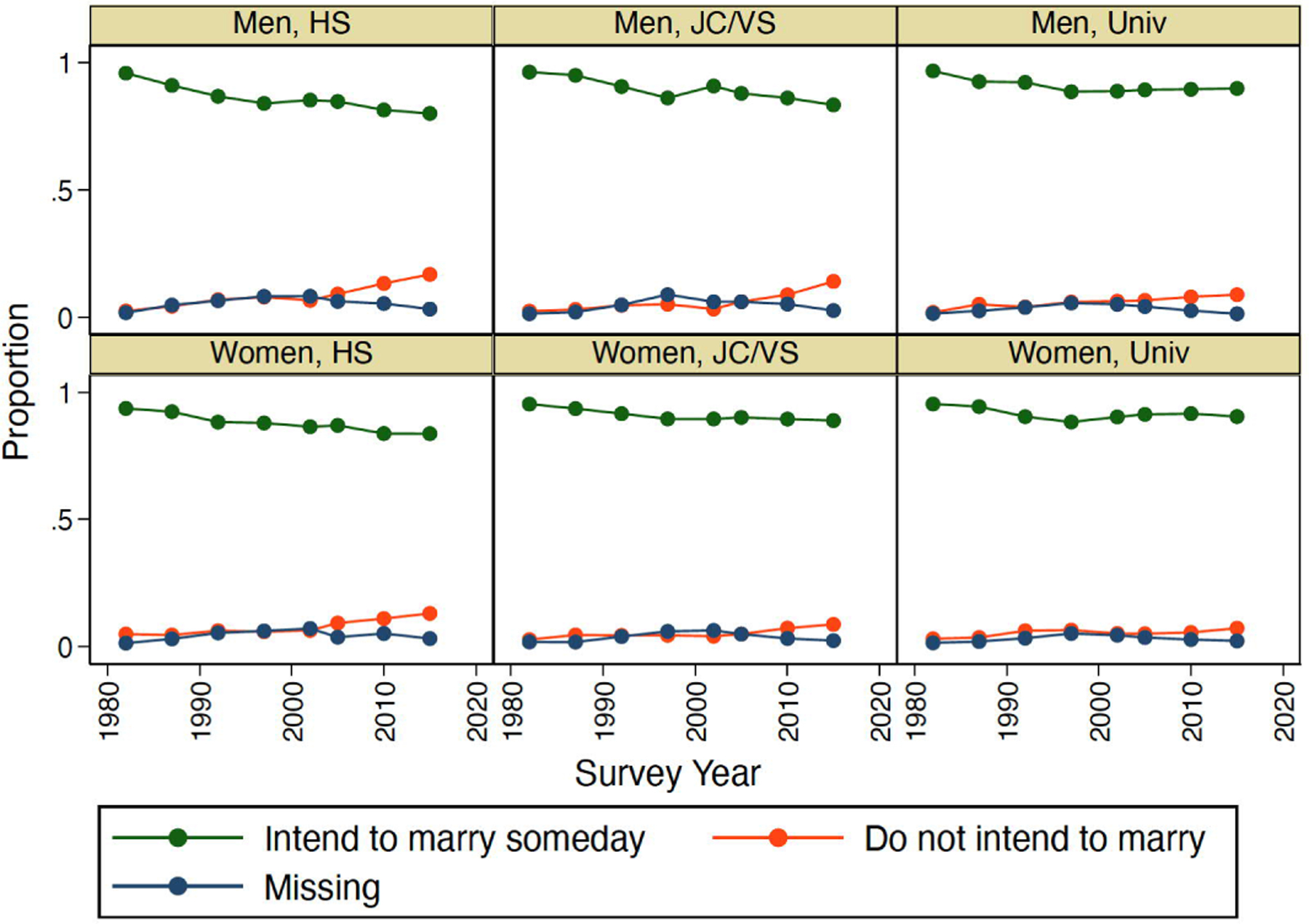
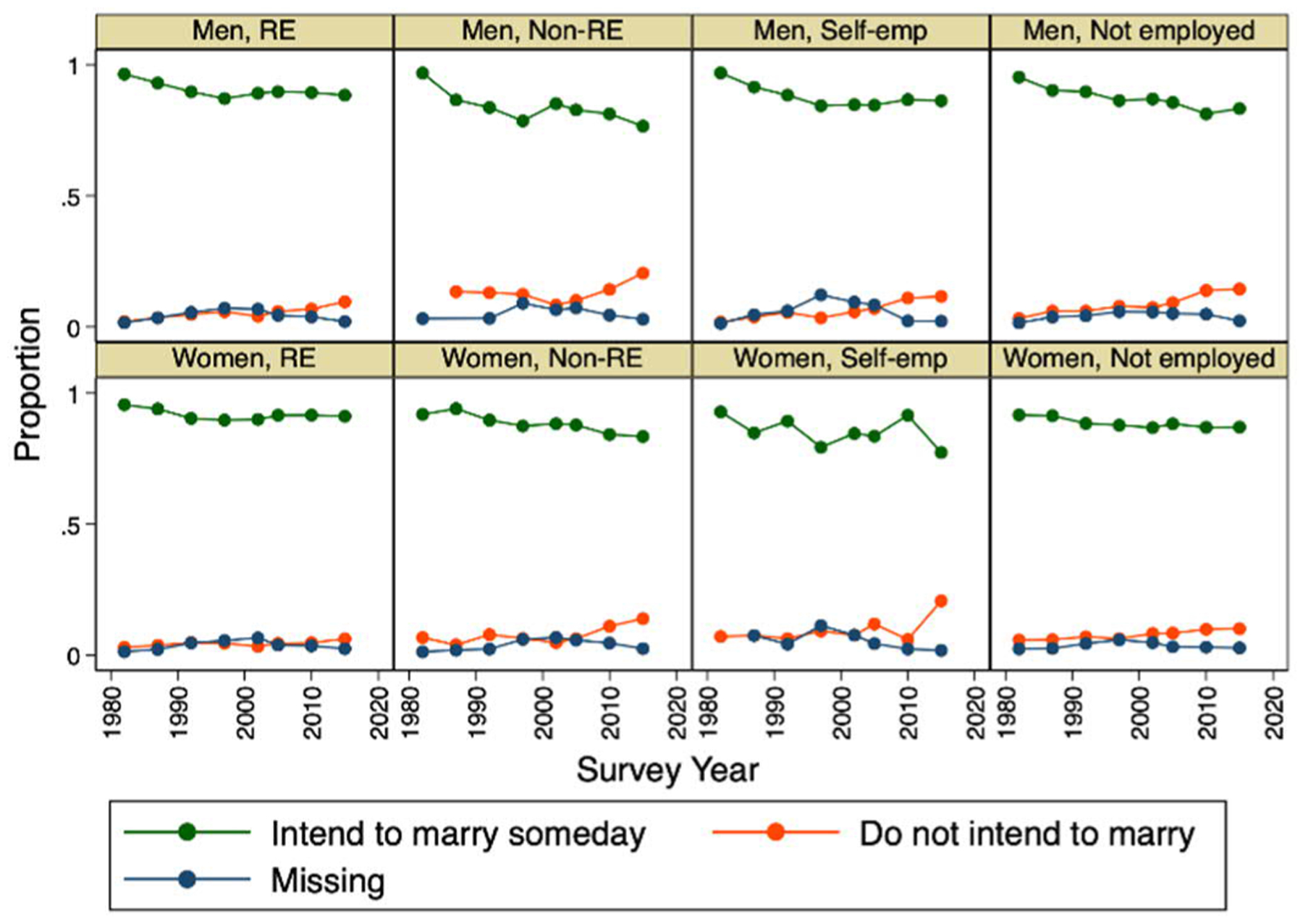
Using two sources of nationally representative data, we describe the prevalence of positive, negative, and passive marriage intentions and desires among men and women who have never been married. We also examine socioeconomic differences in intentions, patterns of marriage desires across young adulthood, and relationships between marriage desires and outcomes. By linking three pathways to later and less marriage (rejection of marriage, failure to realize marriage desires, and unplanned drifting into singlehood) to specific theoretical frameworks, we generate indirect insights into explanations for later and less marriage.
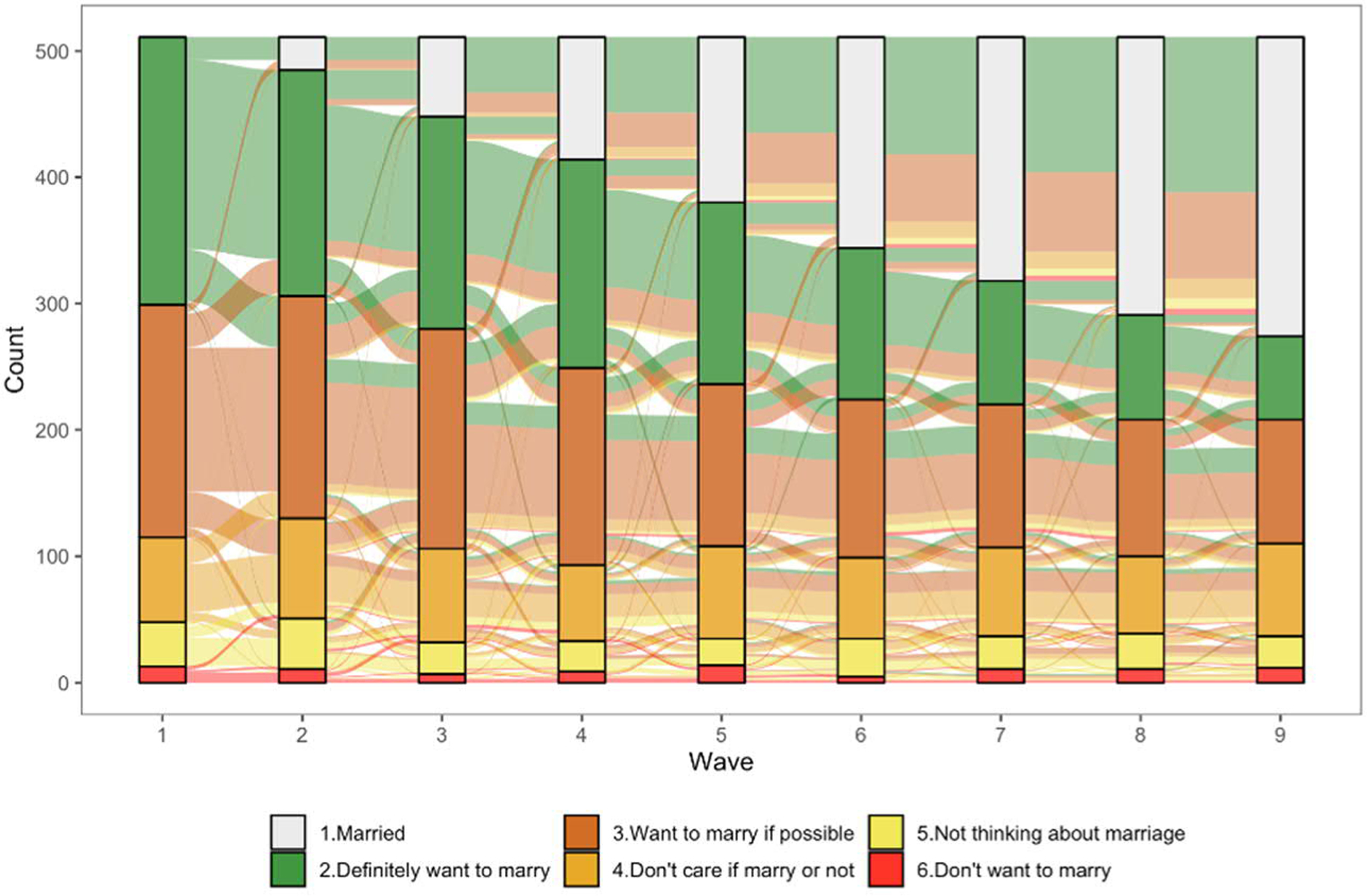
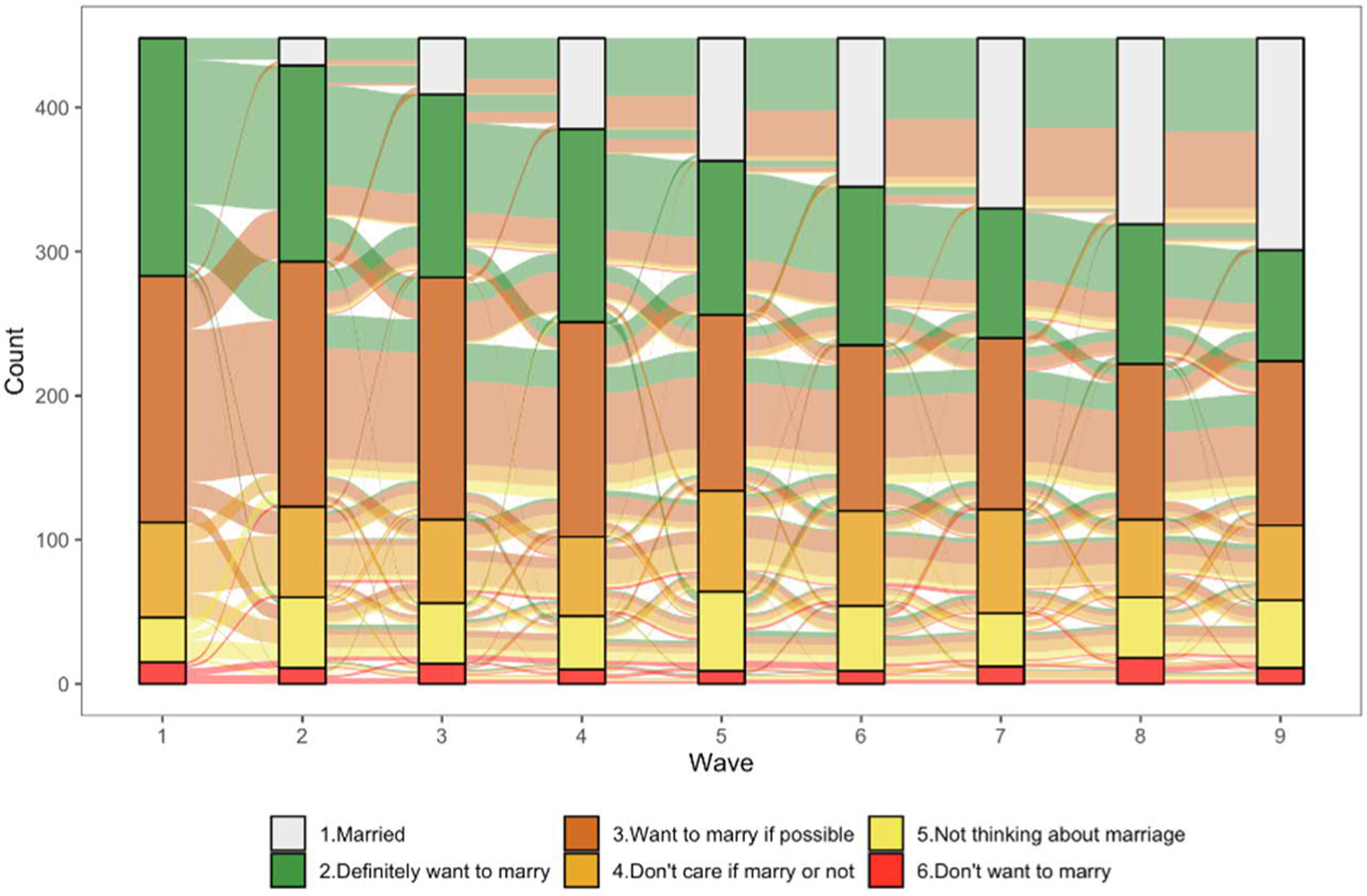
Although the large majority of unmarried men and women want to marry, less than half of respondents married across nine waves of the Japanese Life Course Panel Survey. Among those who remained unmarried, roughly two-thirds can be classified as 'drifting' into singlehood, about 30% as 'failing to realize marriage desires,' and no more than 5% as 'rejecting marriage.'
By extending the small body of research on marriage intentions and desires, this study provides a framework for thinking broadly about explanations for later and less marriage in Japan and highlights the importance of both failure to realize marriage desires and unplanned drifting into singlehood.
在低生育率社会中,了解晚婚和少婚趋势尤为重要,因为在这些社会中,婚姻的替代选择有限,非婚生育仍然很少见。
本文的目标是通过明确关注婚姻意愿和渴望,推进我们对日本晚婚和少婚的各种解释的理解。
利用两个具有全国代表性的数据来源,我们描述了从未结婚的男性和女性中积极、消极和被动婚姻意愿及渴望的普遍程度。我们还研究了意愿方面的社会经济差异、青年成年期婚姻渴望模式以及婚姻渴望与结果之间的关系。通过将晚婚和少婚的三条途径(拒绝婚姻、未能实现婚姻渴望、意外步入单身)与特定理论框架联系起来,我们对晚婚和少婚的解释产生了间接见解。
尽管绝大多数未婚男性和女性都想结婚,但在日本生活历程面板调查的九轮调查中,只有不到一半的受访者结婚。在那些仍未结婚的人中,大约三分之二可归类为“意外”步入单身,约30%为“未能实现婚姻渴望”,不超过5%为“拒绝婚姻”。
通过扩展关于婚姻意愿和渴望的少量研究,本研究为广泛思考日本晚婚和少婚的解释提供了一个框架,并强调了未能实现婚姻渴望和意外步入单身的重要性。