Franzone Federica, Nebbioso Marcella, Pergolizzi Tiziano, Attanasio Giuseppe, Musacchio Angela, Greco Antonio, Limoli Paolo Giuseppe, Artico Marco, Spandidos Demetrios A, Taurone Samanta, Agostinelli Enzo
Department of Sensory Organs, Faculty of Medicine and Dentistry, Sapienza University of Rome, I-00161 Rome, Italy.
Low Vision Research Centre of Milan, I-20145 Milan, Italy.
Exp Ther Med. 2021 Jul;22(1):790. doi: 10.3892/etm.2021.10222. Epub 2021 May 21.
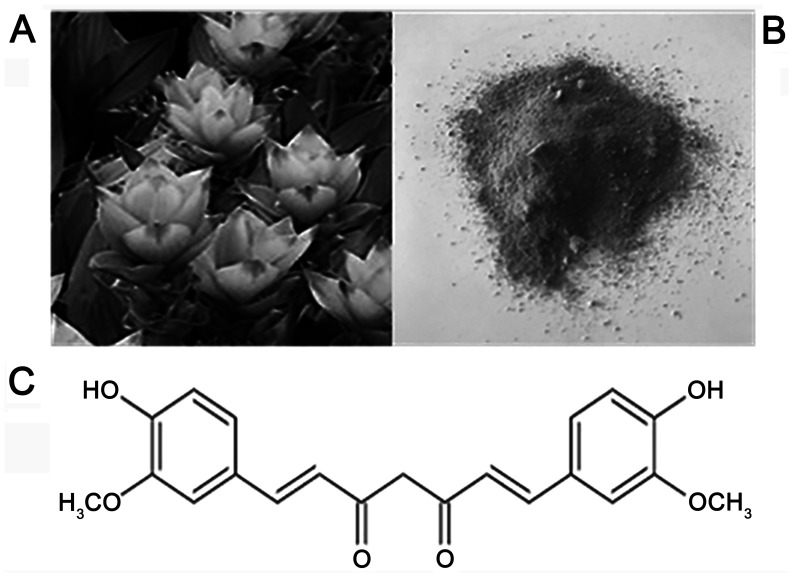
Curcumin [1,7-bis-(4-hydroxy-3-methoxyphenyl)-hepta-1,6-diene-3,5-dione], the main component of turmeric (, a flowering plant of the ginger family, Zingiberaceae), is known to possess different pharmacological activities, particularly anti-inflammatory and antioxidant properties. Since an underlying inflammatory process exists in several ocular conditions, such as anterior uveitis, glaucoma, age-related macular degeneration (AMD) and diabetic retinopathy (DR), the aim of the present review was to summarize the pleiotropic effects exerted by this molecule, focusing in particular on its beneficial role in retinal diseases. The anti-inflammatory activity of curcumin has also been described in numerous systemic inflammatory pathologies and tumors. Specifically, the biological, pharmaceutical and nutraceutical properties of curcumin are associated with its ability to downregulate the expression of the following genes: IκBα, cyclooxygenase 2, prostaglandin E2, interleukin (IL)-1, IL-6, IL-8 and tumor necrosis factor-α. According to this finding, curcumin may be useful in the treatment of some retinal disorders. In DR, proliferative vitreoretinopathy and AMD, beneficial effects have been observed following treatment with curcumin, including slowing down of the inflammatory process. Despite the aforementioned evidence, the main disadvantage of this substance is that it possesses a low solubility, as well as poor oral bioavailability due to its reduced absorption, rapid metabolism and rapid elimination. Therefore, several curcumin analogues have been synthesized and tested over the years, in order to improve the possible obtainable therapeutic effects. The purpose of the present review was to identify new aspects that could guide future research on this important traditional medicine, which is a well-tolerated natural product, and is widely considered safe and economical.
姜黄素[1,7 - 双 -(4 - 羟基 - 3 - 甲氧基苯基)- 庚 - 1,6 - 二烯 - 3,5 - 二酮]是姜科开花植物姜黄中的主要成分,已知具有多种药理活性,尤其是抗炎和抗氧化特性。由于在几种眼部疾病中存在潜在的炎症过程,如前葡萄膜炎、青光眼、年龄相关性黄斑变性(AMD)和糖尿病性视网膜病变(DR),本综述的目的是总结该分子发挥的多效性作用,特别关注其在视网膜疾病中的有益作用。姜黄素的抗炎活性也已在众多全身性炎症性疾病和肿瘤中得到描述。具体而言,姜黄素的生物学、药学和营养保健特性与其下调以下基因表达的能力有关:IκBα、环氧化酶2、前列腺素E2、白细胞介素(IL)-1、IL - 6、IL - 8和肿瘤坏死因子 - α。根据这一发现,姜黄素可能对某些视网膜疾病的治疗有用。在糖尿病性视网膜病变、增殖性玻璃体视网膜病变和年龄相关性黄斑变性中,用姜黄素治疗后已观察到有益效果,包括炎症过程的减缓。尽管有上述证据,但这种物质的主要缺点是其溶解度低,并且由于吸收减少、代谢迅速和消除快速,口服生物利用度差。因此,多年来已经合成并测试了几种姜黄素类似物,以提高可能获得的治疗效果。本综述的目的是确定新的方面,以指导对这种重要传统药物的未来研究,它是一种耐受性良好的天然产物,被广泛认为安全且经济。