Department of Dermatology, The Second Xiangya Hospital, Central South University, Changsha, Hunan 410011, China.
Department of Rheumatology and Immunology, The Second Xiangya Hospital, Central South University, Changsha Hunan 410011, China.
Biomed Res Int. 2021 May 17;2021:6663646. doi: 10.1155/2021/6663646. eCollection 2021.
Vitiligo is a disfiguring skin disease with profound psychosocial impacts, such as anxiety, but the reported effect sizes of associations vary. We aimed to conduct a meta-analysis to quantify the strength of association between anxiety and vitiligo and to estimate the prevalence of anxiety among individuals with vitiligo.
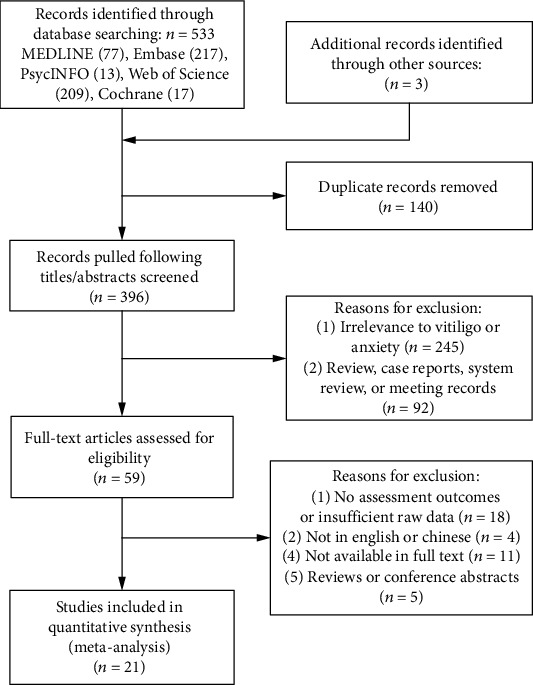
A systematic literature search was performed in five online databases (MEDLINE, Embase, Web of Science, Cochrane Library, and PsycINFO) from inception until March 20, 2020. All of the eligible studies were comprehensively reviewed, and all of the available data were analyzed according to our predefined criteria.
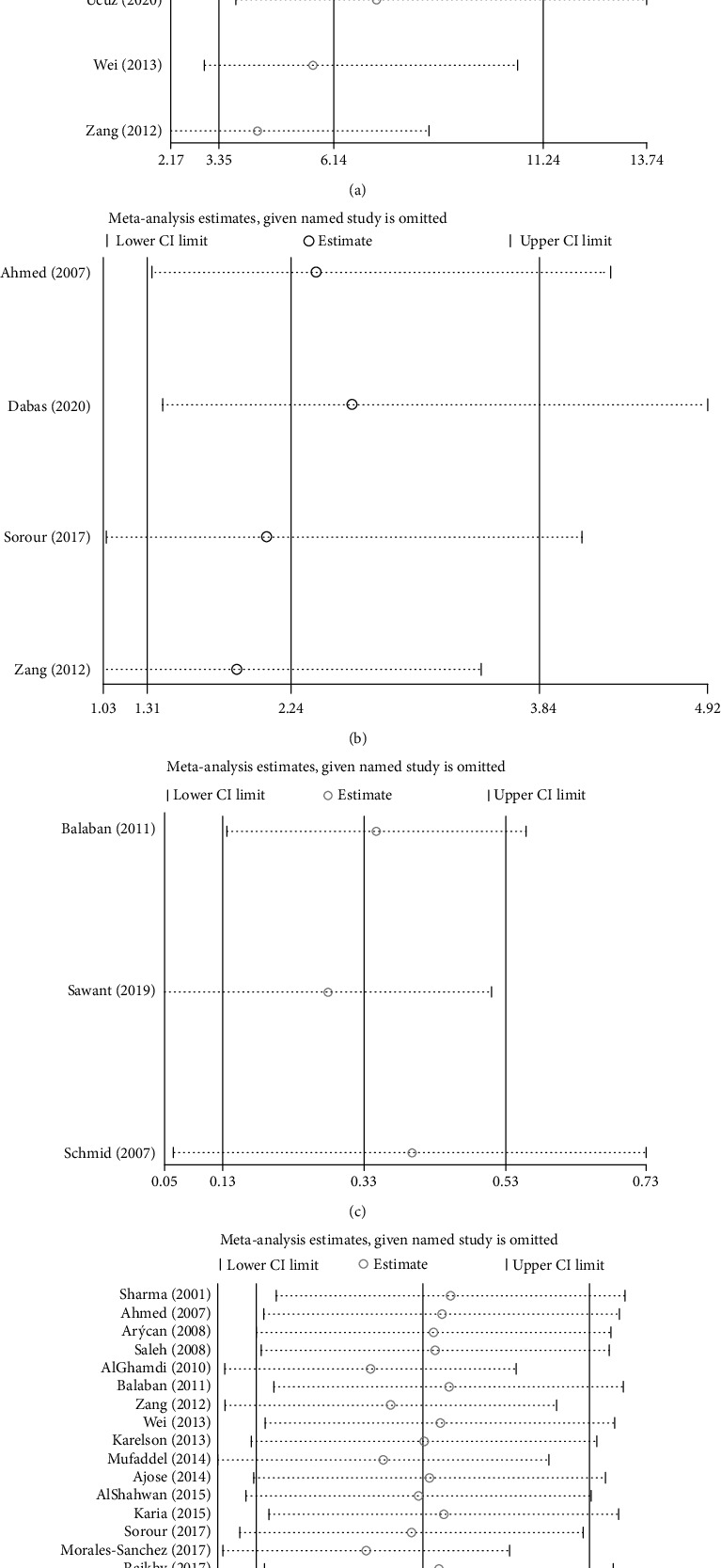
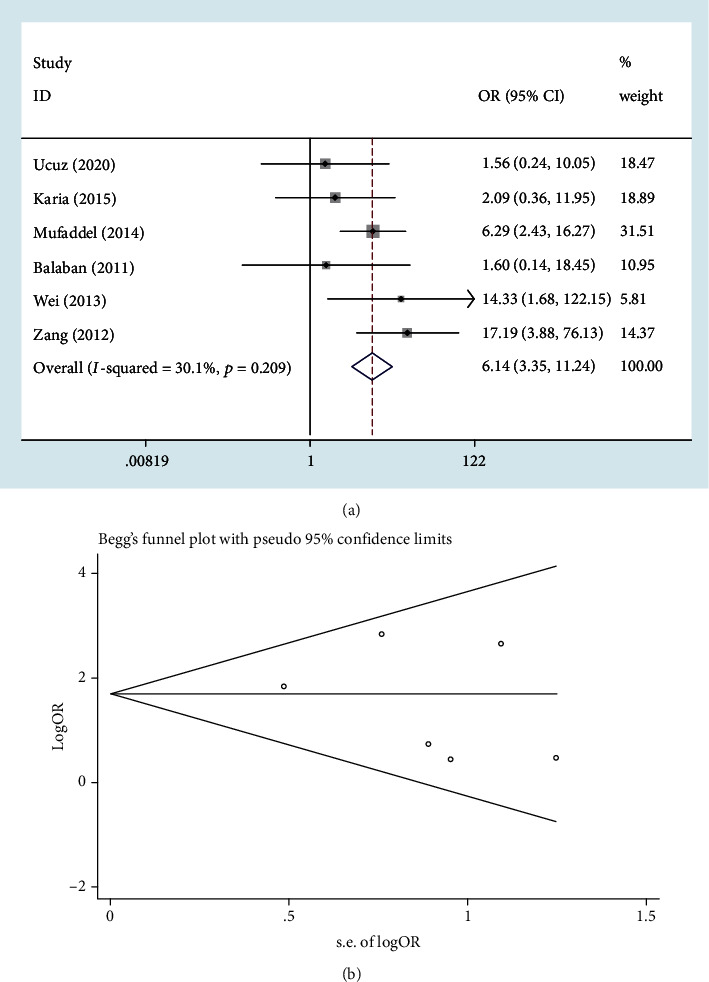
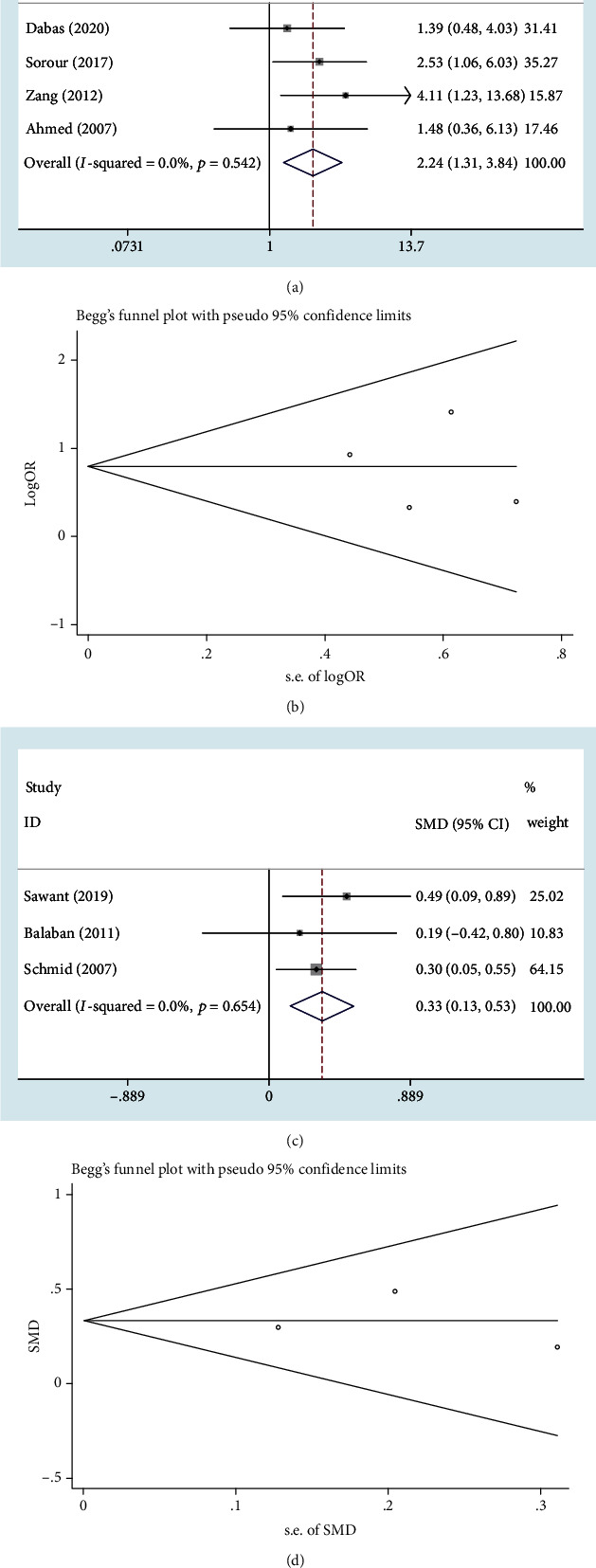
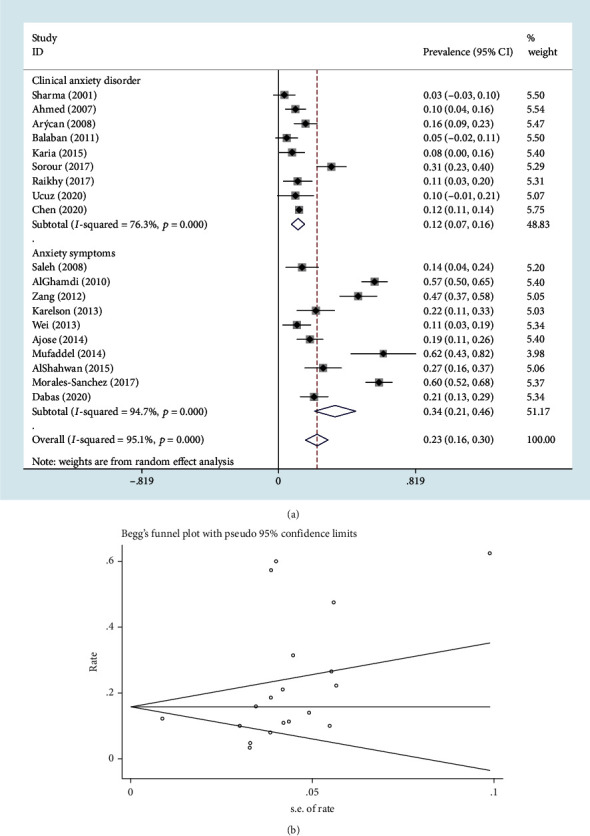
Twenty-one studies involving 3259 patients in 11 countries were included in this meta-analysis. Compared with the healthy control group, patients with vitiligo often had concomitant anxiety (OR = 6.14 [95% CI: 3.35-11.24], = 30.1%). The pooled prevalence of anxiety in female patients was significantly higher than that in males (OR = 2.24 [95% CI: 1.31-3.84], = 0.0%). Subgroup analysis showed that the pooled prevalence of clinical anxiety disorder and anxiety symptoms was 12% (95% CI: 7%-16%, = 76.3%) and 34% (95% CI: 21%-46%, = 94.7%), respectively. No publication bias has been detected by Begg's funnel plot and Egger's test.
Patients with vitiligo have high anxiety comorbidity, with female predominance. Dermatologists and psychiatrists should be vigilant to the presence of anxiety, apply appropriate interventions to reduce the psychological impacts in a timely manner, and thus promote recovery in vitiligo patients. However, due to some objective limitations (poor information about the OR and diversity in assessment tools among included studies), findings should be interpreted with caution.
白癜风是一种影响容貌的皮肤病,会带来严重的心理社会影响,如焦虑,但相关关联的报道效应大小不一。我们旨在进行荟萃分析,以量化焦虑与白癜风之间的关联强度,并估计白癜风患者中焦虑的患病率。
我们在五个在线数据库(MEDLINE、Embase、Web of Science、Cochrane Library 和 PsycINFO)中进行了系统文献检索,检索时间从建库开始到 2020 年 3 月 20 日。全面审查了所有符合条件的研究,并根据我们预先设定的标准对所有可用数据进行了分析。
这项荟萃分析纳入了来自 11 个国家的 21 项研究,共涉及 3259 名患者。与健康对照组相比,白癜风患者常伴有焦虑(OR=6.14 [95%CI:3.35-11.24], = 30.1%)。女性白癜风患者的焦虑患病率明显高于男性(OR=2.24 [95%CI:1.31-3.84], = 0.004)。亚组分析显示,临床焦虑障碍和焦虑症状的总患病率分别为 12%(95%CI:7%-16%, = 76.3%)和 34%(95%CI:21%-46%, = 94.7%)。Begg 漏斗图和 Egger 检验未发现发表偏倚。
白癜风患者存在较高的焦虑共病,以女性为主。皮肤科医生和精神科医生应警惕焦虑的存在,及时应用适当的干预措施减轻心理影响,从而促进白癜风患者的康复。然而,由于存在一些客观限制(纳入研究中 OR 信息较差和评估工具多样性),应谨慎解释研究结果。